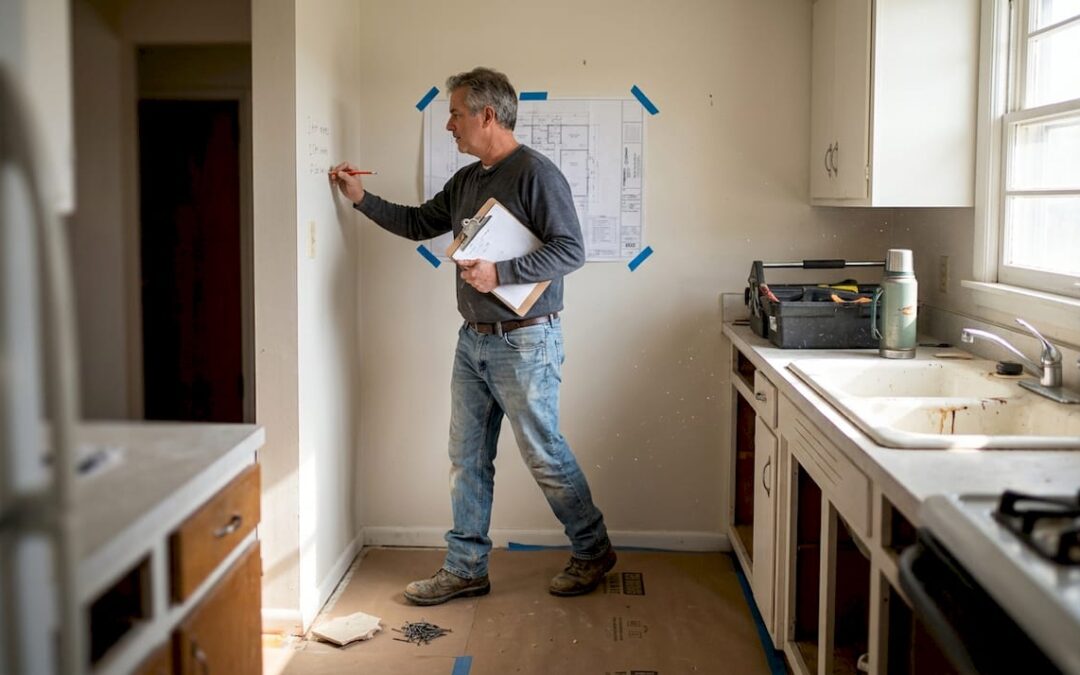
Many homeowners hear “demolition” and picture wrecking balls smashing through walls, reducing buildings to rubble. In reality, demolition in remodeling is a precise, controlled process focused on selective removal of specific elements like drywall, flooring, or outdated fixtures to prepare spaces for upgrades. Whether you’re planning a kitchen refresh or a full interior renovation in Illinois, understanding what demolition truly involves, the legal requirements, and cost factors helps you approach your project with confidence and avoid costly surprises.
Table of Contents
- Key takeaways
- What demolition means in remodeling: methods and goals
- Legal requirements and safety considerations for demolition in Illinois remodeling projects
- Understanding costs and practical considerations when planning demolition in remodeling
- Comparing demolition approaches: demolition, deconstruction, and selective methods for remodeling
- Choose expert demolition and remodeling services in Illinois
- Frequently asked questions
Key Takeaways
| Point | Details |
|---|---|
| Selective interior demolition | In remodeling projects, demolition is the controlled removal of specific elements such as walls, cabinets, and fixtures to create a clean slate for upgrades without compromising structural integrity. |
| Illinois permit requirements | Permits are required for structural changes and safety steps include utility disconnections and asbestos abatement for buildings built before 1980. |
| Demolition methods overview | Mechanical demolition uses heavy equipment for large jobs while selective manual work relies on hand tools and deconstruction focuses on salvaging materials for reuse. |
| Cost factors | Costs vary by method and scope, with selective demolition common indoors, and licensed contractors help ensure safety and compliance. |
What demolition means in remodeling: methods and goals
Demolition in remodeling refers to the controlled removal of existing structures, materials, or systems to prepare a space for upgrades, typically selective interior demolition for renovations rather than full structural teardown. Unlike total demolition where entire buildings come down, remodeling demolition targets specific areas: removing kitchen cabinets, tearing out bathroom tile, pulling up old flooring, or opening walls to reroute plumbing and electrical systems. This precision work creates a clean slate for new installations while preserving the building’s structural integrity.
Three primary methods dominate remodeling demolition work. Mechanical demolition uses excavators and heavy machinery for larger scale jobs, while selective or manual demolition relies on hand tools for precision work in occupied spaces, and deconstruction focuses on salvaging materials for sustainability. Each approach serves different project needs and budgets.
Selective demolition stands out as the preferred method for most residential remodeling projects. When you’re upgrading a single room or working in an occupied home, precision matters more than speed. Contractors use hand tools, reciprocating saws, and careful techniques to remove only what’s necessary, protecting surrounding areas from damage. This approach integrates smoothly with commercial remodeling workflows where businesses stay operational during renovations.
Deconstruction offers an environmentally conscious alternative that’s gaining traction among sustainability focused homeowners. Instead of smashing and hauling materials to landfills, deconstruction crews carefully dismantle elements to salvage wood, fixtures, hardware, and architectural details for reuse or resale. This method reduces waste significantly and can offset some demolition costs through material recovery, though it requires more labor hours and detailed planning upfront.
Common elements removed during remodeling demolition:
- Interior walls and partition framing
- Ceiling materials and suspended systems
- Flooring layers including subfloor when damaged
- Plumbing fixtures, pipes, and drainage systems
- Electrical wiring, outlets, and lighting fixtures
- Cabinetry, countertops, and built in furniture
- Window and door frames when upgrading openings
Pro Tip: Before demolition begins, photograph and document existing conditions thoroughly. These records prove invaluable when unexpected issues arise, helping contractors and inspectors understand original configurations and make informed decisions about repairs or modifications.
Understanding types of demolition methods helps you communicate effectively with contractors and choose the right approach for your specific remodeling goals, timeline, and budget constraints.
Legal requirements and safety considerations for demolition in Illinois remodeling projects
Illinois law treats demolition as a serious construction activity requiring proper permits and safety protocols. Permits are required for structural changes, with interior alterations typically falling under building or renovation permits, while utility disconnections are mandatory and hazardous materials like asbestos in pre-1980 buildings must be abated first. Skipping these steps exposes homeowners to fines, project delays, and potential liens that can derail your entire remodeling timeline.

Hazardous material testing represents a critical first step that many homeowners overlook. Homes built before 1980 commonly contain asbestos in insulation, floor tiles, and ceiling materials, while lead paint remains prevalent in structures from the same era. Illinois regulations require professional testing and certified abatement before demolition can proceed in these situations. The testing process takes only a few days but prevents serious health risks and legal complications down the road.
Utility disconnection follows strict protocols in Illinois. Gas, electric, water, and sewer lines must be properly capped or rerouted by licensed professionals before demolition begins. Attempting to work around active utilities creates dangerous conditions and violates building codes. Most municipalities require inspection and approval of utility disconnections before issuing demolition permits, adding another checkpoint to ensure safety.
Illinois specific compliance checklist for demolition:
- Obtain building or renovation permits from local municipality
- Schedule hazardous material testing for structures built before 1980
- Arrange professional utility disconnections with licensed contractors
- Verify contractor licensing under Home Repair and Remodeling Act
- Implement dust control measures to protect indoor air quality
- Establish noise mitigation plans for occupied buildings
- Schedule required inspections at key demolition milestones
For Illinois homeowners and property managers, prioritizing licensed contractors under HRRA regulations, always permitting work, and testing for hazards prevents liens and fines while selective demolition proves ideal for upgrades in occupied properties. Licensed professionals understand local code requirements, maintain proper insurance, and follow established safety protocols that protect both workers and occupants.
Dust and noise control become especially important when demolition occurs in occupied buildings or densely populated neighborhoods. Illinois municipalities enforce strict limits on construction noise hours, typically restricting loud work to weekdays between 7 AM and 6 PM. Professional contractors use dust barriers, negative air machines, and careful material handling to minimize disruption and maintain healthy indoor environments throughout the demolition phase.
Navigating Illinois renovation standards requires attention to detail and proactive planning. Working with verified licensed contractors ensures your demolition work meets all legal requirements while protecting your investment through proper insurance and bonding.
Understanding costs and practical considerations when planning demolition in remodeling
Demolition costs vary dramatically based on method, scope, and project complexity. Selective interior demolition typically ranges $2-$10 per square foot, while mechanical demolition for larger scale or structural work runs $2-$7 per square foot. These figures represent only the demolition portion of your remodeling budget. Full renovations including demo cost $100-$400 per square foot total, with Chicago kitchen remodels reaching $25,000 to $150,000 depending on finishes and scope.
Several factors push demolition costs toward the higher end of these ranges. Complex projects involving hazardous material abatement, structural modifications, or difficult access increase labor requirements and timeline. Disposal fees add up quickly, especially when local landfills charge premium rates for construction debris. Material type matters too: removing tile and concrete costs more than pulling down drywall due to weight and disposal challenges.
| Demolition Type | Cost Range | Best For | Timeline |
|---|---|---|---|
| Selective interior | $2-$10/sq ft | Kitchen, bath, single room remodels | 1-3 days |
| Mechanical | $2-$7/sq ft | Larger structural changes, additions | 3-7 days |
| Deconstruction | $3-$12/sq ft | Sustainable projects, salvage focus | 5-14 days |
| Full gut renovation | Included in $100-$400/sq ft total | Whole home remodels | 1-3 weeks |
Labor intensity varies significantly between demolition methods. Mechanical demolition with heavy equipment moves quickly but requires skilled operators and careful site management. Selective demolition demands more time and precision but reduces collateral damage and disposal volume. Deconstruction takes the longest but can recover valuable materials that offset some costs through resale or donation tax deductions.
Budget planning considerations for demolition:
- Request itemized estimates separating demo from other renovation costs
- Factor in disposal fees based on debris type and volume
- Account for hazardous material testing and abatement if needed
- Include permit costs ranging from $100 to $500 in Illinois
- Budget contingency of 10-15% for unexpected conditions
- Consider salvage value if pursuing deconstruction approach
Pro Tip: Schedule demolition during the planning phase of your remodel, not as an afterthought. Early demolition can reveal hidden issues like water damage, outdated wiring, or structural concerns that impact your renovation design and budget. Addressing these discoveries before finalizing plans saves money and prevents mid project changes.
Getting accurate renovation estimates requires detailed site assessments and clear communication about project scope. Experienced contractors identify potential complications during initial walkthroughs, helping you budget realistically. Exploring cost effective remodeling solutions can help balance demolition expenses with other renovation priorities while maintaining quality results.
Comparing demolition approaches: demolition, deconstruction, and selective methods for remodeling
Choosing between demolition approaches involves weighing speed, cost, environmental impact, and project requirements. Traditional demolition prioritizes speed and efficiency but tends to be wasteful and environmentally unfriendly, while deconstruction moves slower but supports sustainability and material salvage that can offset costs, and selective demolition preserves existing structures where possible to limit disruption.
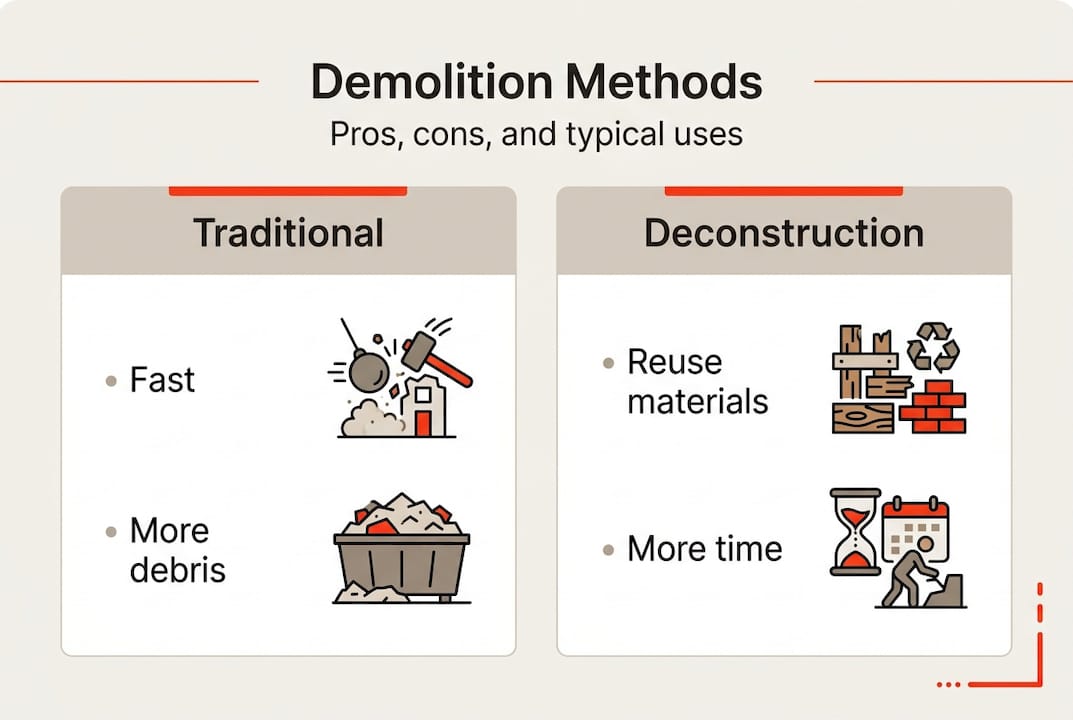
Traditional demolition gets the job done fast. Crews tear through spaces quickly, loading debris into dumpsters without sorting or salvaging. This approach works well when timeline matters most and when existing materials hold little reuse value. The downside shows up in waste volume: entire rooms worth of materials head to landfills, contributing to construction waste that accounts for significant portions of municipal solid waste streams.
Deconstruction flips this equation by treating demolition as a careful dismantling process. Workers remove materials systematically, preserving items for reuse, resale, or donation. Architectural salvage companies pay for quality reclaimed wood, vintage fixtures, and period appropriate hardware. Homeowners pursuing LEED certification or green building standards earn points through material recovery and waste diversion. The tradeoff comes in time and labor: deconstruction takes two to three times longer than traditional demolition and requires skilled workers who understand material value and careful removal techniques.
| Approach | Speed | Cost | Waste | Best Application |
|---|---|---|---|---|
| Traditional demolition | Fastest | Lowest upfront | Highest | Quick turnarounds, low value materials |
| Selective demolition | Moderate | Mid range | Moderate | Occupied spaces, phased projects |
| Deconstruction | Slowest | Higher labor | Lowest | Sustainability goals, salvage value |
Selective demolition occupies the middle ground, offering precision without the full commitment to material salvage. This method works perfectly for remodeling projects in occupied homes where you need to protect surrounding areas and maintain livability. Contractors remove only what’s necessary for the renovation, preserving structural elements and minimizing dust and disruption. The approach costs more than full demolition due to careful work requirements but less than complete deconstruction.
Decision factors when choosing demolition approach:
- Project timeline and schedule flexibility
- Environmental and sustainability priorities
- Material salvage value and reuse potential
- Building occupancy during construction
- Budget constraints and cost priorities
- Local disposal costs and recycling options
- Contractor expertise with different methods
Your choice impacts more than just the demolition phase. Traditional demolition creates large debris volumes requiring multiple dumpster hauls, while deconstruction generates organized material piles that move to salvage yards or donation centers. Selective demolition produces moderate waste but protects adjacent spaces from damage that would require additional repairs.
Understanding these distinctions helps you make informed decisions aligned with your values and project constraints. Following a comprehensive interior renovation guide ensures demolition integrates smoothly with subsequent construction phases, maintaining project momentum and quality throughout.
Choose expert demolition and remodeling services in Illinois
Planning demolition correctly sets the foundation for successful remodeling outcomes. First Solution IL provides licensed demolition and renovation services tailored to Illinois regulations, ensuring your project starts right. Their team handles permits, coordinates hazardous material testing, and implements safe demolition practices that prevent fines and delays. Professional expertise helps you avoid common pitfalls that derail timelines and budgets.
Whether you’re tackling construction projects in Chicago or planning renovations elsewhere in Illinois, working with experienced contractors makes the difference between smooth execution and costly mistakes. First Solution IL’s comprehensive approach covers every phase from initial demolition through final finishes, coordinating trades and managing details so you don’t have to. Their interior remodeling workflow integrates demolition seamlessly with design and construction phases.
Explore detailed guides on how to prepare for renovations to understand what happens before, during, and after demolition. Professional guidance helps you make informed decisions about methods, materials, and scheduling that align with your goals and budget.
Frequently asked questions
What types of permits are required for demolition in Illinois remodeling?
Illinois requires building or renovation permits for most demolition work involving structural changes or significant interior alterations. Local municipalities issue these permits after reviewing plans and confirming compliance with zoning and safety codes. Additional clearances may be necessary when hazardous materials like asbestos or lead are present, requiring specialized abatement permits before demolition begins. Check commercial renovation permit requirements for detailed guidance on Illinois permitting processes.
How can homeowners ensure safety during demolition in occupied buildings?
Hire licensed contractors experienced with phased or selective demolition who understand how to protect occupied spaces. Professional teams implement dust containment systems using plastic barriers and negative air machines, establish clear work zones separated from living areas, and schedule noisy work during agreed upon hours. Verify contractor credentials through Illinois license verification resources before starting work. Proper planning includes hazard abatement, utility management, and daily cleanup protocols that maintain safe, livable conditions throughout the project.
What factors affect demolition cost in Illinois remodeling projects?
Project scope and demolition method drive costs most significantly, with selective interior work ranging $2-$10 per square foot depending on complexity. Labor rates in Illinois, particularly in Chicago and surrounding areas, influence pricing along with disposal fees that vary by material type and landfill location. Hazardous material abatement, difficult access, structural complications, and permit costs add to the total. Selective demolition may cost more upfront but preserves surrounding areas, reducing repair expenses later. Get detailed renovation cost estimates to understand how demolition fits within your overall remodeling budget.
What is the difference between demolition and deconstruction in remodeling?
Demolition focuses on fast removal and disposal, tearing out materials quickly without concern for salvage or reuse. This method generates significant waste but completes work rapidly and costs less in labor. Deconstruction takes a careful, methodical approach to dismantle spaces while preserving materials for reuse, resale, or donation. Though slower and more labor intensive, deconstruction supports sustainability goals, reduces landfill waste, and can offset costs through material recovery. Review interior renovation processes to understand how each approach integrates with your overall project timeline and goals.