

Starting a home renovation can feel overwhelming, especially when unexpected delays or cost overruns threaten your budget and timeline. Many Illinois homeowners face these challenges because they skip critical preparation steps like understanding local permit requirements, vetting contractors properly, or building realistic budgets with contingency funds. This guide walks you through essential preparation strategies, from navigating Illinois legal compliance and securing permits to budgeting effectively and coordinating with contractors, so you can transform your home with confidence and minimal stress.
Table of Contents
- Key takeaways
- Understanding Illinois renovation requirements and legal compliance
- Budgeting and timeline planning for a smooth renovation
- Preparing your home and coordinating with contractors for efficient execution
- Monitoring progress and ensuring quality after renovation begins
- Discover expert remodeling services in Illinois
- Frequently asked questions
Key Takeaways
| Point | Details |
|---|---|
| HRRA compliance threshold | Have written contracts for all projects exceeding $1,000 to protect your rights and outline scope, timeline, payments, and warranties. |
| Early permits and vetting | Apply for permits at least three to four weeks before starting work and verify contractor licensing and insurance before signing. |
| Contingency budgeting | Set aside 15 percent of the total budget to cover hidden issues and surprises. |
| Finalize design early | Finalize all design decisions and material selections before demolition to avoid delays and idle contractor time. |
| Regular contractor communication | Maintain ongoing communication with your contractor to keep the project on schedule and address issues promptly. |
Understanding Illinois renovation requirements and legal compliance
Before breaking ground on your renovation, you need to understand the legal framework governing home improvements in Illinois. Illinois homeowners must comply with the Illinois Home Repair and Remodeling Act (HRRA) for projects over $1,000, requiring written contracts with consumer rights. This law protects you by mandating detailed contracts that specify scope, timeline, payment schedules, and warranty information. Without this documentation, you risk disputes and financial losses.
Permit requirements vary by project type and municipality, but most structural, electrical, plumbing, and HVAC work requires approval. In Chicago, the E-Plan system streamlines permit applications, reducing processing times to 2-4 weeks for standard projects. Suburban areas may have different timelines, so contact your local building department early. Decks over 30 inches high, additions, and major remodels almost always need permits.
Verifying contractor credentials is non-negotiable. Check for proper licensing, insurance coverage, and references from recent projects. The Illinois renovation standards 2026 compliance guide outlines current requirements for contractors operating in the state. Many homeowners also face HOA restrictions or local zoning rules that limit exterior changes, so review these before finalizing plans.
Key compliance steps include:
- Obtain written contracts for all projects exceeding $1,000
- Verify contractor licensing and insurance before signing agreements
- Apply for permits at least 3-4 weeks before starting work
- Check HOA covenants and local zoning ordinances for restrictions
- Keep all documentation organized for inspections and future reference
Budgeting and timeline planning for a smooth renovation
Realistic budgeting separates successful renovations from financial nightmares. Typical Midwest remodeling costs range $100-250 per square foot, with 10-20% contingencies recommended for unexpected expenses. Kitchen remodels in Chicago average $25,000 to $65,000, while bathroom updates run $12,000 to $35,000. Full home renovations can exceed $150,000 depending on scope and finishes. These figures help you establish baseline expectations.
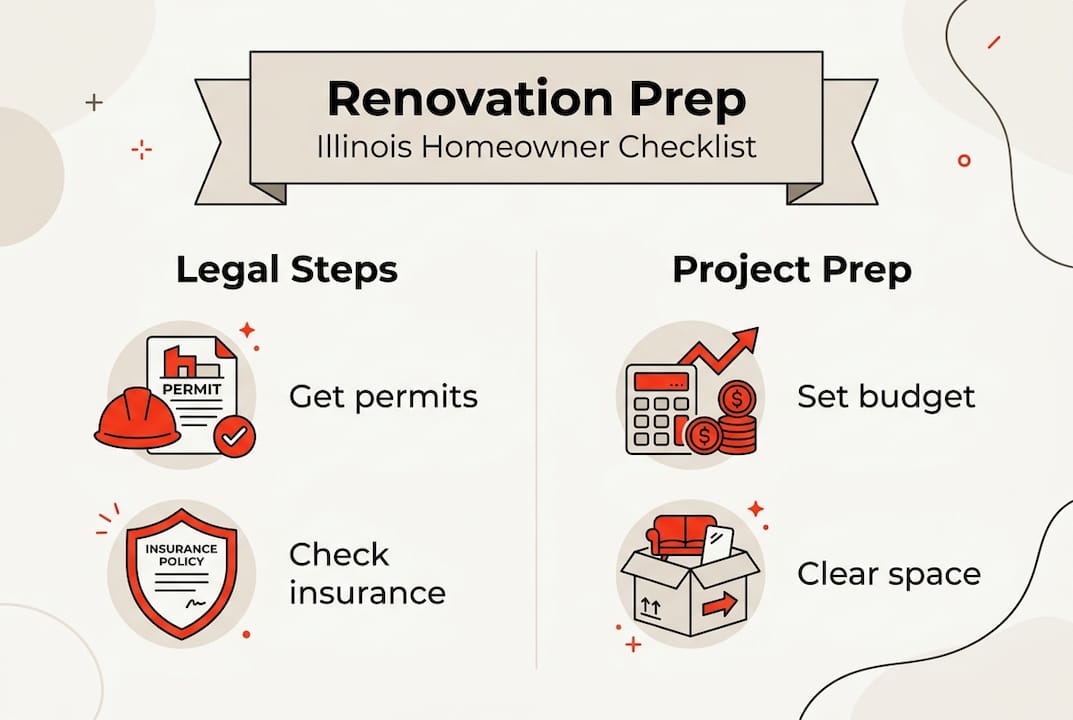
Contingency funds matter because surprises happen. Older Illinois homes often reveal hidden issues like outdated wiring, asbestos, or structural damage once walls open up. Setting aside 15% of your total budget gives you breathing room to address these problems without panic or project stalls. For renovation estimates Illinois homeowners can rely on, consult multiple contractors and compare detailed line-item quotes.
Timing your renovation strategically saves money and hassle. Chicago peak renovation season runs March through July, when contractor schedules fill quickly and material costs spike. Booking during off-peak months like September through February often yields better rates and faster timelines. Finalize all design decisions and material selections before demolition begins to avoid expensive delays when contractors sit idle waiting for your choices.
| Project type | Average cost range | Typical timeline | ROI potential |
|---|---|---|---|
| Kitchen remodel | $25,000 – $65,000 | 6-12 weeks | 60-80% |
| Bathroom update | $12,000 – $35,000 | 4-8 weeks | 55-70% |
| Full home renovation | $150,000+ | 4-6 months | 50-65% |
| Basement finish | $30,000 – $75,000 | 8-12 weeks | 65-75% |
Pro Tip: Lock in material prices early by purchasing tiles, fixtures, and finishes before construction starts. Supply chain delays can push timelines back weeks, and prices fluctuate seasonally.
Explore cost-effective remodeling solutions Illinois 2026 options that maximize value without sacrificing quality. Mid-range upgrades typically deliver stronger returns than luxury finishes, especially if you plan to sell within five years.
Preparing your home and coordinating with contractors for efficient execution
Physical preparation prevents damage and keeps your project moving smoothly. Start by clearing the work area completely, removing furniture, artwork, and breakables to storage or protected rooms. Dust barriers made from plastic sheeting and zip walls contain mess but won’t eliminate it entirely, so plan for thorough cleaning afterward. If renovating kitchens or bathrooms, set up temporary spaces for essential functions like cooking and hygiene.

Hiring the right contractor makes or breaks your experience. Hire licensed and insured contractors, obtain three or more quotes, use fixed-price contracts, and finalize materials before demolition to avoid delays. Fixed-price agreements protect you from cost creep, while time-and-materials contracts can spiral unpredictably. Request references and visit completed projects to assess quality firsthand.
Home preparation checklist:
- Clear work zones of all furniture, decor, and personal items
- Protect floors and remaining furnishings with drop cloths and plastic
- Establish dust barriers between construction and living areas
- Arrange temporary kitchen or bathroom facilities if needed
- Notify neighbors about potential noise and parking disruptions
- Secure pets and children away from work zones during active construction
Communication protocols matter as much as physical prep. Schedule weekly check-ins with your contractor to review progress, address concerns, and approve any changes. Establish preferred contact methods and response time expectations upfront. Document everything in writing, from change orders to completion milestones, to avoid misunderstandings later.
Pro Tip: Take detailed photos and videos of your home before work begins. This documentation proves invaluable if disputes arise about pre-existing conditions or accidental damage.
Understanding Illinois contractor licenses cut renovation defects 40% demonstrates why credential verification protects your investment. Licensed professionals carry accountability and expertise that unlicensed workers cannot match.
Monitoring progress and ensuring quality after renovation begins
Once construction starts, active oversight keeps quality high and timelines on track. Schedule regular site visits to observe work and ask questions, but avoid micromanaging or disrupting the crew’s workflow. Weekly meetings with your contractor provide structured opportunities to review completed work, upcoming tasks, and any emerging issues. Older Illinois homes frequently reveal surprises like outdated plumbing or insufficient insulation that require scope adjustments.
Basic quality checks you can perform include verifying that installations match specifications, checking for level surfaces and square corners, and ensuring proper sealing around fixtures. Mid-range renovations often yield better ROI than upscale projects, so inspect quality regularly and communicate weekly to manage surprises. Professional inspections at key milestones like framing, rough-in, and final walkthrough provide expert validation.
Common renovation surprises in Illinois homes:
- Knob-and-tube wiring requiring full electrical upgrades
- Asbestos or lead paint in pre-1980 construction
- Inadequate structural support in load-bearing walls
- Water damage or mold behind walls and under floors
- Outdated plumbing that doesn’t meet current codes
Address problems immediately when discovered. Delaying repairs compounds costs and extends timelines. Your contingency fund exists precisely for these situations, so use it without guilt when necessary. Maintain detailed records of all changes, approvals, and additional costs for final reconciliation.
Successful renovations depend on proactive communication and regular quality verification. Homeowners who inspect work weekly and maintain open dialogue with contractors report 40% fewer disputes and finish closer to original timelines.
For comprehensive guidance on quality standards, review inspecting renovation quality 2026 Illinois homeowners guide to learn what to look for at each construction phase. Understanding these benchmarks empowers you to catch issues early when fixes cost less.
Discover expert remodeling services in Illinois
Navigating permits, budgets, and contractor coordination takes significant time and expertise. Professional remodeling services handle these complexities while delivering quality results that meet Illinois standards. Whether you’re planning a kitchen update, bathroom refresh, or whole-home transformation, experienced contractors bring efficiency and accountability to every project phase.

Explore examples of interior remodeling for homeowners to see how strategic upgrades enhance functionality and value. Understanding the interior remodeling workflow step by step guide helps you anticipate each phase and prepare accordingly. For clarity on service scope and deliverables, review defining remodeling services Illinois to align expectations with your renovation goals.
Frequently asked questions
What permits do I need for home renovations in Illinois?
Most structural, electrical, plumbing, and HVAC work requires permits from your local building department. Decks over 30 inches high, additions, and major remodels also need approval. Contact your municipality early to identify specific requirements and allow 2-4 weeks for processing.
How much contingency should I budget for unexpected renovation costs?
Allocate 10-20% of your total project budget as contingency to cover surprises like hidden damage, code upgrades, or material price increases. Older Illinois homes often reveal issues once walls open, making this buffer essential for completing work without financial stress.
How do I find trustworthy contractors for my renovation?
Verify licensing and insurance, then obtain at least three detailed quotes for comparison. Check references from recent projects and visit completed work to assess quality. Use fixed-price contracts that specify scope, timeline, and payment schedules to protect your interests.
What are the best ways to protect my home during renovations?
Clear work areas completely and establish dust barriers using plastic sheeting and zip walls. Protect remaining furnishings with drop cloths, arrange temporary facilities for essential functions, and communicate expectations about cleanliness and access with your contractor upfront.
When is the best time to start a renovation in Illinois?
Off-peak months from September through February often provide better contractor availability and pricing. Peak season runs March through July when schedules fill quickly. Book contractors 2-3 months ahead regardless of timing, and finalize all design decisions before demolition begins.