
Many Illinois property owners assume hiring a general contractor means working with someone holding a state license, but Illinois doesn’t require a statewide general contractor license for residential projects. This surprising gap often leads to confusion about credentials and verification. Understanding which licenses actually matter, how to verify them, and what legal protections apply can save you thousands in potential losses and ensure your renovation project meets all regulatory requirements while protecting your investment.
Table of Contents
- Key takeaways
- Understanding Illinois contractor licensing requirements
- Key state and local trade licenses for home renovation projects
- Illinois Home Repair and Remodeling Act (HRRA) and contract requirements
- How to verify contractor licenses and avoid unlicensed work risks in Illinois
- Protect your Illinois property investment with licensed contractors
- Frequently asked questions
Key Takeaways
| Point | Details |
|---|---|
| No statewide GC license | Illinois does not require a statewide general contractor license for residential renovations. |
| Local licensing varies | Local cities and counties establish their own registration and licensing rules for general contractors. |
| Trade licenses required | Roofing contractors must hold IDFPR licenses with exams, plumbers require IDPH licenses, and electricians are licensed locally under municipal authority. |
| GC coordinates trades | General contractors coordinate licensed subcontractors rather than holding a single comprehensive state license. |
Understanding Illinois contractor licensing requirements
Illinois takes a different approach to contractor regulation compared to many states. Illinois does not require a statewide general contractor license for home renovations and residential projects. Instead, the state delegates most contractor oversight to local municipalities while maintaining direct control over specific skilled trades. This decentralized system means you need to understand both state and local requirements to verify your contractor’s credentials properly.
Local cities and counties establish their own registration and licensing rules for general contractors. Chicago, for example, requires contractors to register with the Department of Buildings and obtain proper permits for construction work. Smaller municipalities may have minimal requirements or rely primarily on state trade licenses. This patchwork creates complexity for property owners trying to ensure they’re working with properly credentialed professionals.
State licenses become mandatory for certain specialized trades where public safety concerns are highest:
- Roofing contractors must hold an IDFPR license and pass a state examination
- Plumbers need IDPH licensing after completing required exams
- Electricians typically operate under local licensing (Chicago DOB registration required in the city)
- HVAC contractors may need local permits depending on jurisdiction
General contractors coordinate these licensed subcontractors rather than holding a single comprehensive state license themselves. When you hire a general contractor, you’re essentially hiring a project manager who brings together properly licensed tradespeople for each aspect of your renovation. Understanding how Illinois contractor licenses impact renovation quality helps you appreciate why verification matters even without a statewide general contractor requirement.
Key state and local trade licenses for home renovation projects
Specific trades require state licensing with examination requirements that ensure technical competency and safety knowledge. These requirements apply to residential properties with 1 to 6 units, covering most homeowner renovations and small investment properties.
| Trade | Licensing Authority | Exam Required | Scope of Authority |
|---|---|---|---|
| Roofing Contractor | IDFPR | Yes | Statewide for all roofing work |
| Plumber | IDPH | Yes | Statewide for all plumbing installations |
| Electrician | Local (e.g., Chicago DOB) | Varies by municipality | Local jurisdiction only |
| General Contractor | Local municipalities | No state exam | Varies by city/county |
Roofing contractors require IDFPR licenses with exams, plumbers need IDPH licenses with exams, and electricians are licensed locally under municipal authority. The state examination process for roofing and plumbing ensures these professionals understand building codes, safety protocols, and proper installation techniques. Roofing licenses specifically address weatherproofing, structural load considerations, and material specifications critical to protecting your property from water damage and structural failure.

Electrician licensing operates differently because local municipalities maintain control. In Chicago, electricians must register with the Department of Buildings and work under a licensed master electrician. Suburban areas may have their own requirements or accept state certifications. This local control means you need to verify electrician credentials with your specific municipality’s building department rather than a single state database.
Important distinctions for trade licensing:
- No exemptions exist for small jobs in licensed trades (even minor plumbing repairs require licensed plumbers)
- Licenses must be current and in good standing at project start
- Subcontractors working under a general contractor must hold appropriate licenses
- Homeowners performing DIY work on their own residence may be exempt from licensing but not from permit requirements
Pro Tip: Always request copies of trade licenses before signing contracts. Legitimate contractors readily provide this documentation and understand it protects both parties. If a contractor hesitates or claims exemptions for small projects, that’s a red flag warranting further investigation.
Understanding Illinois renovation standards and compliance requirements helps you recognize when specific trade licenses become necessary for your project scope. Complex renovations involving multiple trades require coordination among several licensed professionals, making general contractor oversight valuable for managing compliance across all work phases.
Illinois Home Repair and Remodeling Act (HRRA) and contract requirements
The Home Repair and Remodeling Act provides crucial consumer protections for residential projects. HRRA requires written contracts for residential remodeling over $1,000 including start and end dates, cancellation rights, and a consumer rights pamphlet. This state law applies specifically to home repair and remodeling work on residences with 1 to 6 units, covering most homeowner and small investor projects.
Mandatory contract elements under HRRA include:
- Total project cost broken down by labor and materials
- Contractor’s business name, address, and telephone number
- Detailed description of work to be performed
- Estimated start and completion dates
- Payment schedule tied to work milestones
- Contractor’s signature and date
The three-day cancellation right gives you a cooling-off period after signing. You can cancel the contract within three business days without penalty, and the contractor must provide written notice of this right in the contract. This protection helps prevent high-pressure sales tactics and gives you time to verify credentials, compare bids, and ensure you’re making an informed decision.
Contractors must provide a consumer rights pamphlet explaining HRRA protections before you sign. This pamphlet outlines your rights, the contractor’s obligations, and how to file complaints if problems arise. Failure to provide this pamphlet can render the contract unenforceable, giving you grounds to void the agreement if the contractor later fails to perform.
Penalties for HRRA violations create strong incentives for compliance:
- Contracts become unenforceable in court if they don’t meet HRRA requirements
- Contractors cannot collect payment for work performed under non-compliant contracts
- Illinois Attorney General can pursue fines and injunctions against repeat violators
- Homeowners may recover damages and attorney fees in successful enforcement actions
Pro Tip: Never accept a handshake agreement or verbal estimate for projects over $1,000. Insist on a written contract meeting all HRRA requirements before any work begins. This documentation protects you legally and provides clear recourse if disputes arise about scope, quality, or payment.
Understanding renovation contract requirements in Illinois ensures you start every project with proper legal protections in place. A well-drafted contract aligned with HRRA standards prevents most disputes and gives you enforceable remedies when problems occur.
How to verify contractor licenses and avoid unlicensed work risks in Illinois
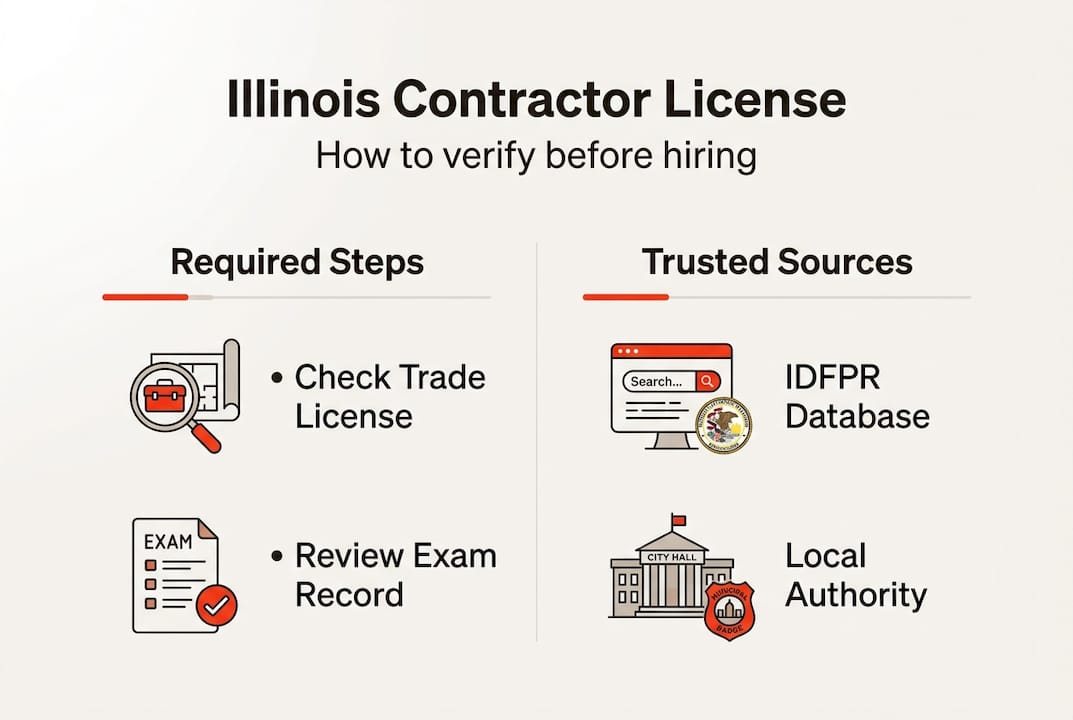
Verifying contractor credentials protects your investment and ensures regulatory compliance. Use IDFPR License Lookup for roofing and plumbing, Chicago DOB for local licenses, and expect penalties up to $5,000 per offense for unlicensed roofing work. Follow these steps to confirm your contractor’s credentials before signing any contract or making payments.
Step-by-step verification process:
- Request the contractor’s license number and issuing authority during initial conversations
- Visit the IDFPR License Lookup database at idfpr.com for roofing contractors and search by name or license number
- Check the IDPH website for plumber license verification using their online lookup tool
- Contact your local Department of Buildings to verify general contractor registration and electrician licenses
- Confirm the license is current, in good standing, and matches the contractor’s business name exactly
- Request proof of liability insurance and workers’ compensation coverage with current certificates
The IDFPR database shows license status, issue date, expiration date, and any disciplinary actions. A clean record with current credentials indicates a contractor who maintains professional standards and regulatory compliance. Expired licenses or disciplinary history should prompt serious questions about reliability and professionalism.
Local verification requires contacting your municipality’s building department directly. Many cities maintain online databases, but smaller jurisdictions may require phone calls or in-person visits. Chicago’s Department of Buildings offers online contractor lookup, making verification straightforward for city projects. Suburban and rural areas may have less formal systems, but building departments can still confirm registration status and permit history.
Essential documentation to request:
- Current state trade licenses for all relevant trades (roofing, plumbing, HVAC)
- Local contractor registration or business license
- Certificate of liability insurance with minimum $1 million coverage
- Workers’ compensation insurance certificate
- References from recent projects similar to yours
“Penalties for unlicensed work create significant financial risks for property owners. Illinois imposes fines up to $5,000 per offense for unlicensed roofing work. HRRA violations void contracts entirely, leaving you without legal recourse to compel performance or recover deposits. Working with properly licensed contractors eliminates these risks and ensures you have legal protections if problems arise.”
Unlicensed contractors often offer lower bids because they avoid licensing fees, insurance costs, and regulatory oversight. This apparent savings disappears quickly when work fails inspection, requires expensive corrections, or results in property damage without insurance coverage. Licensed contractors carry insurance specifically to protect you from these scenarios, making the slightly higher cost a valuable investment in risk management.
Recognizing the benefits of working with local licensed contractors helps you appreciate why thorough verification matters. Local contractors maintain reputations in their communities and face direct accountability for quality and compliance. They understand local building codes, maintain relationships with municipal inspectors, and have established track records you can verify through references and online reviews.
Protect your Illinois property investment with licensed contractors
Navigating Illinois contractor licensing requirements protects your renovation investment and ensures regulatory compliance. Choosing licensed, insured contractors eliminates the risks of unlicensed work while providing legal recourse if problems arise. Professional remodeling elevates property value, ensures code compliance, and delivers quality results that stand the test of time.

Exploring interior remodeling examples shows how professional contractors transform spaces while maintaining proper licensing and permits. Understanding the benefits of hiring a general contractor for home remodeling reveals how experienced professionals coordinate licensed trades, manage compliance, and deliver successful projects. Discover comprehensive solutions through our remodeling services designed to protect your investment with proper credentials and quality craftsmanship.
Frequently asked questions
Are general contractors in Illinois required to have a state license?
No, Illinois does not require a statewide general contractor license for residential projects. Local municipalities may require registration or business licenses, so check with your city or county building department. General contractors coordinate licensed tradespeople who must hold appropriate state or local credentials for their specific work.
How can I verify a roofing contractor’s license in Illinois?
Verify roofing contractor licenses using IDFPR License Lookup at the IDFPR website. Enter the contractor’s name or license number to confirm current status, expiration date, and any disciplinary actions. Always verify before signing contracts, as unlicensed roofing work carries penalties up to $5,000 per offense and leaves you without legal protections.
What happens if I hire an unlicensed contractor in Illinois?
Penalties for unlicensed work include fines up to $5,000 for roofing and unenforceable contracts under HRRA. You may lose legal recourse to compel performance, recover deposits, or seek damages for poor work. Hiring licensed contractors protects you legally and ensures access to insurance coverage if property damage or injuries occur during your project.
Does the Home Repair and Remodeling Act apply to all residential projects?
HRRA applies to home repair and remodeling contracts over $1,000 on residences with 1 to 6 units. The law requires written contracts with specific elements, three-day cancellation rights, and consumer rights pamphlets. Projects under $1,000 or on larger multi-unit buildings may not fall under HRRA protections, though other consumer protection laws still apply.
Where can I file a complaint about an unlicensed or non-compliant contractor?
File complaints with the Illinois Attorney General’s Consumer Protection Division for HRRA violations or unlicensed contractor issues. For licensed trades like roofing or plumbing, contact IDFPR to report unlicensed work or professional misconduct. Your local building department handles permit violations and local licensing issues. Document all communications, contracts, and evidence of problems before filing complaints.