
Illinois homeowners face a persistent challenge: achieving quality remodeling within budget. Rising material and labor costs, complex permits, and competing design priorities make balancing affordability and aesthetics difficult. This guide provides actionable strategies and practical options to enhance your home cost-effectively while navigating Illinois-specific considerations like regional pricing, local grants, and permitting processes.
Table of Contents
- How To Choose Cost-Effective Remodeling Solutions: Key Criteria
- 1. Kitchen Remodeling: Balancing Trends And Budget
- 2. Bathroom Remodeling: Affordable Yet Impactful Upgrades
- 3. Flooring Solutions: Vinyl And Epoxy For Cost Efficiency And Durability
- 4. Financing And Grants: Leveraging Local Resources For Remodel Affordability
- 5. Local Permits And Contractor Selection: Navigating Regulations And Finding Trusted Help
- 6. Diy And Phased Remodels: Strategies To Save Labor Costs Without Compromising Quality
- Summary Comparison And Situational Recommendations
- Explore Expert Remodeling Services In Illinois
- Faq
Key takeaways
| Point | Details |
|---|---|
| Labor dominates costs | Labor typically represents 60% of remodeling expenses in Illinois, making contractor selection critical for budget control. |
| Kitchen costs vary widely | Chicago kitchen remodels range $25,000 to $150,000 based on scope, materials, and design complexity. |
| Financing support available | Over 180 grants and HELOCs ease funding burden, allowing phased projects that fit cash flow. |
| DIY cuts expenses | Simple tasks like painting and fixture installation reduce labor costs by up to 40% when done safely. |
How to choose cost-effective remodeling solutions: key criteria
Selecting the right remodeling approach starts with understanding five core criteria tailored to Illinois homeowners. First, labor costs typically represent 60% of your total budget, making contractor choice the single most impactful decision. Skilled professionals prevent costly mistakes while maintaining code compliance.
Material selection directly influences both upfront costs and long-term maintenance. Durable options like epoxy flooring or engineered wood reduce replacement frequency, lowering lifetime expenses. Consider how materials perform in Illinois climate conditions, where temperature swings and moisture affect durability.
Permits and regulatory requirements vary significantly across Illinois municipalities. Chicago’s Express Permit program accelerates approvals to 5-10 days, while smaller towns may take weeks. Understanding these timelines prevents schedule delays and budget overruns, especially for structural or electrical work requiring inspections.
Financing options shape project feasibility. Illinois offers diverse grant programs targeting seniors, veterans, and energy efficiency upgrades. Home equity lines of credit (HELOCs) provide flexible funding for phased remodels, spreading costs without draining savings. Maintaining a 10-20% contingency buffer protects against unexpected expenses.
DIY feasibility depends on skill level and project complexity. Simple tasks like painting, hardware installation, or demolition cut labor costs substantially. However, plumbing, electrical, and structural work demand licensed professionals to meet safety codes and preserve home value. For comprehensive budgeting guidance on Illinois remodeling projects, consider professional planning services.
Pro Tip: Create a prioritized list ranking projects by impact and cost. Focus on high-visibility, lower-cost upgrades like kitchen backsplashes or bathroom fixtures before tackling structural changes. This approach delivers visible results early while preserving budget for complex work.
Key evaluation factors include:
- Labor proportion and contractor reputation
- Material lifespan versus upfront cost
- Local permit timelines and fees
- Available financing and grant eligibility
- Safe DIY opportunities versus professional requirements
1. Kitchen remodeling: balancing trends and budget
Kitchen remodels represent the highest-value home improvement but carry wide cost variations. Chicago kitchen projects typically cost $25,000 to $150,000 depending on scope, with labor and permits driving expenses. Suburban projects often run 20-30% lower due to reduced contractor rates and simpler permit processes.
Current design trends favor two-tone cabinetry, open shelving, and quartz countertops. These elements deliver modern aesthetics without custom pricing. Two-tone cabinets combine painted uppers with stained lowers, creating visual interest at standard cabinet costs. Open shelving reduces material expenses while showcasing dishware.
Cost breakdown reveals where to prioritize spending:
| Component | Budget Range | Mid-Range | High-End |
|---|---|---|---|
| Cabinets | $3,000-$20,000 | $8,000 | $15,000+ |
| Countertops | $2,000-$8,000 | $4,500 | $7,000+ |
| Appliances | $2,500-$15,000 | $6,000 | $12,000+ |
| Labor/Install | $5,000-$30,000 | $12,000 | $25,000+ |
Permits add $500-$2,000 for electrical, plumbing, and structural modifications. Chicago requires separate permits for each trade, while smaller municipalities may bundle approvals. Factor permit costs and 2-4 week processing times into project schedules.
Smart strategies maximize kitchen value per dollar:
- Refinish existing cabinets instead of replacing for 60% savings
- Choose ready-to-assemble (RTA) cabinets to reduce material costs by 40%
- Install luxury vinyl plank (LVP) flooring mimicking hardwood at one-third the price
- Select mid-range appliances with essential features over premium brands
- Keep existing layout to avoid costly plumbing and electrical relocation
Pro Tip: Update cabinet hardware, lighting fixtures, and backsplash first. These visible changes cost $2,000-$4,000 but dramatically refresh appearance, delaying or eliminating need for full remodels.
Balancing trends with budget requires identifying which elements matter most to your household. Prioritize durability in high-use items like countertops and faucets, while accepting economy options for decorative features. For detailed Illinois renovation cost estimates specific to your zip code, consult local contractors.
2. Bathroom remodeling: affordable yet impactful upgrades
Bathroom remodels deliver strong returns with manageable budgets when approached strategically. Chicago high-end projects can exceed $85,000, while suburban full renovations cost $15,000 to $30,000 for comparable scope. Basic updates in smaller bathrooms start around $10,000, focusing on fixtures and finishes without layout changes.
Regional cost variations reflect labor rates and regulatory complexity. Chicago requires licensed plumbers and electricians for all fixture work, increasing labor expenses 25-35% over rural areas. Older homes often need infrastructure upgrades to meet current codes, adding unexpected costs.
Cost tiers guide budget planning:
| Scope | Cost Range | Typical Includes |
|---|---|---|
| Basic refresh | $10,000-$15,000 | New fixtures, paint, flooring, vanity |
| Mid-range update | $20,000-$40,000 | Tile work, upgraded shower, vanity, lighting |
| Full renovation | $45,000-$85,000+ | Layout change, luxury finishes, custom features |
Impactful upgrades maximize visual improvement per dollar. Replace builder-grade fixtures with brushed nickel or matte black alternatives for instant style elevation at $500-$1,500. Install frameless glass shower doors to modernize appearance without expanding footprint, costing $800-$2,000 installed.
Flooring choices significantly affect both cost and longevity. Luxury vinyl tile (LVT) replicates ceramic appearance at $3-$7 per square foot installed, versus $8-$15 for porcelain. Both options handle moisture well, making LVT practical for budget-conscious projects.
Priority upgrades for maximum impact:
- Replace vanity and mirror for updated style
- Install water-efficient fixtures qualifying for rebates
- Update lighting with LED fixtures and dimmer controls
- Add tile accent wall behind vanity or in shower
- Refinish tub instead of replacing to save $1,500-$3,000
Permit requirements vary by work scope. Fixture replacement without moving plumbing lines rarely requires permits. However, relocating toilets, adding electrical circuits, or modifying walls triggers permitting in most Illinois municipalities. Budget $300-$800 for bathroom permits and 1-3 week approval timelines. Review Illinois bathroom renovation estimates to understand regional pricing.
3. Flooring solutions: vinyl and epoxy for cost efficiency and durability
Flooring selection balances upfront cost, lifespan, and maintenance requirements. Two cost-effective options dominate Illinois remodels: vinyl and epoxy. Each serves distinct applications with proven durability in residential settings.
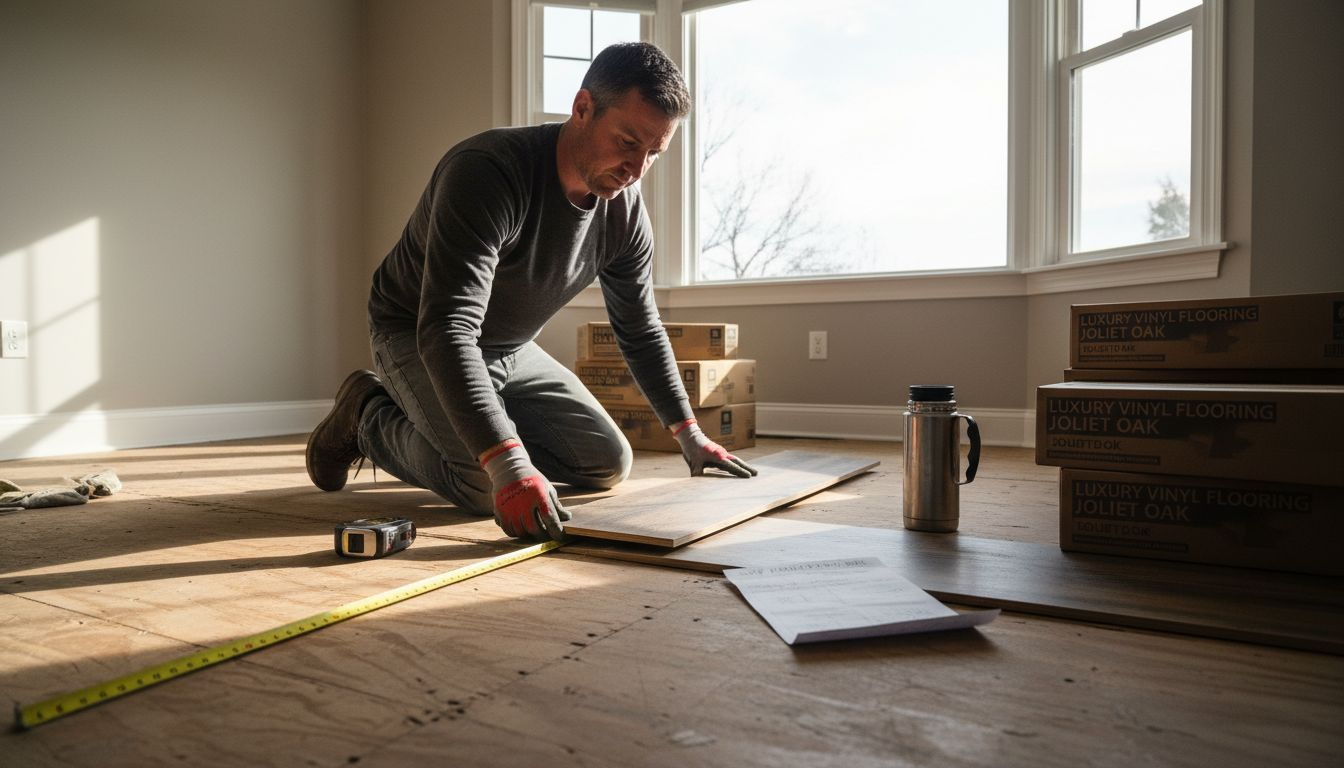
Vinyl flooring averages 15-20 year lifespan with moderate installation costs. Luxury vinyl plank (LVP) and luxury vinyl tile (LVT) replicate hardwood and stone aesthetics at $3-$8 per square foot installed. Vinyl handles moisture well, making it ideal for kitchens, bathrooms, and basements prone to humidity.
Epoxy flooring provides enhanced durability and chemical resistance, particularly valuable in garages, workshops, and utility areas. Professional epoxy installation costs $4-$12 per square foot but delivers 20-30 year lifespan with minimal maintenance. The seamless surface resists stains, impact, and moisture damage.
Material comparison reveals trade-offs:
| Feature | Vinyl Flooring | Epoxy Flooring |
|---|---|---|
| Install cost/sq ft | $3-$8 | $4-$12 |
| Lifespan | 15-20 years | 20-30 years |
| Maintenance | Moderate | Low |
| Best applications | Living areas, kitchens | Garages, basements |
| DIY feasibility | High | Low |
Vinyl installation suits DIY-capable homeowners. Click-lock systems require basic tools and install over most existing floors, saving $1-$3 per square foot in labor. Proper subfloor preparation ensures longevity, addressing levelness and moisture issues before installation.
Epoxy demands professional application. Surface preparation, moisture testing, and multi-coat application require specialized equipment and expertise. Improper installation causes peeling, bubbling, or premature wear, negating cost savings from DIY attempts.
Maintenance costs differ substantially. Vinyl requires regular sweeping and occasional deep cleaning with pH-neutral products. Epoxy needs only periodic sweeping and damp mopping, with no waxing or refinishing over its lifespan. Calculate total ownership cost by factoring maintenance time and materials.
Selection factors include:
- Room function and traffic patterns
- Moisture exposure and climate conditions
- Aesthetic preferences and home style
- DIY capability and time availability
- Long-term maintenance commitment
For comprehensive information on epoxy flooring benefits and applications, explore professional installation options that ensure proper surface preparation and coating application.
4. Financing and grants: leveraging local resources for remodel affordability
Smart financing transforms unaffordable projects into manageable investments. Illinois offers over 180 home improvement grants targeting seniors, veterans, low-income households, and energy efficiency upgrades. These programs provide thousands in assistance, reducing out-of-pocket costs significantly.
Grant programs vary by county and municipality. The Illinois Housing Development Authority (IHDA) administers accessibility and weatherization grants. Local utilities offer rebates for energy-efficient windows, insulation, and HVAC systems. Veterans Affairs provides home adaptation grants for disabled service members. Research eligibility requirements early, as application timelines span 4-12 weeks.
Home equity lines of credit (HELOCs) provide flexible funding for phased remodeling without unsustainable debt. You borrow only needed amounts as projects progress, paying interest solely on drawn balances. Current HELOC rates average 7-9%, significantly lower than credit cards or personal loans. This structure suits multi-year renovation plans, spreading costs across manageable time periods.
Cash remains the most cost-effective option when available. Paying contractors directly eliminates interest charges and loan fees totaling 3-8% of project costs. However, depleting emergency funds creates financial vulnerability. Maintain 3-6 months living expenses in liquid savings before committing cash to remodels.
Financing strategy depends on project scope and financial situation:
- Small projects under $10,000: Cash or 0% promotional credit cards
- Medium projects $10,000-$50,000: HELOCs or cash-out refinancing
- Large projects over $50,000: Construction loans or phased HELOC draws
- Energy upgrades: Utility rebates and weatherization grants first
Pro Tip: Apply for grants before starting work. Most programs require pre-approval and won’t reimburse completed projects. Stack multiple grants when eligible to maximize assistance, combining energy rebates with accessibility grants for comprehensive support.
Budget protection strategies prevent financial stress. Maintain 10-20% contingency reserves for unexpected issues like hidden water damage or code violations requiring correction. Track expenses weekly against budget, adjusting scope immediately when overruns emerge. For detailed budgeting guidance on Illinois remodeling projects, consider professional financial planning.
Financing resources include:
- Illinois Housing Development Authority grants
- Local utility energy efficiency rebates
- Veterans Affairs home adaptation programs
- Community development block grants
- Credit union home improvement loans with competitive rates
5. Local permits and contractor selection: navigating regulations and finding trusted help
Permit compliance and contractor selection directly impact project costs and outcomes. Since labor represents roughly 60% of remodeling expenses, choosing qualified professionals prevents costly mistakes while ensuring code adherence. Illinois requires specific licenses for electrical, plumbing, and HVAC work, making credential verification essential.
Chicago’s Express Permit Program shortens approvals to 5-10 days for qualifying projects, accelerating timelines substantially. This expedited process covers single-trade permits for straightforward work like electrical panel upgrades or water heater replacement. Standard permits requiring plan review take 2-4 weeks, while complex structural modifications extend to 6-8 weeks.
Contractor selection criteria ensure quality outcomes:
- Valid Illinois contractor license and trade-specific certifications
- Active general liability and workers’ compensation insurance
- Local references from recent projects in your municipality
- Written estimates detailing materials, labor, timeline, and payment schedule
- Established business presence with verifiable address and contact information
Licensed contractors understand local codes and maintain relationships with municipal inspectors. This expertise prevents code violations requiring expensive corrections. Licensed Illinois contractors reduce renovation defects by 40% compared to unlicensed workers, protecting your investment and home value.
Permit costs vary by project scope and location. Chicago charges $150-$500 for electrical permits, $200-$600 for plumbing work, and $300-$1,000 for structural modifications. Suburban municipalities typically charge 20-40% less. Budget these fees during planning to avoid surprises.
Vetting contractors thoroughly prevents fraud and poor workmanship. Request three references, then contact each to verify quality, timeline adherence, and communication. Check Illinois Department of Financial and Professional Regulation records for license status and disciplinary actions. Avoid contractors demanding full payment upfront or lacking physical business locations.
Red flags indicating problematic contractors:
- No written contract or vague scope descriptions
- Pressure tactics or limited-time pricing
- Requests for large cash deposits
- Inability to provide insurance certificates
- No local references or online presence
Payment structures protect both parties. Standard schedules include 10-20% deposit, 40-50% at project midpoint, and final 30-40% upon completion and inspection approval. Never pay in full before work finishes. Withhold final payment until obtaining required permits, passing inspections, and confirming satisfaction.
For professional contractor selection assistance, explore Illinois contractor licensing benefits and verification resources to ensure qualified professionals handle your project.
6. DIY and phased remodels: strategies to save labor costs without compromising quality
Strategic DIY work and project phasing reduce expenses without sacrificing quality when applied appropriately. DIY tasks like painting and fixture installation cut labor costs by up to 40%, directly improving project affordability. However, distinguishing DIY-appropriate work from tasks requiring professionals protects safety and home value.
Safe DIY projects for most homeowners include interior painting, cabinet hardware replacement, light fixture updates, and simple flooring installation. These tasks require basic tools and minimal technical knowledge. YouTube tutorials and home improvement stores provide free instruction, making skill development accessible.
Painting delivers maximum impact per dollar invested. A typical room costs $400-$800 for professional painting but only $100-$200 in materials for DIY completion. Proper preparation including patching, sanding, and priming ensures professional results. Budget 2-3 days for complete room painting including prep work and drying time.
Fixture installation saves substantially on labor. Replacing faucets, cabinet pulls, light fixtures, and door hardware costs $50-$200 per hour for professional installation. DIY completion using basic hand tools reduces costs to material prices only, typically $200-$800 depending on fixture quality.
Phased remodeling spreads costs across multiple years while maintaining livable conditions. Complete kitchen cabinets and countertops year one, then appliances and flooring year two. This approach preserves cash flow, allows budget recovery between phases, and enables incorporating design feedback from completed work.
Pro Tip: Start with reversible DIY projects to build confidence and skills. Cabinet painting or removable backsplash tiles allow experimentation without permanent consequences. Graduate to more complex work as capabilities improve.
Projects requiring licensed professionals:
- Electrical work beyond fixture replacement
- Plumbing modifications or new fixture installation
- Structural wall removal or addition
- Gas line work or HVAC modifications
- Permit-required work specified by local codes
Risk assessment prevents costly DIY mistakes. Electrical work poses fire and shock hazards when performed incorrectly. Plumbing errors cause water damage costing thousands in remediation. Structural modifications without engineering analysis risk collapse. These scenarios far exceed labor savings from DIY attempts.
Balancing DIY with professional work optimizes budgets. Handle demolition, painting, and finish work yourself while hiring licensed contractors for technical trades. This hybrid approach maintains code compliance while reducing total project costs 20-35%. For comprehensive budgeting guidance on Illinois remodeling projects, explore planning resources.
Effective phasing strategies:
- Complete visible areas first for immediate enjoyment
- Group related work to minimize contractor mobilization fees
- Maintain functional kitchen and bathroom during construction
- Allow 3-6 months between phases for budget recovery
- Document completed work to inform future phase planning
Summary comparison and situational recommendations
Comprehensive remodeling decisions require comparing options across multiple dimensions. This summary provides side-by-side analysis to guide your project planning based on budget, timeline, and priorities.
| Project Type | Cost Range | Timeline | DIY Potential | Best For |
|---|---|---|---|---|
| Kitchen refresh | $5,000-$15,000 | 2-4 weeks | High | Updated look without layout change |
| Kitchen remodel | $25,000-$150,000 | 6-12 weeks | Medium | Functional improvement and modernization |
| Bathroom update | $10,000-$30,000 | 3-6 weeks | Medium | Fixture and finish upgrades |
| Bathroom renovation | $45,000-$85,000 | 8-12 weeks | Low | Layout changes and luxury features |
| Vinyl flooring | $3-$8/sq ft | 1-3 days | High | Living areas and moisture-prone rooms |
| Epoxy flooring | $4-$12/sq ft | 2-5 days | Low | Garages and high-durability needs |
Situational recommendations guide project selection:
Tight budget (under $20,000): Focus on single-room updates using DIY labor for painting, demolition, and finish work. Prioritize kitchens or bathrooms for maximum value impact. Utilize grants and rebates to stretch budgets further. Phase work across 12-18 months to manage cash flow.
Medium budget ($20,000-$60,000): Complete full kitchen or bathroom remodels without layout changes. Combine professional labor for technical trades with DIY finish work. Invest in durable materials like quartz countertops and quality cabinets that avoid near-term replacement needs.
Larger budget (over $60,000): Undertake comprehensive remodels including layout modifications and premium finishes. Hire design professionals to optimize space utilization and material selection. Complete projects in single phases to minimize living disruption and contractor mobilization costs.
First-time remodelers: Start with smaller projects like bathroom updates or flooring installation to understand processes and contractor relationships. Build experience before tackling complex kitchen remodels requiring extensive coordination.
Experienced DIYers: Maximize labor savings by handling all appropriate tasks while maintaining licensed professionals for technical trades. Your sweat equity reduces costs 30-40% compared to fully contracted work.
Financing alignment with project scope:
- Projects under $15,000: Cash or 0% promotional credit cards
- Projects $15,000-$40,000: HELOCs with interest-only payments during construction
- Projects $40,000-$80,000: Cash-out refinancing or construction loans
- Energy-focused work: Stack utility rebates with weatherization grants
For detailed Illinois remodeling cost comparison specific to your location and project scope, consult local contractors providing itemized estimates.
Explore expert remodeling services in Illinois
Applying these cost-effective strategies becomes simpler with experienced professionals guiding your project. First Solution IL offers comprehensive construction services across Chicago, Naperville, and throughout Illinois to help homeowners achieve their renovation goals within budget.

Our team assists with budget development, material selection, permit navigation, and quality execution across kitchen remodels, bathroom renovations, flooring installation, and complete home transformations. Whether you’re tackling a single room refresh or multi-phase renovation, we provide the expertise ensuring projects stay on schedule and within budget. Explore our full range of professional remodeling services to start your cost-effective home transformation.
FAQ
What is the average labor cost percentage in Illinois remodeling projects?
Labor expenses constitute roughly 60% of total remodeling budgets in Illinois, particularly for kitchen and bathroom projects requiring skilled trades. This proportion makes contractor selection the most impactful budget decision. Licensed professionals prevent costly errors while ensuring code compliance, protecting your investment and home value.
How can Illinois homeowners find grants and financing for remodeling?
Illinois provides over 180 home improvement grant programs targeting seniors, veterans, low-income households, and energy efficiency upgrades through state agencies, utilities, and municipalities. HELOCs offer flexible funding for phased projects, allowing borrowing only needed amounts while paying interest solely on drawn balances. Maintaining 10-20% contingency reserves and 3-6 months emergency savings protects against unexpected expenses while pursuing remodels.
What local permits do I need for a home remodel in Illinois?
Permit requirements vary by municipality and project scope, with Chicago offering Express Permit approvals in 5-10 days for single-trade work like electrical or plumbing updates. Standard permits requiring plan review take 2-4 weeks, while structural modifications extend to 6-8 weeks. Licensed contractors typically handle permit submission, ensuring applications meet local code requirements and preventing approval delays that cause budget overruns.
Is DIY a good way to save money on remodeling in Illinois?
DIY work on appropriate tasks like painting, fixture installation, and simple flooring reduces labor costs by up to 40% when executed safely and correctly. However, electrical, plumbing, and structural work require licensed professionals to meet Illinois codes and maintain safety standards. Balancing DIY finish work with professional technical trades optimizes budgets while preserving quality, achieving 20-35% overall cost reduction compared to fully contracted projects.