

Many homeowners believe craftsmanship is just about visual appeal, a nice-to-have feature that makes remodeling projects look polished. This misconception can lead to costly mistakes, code violations, and structural issues that undermine your investment. Quality craftsmanship goes far beyond aesthetics, forming the foundation of durability, safety, and legal compliance in Illinois residential projects. This guide clarifies how skilled workmanship affects every aspect of your remodeling outcome, from permit approvals to long-term property value, helping you make informed decisions that protect your home and budget.
Table of Contents
- Understanding Craftsmanship In Illinois Remodeling
- Navigating Illinois Regulations And Legal Protections For Remodeling Craftsmanship
- Challenges And Nuances In Maintaining Craftsmanship Quality During Remodeling
- Maximizing The Value Of Craftsmanship In Your Remodeling Project
- Discover Expert Remodeling Services In Illinois
- Frequently Asked Questions About Craftsmanship In Illinois Remodeling
Key takeaways
| Point | Details |
|---|---|
| Craftsmanship ensures quality | Skilled workmanship delivers code compliance, structural integrity, and lasting durability beyond surface aesthetics. |
| Illinois requires licensing | Licensed professionals and permits are mandatory for remodeling work, protecting homeowners from substandard installation. |
| Contracts protect homeowners | Written agreements clarify project scope, costs, and timelines while establishing legal protections under state law. |
| Matching existing work costs more | Replicating original craftsmanship can increase expenses by 10-30% but preserves architectural value and resale appeal. |
Understanding craftsmanship in Illinois remodeling
Craftsmanship in remodeling means precision, skill, and meticulous attention to detail throughout every construction phase. It separates professional renovation from basic construction by emphasizing techniques that ensure longevity, proper function, and visual harmony with your existing home. You’re not just getting walls painted or floors installed. You’re investing in expertise that prevents future repairs, maintains structural integrity, and meets rigorous safety standards.
Illinois regulations require licensed tradespeople for specialized work like plumbing, electrical, and HVAC installations. These licensing requirements exist because improper installation creates hazards, voids insurance coverage, and triggers expensive corrections during inspections. Code compliance is integral to craftsmanship, not a separate checklist item. When contractors cut corners on technique to save time, they compromise both safety and aesthetics.
Inspection stages in Illinois remodeling include permit approval, rough-in verification, and final inspection. Each stage validates that work meets building codes and industry standards. Rough-in inspections examine framing, electrical wiring, and plumbing before walls close up, catching errors when fixes are still manageable. Final inspections confirm finished work complies with approved plans and safety requirements. Skipping these steps or hiring unlicensed workers puts you at risk for failed inspections, project delays, and costly rework.
Pro Tip: Always verify your contractor holds current Illinois licenses for the specific trades involved in your project, and confirm they pull permits before work begins to avoid legal complications.
Choosing professional contractors with proven craftsmanship portfolios protects your investment and ensures compliance. Look for contractors who:
- Provide detailed references from recent Illinois projects
- Maintain active licensing and insurance coverage
- Demonstrate knowledge of local building codes
- Offer transparent timelines and cost breakdowns
Navigating Illinois regulations and legal protections for remodeling craftsmanship
The Illinois Home Repair and Remodeling Act (HRRA) establishes critical protections for homeowners undertaking residential projects. This legislation applies to homes with up to six units and requires written contracts for projects exceeding $1,000, creating enforceable standards that safeguard your interests. Understanding these legal frameworks helps you recognize quality contractors and avoid those who operate outside regulatory boundaries.
Required contract elements under HRRA include:
- Complete project scope with specific work descriptions
- Total cost breakdown itemizing materials and labor
- Start and completion dates with milestone schedules
- Payment terms specifying deposit limits and progress payments
- Three-day cancellation right for contracts signed at your home
- Contractor’s business name, address, and license numbers
These provisions prevent common disputes by establishing clear expectations before work begins. Contractors who resist detailed contracts or pressure you to waive cancellation rights raise immediate red flags. Legal compliance demonstrates professionalism and commitment to quality workmanship.
Licensing requirements vary by trade, with plumbing, electrical, and HVAC work requiring specialized credentials. Illinois mandates that licensed professionals supervise these installations, even when apprentices perform hands-on tasks. This supervision ensures techniques meet code standards and protects you from liability if accidents occur on your property.
Non-compliance consequences affect both parties. Homeowners who hire unlicensed contractors may face:
- Permit denials that halt project progress
- Insurance claim rejections for faulty workmanship
- Difficulty selling your home due to unpermitted improvements
- Financial responsibility for correcting code violations
- Legal liability if unlicensed work causes injuries
Contractors operating without proper licensing risk fines, criminal charges, and permanent industry bans. Their lack of credentials signals insufficient training and disregard for safety protocols. Understanding remodeling contracts helps you identify legitimate professionals who prioritize legal compliance and quality outcomes.
Challenges and nuances in maintaining craftsmanship quality during remodeling
Matching existing craftsmanship presents unique challenges that significantly impact project budgets and timelines. When you want new work to blend seamlessly with original construction, contractors must replicate techniques, materials, and finishes that may no longer be standard practice. This precision work requires additional labor hours, specialized materials, and expert skill that increases costs by 10-30% compared to using contemporary methods.

Custom remodeling projects face higher risk of cost overruns, with 20-40% experiencing budget increases due to unforeseen complications, material shortages, or scope changes. Clear communication between you and your contractor reduces disputes by 60%, making regular check-ins and documentation essential for staying on track. Setting realistic expectations from the start prevents frustration when challenges arise.
Common pitfalls include:
- Discovering hidden structural issues after demolition begins
- Material lead times extending beyond initial estimates
- Design changes mid-project requiring rework and additional costs
- Underestimating complexity of matching historical details
- Inadequate contingency budgets for unexpected repairs
| Challenge | Homeowner Solution |
|---|---|
| Matching original trim profiles | Request samples before ordering to verify accuracy |
| Replicating custom finishes | Allocate 15-20% budget contingency for specialized materials |
| Coordinating multiple trades | Establish weekly progress meetings with contractor |
| Ensuring code compliance | Require permit copies and inspection schedules upfront |
| Managing timeline delays | Build two-week buffer into project completion date |
Pro Tip: Conduct weekly site visits during active construction phases, photographing work in progress to create a visual record that helps identify quality issues before they become permanent.
Proactive communication establishes accountability and keeps everyone aligned on quality standards. Share your expectations clearly, ask questions when you don’t understand technical details, and address concerns immediately rather than waiting for problems to compound. Contractors appreciate homeowners who engage constructively without micromanaging.
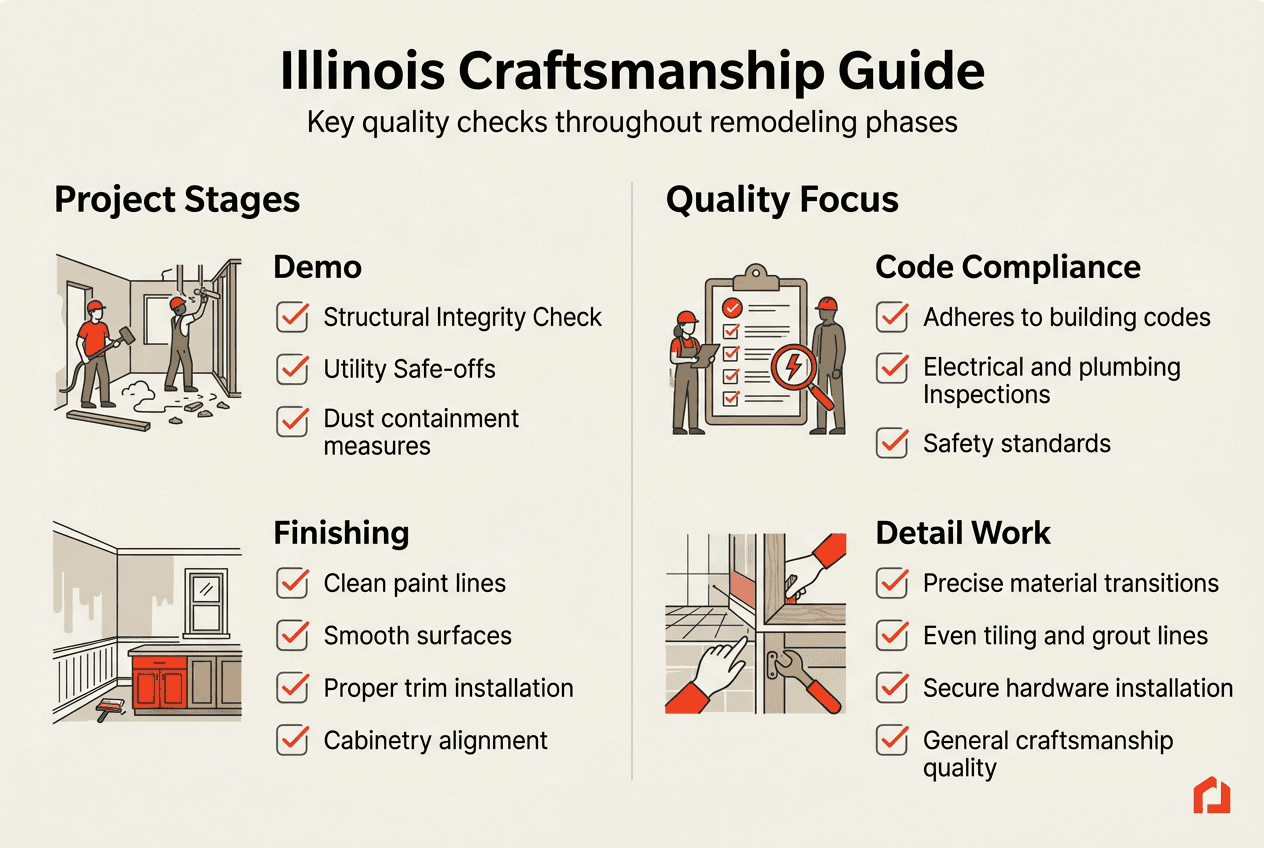
Inspecting remodeling craftsmanship quality requires understanding what good workmanship looks like at each project stage. Learn to recognize clean cuts, level installations, proper fastening techniques, and appropriate material applications. This knowledge empowers you to spot deficiencies early when corrections are simpler and less expensive.
Maximizing the value of craftsmanship in your remodeling project
Prioritizing craftsmanship delivers returns that extend far beyond initial installation, increasing property value and reducing long-term maintenance costs. Quality workmanship often outweighs initial investment through enhanced durability, better energy efficiency, and stronger market appeal when you eventually sell. Strategic planning and contractor selection maximize these benefits.
Vetting contractors with proven craftsmanship portfolios requires systematic evaluation:
- Review portfolios showing projects similar in scope and style to yours
- Contact three recent clients to discuss their experience and satisfaction
- Verify active licenses through Illinois state databases
- Confirm insurance coverage meets your project requirements
- Request detailed proposals comparing approaches and materials
- Check Better Business Bureau ratings and online reviews
- Interview finalists to assess communication style and professionalism
Contract negotiation provides opportunities to establish craftsmanship standards explicitly. Include specific material brands, installation techniques, and quality benchmarks in your agreement. Specify that work must pass all inspections on first submission, with contractor responsibility for correction costs if deficiencies appear. These provisions create accountability and reduce ambiguity about acceptable outcomes.
Maintaining regular oversight ensures contractors adhere to agreed standards throughout the project. Schedule site visits during critical phases like framing, rough-in installations, and finish work. Take photographs documenting progress and quality, creating evidence if disputes arise later. Ask questions when you observe techniques that seem questionable, and request explanations for any deviations from original plans.
Craftsmanship features significantly influence property appraisals and buyer perceptions. Custom millwork, quality tile installations, and expert finish carpentry command premium valuations because they signal overall home quality. Buyers recognize the difference between contractor-grade work and skilled craftsmanship, making your property more competitive in resale markets.
Homeowner responsibilities supporting craftsmanship success:
- Maintain clear communication channels with your contractor
- Make timely decisions on selections and change orders
- Provide access to work areas as scheduled
- Protect completed work from damage during ongoing construction
- Review invoices carefully before authorizing payments
- Document all agreements and modifications in writing
Pro Tip: Create a project binder organizing contracts, permits, invoices, product warranties, and progress photos to simplify future maintenance and provide valuable documentation for home sales.
Estimating remodeling costs accurately requires understanding how craftsmanship quality affects pricing. Premium materials and skilled labor cost more upfront but deliver superior performance and longevity. Balance your budget priorities by investing in craftsmanship for structural elements and high-use areas while considering cost-effective options for less critical spaces.
Benefits of local contractors include familiarity with Illinois building codes, established relationships with local inspectors, and accountability within your community. Local professionals stake their reputation on every project, providing strong motivation to deliver quality work that generates referrals and repeat business.
Discover expert remodeling services in Illinois
Your remodeling project deserves the precision and expertise that only experienced professionals deliver. First Solution IL brings deep knowledge of Illinois building codes, licensing requirements, and craftsmanship standards to every residential project we undertake. We understand that quality remodeling requires more than basic construction skills. It demands attention to detail, proper technique, and commitment to long-term durability.

Our team helps homeowners navigate contract requirements, manage project timelines, and ensure every installation meets both regulatory standards and your quality expectations. From Illinois remodeling services explained to interior remodeling examples showcasing our craftsmanship, we provide transparency throughout your project journey. Explore our remodeling contract insights to understand how we protect your interests while delivering exceptional results. Contact us today for a detailed consultation and discover how professional craftsmanship transforms your home.
Frequently asked questions about craftsmanship in Illinois remodeling
What licenses should my remodeling contractor have in Illinois?
Your contractor needs state licenses for specialized trades like plumbing, electrical, and HVAC work, plus local business licenses and permits for your specific municipality. General contractors should carry liability insurance and workers’ compensation coverage. Verify all credentials through Illinois state databases before signing contracts.
How do building codes affect craftsmanship in remodeling projects?
Building codes establish minimum safety and construction standards that skilled craftsmen must meet or exceed during installations. These regulations govern structural modifications, electrical systems, plumbing, ventilation, and fire safety. Quality craftsmanship ensures code compliance while delivering superior aesthetics and durability beyond basic requirements.
Can craftsmanship quality impact home resale value?
Yes, quality craftsmanship significantly increases property value by demonstrating overall home care and reducing buyer concerns about future repairs. Professional installations, custom details, and expert finishes command premium pricing because they signal durability and attention to detail. Appraisers specifically note craftsmanship quality when determining market value.
What should a written remodeling contract include under Illinois law?
Illinois law requires contracts over $1,000 to specify complete project scope, itemized costs, start and completion dates, payment schedules, and three-day cancellation rights for agreements signed at your home. Include contractor license numbers, insurance details, permit responsibilities, and change order procedures. These elements protect both parties and prevent common disputes.
How can homeowners ensure craftsmanship matches existing home style?
Provide contractors with detailed photographs and measurements of existing features you want replicated. Request material samples for approval before ordering. Allocate additional budget for custom fabrication and specialized labor. Work with contractors experienced in historical renovation or period-specific techniques. Regular site visits during installation help verify accuracy before work becomes permanent.