

Planning a home renovation in Illinois can feel overwhelming when you’re juggling budgets, permits, and contractor choices. Many homeowners dive in without understanding local legal requirements or realistic cost expectations, leading to budget overruns, permit violations, and contractor disputes. This guide walks you through setting clear goals, creating bulletproof budgets, navigating Illinois-specific permits and contracts, vetting contractors thoroughly, and building realistic timelines that account for local challenges like historic district rules and seasonal delays.
Table of Contents
- Key takeaways
- Setting clear goals and creating a detailed budget
- Navigating permits and Illinois legal requirements
- Selecting and vetting reliable contractors in Illinois
- Planning your renovation timeline and addressing Illinois-specific challenges
- Explore expert remodeling resources and services
- How to plan a renovation: frequently asked questions
Key Takeaways
| Point | Details |
|---|---|
| Clear goals and budget | Define exact objectives for each space and attach a detailed budget with a contingency from day one. |
| Illinois legal requirements | Illinois requires written contracts for jobs over one thousand dollars, provides a consumer rights brochure, and gives a three day cancellation window plus permits for structural, electrical, plumbing, and HVAC work. |
| Licensed and insured contractors | Use licensed and insured contractors to protect your investment and minimize disputes. |
| Realistic renovation timelines | Create schedules that account for historic district restrictions and seasonal delays to reduce stress and avoid overruns. |
| Hidden issues contingency | Older homes may hide wiring, asbestos, or outdated plumbing, so include a contingency of ten to twenty percent. |
Setting clear goals and creating a detailed budget
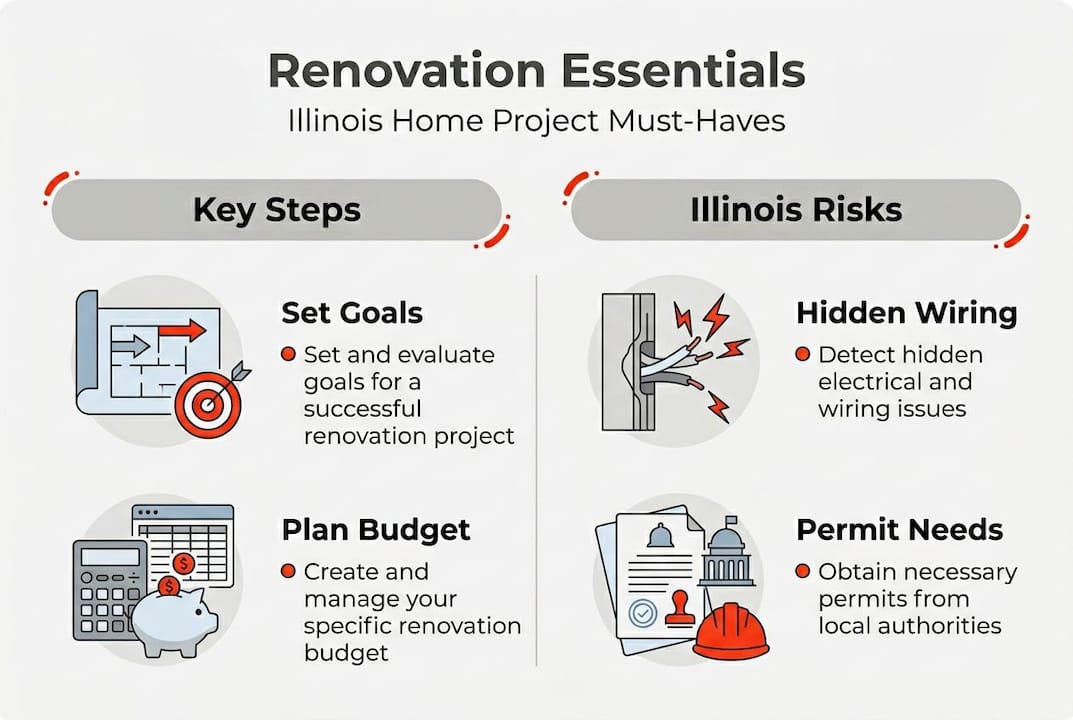
Effective renovation planning starts with setting clear goals and creating a detailed budget with contingency funds built in from day one. Start by defining exactly what you want to achieve in each space. Are you updating a kitchen for better functionality, adding a bathroom for growing family needs, or finishing a basement for extra living area? Writing down specific objectives for each room keeps your project focused and prevents expensive mid-project changes.
Illinois renovation costs vary significantly by project type and location. According to 2026 home repair cost benchmarks, kitchen remodels typically range from $25,000 to $150,000, bathroom renovations run $10,000 to $85,000, and basement finishing projects cost $25,000 to $130,000. These figures reflect current Illinois labor rates and material costs, giving you realistic starting points for your budget. When exploring renovation estimates Illinois homeowners should account for, remember that Chicago metro prices typically run 15-20% higher than downstate areas.
Here’s your budgeting roadmap:
- List every goal for each renovation space with specific features you want
- Research current Illinois costs for materials and labor in your area
- Add 10-20% contingency for unexpected issues common in older homes
- Prioritize must-have features versus nice-to-have upgrades
- Document everything in a spreadsheet to track spending
The contingency fund isn’t optional. Illinois homes built before 1980 often hide surprises like outdated wiring, asbestos insulation, or plumbing that doesn’t meet current code. Setting aside 10-20% of your total budget protects you when contractors discover these issues mid-project.
| Project Type | Average Cost Range | Recommended Contingency |
|---|---|---|
| Kitchen Remodel | $25,000-$150,000 | 15-20% |
| Bathroom Renovation | $10,000-$85,000 | 10-15% |
| Basement Finishing | $25,000-$130,000 | 15-20% |
| Whole Home Updates | $50,000-$300,000 | 20% |
Pro Tip: Prioritize structural repairs, electrical upgrades, and plumbing improvements before cosmetic changes. These foundational fixes deliver the best return on investment and ensure your renovation meets current Illinois building codes, preventing expensive rework later.
Navigating permits and Illinois legal requirements
Illinois law protects homeowners through strict contractor and permit requirements that you need to understand before starting any renovation. Illinois requires written contracts for jobs over $1,000 under the Home Repair and Remodeling Act, and contractors must provide a consumer rights brochure explaining your legal protections. You also get a three-day right to cancel after signing, giving you time to reconsider without penalty.

Permits are required for structural, electrical, plumbing, and HVAC changes, and skipping them creates serious problems. Fines can reach $10,000, and unpermitted work may void your homeowner’s insurance if something goes wrong. Your local building department needs to inspect work at key stages to ensure it meets code, protecting your family’s safety and your home’s value. When reviewing Illinois renovation standards 2026 compliance requirements, you’ll see that most municipalities require permits for decks over 30 inches high, any electrical or plumbing modifications, structural wall changes, and HVAC installations.
Follow these permit steps:
- Check your municipality’s specific requirements on their website or by phone
- Apply for permits at least 2-3 weeks before starting work
- Keep all permit documents and inspection records in a project file
- Schedule required inspections at proper project stages
- Obtain final approval before considering work complete
Skipping permits or working with unlicensed contractors might save money upfront, but it creates legal liability, insurance problems, and resale complications that cost far more than permit fees. Illinois law exists to protect you, not slow you down.
Special considerations apply to certain properties. If your home sits in a historic district, you’ll need approval from your local historic preservation commission before making exterior changes. Homes built before 1980 require asbestos notification to the Illinois EPA if you’re disturbing more than certain square footage thresholds. Understanding these requirements early prevents project delays and legal headaches. A solid renovation contract Illinois homeowners sign should clearly specify who handles permit applications and inspection scheduling.
Selecting and vetting reliable contractors in Illinois
Choosing the right contractor makes the difference between a smooth renovation and a nightmare project. Reliable contractors demonstrate their credibility through verified licenses, insurance, positive references, and clean complaint records with the Illinois Attorney General’s office. Illinois doesn’t require general contractors to hold state licenses, but many specialized trades like electricians and plumbers must be licensed through the Illinois Department of Financial and Professional Regulation. Always verify credentials before signing anything.
Follow these vetting steps in order:
- Collect at least three detailed bids from different contractors for comparison
- Verify required trade licenses through IDFPR’s online lookup tool
- Confirm general liability and workers’ compensation insurance with certificate copies
- Check for complaints with the Illinois Attorney General and Better Business Bureau
- Contact three recent references and ask about quality, timeline, and communication
- Review online ratings on Google, Yelp, and contractor-specific platforms
- Visit completed projects in person if possible to assess workmanship
When exploring professional contractors Illinois remodels require, pay attention to how they communicate during the bidding process. Do they return calls promptly? Do they ask detailed questions about your goals? Do they provide itemized bids that break down labor and materials? These behaviors predict how they’ll handle your project.
Watch for these red flags:
- Demanding full payment upfront before starting work
- Refusing to provide a written contract with detailed specifications
- Using high-pressure sales tactics or limited-time offers
- Lacking proper insurance or unwilling to provide certificates
- Offering bids significantly lower than other contractors
- Operating without a physical business address or phone number
Pro Tip: Structure payments in three installments tied to project milestones rather than paying everything upfront. A typical schedule is one-third at signing, one-third at midpoint completion, and the final third after final inspection and your approval. This protects your investment and keeps contractors motivated to finish quality work.
Extremely low bids often signal problems. Contractors might be unlicensed, planning to use substandard materials, or underestimating the work required. Any of these scenarios leads to poor results, cost overruns, or abandoned projects. Understanding local contractors Illinois homeowner benefits helps you see why established local businesses with reputations to protect offer better value than rock-bottom prices from unknown operators.
Planning your renovation timeline and addressing Illinois-specific challenges
Developing a realistic timeline with built-in contingency prevents frustration and keeps your project on track despite inevitable delays. Start by mapping out every phase: permit applications typically take 2-4 weeks, material orders for custom items need 4-8 weeks, and contractor schedules fill up 4-6 weeks in advance during busy seasons. Add these lead times together before setting your start date.
Illinois presents unique timing challenges you need to plan around:
- Build in 10-20% time contingency for permit delays and inspection rescheduling
- Avoid major exterior work during Chicago winters when temperatures drop below freezing
- Add 2-4 weeks for asbestos testing and remediation if your home was built before 1980
- Allow extra time for historic district approvals if applicable
- Plan around major holidays when contractors and inspectors take vacation
Phasing your renovation can make large projects more manageable, but it comes with tradeoffs. Here’s how single-phase and phased approaches compare:
| Approach | Benefits | Drawbacks |
|---|---|---|
| Single-Phase | Faster completion, lower overall cost, less disruption time | Higher upfront cost, more intense disruption, requires full budget available |
| Phased | Spread costs over time, live in home during work, adjust plans between phases | Longer total timeline, potential for higher cumulative costs, repeated contractor mobilization fees |
Pro Tip: Tackle structural repairs, electrical upgrades, and plumbing improvements in your first phase before moving to cosmetic updates. This prevents tearing out new finishes to access systems later, saving money and frustration while ensuring your home meets current code requirements.
Zoning setback requirements and historic district approvals add weeks or months to timelines in certain Illinois locations. Chicago’s historic districts require commission review for exterior changes, and some suburbs have strict setback rules for additions or decks. Research these requirements during your planning phase, not after you’ve hired a contractor and set expectations. Following an interior renovation step by step guide helps you sequence work logically and avoid costly mistakes.
Realistic scheduling acknowledges that renovations rarely go exactly as planned. Weather delays outdoor work, material shipments arrive late, inspectors find code issues requiring changes, and hidden problems emerge once walls open up. Building buffer time into your schedule reduces stress when these normal complications occur. Communicate timeline expectations clearly with your contractor and get their input on realistic completion dates based on their current workload and your project’s complexity.
Explore expert remodeling resources and services
Now that you understand the planning fundamentals, diving deeper into specific renovation processes helps you execute your project with confidence. Our interior renovation step by step guide walks you through each phase from demolition to final touches, helping you understand what to expect at every stage. Getting accurate renovation estimates Illinois homeowners can rely on starts with understanding your project scope and local cost factors.

Working with experienced professionals transforms renovation stress into excitement about your home’s transformation. Discover why choosing professional contractors Illinois remodels require makes the difference between amateur results and quality craftsmanship that lasts. First Solution Remodeling connects Illinois homeowners with trusted contractors who understand local codes, permit processes, and the unique challenges of renovating in our state. Reach out today to discuss your renovation goals and get personalized guidance for your specific project.
How to plan a renovation: frequently asked questions
What permits are required for home renovations in Illinois?
Illinois municipalities require permits for structural changes, electrical work, plumbing modifications, HVAC installations, and decks over 30 inches high. Requirements vary by location, so check with your local building department early in planning. Skipping permits risks fines up to $10,000 and insurance complications.
How much contingency should I budget for during a renovation?
Budget 10-20% contingency depending on your home’s age and project scope. Older Illinois homes often hide outdated wiring, asbestos, or plumbing issues that require additional work once walls open. This buffer prevents project delays when contractors discover unexpected problems requiring immediate attention.
How do I verify if a contractor is licensed in Illinois?
Check specialized trade licenses through the Illinois Department of Financial and Professional Regulation’s online lookup tool. While Illinois doesn’t require general contractor licenses, electricians, plumbers, and HVAC technicians must hold current licenses. Always verify insurance certificates and check for complaints with the Attorney General’s office.
Can I cancel a renovation contract after signing?
Illinois law gives you a three-day right to cancel contracts over $1,000 under the Home Repair and Remodeling Act. This cooling-off period starts when you receive the required consumer rights brochure and sign the contract. After three days, cancellation terms depend on what your specific contract states.
What special considerations apply to historic homes or districts in Illinois?
Historic districts require approval from local preservation commissions before making exterior changes, adding weeks or months to project timelines. Homes built before 1980 need asbestos testing before disturbing materials, and notification to the Illinois EPA may be required. Check historic designation status and environmental requirements early in planning to avoid delays.