

Illinois real estate investors face a brutal reality: the state’s 1.98% property tax rate is nearly double the national average, and a poorly planned renovation can wipe out your profit margin before you even list the property. One wrong contractor, one skipped permit, one miscalculated budget—and your fix-and-flip turns into a money pit. The good news is that a structured, compliance-focused renovation process can protect your investment and significantly boost returns. This guide gives you a step-by-step roadmap built specifically for Illinois investors, whether you’re flipping single-family homes in Chicago or upgrading commercial space in the suburbs.
Table of Contents
- Define your renovation strategy and set goals
- Budgeting and financial planning for Illinois projects
- Understand Illinois laws, permits, and compliance
- Choosing the right Illinois contractor for investment projects
- Executing and managing your renovation project
- Inspecting, evaluating, and maximizing renovation returns
- Your next step: Trusted renovation solutions for Illinois investors
- Frequently asked questions
Key Takeaways
| Point | Details |
|---|---|
| Focus on high ROI updates | Prioritize kitchens, baths, and curb appeal enhancements to get the best return for Illinois investment properties. |
| Follow Illinois legal requirements | Get permits, use written contracts for jobs over $1,000, and verify your contractor’s licensing and insurance. |
| Use the 70% rule for budgeting | Pay no more than 70% of the after-repair value minus renovation costs to ensure a profitable investment. |
| Hire experienced investor contractors | Choose licensed professionals with a track record in investment rehabs and positive reviews to minimize risks. |
Define your renovation strategy and set goals
Before you swing a hammer, you need to know exactly what you want this renovation to accomplish. A property you plan to flip in six months needs a completely different approach than a rental you intend to hold for a decade. Getting this wrong from the start is the single most common reason Illinois investors leave money on the table.
Start by identifying your renovation purpose: resale, higher rent, or long-term asset improvement. Each goal drives different decisions about materials, finishes, and scope. A renovate-to-rent project should prioritize durability and energy savings, since tenants are harder on finishes and utility costs affect your net operating income. A renovate-to-sell project needs buyer appeal—neutral colors, updated kitchens, and strong curb appeal.
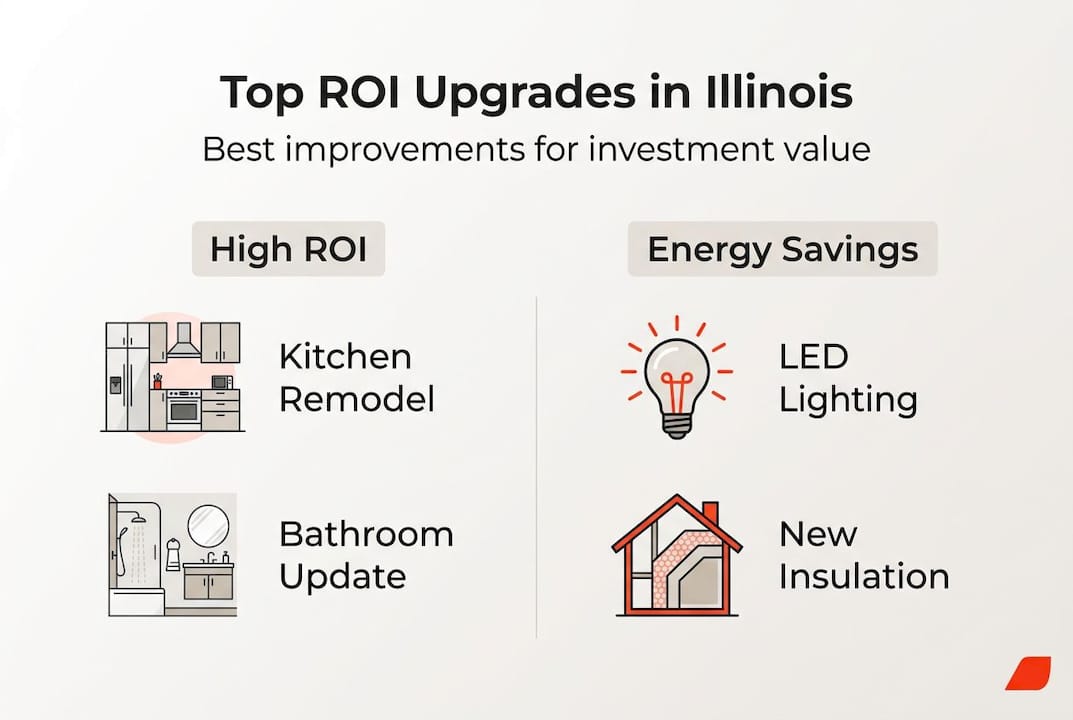
Not all upgrades are created equal. Prioritize high-ROI updates like kitchens, bathrooms, and curb appeal to maximize your return in Illinois markets. Here’s how the numbers break down by project type:
- Kitchen renovation: 70–85% ROI, highest buyer impact
- Bathroom remodel: 60–80% ROI, strong rental appeal
- Garage door replacement: Up to 282% ROI, best curb appeal value
- Exterior paint and landscaping: High visual impact, low cost
- Energy-efficient windows: Dual benefit of appeal and utility savings
For commercial properties, sustainability upgrades carry extra weight—tenants increasingly factor energy costs into lease decisions. Once you know your purpose, plan a renovation scope that matches your exit strategy, not just your wish list.
Pro Tip: Use Illinois-specific ROI calculators before finalizing your scope. National averages don’t account for Chicago’s competitive buyer pool or the suburban rental market’s unique demands.
Budgeting and financial planning for Illinois projects
With your goals in place, you need to set a realistic financial foundation for your renovation. Underestimating costs is the fastest way to kill your deal, and Illinois has several cost factors that catch out-of-state investors off guard.
The 70% rule is your first line of defense. Pay no more than 70% of ARV minus renovation costs when evaluating a purchase. For example, if a property’s after-repair value is $300,000 and renovations will cost $50,000, your maximum purchase price is $160,000. This buffer absorbs holding costs, closing fees, and the unexpected.
Here’s a breakdown of typical Illinois renovation costs to anchor your budget:
| Project type | Estimated cost range | Typical ROI |
|---|---|---|
| Mid-range kitchen | $45,000–$75,000 | 72–85% |
| Full bathroom remodel | $15,000–$35,000 | 60–80% |
| Garage door replacement | $1,500–$4,000 | Up to 282% |
| Exterior paint | $3,000–$8,000 | High visual ROI |
| HVAC replacement | $8,000–$15,000 | Essential for compliance |
A mid-range kitchen renovation in Chicago runs $45,000–$75,000 and recoups 72–85% at resale—strong numbers, but only if you buy right. Always add a 10–15% contingency reserve on top of your projected costs. Illinois properties, especially older Chicago-area stock, routinely surface surprises like outdated electrical panels or hidden water damage.
Get accurate renovation cost estimates before you close on a property, not after. And when preparing your budget, factor in holding costs: mortgage payments, insurance, utilities, and property taxes accumulate fast at Illinois rates.
Pro Tip: Neighborhood ROI varies dramatically across Illinois. A $60,000 kitchen remodel in Lincoln Park performs very differently than the same investment in a south suburban market. Always consult local comparable sales data before committing to a scope.
Understand Illinois laws, permits, and compliance
After budgeting, the next place investors get burned is legal and regulatory compliance. Illinois has specific requirements that go beyond standard building codes, and ignoring them can result in fines, failed inspections, or worse—a lien on your property.
The Illinois Home Repair and Remodeling Act requires written contracts for any job over $1,000. This isn’t optional, and it protects both parties. Your contract should clearly outline scope, payment schedule, materials, and completion timeline. Without it, disputes become expensive and difficult to resolve.
Here’s what you must verify before any work begins:
- Permits: Required for structural changes, electrical, plumbing, and HVAC work
- Building codes: Local municipalities may have requirements stricter than state minimums
- Zoning compliance: Especially critical for commercial conversions or additions
- Contractor licensing: Verify contractor licenses for plumbing, electrical, and HVAC trades
- Insurance verification: Confirm general liability and workers’ comp before work starts
Always get a written contract—it’s your best protection if issues arise. Verbal agreements have no legal standing under Illinois law for renovation projects over $1,000.
Skipping permits to save time is a trap. Secure permits and comply with building codes to avoid failed inspections that delay your sale or lease-up. Unpermitted work can also void your insurance coverage and create disclosure obligations that kill deals. Review Illinois renovation standards and commercial renovation permits before breaking ground.
Choosing the right Illinois contractor for investment projects
Compliance in hand, your next step is hiring a renovation partner who can deliver on both results and regulations. The wrong contractor is the single biggest risk factor in any Illinois investment renovation.
Here’s how the main contractor types compare for investment projects:
| Contractor type | Best for | Key advantage | Watch out for |
|---|---|---|---|
| Generalist contractor | Small repairs, basic updates | Lower cost | Limited investor experience |
| Investment specialist | Fix-and-flip, BRRRR projects | Understands timelines and ROI | Higher demand, book fast |
| Design-build firm | High-end flips, commercial | Single point of contact | Premium pricing |
For reliable results, seek licensed firms focused on investor rehabs and check credible local reviews. Top-rated Illinois contractors like URB Remodeling carry a 4.9 out of 5 rating across verified reviews—that kind of track record matters when your timeline and budget are on the line.
Red flags to watch for during contractor vetting:
- Missing or expired license documentation
- Upfront deposit demands exceeding 20% of total project cost
- Vague timelines with no milestone schedule
- No verifiable portfolio of investor or commercial projects
- Reluctance to provide insurance certificates
The benefits of using a licensed contractor go beyond legal compliance—licensed firms statistically produce fewer defects and costly callbacks. Before signing anything, review a renovation contract template so you know exactly what terms to negotiate.
Executing and managing your renovation project
With a contractor in place, successful execution depends on disciplined management and oversight. Even the best contractor needs a client who stays engaged.
Follow this project management checklist to keep your renovation on track:
- Kickoff meeting: Confirm scope, timeline, and communication cadence before day one
- Weekly check-ins: Walk the site or review photo updates every week without exception
- Milestone payments: Tie payment releases to completed, inspected work phases
- Change order protocol: Require written approval for any scope or cost changes
- Permit tracking: Confirm inspections are scheduled and passed at each required phase
- Material verification: Check that specified materials are actually being installed
- Punch list: Create a detailed list of incomplete or deficient items before final payment
Build a reliable team including contractors, realtors, and property managers, and communicate early about your timeline and leasing goals. For commercial projects, sustainable practices deliver 15–30% energy savings and make your space more attractive to quality tenants negotiating long-term leases.
Energy efficiency upgrades—LED lighting, smart thermostats, improved insulation—add measurable value in both residential and commercial contexts. They also reduce operating costs, which directly improves cap rate calculations for hold investors. Review commercial remodeling management tips and remodeling workflow steps to build your oversight system before the project starts.
Pro Tip: For commercial properties, conduct a post-occupancy evaluation 90 days after tenants move in. Addressing minor issues quickly boosts tenant satisfaction and dramatically improves lease renewal rates.
Inspecting, evaluating, and maximizing renovation returns
To finish strong, verify renovation quality and put systems in place for maximum post-renovation value. A completed renovation is only as good as your ability to document and monetize it.
Follow this final inspection sequence:
- Pre-final walkthrough: Identify all punch list items before the contractor demobilizes
- Third-party inspection: Hire an independent inspector for structural and MEP systems
- Permit closeout: Confirm all open permits are officially closed with the municipality
- Photo documentation: Capture every room and system for insurance and compliance records
- Warranty collection: Gather all manufacturer and contractor warranties in writing
Renovation returns recoup 60–85% at resale in strong Illinois markets, but only if the work is properly documented and the property is positioned correctly. Sloppy closeout kills deals during buyer due diligence.
Once the renovation is complete, use these tactics to maximize your returns:
- Re-lease quickly: Vacancy is your biggest post-renovation cost; have a leasing plan ready before completion
- Flexible space design: Commercial tenants pay premiums for adaptable floor plans
- Smart home upgrades: Keyless entry, smart lighting, and connected thermostats command higher rents in competitive Illinois markets
- Benchmark your ROI: Track cap rate changes and rental uplift against your original projections
- Refinance strategically: A higher appraised value after renovation can unlock equity for your next deal
For a detailed quality verification process, review inspecting renovation quality to make sure nothing slips through the cracks before you close out the project.
Your next step: Trusted renovation solutions for Illinois investors
Now that you understand the full renovation process, working with a proven Illinois contractor can be the difference between a project that delivers and one that drains your reserves. The steps above give you the framework—but execution requires the right partner on the ground.

First Solution IL works with real estate investors and commercial property owners across Illinois, handling everything from interior renovations and epoxy flooring to full commercial remodels. Our team understands investor timelines, compliance requirements, and the ROI-focused decisions that drive your projects. Browse our top renovation contractors resource to compare options, or connect directly with trusted Illinois renovation experts at First Solution IL for a free estimate. Your next renovation should build wealth, not burn it.
Frequently asked questions
What is the 70% rule for investment property renovations?
It’s a guideline to ensure profitability: never pay more than 70% of after-repair value minus renovation costs when buying a property. It protects your margin against holding costs and surprises.
What home renovations offer the best ROI in Illinois?
Kitchens deliver 70–85% ROI, bathrooms return 60–80%, and garage door replacements can reach up to 282%—making them the top three choices for Illinois investment properties.
Do I need a permit for all property renovations in Illinois?
Most renovations require permits, especially for structural, electrical, or plumbing work. Always check with your local authority before starting any project to avoid fines and failed inspections.
How do I find a trustworthy contractor for my Illinois property?
Look for licensed, insured firms with investor project experience and strong online ratings. URB Remodeling’s 4.9 out of 5 verified rating is a benchmark for what a reputable Illinois contractor looks like.