Hiring a licensed contractor reduces renovation defects by over 40% in Illinois homes. Yet many homeowners overlook licensing when selecting remodelers, focusing only on price or promises. This guide clarifies Illinois licensing laws, explains the protections you gain, and shows you how to verify credentials before signing contracts. Understanding these requirements transforms how you approach remodeling projects and ensures safer, higher quality results.
Table of Contents
- Introduction To Contractor Licensing In Illinois
- Legal Requirements For Contractor Licensing In Illinois
- How Licensing Enhances Renovation Quality And Safety
- Common Misconceptions About Contractor Licensing
- Legal Consequences Of Hiring Or Being An Unlicensed Contractor
- Importance Of Verifying Contractor Licenses Before Hiring
- Conclusion: Building Trust And Quality Through Licensed Contractors
- Enhance Your Illinois Home Remodeling With Licensed Contractors
Key Takeaways
| Point | Details |
|---|---|
| Legal Threshold | Illinois requires contractor licenses for remodeling projects exceeding $15,000 in total cost. |
| Quality Impact | Licensed contractors deliver 40% fewer renovation defects compared to unlicensed workers. |
| Verification Access | Homeowners can verify licenses online through the Illinois Department of Financial and Professional Regulation portal. |
| Legal Risks | Unlicensed contractors face fines up to $25,000 and criminal prosecution for violations. |
| Homeowner Protection | Licensing ensures insurance coverage, warranty obligations, and enforceable contracts for your protection. |
Introduction to Contractor Licensing in Illinois
Contractor licenses are state-issued credentials that verify a professional meets minimum qualifications for construction and remodeling work. Illinois regulates contractor licensing to uphold professional standards and protect homeowners from fraud and substandard work. These credentials affirm competency, insurance coverage, and adherence to ethical business practices.
The state mandates licenses for remodeling contractors working on projects exceeding $15,000. This threshold applies to total project cost, including materials and labor. Below this amount, contractors may operate without state licensure, though many municipalities impose their own requirements. Understanding these defining remodeling services in Illinois helps you know when licensing becomes mandatory.
Licensing enforces standards that protect your investment and safety. Key requirements include:
- Proof of professional competency through examinations and documented experience
- Valid insurance policies covering liability and workers’ compensation
- Compliance with state building codes and safety regulations
- Financial responsibility demonstrated through bonding requirements
- Adherence to ethical business conduct standards
These criteria create accountability mechanisms absent when hiring unlicensed workers. The licensing system gives you recourse through state regulatory agencies if problems arise. It also ensures contractors maintain current knowledge of building practices and code updates that directly affect your remodeling project quality and safety.
Legal Requirements for Contractor Licensing in Illinois
Illinois law establishes clear prerequisites contractors must satisfy to obtain and maintain licenses. The legal licensing framework governs every aspect of contractor credentialing, from initial applications through ongoing renewals. Projects above the $15,000 threshold cannot legally proceed without properly licensed contractors performing the work.
The application process verifies professional qualifications rigorously. Contractors must submit documentation proving relevant experience, typically requiring several years in the construction industry. They pass comprehensive examinations testing knowledge of building codes, safety standards, and business practices. Insurance certificates demonstrating adequate liability and workers’ compensation coverage are mandatory.
License renewal occurs on regular cycles, not a one-time event. Contractors must renew licenses periodically and complete continuing education to stay compliant. This ongoing education requirement ensures professionals remain current with evolving construction methods, code updates, and safety protocols. The renewal process includes:
- Submitting updated insurance documentation proving continuous coverage
- Completing required continuing education credits in approved programs
- Paying renewal fees and providing updated business information
- Confirming no disciplinary actions or unresolved complaints exist
- Demonstrating ongoing compliance with state and local regulations
Failure to meet these requirements means contractors cannot legally operate on remodeling services in Illinois above the threshold. You should verify current compliance before hiring anyone. Expired or suspended licenses leave you without the legal protections licensing provides.
Pro Tip: Always ask contractors for their license number and expiration date during initial conversations. Legitimate professionals provide this information readily, while evasive responses signal potential problems.
How Licensing Enhances Renovation Quality and Safety
Licensed contractors follow Illinois building codes strictly, reducing safety hazards in your home. This adherence stems from both professional training and legal accountability. Code compliance affects everything from electrical work to structural modifications, directly impacting your family’s safety and your home’s long-term integrity.

Insurance and warranty obligations protect you financially and legally. Licensed contractors carry liability insurance covering property damage and bodily injury. Workers’ compensation protects you from liability if construction workers suffer injuries on your property. These protections vanish when hiring unlicensed workers, leaving you exposed to potentially devastating financial consequences.
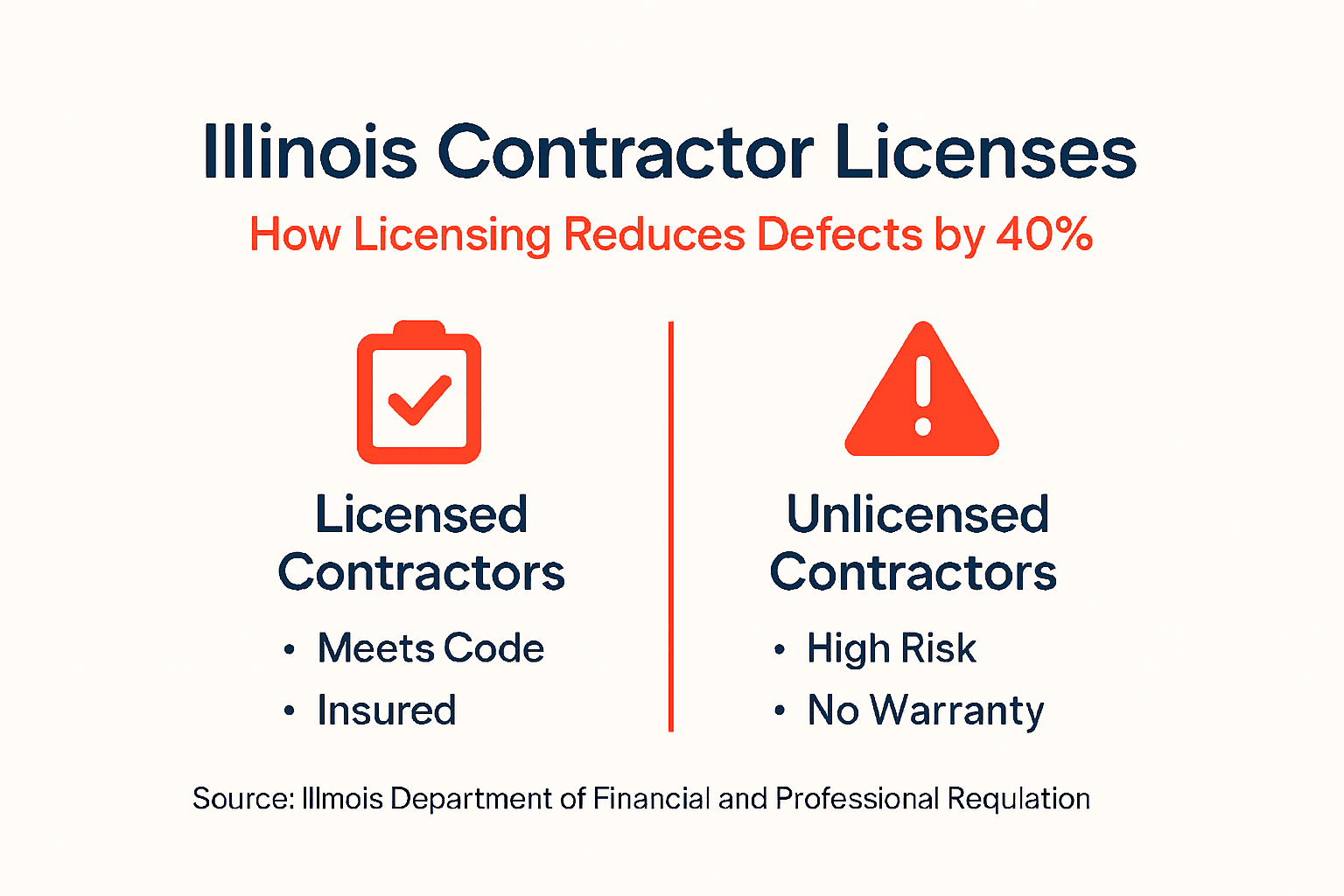
Research shows hiring licensed contractors reduces renovation defects by over 40% compared to unlicensed alternatives. This dramatic difference reflects professional standards, ongoing education, and accountability mechanisms licensing creates. Licensed contractors face disciplinary action for substandard work, motivating consistent quality. Their reputations and livelihoods depend on maintaining good standing with regulatory agencies.
Licensing requires contractors to maintain professional standards and ethical practices throughout every project phase. Key benefits include:
- Adherence to current building codes and safety standards
- Regular inspections ensuring work meets legal requirements
- Professional liability creating accountability for defects
- Access to complaint resolution through state regulatory bodies
- Financial protections through required insurance coverage
| Factor | Licensed Contractors | Unlicensed Contractors |
|---|---|---|
| Code Compliance | Verified through inspections | No oversight |
| Insurance Coverage | Mandatory liability and workers’ comp | Often none |
| Quality Standards | Professional certification required | No verification |
| Legal Recourse | State regulatory complaints available | Limited options |
| Warranty Protection | Enforceable contract terms | Uncertain |
Understanding legal compliance in remodeling helps you appreciate these protections. The licensing system creates multiple checkpoints ensuring your project meets professional standards from start to finish.
Pro Tip: Request copies of insurance certificates directly from the contractor’s insurance company, not just from the contractor. This verification prevents fraudulent documentation and confirms active coverage.
Common Misconceptions About Contractor Licensing
Many homeowners believe extensive experience or low prices substitute for proper licensing. This dangerous misconception puts projects and investments at risk. Experience matters, but licensing confirms a contractor has met state-mandated professional and ethical standards through objective verification.
Licensing provides independent confirmation beyond reputation or cost considerations. Even highly experienced contractors must demonstrate current knowledge through examinations and continuing education. The credential verifies competency in ways personal recommendations cannot. It also ensures financial responsibility through insurance and bonding requirements protecting you if problems occur.
Ignoring licensing status risks hiring unqualified contractors and losing legal protections. Contracts with unlicensed contractors may be unenforceable in Illinois courts, limiting your recourse for defective work. Insurance claims can be denied if unlicensed workers caused damage. These consequences far exceed any initial cost savings unlicensed contractors might offer.
No license means absence of accountability through state regulatory agencies. If disputes arise, you lack formal complaint channels available with licensed professionals. Common false beliefs include:
- “My neighbor used them successfully” replaces need for licensing verification
- Lower bids from unlicensed contractors represent better value
- Small projects don’t require licensed professionals
- Licensing is just bureaucratic paperwork without real benefits
- Checking licenses wastes time when contractors seem trustworthy
“Contractor licensing serves as your independent verification system, confirming professionals meet objective standards beyond their sales pitch or your initial impressions. Never skip this critical due diligence step.”
Understanding contractor licensing misconceptions prevents costly mistakes. The licensing requirement exists specifically to protect homeowners from the risks these misconceptions create. Every verification step you take reduces your exposure to fraud, defective work, and legal complications.
Legal Consequences of Hiring or Being an Unlicensed Contractor
Illinois imposes severe penalties on unlicensed contractors operating illegally. Unlicensed contractors face fines up to $25,000 and criminal charges for repeated offenses. These penalties reflect how seriously the state takes consumer protection and professional standards enforcement. Criminal prosecution can result in jail time for flagrant violations, particularly when fraud is involved.
Homeowners also face significant legal risks when hiring unlicensed workers. Insurance companies may deny claims for damage caused during unlicensed construction work. Your homeowner’s policy likely contains exclusions for work performed by uninsured or unlicensed contractors. This leaves you personally liable for property damage, injuries, and defects.
Contracts with unlicensed contractors can be unenforceable in court, limiting your recourse for poor workmanship. Illinois courts have ruled that agreements for services requiring licensure are void when contractors lack proper credentials. You cannot sue for breach of contract if the underlying agreement violated licensing laws. This legal principle protects consumers by discouraging unlicensed work but leaves you without remedies if you proceed anyway.
Hiring unlicensed contractors jeopardizes remodeling timelines and project quality through possible cease-work orders. Building inspectors can shut down projects using unlicensed contractors, delaying completion indefinitely. Correcting work to meet code requirements after the fact costs significantly more than doing it right initially. Legal risks include:
- Loss of insurance coverage for construction-related damage or injuries
- Inability to enforce contract terms or warranties in court
- Personal liability for injuries to unlicensed workers on your property
- Building code violations requiring expensive corrections
- Potential fines from local authorities for code violations
- Reduced home value if unpermitted work is discovered during future sales
Understanding legal consequences of hiring unlicensed contractors clarifies the true cost of choosing based solely on price. The legal penalties create strong incentives for compliance, but only if you verify credentials before hiring.
Importance of Verifying Contractor Licenses Before Hiring
The Illinois Department of Financial and Professional Regulation (IDFPR) maintains an online portal for license verification. This free resource lets you confirm license validity, check for disciplinary actions, and verify insurance coverage in minutes. Using official channels prevents relying on potentially fraudulent documentation contractors might provide directly.
Verification protects your financial and legal interests before you commit to contracts or make payments. The process takes less time than reviewing bids but provides exponentially more protection. Checking license status ensures contractors meet state-mandated standards and maintain good standing with regulatory agencies.
Follow these steps to perform thorough due diligence:
- Request the contractor’s license number during initial conversations
- Visit the IDFPR online license verification portal
- Enter the license number and verify it matches the contractor’s business name
- Check the expiration date to ensure current validity
- Review any disciplinary actions or complaints on record
- Request insurance certificates directly from the insurance carrier
- Verify workers’ compensation coverage meets state requirements
- Confirm the license classification matches your project type
Ask contractors for documentation supporting their credentials. Legitimate professionals provide license numbers, insurance certificates, and proof of continuing education without hesitation. Evasive responses or pressure to skip verification signal serious problems. Understanding verifying licenses in Illinois empowers you to make informed hiring decisions.
Pro Tip: Screenshot the IDFPR verification results showing the contractor’s active license and save it with your project documentation. This creates a record proving you performed due diligence if questions arise later.
Verification prevents hiring fraud and ensures contractors meet state standards. The minimal time investment protects you from extensive legal and financial complications. Make license verification your first step in every contractor evaluation process.
Conclusion: Building Trust and Quality Through Licensed Contractors
Licensed contractors are essential partners for trustworthy, code-compliant remodeling that protects your investment and family’s safety. The licensing system creates accountability, ensures professional competency, and provides legal protections unavailable with unlicensed workers. Every requirement contractors meet to obtain and maintain licenses directly benefits you.
Licensing offers legal protections, safety assurances, and quality standards that transform remodeling outcomes. The 40% reduction in defects represents real savings in time, money, and stress. Insurance requirements protect you from liability. Enforceable contracts give you recourse if problems occur. These benefits far outweigh any perceived cost savings from hiring unlicensed alternatives.
Always verify licenses using official state resources before hiring anyone for remodeling work. The IDFPR portal provides free, immediate verification taking just minutes. This simple step prevents costly mistakes and legal complications that can haunt you for years. Making informed contractor choices leads to better renovation outcomes and genuine peace of mind throughout your project.
Enhance Your Illinois Home Remodeling with Licensed Contractors
Professional licensed contractors ensure your remodeling projects meet the highest quality and safety standards. First Solution IL brings fully licensed expertise to every residential project, combining technical knowledge with commitment to code compliance and customer satisfaction.

Explore comprehensive defining remodeling services tailored specifically for Illinois homeowners’ needs. Our interior remodeling step-by-step guide walks you through professional processes ensuring successful outcomes. Partner with First Solution IL for expert guidance, verified credentials, and trusted remodeling results that enhance your home’s value and your family’s quality of life.
Frequently Asked Questions
What projects legally require a contractor license in Illinois?
Illinois requires contractor licenses for remodeling projects exceeding $15,000 in total cost, including materials and labor. This threshold applies to residential and commercial work. Some municipalities impose stricter requirements, so always check local ordinances for your specific area.
How often do licensed contractors need to renew their licenses?
Contractors must renew licenses on cycles set by the Illinois Department of Financial and Professional Regulation, typically every one to three years depending on license type. Renewal requires proof of continuing education, updated insurance documentation, and payment of renewal fees to maintain active status.
What happens if I hire an unlicensed contractor by accident?
You may lose legal protections including contract enforceability and insurance coverage for damage or injuries. Contracts with unlicensed contractors can be void under Illinois law, limiting your ability to sue for defective work. Always verify licenses before signing contracts or making payments to avoid these consequences.
Are licensed contractors guaranteed to do perfect work?
No, licensing ensures minimum competency standards and provides accountability mechanisms but doesn’t guarantee perfection. However, licensed contractors deliver measurably better outcomes with 40% fewer defects than unlicensed alternatives. You gain recourse through regulatory complaints and enforceable contracts if problems occur.
Where can I verify a contractor’s license status online?
The Illinois Department of Financial and Professional Regulation maintains a free online verification portal at idfpr.com. Enter the contractor’s license number to check validity, expiration dates, and any disciplinary actions. This official resource provides reliable verification in minutes, protecting you from fraudulent credentials.