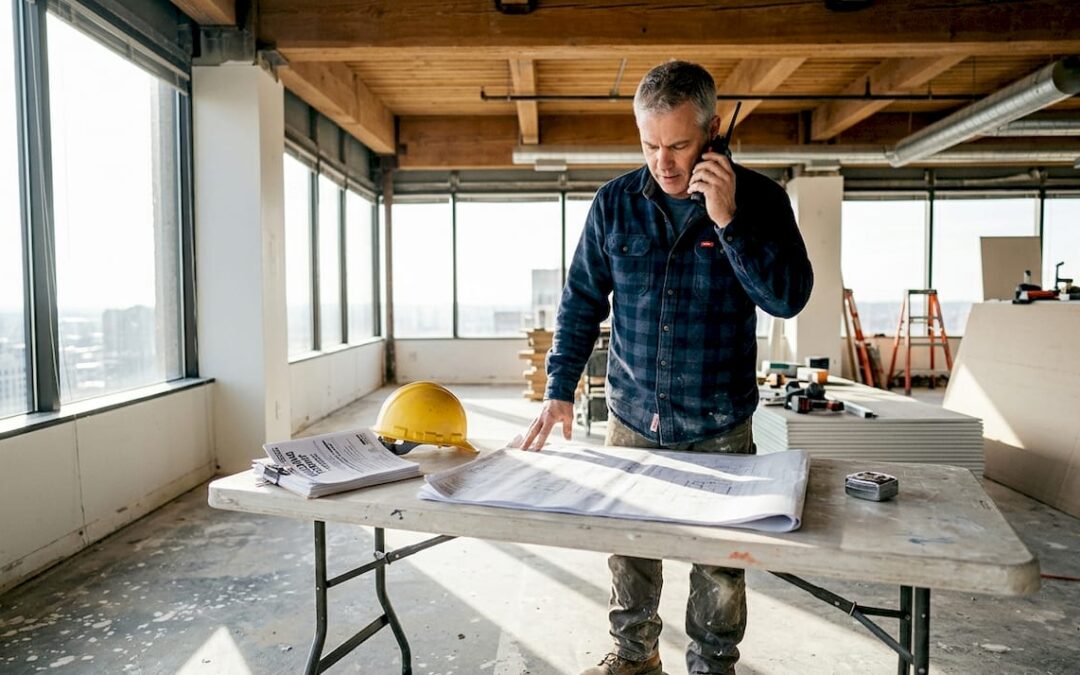
Most commercial property owners assume a contractor’s job is straightforward: show up, swing a hammer, and hand over the keys. That assumption costs money. In reality, a qualified contractor shapes every phase of your Illinois commercial build-out, from the first scope meeting through final inspections. Build-out timelines run 3 to 6 months for typical projects, and the decisions made in week one ripple through every dollar and deadline that follows. Understanding what contractors actually do gives you clearer expectations, better project outcomes, and the confidence to hire the right team.
Table of Contents
- What is a commercial build-out?
- The build-out process: Key phases and contractor responsibilities
- Licensing and compliance: Contractor requirements in Illinois
- Navigating challenges: Pitfalls and how contractors add value
- MEP systems and value engineering: Where expertise matters most
- Choosing the right contractor: Vetting, bids, and smart hiring
- Next steps: Work with Illinois build-out experts
- Frequently asked questions
Key Takeaways
| Point | Details |
|---|---|
| Contractors manage every phase | From preconstruction planning to final inspections, expert contractors steer your build-out to success. |
| Licensing is local | Illinois uses municipal registration and trade-specific licenses, not a statewide system. |
| Project delays can be prevented | Early contractor involvement and experience with permitting reduce risks and cost overruns. |
| MEP costs are significant | Mechanical, electrical, and plumbing often make up most of your budget—smart value engineering saves money. |
| Hire with care | Vetting, checking credentials, and requiring detailed bids protects your project from pitfalls. |
What is a commercial build-out?
A commercial build-out is the process of converting a raw or partially finished commercial space into a fully functional environment for a specific business use. It is not the same as a renovation or remodel, though people use those terms interchangeably. A renovation typically updates an existing finished space. A remodel changes the layout or function. A build-out, by contrast, often starts from a shell and builds everything from scratch to meet a tenant’s or owner’s specific needs.
There are three common types of build-outs you will encounter in Illinois:
- Vanilla shell: The landlord delivers a basic, unfinished space with concrete floors, exposed ceilings, and rough utilities stubbed in. The tenant or buyer completes everything else.
- Turnkey build-out: The landlord or developer handles the entire construction process based on an agreed-upon plan, delivering a finished, move-in-ready space.
- Tenant improvement (TI) build-out: The tenant controls the construction process, often using a landlord-provided allowance to fund improvements tailored to their business.
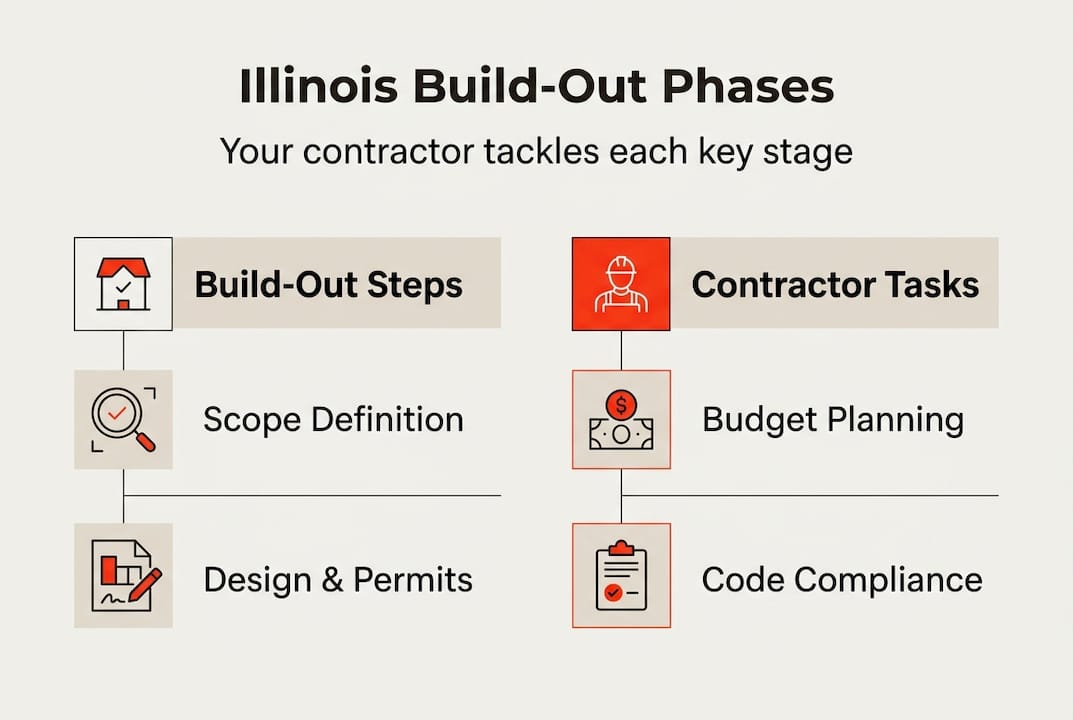
The build-out process follows structured phases: programming and scope definition, design and permitting, buyout and scheduling, construction, and inspections through closeout. Each phase requires contractor input. Skipping that input at any stage creates gaps that show up as expensive surprises later. Reviewing a remodeling workflow overview before you start helps you understand where those gaps typically appear.
Pro Tip: Before you contact a single contractor, write down your business goals, space requirements, and must-have features. Contractors who receive a clear brief deliver more accurate bids and fewer change orders.
The build-out process: Key phases and contractor responsibilities
Defining a build-out sets the stage. Now let’s break down what happens at each phase and where contractors make the biggest difference.
A well-run Illinois commercial build-out moves through five distinct stages. Here is how the timeline typically looks:
| Phase | Typical duration | Contractor’s primary role |
|---|---|---|
| Programming and scope | 1 to 2 weeks | Define requirements, assess site conditions |
| Design and permitting | 2 to 8 weeks | Coordinate with architects, submit permit applications |
| Buyout and scheduling | 1 to 3 weeks | Solicit subcontractor bids, build project schedule |
| Construction | 8 to 16 weeks | Manage trades, quality control, daily site oversight |
| Inspections and closeout | 1 to 3 weeks | Coordinate inspections, resolve punch list items |
Total timelines run 3 to 6 months for most projects, though complex builds or permitting delays can push that further. Here is what a contractor does at each step:
- Programming and scope: The contractor reviews your business needs, walks the site, and flags constructability issues before design begins.
- Design and permitting: They coordinate with architects and engineers, submit permit applications, and respond to city comments to keep approvals moving.
- Buyout and scheduling: They solicit competitive bids from subcontractors, negotiate pricing, and build a realistic project schedule.
- Construction: They manage every trade on site, enforce quality standards, track progress against the schedule, and handle daily problem-solving.
- Inspections and closeout: They schedule and attend all required inspections, resolve any deficiencies, and deliver a complete, code-compliant space.
The financial case for early contractor involvement is strong. Commissioning reduces energy costs 8 to 15% and cuts callbacks by 50%. Change orders that arise mid-construction cost 1.5 to 2 times more than decisions made during preconstruction. Reviewing Illinois renovation stages before your project kicks off shows exactly where those savings are captured.
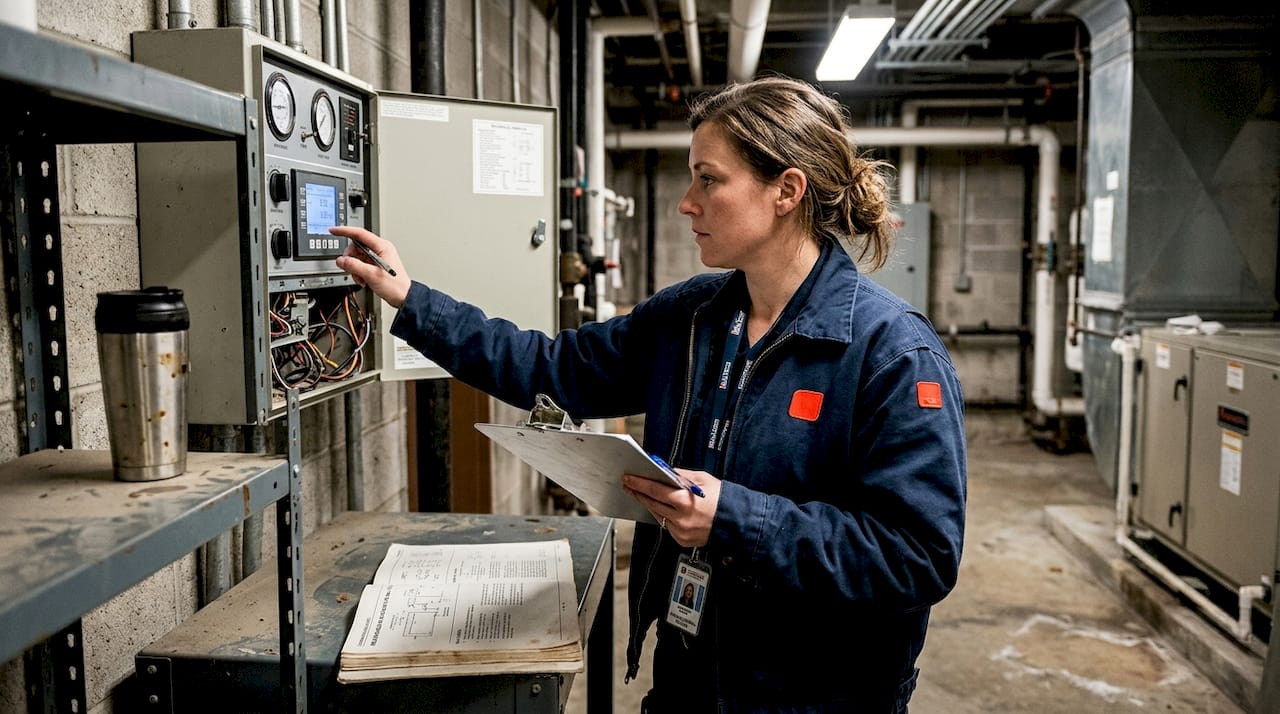
Pro Tip: Bring your contractor into the conversation during design, not after. Early involvement is the single most effective way to prevent expensive change orders.
Licensing and compliance: Contractor requirements in Illinois
Understanding contractor roles by phase is only part of the picture. In Illinois, who is legally qualified to take on your build-out matters just as much.
Illinois does not issue a statewide general contractor license. Instead, requirements are trade-specific and municipal, meaning the rules vary by city and by trade. Chicago, for example, requires contractors to register with the Department of Buildings and carry proof of insurance. Suburban municipalities have their own registration systems.
Here is how Illinois compares to states with statewide licensing:
| Factor | Illinois | States with statewide GC license |
|---|---|---|
| General contractor license | Not required statewide | Required before any work |
| Trade licenses | Required (plumbing, roofing, electrical) | Often bundled under GC license |
| Municipal registration | Required city by city | Usually not required separately |
| Insurance verification | Done at city level | Done at state level |
As a property owner or manager, here is what you must verify before signing any contract:
- City or municipal registration for the specific jurisdiction where your project is located
- Trade-specific licenses for plumbing, electrical, roofing, and any other specialized work
- General liability insurance of at least $2 million, plus workers’ compensation coverage
- Proof of compliance with prevailing wage requirements if your project involves any public funding
Important edge cases: Historic buildings in Illinois may require additional review and approvals from preservation authorities. Projects on public property or using public funds trigger prevailing wage laws, which set minimum pay rates for construction workers. Your contractor must know these rules before work begins.
Hiring an unlicensed contractor exposes you to fines, stop-work orders, and workmanship defects that void your insurance claims. Verifying Illinois contractor licenses before you commit is a non-negotiable step. Research also shows that licensed contractors cut renovation defects by 40%, which directly protects your investment. Make sure you also understand permitting for Illinois build-outs so you know what approvals your contractor needs to pull.
Navigating challenges: Pitfalls and how contractors add value
Getting licensing right helps avoid legal headaches, but even well-qualified contractors face project challenges. Here is what can go wrong and how the right professionals help you succeed.
Common risks in Illinois commercial build-outs include:
- Permitting delays: Chicago permit timelines can run 60 to 180 days, stalling construction before it starts.
- Change orders: Scope changes mid-project are the leading cause of budget overruns.
- Code upgrades: Older buildings often require electrical, fire suppression, or accessibility upgrades that were not in the original budget.
- Occupancy logistics: Occupied buildings need phased construction to keep tenants or operations running.
- Labor shortages: Skilled trade availability in Illinois fluctuates, affecting scheduling and pricing.
- Cost volatility: Material prices shift, and contracts without escalation clauses can leave you exposed.
Delivery method also matters. Design-build accelerates timelines compared to the traditional design-bid-build approach, where design is fully completed before contractors are brought in. In design-build, the contractor and designer work together from the start, catching conflicts early and compressing the schedule. For occupied buildings, experienced contractors use phasing plans, dust barriers, and off-hours scheduling to minimize disruption. Local contractor teams understand Chicago’s permitting office rhythms and suburban municipality quirks in ways that out-of-state firms simply do not.
Pro Tip: During the interview process, ask every contractor to walk you through their specific strategy for managing permit delays and controlling costs. Vague answers are a red flag.
MEP systems and value engineering: Where expertise matters most
Not all build-out decisions carry equal weight. Mechanical, electrical, and plumbing (MEP) choices can make or break your budget and your compliance standing.
MEP refers to the systems that make a building functional: HVAC, electrical distribution, plumbing, fire suppression, and data infrastructure. These systems are invisible once the walls go up, but they drive the majority of build-out costs. MEP upgrades can represent 65% of total project costs in some commercial build-outs, making them the single largest budget category.
Common triggers for MEP upgrades in Illinois commercial spaces include:
- Energy efficiency requirements: Illinois energy codes require specific HVAC efficiency ratings and lighting controls.
- Layout changes: Moving walls or adding rooms almost always requires rerouting ductwork, electrical circuits, and plumbing lines.
- Code compliance: Older buildings frequently need panel upgrades, fire suppression extensions, or ADA-compliant restroom plumbing.
- Tenant-specific needs: Restaurants, medical offices, and data centers have MEP demands far beyond standard office builds.
Value engineering is the process of reviewing design choices to find less expensive alternatives that meet the same performance standard. A skilled contractor does not just build what the drawings show. They question whether a $40,000 HVAC configuration can be replaced with a $28,000 system that meets the same code requirements. Forensic costing means breaking down every line item to verify that subcontractor pricing is competitive and realistic. Reviewing MEP compliance standards for Illinois helps you understand what your contractor is required to deliver.
Pro Tip: Request a detailed MEP cost breakdown and a written value engineering proposal from every contractor you are seriously considering. If they cannot produce one, they are not the right fit for a complex commercial build-out.
Choosing the right contractor: Vetting, bids, and smart hiring
Understanding MEP and cost control leads directly to the most important decision you will make: who to hire.
Follow these steps to hire with confidence:
- Define your scope in writing before soliciting any bids. Include square footage, intended use, MEP requirements, and your target completion date.
- Solicit at least three bids from contractors with documented commercial build-out experience in Illinois.
- Verify credentials for every finalist: city registration, trade licenses, and certificates of insurance.
- Compare estimates line by line, not just the bottom number. A low bid with vague line items is a setup for change orders.
- Check references from projects of similar size and complexity, and visit completed sites if possible.
When reviewing bids, look for these specifics:
- City or municipal registration for your project’s location
- Trade-specific licenses for all MEP work included in the scope
- General liability insurance of $2 million or more, as standard for Illinois commercial work
- Evidence of past commercial build-outs, not just residential remodels
- A clear phasing plan if your building will remain occupied during construction
Red flags include missing or expired insurance, bids that lump all costs into a single number, contractors who have never worked on commercial projects, and anyone who pressures you to skip the permit process. Reviewing a workflow for smooth hiring gives you a structured checklist to follow at each decision point.
Pro Tip: Always require a written contract that breaks out MEP costs, code compliance work, and phasing separately. Bundled contracts hide the details that protect you when disputes arise.
Next steps: Work with Illinois build-out experts
By following best hiring practices, you are ready for the final step: partnering with proven local experts who know Illinois build-outs inside and out.

A successful commercial build-out does not happen by accident. It takes a contractor who understands Illinois permitting, MEP complexity, municipal licensing, and the specific demands of commercial tenants and property owners. At First Solution IL, we bring that expertise to every project, from initial scope planning through final inspection. Whether you are fitting out a new tenant space, converting a shell, or upgrading an existing commercial property, our team is ready to help you move forward with confidence. Explore our remodeling workflow overview to see how we structure projects for success, browse our work among top contractors in Illinois, or reach out to our team to schedule a consultation and get your project started on the right foot.
Frequently asked questions
What is the average timeline for a commercial build-out in Illinois?
Most projects run 3 to 6 months, depending on permitting speed, building size, and scope complexity. Larger or more complex projects with significant MEP work can extend beyond that range.
Do Illinois contractors need a state license?
Illinois requires municipal registration and trade-specific licenses, not a statewide general contractor license. Requirements vary by city, so always verify credentials for the specific municipality where your project is located.
How do I check a contractor’s insurance or credentials?
Ask for city registration documents, trade licenses for each applicable discipline, and a current certificate of insurance. $2 million in general liability coverage is the standard benchmark for commercial work in Illinois.
What’s the impact of MEP upgrades on project budget?
MEP work can reach 65% of total costs in some commercial build-outs. Careful planning, detailed cost breakdowns, and value engineering from an experienced contractor are the most effective ways to keep that number under control.