TL;DR:
- Soundproofing during renovation significantly enhances comfort and privacy in Illinois homes by reducing traffic noise, footsteps, and shared wall sound transmission. It involves layered strategies like insulation, resilient channels, and sealing gaps to meet or exceed industry ratings such as STC 50 and IIC 50. Incorporating soundproofing into remodeling plans is more cost-effective before walls are closed and greatly boosts property value and daily quality of life.
Renovating your Illinois home is one of the best investments you can make, but most homeowners focus on what they can see and completely miss what they can hear. Noise from traffic on busy streets, a neighbor’s loud television through the shared wall, or the constant thump of footsteps from upstairs can drain the comfort from even the most beautifully renovated space. Soundproofing during a renovation solves all of that, and it does it at a fraction of the cost compared to adding it later. This guide breaks down exactly what soundproofing means for your home project, what Illinois codes say, and how to make smart choices that protect your comfort and your property’s value.
Table of Contents
- What is soundproofing in renovation?
- Why soundproofing matters for Illinois homes
- Soundproofing codes and standards in Illinois
- Practical soundproofing solutions for your renovation
- Why most homeowners underestimate the value of soundproofing
- Upgrade your renovation — partner with Illinois soundproofing experts
- Frequently asked questions
Key Takeaways
| Point | Details |
|---|---|
| Soundproofing defined | It involves modifying walls, floors, and ceilings to block unwanted noise during renovations. |
| Illinois code basics | Multi-family homes have mandated standards, single-family projects rely on recommendations. |
| Value and comfort | Effective soundproofing dramatically boosts comfort, privacy, and resale potential. |
| Practical solutions | Upgrades like quality insulation, solid doors, and sealing gaps deliver big noise reduction results. |
| Professional help | Consulting renovation experts ensures code compliance and maximized benefits from soundproofing. |
What is soundproofing in renovation?
Soundproofing, in the context of a home renovation, means modifying your home’s structures to reduce how much sound travels between rooms, floors, or from the outside in. It is not a single product or a single fix. It is a layered strategy involving materials, methods, and planning that work together to control sound.
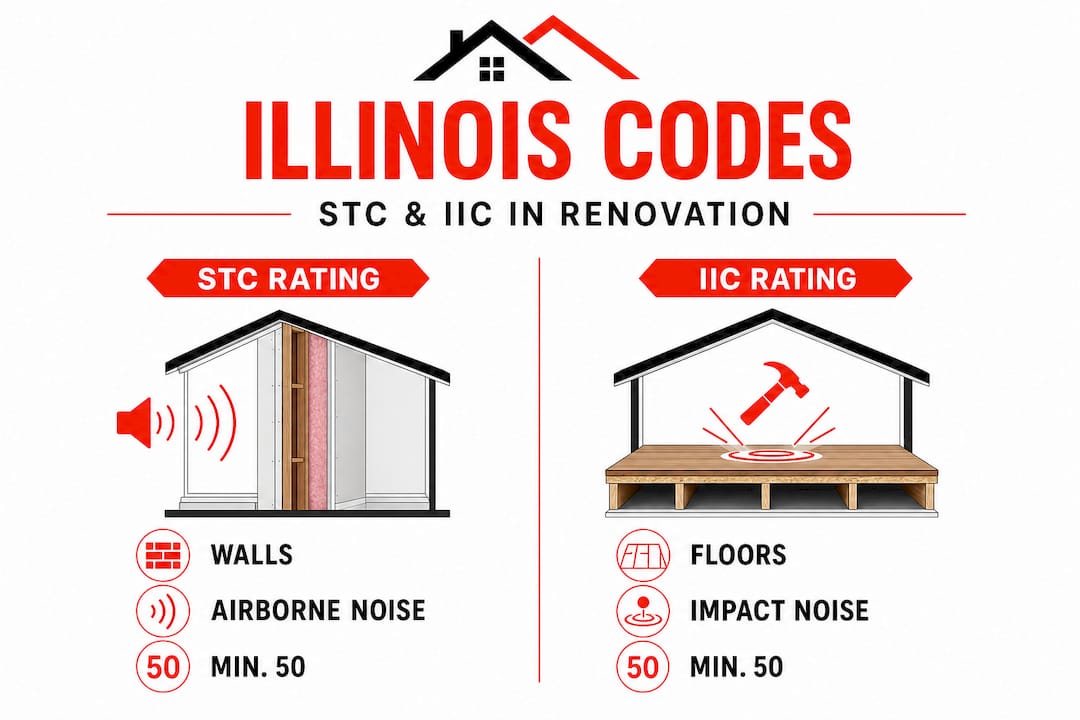
There are two main types of sound that matter in residential renovation. Airborne sound includes voices, music, television, and traffic noise that travels through the air and then through walls or ceilings. Impact sound includes footsteps, dropped objects, and anything that physically strikes a surface and sends vibrations through the structure. Both types require different solutions and are measured separately.
Two ratings you will hear constantly in soundproofing discussions are STC and IIC. STC stands for Sound Transmission Class and measures how well a wall, ceiling, or floor assembly blocks airborne sound. The higher the STC number, the better the barrier. IIC stands for Impact Insulation Class and measures how well a floor assembly reduces impact noise traveling downward. Both ratings are tested under lab conditions and give you a reliable way to compare products and assemblies.
Common soundproofing methods used in renovation projects include:
- Dense-pack or batt insulation inside walls and ceilings to absorb airborne sound
- Double drywall layers with a viscoelastic compound (a flexible, sound-dampening material) sandwiched between them
- Resilient channels or sound isolation clips that decouple drywall from framing so vibrations cannot travel directly through the structure
- Acoustic panels on walls or ceilings for rooms like home theaters or offices
- Solid-core doors instead of hollow-core doors, which do almost nothing to block sound
- Acoustic caulk and sealants to close gaps around outlets, pipes, and door frames
Per IBC acoustic requirements, Illinois follows the International Building Code for multi-family buildings, which sets a minimum STC and IIC rating of 50 for walls and floors between separate dwelling units. For single-family renovations, there are no mandated minimums, but meeting those same benchmarks is strongly recommended for comfort and privacy. Knowing your state’s building code requirements before you start any renovation keeps your project on the right track.
Why soundproofing matters for Illinois homes
Illinois homeowners face a specific set of noise challenges. Urban neighborhoods in Chicago, Evanston, and Naperville deal with street traffic, trains, and dense housing. Suburban and even rural areas face noise from HVAC systems, neighboring properties, and busy household life. Soundproofing directly addresses all of it.
The most immediate benefit is comfort. A bedroom that genuinely blocks outside noise means better sleep. A home office with treated walls means fewer interruptions during calls or focused work. A basement rec room with proper acoustic insulation means the whole family can enjoy separate activities without stepping on each other.
Privacy is equally important and often underestimated. Conversations in a bedroom or home office should stay there. Many Illinois homeowners have renovated a beautiful master suite only to realize they can hear every word spoken in the kitchen one floor below. That is a quality of life issue that soundproofing solves directly.
The financial case is also compelling. Take a look at how soundproofing investment compares to other comfort upgrades:
| Upgrade | Avg. cost range | Impact on resale appeal | Reversibility |
|---|---|---|---|
| Soundproofing walls/floors | $1,500 to $4,000 | High | Low (built-in) |
| New paint | $800 to $2,000 | Moderate | High |
| Smart thermostat | $250 to $500 | Low to moderate | High |
| Solid-core door installation | $300 to $700 per door | Moderate to high | Moderate |
Soundproofing consistently ranks among the home renovations that add value for Illinois properties, especially in dense neighborhoods where buyers already know noise is a concern. Buyers who work from home, have young children, or simply value peace will pay a premium for a home that delivers it. Improved renovation productivity in home offices is another angle that increasingly matters to buyers.
“Noise is one of the top quality-of-life complaints from homeowners in dense Illinois communities. Addressing it during renovation is far more cost-effective than retrofitting later.”
Pro Tip: If you are already opening up walls for electrical, plumbing, or insulation work, that is the best possible time to add acoustic insulation. The labor cost is essentially the same, and the difference in your daily comfort is enormous.
Soundproofing codes and standards in Illinois
Illinois does not have a standalone statewide soundproofing code for single-family homes. What it does follow is the International Building Code, and that code draws a clear line between property types.
Here is a direct comparison of what applies where:
| Property type | Code requirement | Minimum STC | Minimum IIC | Consequence of non-compliance |
|---|---|---|---|---|
| Multi-family (apartments, condos) | Legally required per IBC | 50 | 50 | Failed inspection, penalties |
| Single-family homes | No legal requirement | None mandated | None mandated | No penalty, but poor comfort |
| Mixed-use buildings | IBC applies to residential portions | 50 | 50 | Failed inspection |
The IBC acoustic standards for multi-family buildings set STC 50 and IIC 50 as the floor, not the goal. Many acoustic professionals recommend STC 55 or higher for true speech privacy between units. For single-family renovations, those same numbers serve as a practical benchmark even without legal force.
Here is a practical checklist you can walk through before finalizing your renovation plans:
- Identify your noise sources. Is the problem street traffic, HVAC, another room, or upstairs foot traffic? Each source points toward a specific solution.
- Assess your most used rooms first. Bedrooms and home offices are almost always the highest priority for noise control.
- Check what is inside your existing walls. Many older Illinois homes have minimal or no insulation in interior walls, making them easy wins.
- Plan acoustic upgrades before drywall goes up. Once walls are closed, adding insulation requires tearing them open again.
- Select appropriate rated assemblies. Match your wall and floor assemblies to the STC and IIC targets you want to hit.
- Do not skip the small gaps. Electrical outlets, light switches, HVAC vents, and pipe penetrations are major sound leaks that are cheap to seal but often overlooked.
- Choose doors deliberately. Interior hollow-core doors have STC ratings as low as 20 to 25. Solid-core doors start at STC 28 to 32 and go higher with proper sealing.
Following renovation compliance standards matters not just for legal reasons but for making sure your project holds up over time. After work is done, inspecting renovation quality helps confirm that the materials and methods installed actually perform as expected.
Pro Tip: Ask your contractor to specify the STC and IIC ratings for every wall and floor assembly in your renovation plans. If they cannot provide those numbers, that is a red flag worth addressing before work begins.
Practical soundproofing solutions for your renovation
Knowing the codes and benchmarks is important, but the real work happens in the choices you make during construction. Here is how to put that knowledge into practical action.
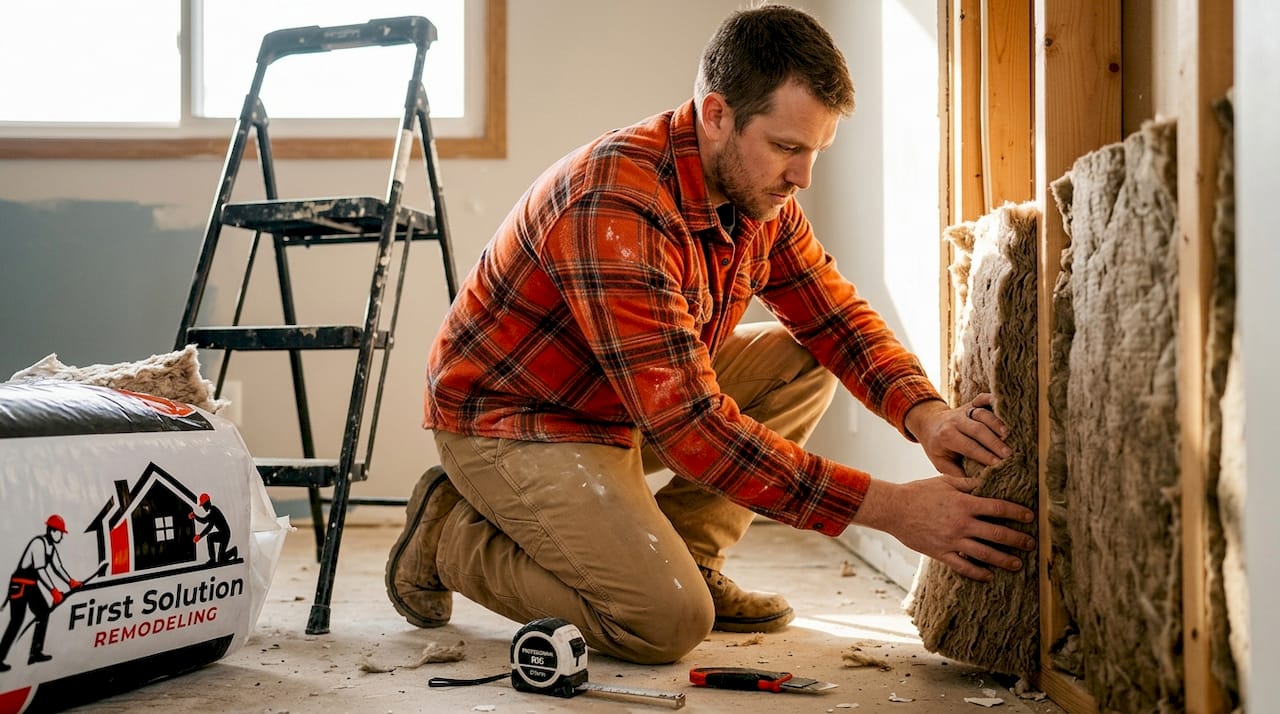
Start with the highest-impact rooms. Bedrooms, home offices, and any room with a shared wall to a noisy space should be your first priority. These rooms directly affect sleep, work, and daily wellbeing. A basement media room or a kids’ playroom are also strong candidates because the noise they generate affects the rest of the house.
Affordable upgrades that deliver real results include:
- Dense batt or blown-in insulation inside interior walls. This is inexpensive when walls are already open and makes a significant difference in airborne sound.
- Acoustic putty pads around electrical outlets and boxes. Outlets are essentially holes in your wall assembly, and sound travels right through them.
- Door sweeps and weather stripping on interior doors. A solid-core door loses half its effectiveness if there is a gap at the bottom.
- Resilient sound isolation channels under drywall. These metal channels flex slightly and prevent vibrations from the framing from reaching the drywall surface.
- Green Glue or similar viscoelastic compounds between double layers of drywall. This is a proven, cost-effective method for boosting STC ratings without significant structural work.
Illinois climate adds a layer of consideration. Because of Chicago-area winters and humid summers, moisture management inside walls matters. Products like closed-cell spray foam insulation provide both thermal performance and decent sound absorption, making them a strong dual-purpose choice. Always confirm that acoustic materials are compatible with your local climate conditions.
Common mistakes homeowners make:
- Soundproofing walls but forgetting the floor and ceiling, allowing sound to flank (travel around) the treated surfaces
- Installing beautiful solid-core doors but leaving a wide gap at the bottom
- Using standard fiberglass batt insulation when denser options like mineral wool or Rockwool perform significantly better acoustically
- Treating only one side of a shared wall when both sides need attention for best results
For smart ways to keep costs down while still achieving solid acoustic performance, cost-saving renovation tips are worth reviewing before you finalize your budget. And because doors are one of the most commonly botched parts of any acoustic renovation, learning how to avoid door installation mistakes can save you both money and frustration.
Prioritizing by budget is straightforward. If you have limited funds, start with insulation and door upgrades. If you have a moderate budget, add resilient channels and double drywall to the most critical rooms. If you are doing a full renovation, build acoustic performance into every assembly from the start. The cost per square foot drops significantly when acoustic work is folded into a larger project rather than added separately.
Why most homeowners underestimate the value of soundproofing
We see this constantly in our work across Illinois. A homeowner spends $40,000 on a kitchen remodel, chooses perfect countertops and custom cabinets, and then six months later calls us because they can hear their teenager’s music from two floors away. The kitchen looks incredible. The house sounds like a drum.
The reason soundproofing gets skipped is almost always the same: it is invisible. You cannot photograph acoustic insulation for an Instagram post. You cannot show a buyer your STC rating in the same way you show them quartz countertops. People default to spending money on what they can see.
But here is what we know after working on renovation projects across Illinois: the homeowners who regret skipping soundproofing outnumber the ones who regret adding it by a wide margin. A home office that does not block noise during calls is not really a functional home office. A master bedroom where you can hear every footstep from the floor above is not the retreat it was designed to be.
There is also a harder truth about timing. Soundproofing during an active renovation costs a fraction of what it costs to add it later. Once walls are closed, you are looking at demolition, disposal, re-finishing, and repainting on top of the acoustic work itself. We have seen homeowners spend three times as much fixing a problem they could have prevented for pennies on the dollar.
The renovation returns from soundproofing are real, but they are felt first as daily quality of life and second as resale value. Both matter. Our honest opinion is that treating soundproofing as optional is a mistake. It belongs in the same category as good insulation and proper ventilation: foundational work that makes everything else perform better.
Upgrade your renovation — partner with Illinois soundproofing experts
Soundproofing delivers some of the most meaningful improvements a renovation can make to your daily comfort and long-term property value. But it has to be planned and executed correctly to work.

At First Solution IL, we bring hands-on renovation experience to every project we take on in Illinois. Whether you are renovating a single room or tackling a full interior transformation, our team plans acoustic performance into your project from the very first step. Our interior remodeling workflow guide shows exactly how we approach every project to keep quality consistent from start to finish. Explore our full range of interior remodeling services or contact our Illinois renovation experts to request a free estimate and start planning a space that truly works for you.
Frequently asked questions
Is soundproofing a legal requirement for home renovations in Illinois?
For single-family homes, soundproofing is not legally required, but IBC standards mandate STC and IIC minimums of 50 for multi-family buildings. Single-family homeowners follow these benchmarks voluntarily for comfort and resale value.
What does STC or IIC mean in soundproofing?
STC measures how effectively a wall or ceiling blocks airborne sound like voices and music, while IIC ratings measure how well a floor assembly reduces impact noise such as footsteps traveling downward.
Which rooms should be soundproofed first?
Prioritize bedrooms, home offices, and any rooms sharing a wall or ceiling with noisy spaces, since these areas have the highest impact on daily comfort and work-from-home productivity.
Does soundproofing increase my home’s value?
Yes. Soundproofing improves comfort and privacy in measurable ways, and Illinois buyers, especially in dense urban and suburban neighborhoods, are increasingly willing to pay a premium for a quieter home.