
Over 60% of Illinois construction project payrolls go to out-of-state contractors, exporting nearly $100 million in wages annually and leaving local communities without the economic benefits of their own investments. Many property owners assume hiring local contractors costs more, but this misconception overlooks the hidden expenses of delays, code violations, and supply chain inefficiencies that out-of-state firms often bring. Choosing a local Illinois contractor delivers measurable advantages in project quality, regulatory compliance, cost control, and community reinvestment. This guide reveals the evidence-based benefits of partnering with local expertise for your residential or commercial renovation.
Table of Contents
- Understanding The Impact Of Contractor Origins On Illinois Projects
- Why Local Contractors Excel In Compliance And Project Efficiency
- Economic And Community Benefits Of Hiring Local Contractors In Illinois
- Practical Advantages: Cost Savings And Supplier Relationships With Local Contractors
- Explore Illinois Commercial And Residential Remodeling Services
Key takeaways
| Point | Details |
|---|---|
| Faster approvals | Local contractors reduce permitting and inspection delays by 15-20% through deep knowledge of Illinois building codes. |
| Economic multiplier | Every dollar spent with local contractors generates an additional $0.68 in community economic activity. |
| Cost savings | Established supplier relationships enable local contractors to secure materials 5-10% cheaper than out-of-state alternatives. |
| Wage retention | Hiring local keeps construction wages circulating in Illinois communities instead of exporting them to other states. |
| Compliance expertise | Local contractors’ familiarity with regional zoning and regulations minimizes costly code violations and project rework. |
Understanding the impact of contractor origins on Illinois projects
Illinois faces a striking contractor demographics problem that directly affects your project outcomes and community prosperity. Four in five community solar workers travel from another state, creating a labor pattern where out-of-state contractors file over 60% of payrolls in Illinois community solar and construction projects. This dominance means significant wage export, with Illinois exporting almost $100 million in community solar construction wages every year to workers living elsewhere.
The economic consequences extend beyond simple payroll numbers. When construction wages leave Illinois, local communities lose the multiplier effect of workers spending earnings at nearby businesses, supporting local schools through property taxes, and reinvesting in neighborhood services. Your project dollars fund jobs that don’t benefit your community’s long-term prosperity. Research shows union project labor agreements (PLAs) can drastically shift this dynamic, increasing local employment to 94% and ensuring wages stay within state borders.
Choosing local contractors reverses this pattern. Local workers spend their earnings at Illinois grocery stores, restaurants, and service providers. They pay property taxes that fund schools and infrastructure in your community. They’re available for warranty work and future projects without travel premiums. Understanding the benefits of local contractors in Illinois helps you make informed decisions that support both project quality and community economic health.
The contractor origin question isn’t just about supporting neighbors. It’s about recognizing that out-of-state labor creates hidden costs in coordination challenges, unfamiliarity with local regulations, and reduced accountability after project completion. Illinois ratepayers and property owners subsidize jobs that don’t land in their communities, a dynamic that local hiring directly addresses.
Why local contractors excel in compliance and project efficiency
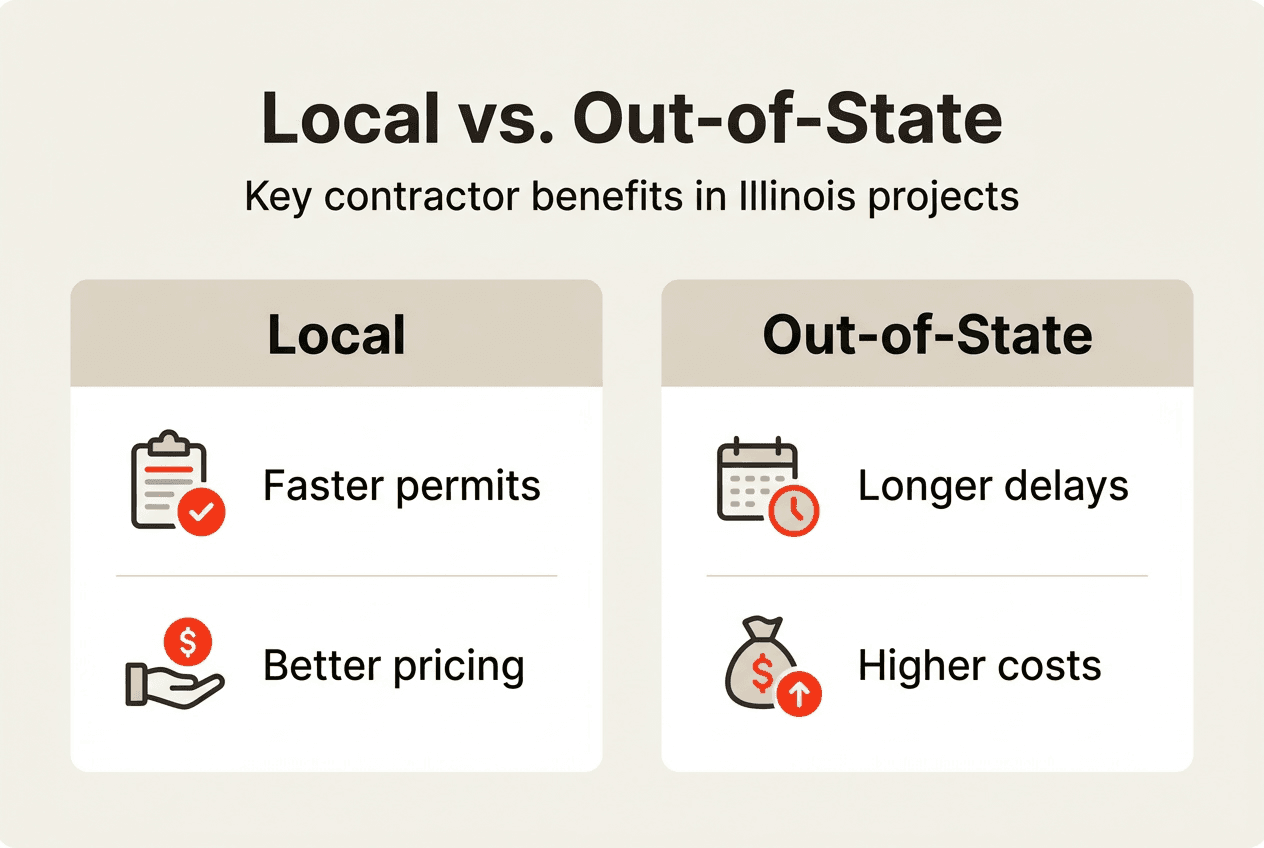
Local contractors possess intimate knowledge of Illinois zoning ordinances, building codes, and inspection protocols that out-of-state firms simply cannot match. This expertise translates directly into fewer code violations, faster permit approvals, and smoother inspection processes. Local contractors reduce permitting and inspection-related delays by 15-20% compared to out-of-state alternatives, accelerating your project timeline and reducing carrying costs.
The compliance advantage stems from daily interaction with local building departments and inspectors. Local contractors understand which jurisdictions require specific documentation, how to navigate municipal variance processes, and what details inspectors prioritize during reviews. They know that Chicago’s building code differs from suburban Cook County requirements, and that downstate Illinois municipalities often have unique local amendments. This granular knowledge prevents the costly delays that occur when out-of-state contractors submit incomplete applications or design plans that don’t meet local standards.
Understanding Illinois contractor license benefits reveals another compliance layer. Licensed local contractors maintain current knowledge of code updates and regulatory changes through required continuing education. They’re accountable to state licensing boards and local professional networks that enforce quality standards. When violations do occur, local contractors face immediate reputational consequences in the communities where they live and work, creating powerful incentives for compliance.
The efficiency gains compound throughout your project. Faster permit approvals mean earlier construction starts. Smooth inspections prevent work stoppages. Compliance expertise eliminates expensive rework when code violations surface late in construction. For commercial renovation permits in Illinois, these advantages become even more critical as commercial projects face stricter accessibility, fire safety, and occupancy requirements.
Pro Tip: Before signing any contract, verify your contractor holds current Illinois licenses, carries adequate insurance, and can provide references from recent projects in your municipality. Ask specifically about their experience with your local building department and request examples of past permit approvals.
Economic and community benefits of hiring local contractors in Illinois
Hiring local contractors creates measurable economic ripple effects that benefit your entire community. Every dollar spent with a local contractor generates an additional $0.68 in local economic activity through what economists call the multiplier effect. This happens because local workers spend wages at nearby businesses, local contractors purchase from regional suppliers, and profits get reinvested in community operations rather than exported to corporate headquarters in other states.
The job creation impact extends beyond the workers directly on your project. When you hire a local contractor, you’re supporting:
- Direct employment of Illinois construction workers who pay state and local taxes
- Indirect jobs at local supply yards, equipment rental companies, and professional service providers
- Induced employment as workers spend wages at restaurants, retail stores, and service businesses
- Long-term community investment as contractors sponsor youth sports, support local charities, and participate in civic organizations
This economic circulation matters for property values and neighborhood vitality. Communities with thriving local contractor networks maintain better building stock, respond faster to renovation needs, and develop deeper expertise in regional architectural styles and climate challenges. Your decision to hire locally contributes to this ecosystem, ensuring skilled tradespeople remain available for future projects and emergency repairs.
Illinois ratepayers subsidize jobs that do not land in our communities. Hiring local changes this dynamic by keeping construction wages circulating within state borders, funding local schools through property taxes, and building contractor networks accountable to the communities they serve.
The benefits of local contractors in Illinois include enhanced warranty service and long-term accountability. Local contractors can’t disappear after project completion because their reputation depends on satisfied customers in their home market. They’re available for callbacks, warranty work, and future renovations without travel charges or scheduling complications. This accountability creates quality incentives that out-of-state contractors simply don’t face.
Community investment also means local contractors understand regional climate challenges, soil conditions, and architectural traditions. They know which foundation techniques work in Illinois clay soils, how to detail exterior work for freeze-thaw cycles, and what materials perform best in humid Midwest summers. This knowledge prevents costly mistakes and ensures your project stands the test of time.
Practical advantages: cost savings and supplier relationships with local contractors
Local contractors leverage established supplier relationships to deliver cost advantages that often surprise property owners expecting premium pricing. Local contractors secure materials at prices 5-10% lower than out-of-state contractors through volume purchasing agreements, preferred customer status, and elimination of shipping premiums for rush orders. These savings directly reduce your project costs while improving material availability and delivery reliability.
The supplier relationship advantage extends beyond pricing. Local contractors maintain accounts at multiple supply yards, giving them backup options when specific materials face shortages or delays. They know which suppliers stock premium products, which offer best value in mid-range materials, and which provide fastest delivery for time-sensitive orders. This network prevents the work stoppages that occur when out-of-state contractors discover their preferred suppliers don’t serve Illinois or can’t meet project timelines.
| Factor | Local Contractors | Out-of-State Contractors |
|---|---|---|
| Material pricing | 5-10% lower through established relationships | Standard retail or premium rush pricing |
| Delivery speed | Same-day or next-day from local suppliers | 3-7 days plus shipping from distant suppliers |
| Supply chain flexibility | Multiple local backup suppliers | Limited options, dependent on home-state networks |
| Warranty support | Direct supplier relationships for claims | Complicated chains requiring contractor mediation |
| Emergency materials | Immediate pickup for urgent needs | Expensive expedited shipping or project delays |
Local subcontractor networks provide similar advantages. Experienced Illinois general contractors maintain relationships with specialized trades including electricians, plumbers, HVAC technicians, and finish carpenters who understand local code requirements and deliver consistent quality. These subcontractors prioritize local general contractors’ projects because repeat business sustains their operations. Out-of-state contractors often struggle to find available, qualified subcontractors willing to accommodate their schedules.
Pro Tip: Ask potential contractors to name their primary suppliers and subcontractors. Verify these businesses operate locally and check their reputations independently. A contractor with strong local networks demonstrates commitment to the Illinois market and ability to deliver efficient projects.
The efficiency of local supply chains prevents costly project overruns. When materials arrive on schedule, workers stay productive and projects maintain momentum. When substitutions become necessary, local suppliers can quickly source alternatives that meet specifications without expensive change orders. Understanding your renovation contract details helps you recognize how supplier relationships affect project costs and timelines.
Local contractors also understand seasonal material availability in Illinois. They know when lumber prices typically peak, which months offer best concrete pouring conditions, and how to schedule exterior work around weather patterns. This knowledge optimizes project timing and prevents the premium costs associated with off-season construction or weather-related delays.
Explore Illinois commercial and residential remodeling services
After understanding the measurable benefits of local contractor expertise, the next step involves partnering with experienced Illinois professionals who deliver these advantages on your specific project. First Solution IL specializes in both residential and commercial remodeling throughout Illinois, bringing deep knowledge of local codes, established supplier relationships, and commitment to community investment that out-of-state contractors cannot match.

Our commercial interior remodeling services demonstrate how local expertise accelerates project timelines and ensures compliance with Illinois accessibility, fire safety, and occupancy regulations. We’ve helped property managers navigate complex permit processes, coordinate with local inspectors, and deliver finished spaces that meet exact specifications. Explore our interior remodeling examples to see how local knowledge translates into quality outcomes for Illinois homeowners and commercial clients.
Whether you’re planning a residential renovation or commercial space transformation, our comprehensive remodeling services in Illinois provide the local accountability, regulatory expertise, and supplier networks that ensure successful projects. Contact us to discuss how partnering with reliable local contractors protects your investment and supports your community’s economic prosperity.
FAQ
Is hiring a local contractor more expensive than an out-of-state alternative?
Local contractors may quote slightly higher hourly rates, but total project costs often run lower due to fewer delays, reduced code violations, and efficient material sourcing. The 15-20% reduction in permitting delays alone saves substantial carrying costs and prevents expensive rework. Local expertise and efficient processes offset any perceived higher costs, leading to overall project savings through faster completion and fewer change orders.
How does choosing a local contractor affect project timelines?
Local contractors’ familiarity with Illinois building codes and municipal inspection processes directly accelerates project completion. Projects with local contractors see up to 20% faster permitting and inspection phases compared to out-of-state alternatives. This speed advantage compounds throughout construction as local contractors avoid the learning curve that out-of-state firms face with unfamiliar regulations. Understanding typical Illinois renovation permit timelines helps you set realistic expectations and recognize the value of local expertise.
What should I verify when hiring a local contractor in Illinois?
Confirm your contractor holds current Illinois licenses specific to your project type, carries adequate liability and workers’ compensation insurance, and maintains good standing with state regulatory boards. Always verify licensing and insurance, and check references from previous projects in your municipality. Ask for examples of recent permit approvals in your jurisdiction and contact past clients about their experience with project quality, timeline adherence, and warranty service.
Do local contractors really understand Illinois building codes better than national firms?
Local contractors interact daily with Illinois building departments, attend regional code update seminars, and maintain relationships with local inspectors who enforce regulations. This constant exposure creates practical knowledge that national firms cannot replicate. Local contractors know which jurisdictions require specific documentation, how to navigate variance processes, and what details inspectors prioritize during reviews. They understand that Chicago codes differ from suburban requirements and that downstate municipalities often have unique local amendments affecting your project.
How do local contractor supplier relationships benefit my renovation project?
Established relationships with Illinois suppliers give local contractors access to better pricing, faster delivery, and priority service during material shortages. They maintain accounts at multiple supply yards, providing backup options when specific products face delays. Local suppliers also support warranty claims more efficiently when contractors they know bring issues to their attention. These networks prevent the work stoppages and premium shipping costs that out-of-state contractors often encounter when their distant suppliers cannot meet Illinois project timelines.