
TL;DR:
- Illinois remodeling requires materials that meet strict energy codes and climate challenges.
- Proper permits, contractor credentials, and documentation are essential for legal compliance and project success.
- Choosing durable, climate-appropriate materials with quality installation prevents costly future failures.
Picking the wrong materials for your Illinois home remodel can cost you far more than a bad aesthetic. It can mean failed inspections, code violations, moisture damage from brutal Midwest winters, and a hit to your resale value. Illinois homeowners face a unique set of challenges: a climate that swings from subzero winters to humid summers, strict energy codes, and local permit rules that vary by city and county. This guide walks you through every step, from defining your goals to verifying contractor credentials, so you can make confident, code-compliant material choices that hold up for decades.
Table of Contents
- Understand your remodeling goals and constraints
- Know Illinois regulations and building codes for materials
- Evaluate materials for durability, efficiency, and climate fit
- Get the right permits, documentation, and expert support
- Why intelligent material selection beats default choices: our experience
- Ready to start? Get remodeling help from trusted Illinois experts
- Frequently asked questions
Key Takeaways
| Point | Details |
|---|---|
| Prioritize code compliance | Verify materials meet Illinois codes for energy, plumbing, and safety before buying. |
| Match materials to climate | Select products proven to withstand Illinois moisture, freeze-thaw cycles, and humidity swings. |
| Document every decision | Keep written contracts, specs, and inspection paperwork for permits and resale. |
| Hire verified professionals | License-checked contractors and correct permits prevent legal or long-term renovation issues. |
Understand your remodeling goals and constraints
Before you look at a single tile sample or flooring catalog, you need a clear picture of what you actually want to achieve. Are you remodeling to improve energy efficiency, update the look, increase resale value, or fix a functional problem like poor drainage or outdated plumbing? Each goal points you toward a different set of material priorities.
Start by listing the specific spaces you plan to renovate. A kitchen remodel has completely different material demands than a basement finishing project or a bathroom upgrade. Once you know the scope, you can set a realistic budget. A common mistake is budgeting for materials alone and forgetting installation, permits, and unexpected repairs. A solid step-by-step renovation guide can help you map out the full cost picture before you commit.
Here are the key constraints to define before you start shopping:
- Functional priorities: Do you need moisture resistance, high foot traffic durability, or thermal performance?
- Budget range: Separate your minimum acceptable quality from your ideal quality. Know where you can flex.
- Timeline: Some materials, like custom cabinetry or specialty tile, have long lead times that can delay your project.
- HOA or historic district rules: Many Illinois neighborhoods have restrictions on exterior colors, siding types, or window styles.
- Energy and resale goals: Choosing low-maintenance, energy-efficient materials now reduces costs over time and appeals to future buyers.
If you are unsure what your project should realistically cost, getting accurate remodeling estimates early helps you avoid the painful experience of falling in love with a material you cannot afford.
Pro Tip: Write down your top three priorities before visiting any showroom or supplier. When a salesperson pushes a trendy option, your list keeps you grounded and focused on what actually matters for your home.
Future-proofing is worth thinking about now, not later. Materials that meet or exceed current energy standards, resist moisture, and require minimal upkeep will serve you better as Illinois building codes continue to tighten. Spending a little more upfront on quality often eliminates expensive repairs within five to ten years.
Know Illinois regulations and building codes for materials
Once your goals are clear, you need to understand what the rules actually require. Illinois follows the International Energy Conservation Code, and the 2025 update sets specific insulation minimums depending on your climate zone and the type of space you are renovating.
Here is a quick reference for common insulation requirements under the Illinois energy code:
| Area | Minimum R-value (CZ4/5) |
|---|---|
| Walls (above grade) | R-30 |
| Ceilings/attic | R-49 |
| Basement walls | R-13 to R-19 |
| Floors over unconditioned space | R-30 |
The Illinois energy code 2025 targets 30 to 75 percent energy savings through deep retrofits that combine proper insulation, HVAC upgrades, and window improvements. That is not a small number. Choosing materials that meet these minimums is not optional; it is the law for permitted projects.
“Any plumbing alteration, including fixture relocation of more than six inches or adding new fixtures, requires a licensed plumber and a permit. Kitchen and bath remodels commonly trigger both rough-in and final inspections covering venting and drainage.”
This matters for material selection because certain fixtures, pipe materials, and installation methods are only approved for specific applications. Using the wrong pipe material or skipping a licensed plumber to save money can result in a failed inspection and a costly tear-out.
Always check with your specific city or county, because local amendments can be stricter than state minimums. Chicago, for example, has its own building code amendments that go beyond the base Illinois code. Reviewing Illinois renovation standards before you finalize material selections prevents expensive surprises. If you are touching the exterior of your home, also review exterior remodeling requirements for your area.
Evaluate materials for durability, efficiency, and climate fit
Now comes the part most homeowners enjoy: actually comparing materials. But with so many options, it helps to have a structured way to evaluate them. Illinois homes need materials that can handle freeze-thaw cycles, high humidity in summer, and heavy snow loads in winter.
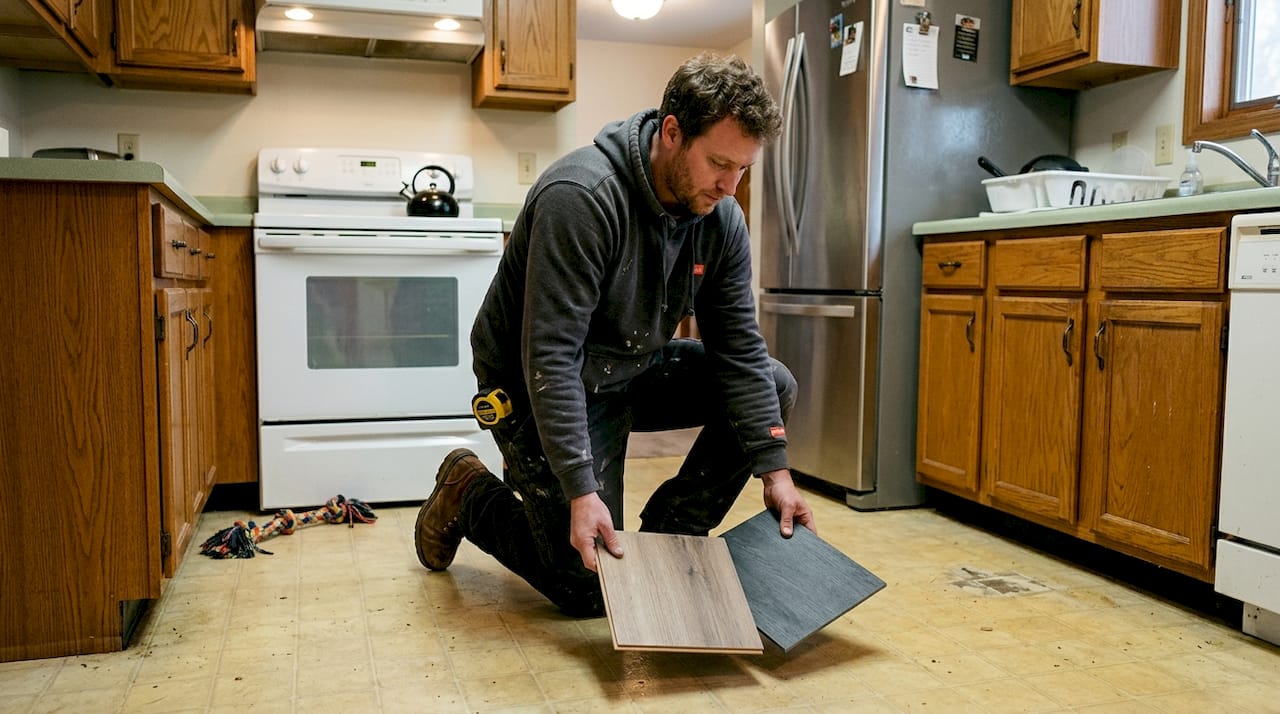
Here is a comparison of popular material choices across common remodel categories:
| Material | Lifespan | Climate resilience | Code compatibility | Best use |
|---|---|---|---|---|
| Luxury vinyl plank | 15-25 yrs | Excellent (moisture resistant) | High | Kitchens, basements |
| Engineered hardwood | 20-30 yrs | Good (stable in humidity) | High | Living areas, bedrooms |
| Solid hardwood | 50+ yrs | Moderate (expands/contracts) | High | Dry, stable rooms |
| Ceramic/porcelain tile | 20-50 yrs | Excellent | High | Bathrooms, entryways |
| Fiber cement siding | 25-50 yrs | Excellent (freeze-thaw rated) | High | Exterior walls |
| Natural stone countertops | 30+ yrs | Good (needs sealing) | High | Kitchens, baths |
Before any flooring goes down, subfloor moisture testing using MVER or ASTM standards is a critical step that many homeowners skip. A floor installed over a damp subfloor will buckle, warp, or grow mold within a couple of years, no matter how premium the material is.
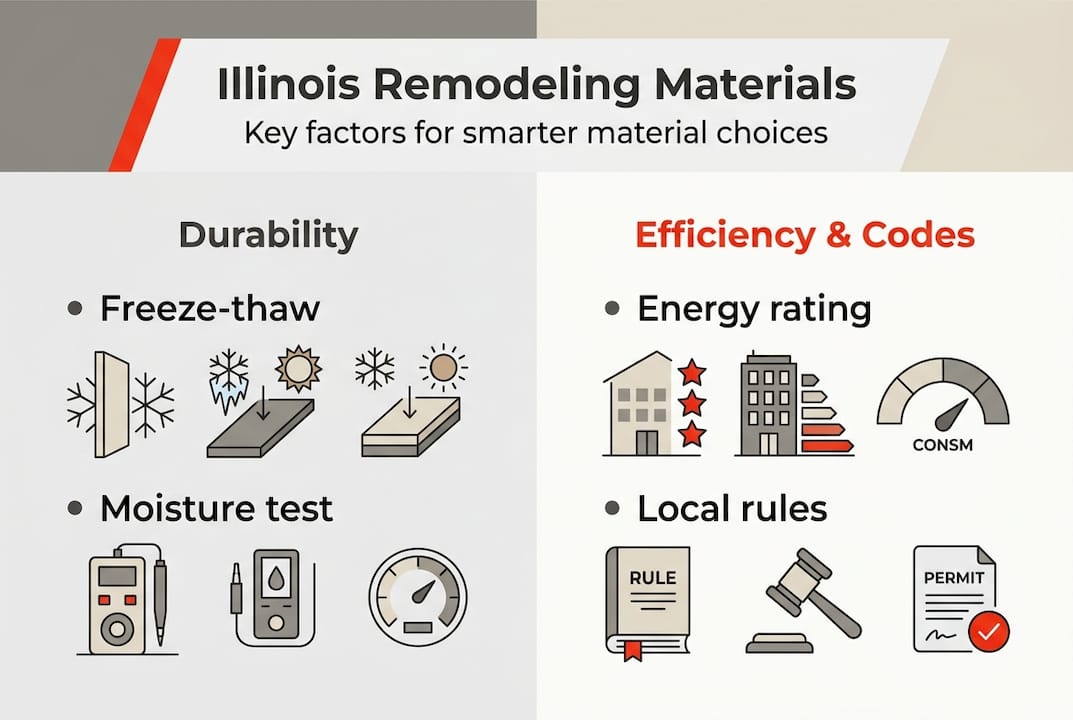
For exterior work, always install a weather-resistant barrier under siding. Stone countertops need proper sealing to resist staining and moisture penetration. These are not optional finishing touches; they are what separates a lasting installation from a costly failure.
Key factors to evaluate for every material:
- Moisture resistance: Critical for basements, bathrooms, and exterior applications in Illinois
- Thermal performance: Insulation materials especially must meet IECC R-value requirements
- Freeze-thaw durability: Outdoor materials must handle repeated expansion and contraction
- Maintenance requirements: Lower maintenance means lower long-term cost
Explore remodeling exterior materials and cost-effective material options to compare what works best for your specific project and budget.
Get the right permits, documentation, and expert support
Great materials mean nothing if your project fails inspection or creates legal problems down the road. Permits are required for most kitchen, bathroom, mechanical, and plumbing remodels in Illinois. Skipping them is not just risky; it can make your home harder to sell and expose you to fines.
Here is how to handle the permit and documentation process correctly:
- Identify your project scope. Determine which trades are involved: plumbing, electrical, structural, or HVAC.
- Contact your local building department. Ask specifically which permits are required for your scope and which inspections will be scheduled.
- Verify contractor licenses. Check that every contractor you hire holds a valid Illinois license for their trade.
- Get a written contract. Under Illinois law, any home repair or remodeling contract over $1,000 must be in writing and must detail the materials and specifications being used.
- Document all materials. Keep product data sheets, receipts, and manufacturer specs for every major material installed.
- Schedule inspections promptly. Do not close up walls or cover work until the inspector has signed off.
“Always verify the local authority having jurisdiction, since Chicago amendments are stricter than state minimums. Written contracts over $1,000 are mandatory under the Home Repair and Remodeling Act and must detail materials and specifications.”
The HRRA contract requirement protects you as a homeowner. If a contractor refuses to provide a written contract with material details, that is a red flag.
Pro Tip: Take photos of every rough-in stage before walls are closed. If a problem surfaces years later, those photos are your proof of what was installed and how.
Expert installation is not just about quality; it directly affects whether your project passes inspection. Freeze-thaw cycles in Illinois are relentless, and improper installation of siding, windows, or roofing can lead to water intrusion within a single season. Learn more about the benefits of hiring a contractor and use a contractor license checklist to vet your team. Working with licensed contractor benefits backed by verified credentials reduces defects and protects your investment.
Why intelligent material selection beats default choices: our experience
Here is something we have seen repeatedly on Illinois job sites: homeowners who spent hours researching countertop colors but almost nothing on insulation R-values or subfloor moisture levels. The result? Beautiful kitchens with buckled floors and sky-high heating bills.
The most expensive remodeling mistakes we encounter are not from choosing the wrong style. They come from ignoring climate fit and code compliance. A trendy laminate floor installed over an untested basement slab in an Illinois winter is a disaster waiting to happen. A popular siding product without proper weather-resistant barrier installation will leak within two seasons.
Smart material selection means thinking past the showroom. It means asking: will this hold up in a freeze-thaw cycle? Does this meet current IECC standards? Will this installation method pass inspection? These questions save thousands later.
We also believe that the permit and documentation process is not red tape. It is your protection. A contractor who pushes you to skip permits or skip moisture testing is not saving you money. They are transferring risk onto you. Learn more about craftsmanship and long-term value to understand what separates a quality renovation from one that needs redoing in five years.
Ready to start? Get remodeling help from trusted Illinois experts
You now have a clear framework for selecting materials that fit Illinois codes, climate, and your personal goals. Putting that knowledge into action is where a trusted local partner makes all the difference.

First Solution IL works with Illinois homeowners to evaluate material and code fit from the very first consultation. Our team handles everything from permit documentation to final inspection, so nothing falls through the cracks. Whether you are planning a kitchen update, a basement finish, or a full exterior renovation, explore our construction services in Chicago or review our remodeling workflow guide to see exactly how we manage your project from quote to completion. Reach out today for a personalized, on-site estimate.
Frequently asked questions
What documentation should I keep when choosing remodeling materials in Illinois?
Always keep written contracts over $1,000, material specifications, and inspection approvals. State law under the HRRA requires written contracts detailing materials and specs for every qualifying project.
Which permits are typically needed when remodeling in Illinois?
Permits are commonly required for plumbing, electrical, and structural work. Kitchen and bath remodels typically trigger both rough-in and final inspections.
How do I know if a material meets Illinois energy code requirements?
Check the product’s R-value against Illinois IECC minimums for your climate zone. The IECC insulation standards set specific minimums, such as R-49 for ceilings and R-30 for walls.
Why is material installation quality so important in Illinois?
Poor installation exposes materials to freeze-thaw damage, moisture intrusion, and code violations. Proper installation practices like weather-resistant barriers under siding and subfloor moisture testing prevent the most common and costly Illinois remodeling failures.