
Hiring an unlicensed contractor might seem like a harmless way to save money, but it can quietly turn into one of the most expensive decisions you ever make. If a worker gets hurt on your property or the work fails inspection, homeowners may become liable for accidents and poor-quality work when the contractor isn’t properly licensed. Illinois law is specific about what contractors must carry, register, and provide before they touch your home. This article breaks down what licensing means, why it protects you, and exactly how to make sure the pro you hire is the real deal.
Table of Contents
- What does it mean to be a licensed contractor in Illinois?
- Major benefits of hiring a licensed contractor
- The hidden costs and dangers of hiring unlicensed contractors
- Your rights and protections under Illinois law
- How to confirm you’re hiring the right (licensed) contractor
- The inconvenient truth most Illinois homeowners miss about licensing
- Get the peace of mind only a licensed Illinois pro delivers
- Frequently asked questions
Key Takeaways
| Point | Details |
|---|---|
| Legal protection | Licensed contractors shield you from liability, insurance gaps, and poor workmanship. |
| Consumer rights | State laws guarantee contracts, cancellation rights, and complaint avenues for your protection. |
| Project quality | Licensed pros deliver code-compliant work that protects your home’s value and safety. |
| Risk of shortcuts | Hiring unlicensed contractors can end in lawsuits, fines, and unsafe renovations. |
| Verification steps | Always check licensing and insurance before any work begins for full peace of mind. |
What does it mean to be a licensed contractor in Illinois?
In Illinois, a “licensed contractor” isn’t just someone with a business card and a truck. It means the contractor has met specific legal requirements to perform work on your home, including registration, insurance, and in many cases, a written contract.
The Home Repair and Remodeling Act (815 ILCS 513) requires written contracts and consumer protections for most home repair and remodeling jobs. This law applies to contractors who perform work for compensation on residential properties. If a contractor skips this step, they’re already operating outside the law.
Here’s what licensing and registration typically require in Illinois:
- General liability insurance to cover property damage
- Workers’ compensation insurance for employees on your job
- A surety bond to protect against incomplete or faulty work
- Written contracts for jobs over $1,000 that detail scope, cost, and timeline
- Compliance with local municipality licensing rules, which vary by city or county
It’s also worth knowing that specialty trades like electrical, plumbing, and HVAC have their own separate licensing requirements at the state level. A general contractor may be registered, but the subcontractors they hire need to meet those trade-specific standards too.
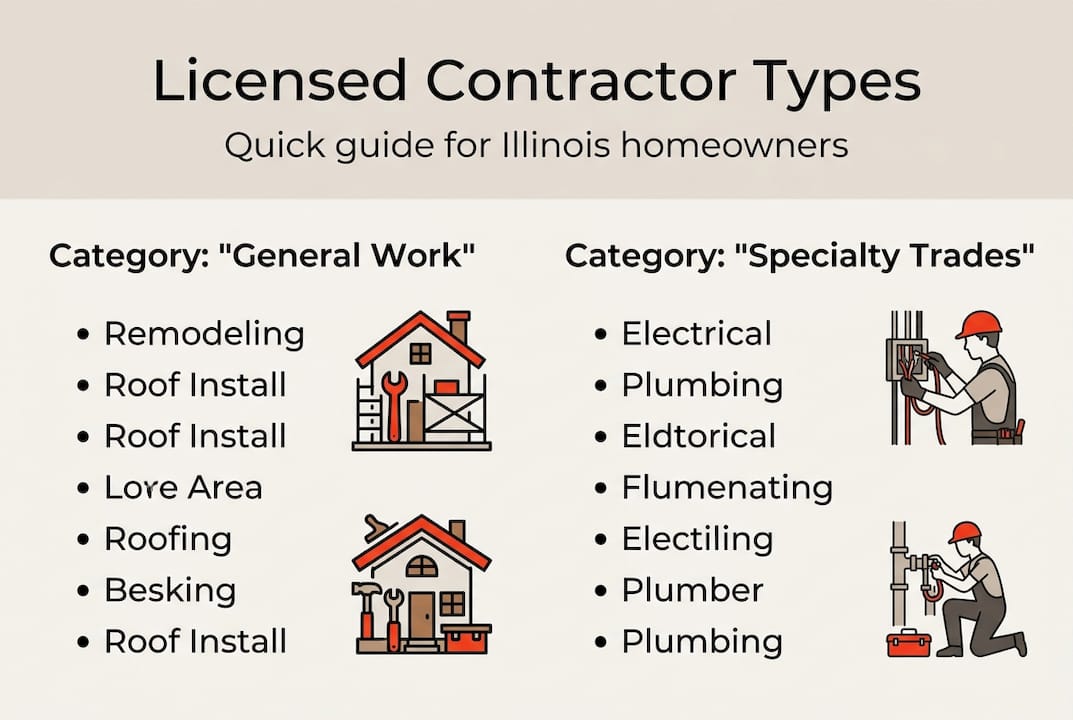
| Type of work | License required? | Key requirement |
|---|---|---|
| General remodeling | Yes (registration) | Written contract, insurance |
| Electrical work | Yes (state license) | State exam, permits |
| Plumbing | Yes (state license) | State exam, permits |
| Roofing | Varies by municipality | Insurance, local registration |
| Minor repairs under $1,000 | Sometimes no | Depends on local rules |
You can verify a contractor’s license before signing anything, and it only takes a few minutes. Understanding the advantages of local licensed pros also helps you see why local knowledge of Illinois-specific rules matters on every job.
If work is done without proper licensing or permits, you could face fines, forced demolition of completed work, or serious problems when you try to sell your home.
Major benefits of hiring a licensed contractor
Now that you know what’s required for licensure, here’s how hiring a licensed contractor pays off for Illinois homeowners.
The most immediate benefit is financial protection. Licensed contractors must carry insurance and bonds, which means if a worker is injured on your property or your home is damaged during the project, you’re not the one writing the check. Without that coverage, you could be sued directly.
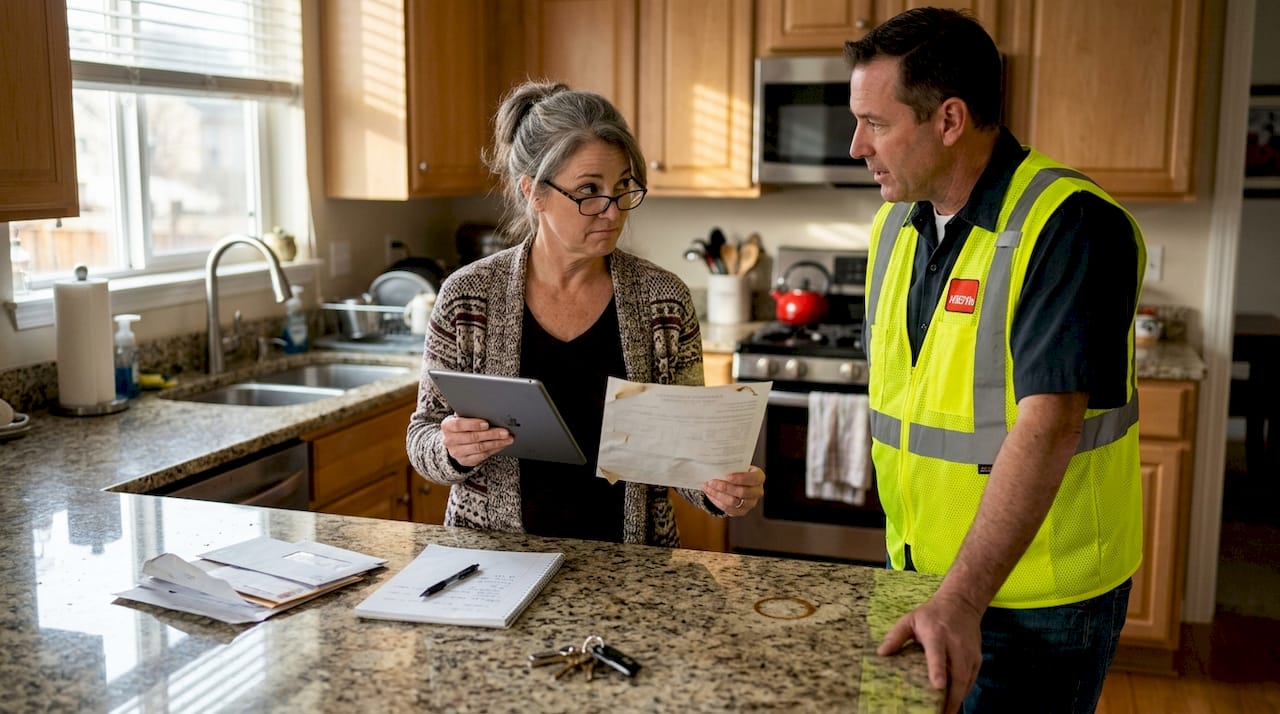
You also gain legal recourse. If a licensed contractor does poor work or abandons your project, you can file complaints via IDFPR or the Illinois Attorney General. That’s a powerful tool most homeowners don’t realize they have.
Here’s a quick comparison of what you get:
| Factor | Licensed contractor | Unlicensed contractor |
|---|---|---|
| Insurance coverage | Required by law | Often none |
| Legal recourse | Yes, via IDFPR/AG | Very limited |
| Permit pulling | Yes | Often can’t |
| Written contract | Required | Rarely provided |
| Code compliance | Standard practice | Inconsistent |
Other key benefits include:
- Higher quality work because licensed pros are accountable to state standards
- Easier permit approvals since licensed contractors know local code requirements
- Better home resale value because buyers and lenders want verifiable, compliant work
- Reduced risk of structural or safety defects from corners being cut
Pro Tip: Ask every contractor for their license number AND their insurance certificate before you sign. A legitimate pro will hand these over without hesitation.
Learning more about the benefits of hiring a general contractor can help you frame your decision around long-term value, not just upfront cost. The top advantages of insured contractors go even deeper on why insurance coverage is non-negotiable. When you look at the full picture, the value of professional contractors becomes very clear. The National Association of Realtors also offers solid guidance on hiring a remodeling contractor that aligns with these principles.
The hidden costs and dangers of hiring unlicensed contractors
Despite these benefits, cutting corners by hiring unlicensed contractors can backfire in serious ways.
The numbers are alarming. A recent investigation found that roughly 67% of 1,800 OSHA-inspected roofing contractors in Illinois lacked verifiable state license records, and many had significant safety violations. That’s not a fringe problem. It’s widespread.
“Homeowner liability persists even if the job looks minor. Insurance and permits can be invalidated when an unlicensed contractor is involved.”
Here’s what you’re actually risking when you hire someone without a license:
- Personal liability for injuries if a worker is hurt and has no workers’ comp
- No legal recourse through the IDFPR or Attorney General if the work fails
- Permit complications because unlicensed contractors can’t pull permits, leaving your project in a gray area
- Fines from your municipality for unpermitted or non-compliant work
- Inability to sell or refinance your home if renovations can’t be verified as code-compliant
- Voided homeowner’s insurance in some cases where unpermitted work caused damage
The financial hit isn’t just about fixing bad work. It’s about legal fees, fines, and lost home equity. Studies on defect reduction from licensing show that proper licensing dramatically lowers the chance of serious project failures.
Unlicensed contractors often win bids by quoting lower prices. But when you factor in the potential costs of litigation, repairs, and permit issues, that “savings” evaporates fast. Sometimes it costs you far more than the original project was worth.
Your rights and protections under Illinois law
The good news is that Illinois law provides powerful protections for homeowners who hire licensed and registered contractors.
The Home Repair and Remodeling Act (815 ILCS 513) gives homeowners a written contract and a 3-day cancellation right for jobs over $1,000. That means if you sign a contract and change your mind within three business days, you can walk away without penalty.
Here’s what a legally compliant contract must include:
- Full name and address of the contractor and homeowner
- Detailed description of the work to be performed
- Total cost and payment schedule
- Start and estimated completion dates
- Materials to be used, including brand and grade where applicable
- Contractor’s license number and insurance information
- Notice of your 3-day cancellation right
If something goes wrong, you have real options. You can file a complaint with the Illinois Department of Financial and Professional Regulation (IDFPR), contact the Illinois Attorney General’s consumer protection division, pursue mediation, or take the contractor to small claims court for disputes under $10,000.
Pro Tip: Keep a paper trail of everything. Signed contracts, change orders, receipts, and photos of work in progress are your best protection if a dispute arises.
Understanding your renovation contract protections before you start is smart planning. Staying current on Illinois renovation compliance in 2026 also ensures your project meets the latest standards from day one. You can review the full scope of Illinois contractor rights to understand every protection available to you.
How to confirm you’re hiring the right (licensed) contractor
Armed with this knowledge, here’s how you can confidently screen and hire the right professionals for your project.
Start with a license check. Here’s a step-by-step process:
- Ask for the contractor’s license number before any conversation about price
- Search the IDFPR license lookup tool online to confirm the license is active
- Check local municipality records since some cities like Chicago have their own licensing databases
- Request a certificate of insurance directly from their insurer, not just a copy they hand you
- Verify the bond is current and covers the scope of your project
During the hiring conversation, ask these direct questions:
- Are you licensed for this specific type of work in my municipality?
- Can you pull the permits for this project?
- Who are your subcontractors and are they licensed too?
- How do you handle disputes or warranty claims?
Watch for these red flags that signal a risky hire:
- Demands for large cash payments upfront with no written contract
- No physical business address or only a P.O. box
- Reluctance to pull permits, claiming it will “save you money”
- Prices dramatically lower than every other bid you received
- No insurance certificate available on request
Remember, unlicensed contractors can’t pull official permits and may expose you to fines or work that has to be torn out and redone. The contractor license verification steps are simple and free. Knowing the local contractor benefits also helps you understand why a locally rooted, licensed pro is worth every dollar.
The inconvenient truth most Illinois homeowners miss about licensing
Most homeowners spend hours comparing quotes and reading online reviews, but spend almost no time verifying a contractor’s license. That’s backwards. A glowing review doesn’t protect you from a lawsuit. A license does.
We’ve seen it happen more than once. A homeowner picks a contractor based on a neighbor’s recommendation and a competitive price. The work looks fine at first. Then a permit issue surfaces during a home sale, or an injury on the job site turns into a legal claim against the homeowner. The contractor? Unreachable.
Licensing isn’t bureaucratic paperwork. It’s the mechanism that forces accountability. It means the contractor has skin in the game, a bond that can be claimed, and a license that can be revoked. That’s your firewall against financial and legal disaster.
Illinois-specific laws make this even more critical. The state’s consumer protection framework only works for you when the contractor is properly registered. Without that, you’re on your own. The licensed contractor advantages aren’t just nice-to-haves. They’re the difference between a project that builds your home’s value and one that drains it.
Get the peace of mind only a licensed Illinois pro delivers
You’ve now seen exactly why licensing matters and what it protects you from. The next step is making sure your renovation is handled by a team that checks every box.

At First Solution IL, we’re a fully licensed and insured Illinois contractor ready to bring your renovation vision to life with zero shortcuts. Whether you’re planning a kitchen remodel, flooring upgrade, or a full interior overhaul, our licensed remodeling services cover it all. Use our interior renovation step-by-step guide to plan your project, then get a free estimate so you know exactly what to expect before work begins.
Frequently asked questions
Can I legally hire an unlicensed contractor for minor home repairs in Illinois?
Some very minor jobs may fall below local licensing thresholds, but for nearly all renovations and remodels, a licensed contractor is the safe and legally sound choice. Liability persists even when the job seems small.
What is the biggest risk of hiring an unlicensed contractor?
You could become personally liable for property damage or worker injuries, with no way to enforce quality or safety standards. Unlicensed contractors typically carry no insurance, which puts that burden directly on you.
How do I check if an Illinois contractor is licensed?
Use the IDFPR’s online license lookup tool or ask the contractor directly for their license number, then verify it yourself. Home repair contractors are required to register and provide written contracts for most jobs.
Do licensed contractors always have insurance?
Yes. Illinois law requires licensed contractors to carry general liability and workers’ compensation insurance, along with a surety bond, to protect homeowners from financial exposure.
Who enforces contractor licensing in Illinois?
Local municipalities and state regulators share enforcement responsibility, but regulators rely heavily on public complaints to identify unlicensed operators, which makes your due diligence even more important.