
Many homeowners assume all contractors deliver the same quality regardless of location. That misconception can lead to delays, code violations, and budget overruns. Local contractors in Illinois bring distinct advantages tied to regional expertise, community relationships, and accessibility. Understanding these benefits helps you make informed decisions for your remodeling project. This guide clarifies why choosing local contractors matters for successful renovations.
Table of Contents
- Understanding Why Local Contractors Excel In Illinois Remodeling Projects
- Economic And Community Benefits Of Hiring Locally In Illinois
- Improved Communication, Reliability, And Vetting Ease With Local Contractors
- Balancing Cost, Quality Craftsmanship, And Customer Satisfaction With Local Contractors
- Explore Expert Remodeling Services By Trusted Illinois Contractors
- What Are The Most Important Licenses And Insurance Local Contractors Must Have In Illinois?
- How Can I Effectively Vet And Select A Reliable Local Contractor?
- What Are The Typical Cost Differences When Hiring Local Versus Non-Local Contractors?
- How Do Local Contractors Impact Project Timelines And Quality Control?
Key takeaways
| Point | Details |
|---|---|
| Code compliance expertise | Local contractors reduce delays by 15-20% through superior knowledge of Illinois building codes and permitting processes. |
| Economic impact | Every dollar spent locally keeps 68 cents circulating in the regional economy, supporting jobs and community growth. |
| Communication reliability | Projects with local contractors experience 15% fewer communication-related delays due to accessibility and face-to-face interaction. |
| Quality craftsmanship | Local contractors provide superior workmanship tailored to Illinois homes, reducing rework and increasing long-term durability. |
| Vetting ease | Checking references, visiting past job sites, and verifying reputation is simpler with local contractors in your community. |
Understanding why local contractors excel in Illinois remodeling projects
Illinois building codes vary significantly across municipalities. What passes inspection in Springfield differs from Chicago requirements. Local contractors navigate these complexities daily, maintaining current knowledge of regional regulations. This expertise directly impacts your project timeline and budget.
Local contractors reduce delays by 15-20% compared to non-local alternatives. Their familiarity with permit offices, inspection schedules, and code enforcement practices eliminates guesswork. You avoid costly violations and rework that plague projects managed by contractors unfamiliar with local standards.
Permitting alone can derail renovation schedules. A Chicago case study tracking 50 remodeling projects showed 15% fewer delays when using local contractors. These professionals maintain relationships with building departments, streamlining the approval process. They know which documents to prepare, when to submit applications, and how to address inspector concerns efficiently.
Consider the advantage when challenges arise. Local contractors quickly source replacement materials from regional suppliers they’ve worked with for years. They understand seasonal weather impacts on Illinois construction. They schedule work around local inspection availability rather than discovering conflicts mid-project.
Pro Tip: Confirm your contractor holds relevant licenses for your specific remodeling scope before signing contracts. Illinois contractor licenses impact project quality and legal compliance significantly.
Key regulatory knowledge areas include:
- Residential and commercial building codes specific to your municipality
- Electrical, plumbing, and HVAC permit requirements
- Historic district regulations if applicable to your property
- Environmental compliance for lead paint and asbestos in older homes
- Accessibility standards for commercial remodeling projects
Economic and community benefits of hiring locally in Illinois
Your contractor choice ripples through the regional economy. Every dollar spent with local contractors keeps 68 cents circulating in Illinois communities. That money supports local suppliers, subcontractors, and workers who then spend earnings at nearby businesses. This multiplier effect strengthens the economic foundation supporting your property value.
Non-local contractors extract resources from your community. Materials often ship from distant suppliers. Labor crews may reside elsewhere, spending their wages outside Illinois. The economic impact studies show approximately $600,000 per million dollars remains local when hiring regional contractors, compared to roughly $320,000 with non-local alternatives.
Local hiring creates jobs in your community. Construction workers, suppliers, and support businesses benefit directly. These jobs generate tax revenue funding schools, roads, and emergency services. Your remodeling investment becomes infrastructure development.
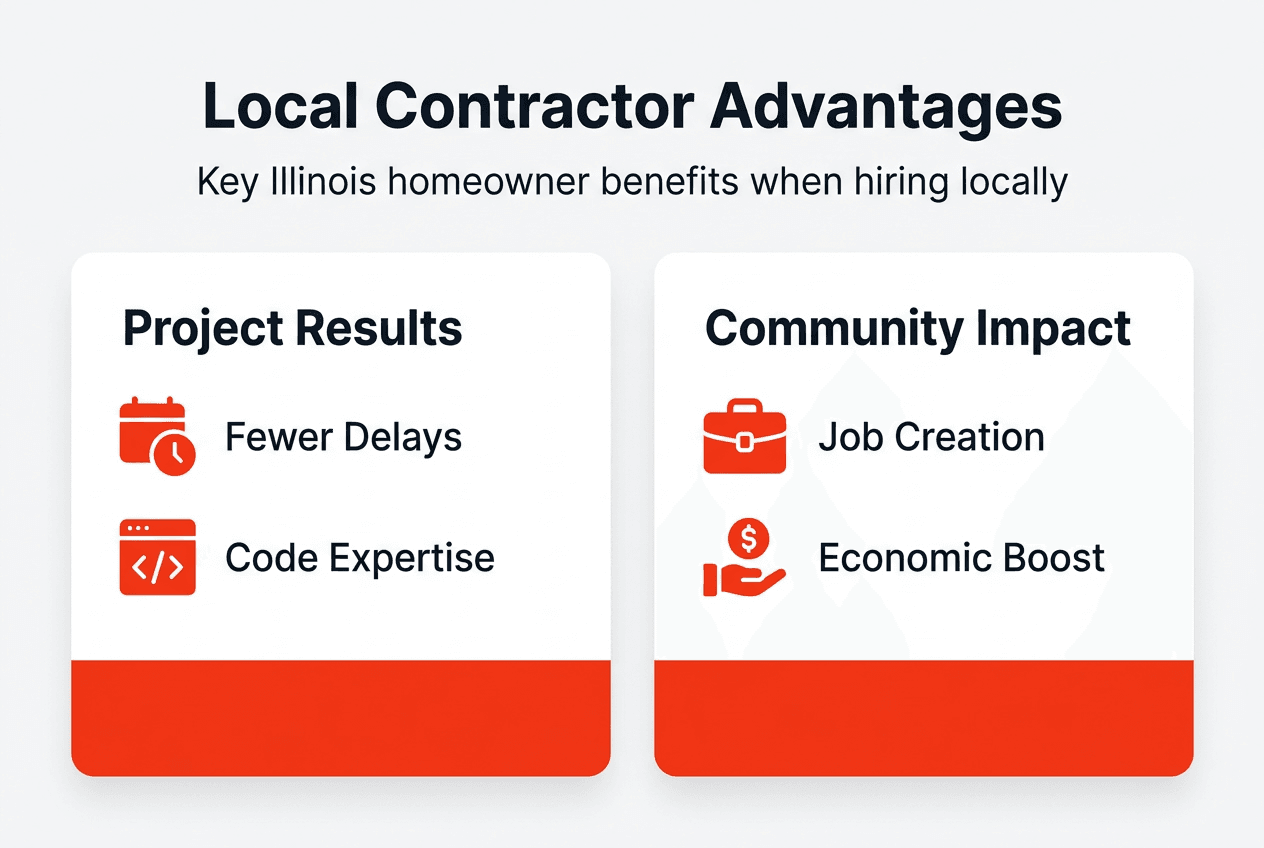
Community reinvestment builds neighborhood vitality. Local contractors often sponsor youth sports, support charitable causes, and maintain visible community presence. Their reputation depends on treating neighbors well. This accountability drives quality and ethical business practices that protect homeowners.
| Economic Factor | Local Contractor ($1M Project) | Non-Local Contractor ($1M Project) |
|---|---|---|
| Money retained locally | $680,000 | $320,000 |
| Jobs created/supported | 12-15 direct positions | 4-6 direct positions |
| Local supplier purchases | 75-80% | 30-40% |
| Community tax revenue | Higher property and sales tax contribution | Lower regional tax contribution |
| Long-term economic impact | Sustained growth and development | Minimal lasting benefit |
These economic advantages compound over time. Strong local construction sectors attract skilled tradespeople. Competition drives innovation and quality. Regional supply chains become more robust. Your individual project choice contributes to this positive cycle, ultimately benefiting your property value and community appeal.
Explore services supporting local economy to understand how professional contractors reinvest in Illinois communities.
Improved communication, reliability, and vetting ease with local contractors
Accessibility transforms project management. Local contractors meet face-to-face before work begins, during construction, and after completion. This proximity enables real-time problem solving. Questions get answered immediately rather than through delayed phone calls or emails.

Projects with local contractors face 15% fewer communication-related delays according to construction law analysis. Clear communication prevents misunderstandings about scope, materials, and timelines. When both parties discuss details in person while standing in the actual space, expectations align naturally.
Reliability concerns plague the remodeling industry. The shocking reality: 32% of homeowners report contractors no-showing for scheduled appointments. Local contractors stake their community reputation on reliability. Word travels fast in regional markets. One pattern of no-shows or poor performance damages their entire business.
Contractor reliability directly correlates with local accountability. When a contractor’s family, friends, and future clients live in the same community, professional standards rise naturally.
Vetting becomes straightforward with local contractors. You can:
- Visit completed projects in your neighborhood
- Speak directly with past clients at nearby properties
- Check references through mutual acquaintances
- Verify licenses and insurance through local agencies
- Review community ratings and Better Business Bureau records
This transparency protects your investment. Non-local contractors may present polished portfolios featuring work from distant locations. Verifying those claims requires significant effort. Local projects offer tangible proof you can inspect personally.
Pro Tip: Always verify contractor reliability through community reviews and past project inspections. Request at least three local references and actually visit those properties to assess quality firsthand.
Communication frequency matters during construction. Local contractors stop by easily for quick check-ins. They respond to urgent issues within hours, not days. Material delivery coordination improves when suppliers and contractors operate in the same region. Inspection scheduling works smoothly because everyone understands local department procedures.
Discover licensed contractor advantages that enhance project reliability and homeowner protection.
Balancing cost, quality craftsmanship, and customer satisfaction with local contractors
Upfront pricing tells only part of the cost story. Local contractors may quote slightly higher than distant competitors bidding your project. That initial difference often reverses through superior execution. Local craftsmanship and satisfaction advantages outweigh cost premiums according to industry analysis.
Quality workmanship reduces lifetime costs. Proper installation means fewer repairs, better energy efficiency, and longer material lifespan. Local contractors understand Illinois climate impacts on construction. They know which materials withstand freeze-thaw cycles, high humidity, and temperature extremes. This regional knowledge prevents premature failure.
Customer satisfaction correlates strongly with project management skills. The 2025 Customer Satisfaction Report identifies behaviors that enhance homeowner satisfaction. Local contractors excel in areas the report highlights: clear communication, realistic scheduling, proactive problem-solving, and accountability.
| Factor | Local Contractor | Non-Local Contractor |
|---|---|---|
| Initial cost estimate | Moderate to higher | Often lower |
| Hidden cost risk | Lower due to accurate local pricing | Higher due to unfamiliarity |
| Rework frequency | 10-15% lower | Baseline |
| Customer satisfaction | 25% higher ratings | Baseline |
| Warranty accessibility | Easy local contact | Difficult distant coordination |
| Long-term value | Superior due to quality | Variable and uncertain |
Evaluating contractor quality requires systematic assessment:
- Verify all required licenses match your project scope and location
- Confirm insurance coverage including general liability and workers compensation
- Request detailed written estimates breaking down labor, materials, and timeline
- Check references specifically for projects similar to yours
- Review past work quality through site visits and photo documentation
- Assess communication style and responsiveness during initial consultations
- Compare warranty terms and understand the claims process
Quality craftsmanship shows in details. Straight cuts, level installations, proper sealing, and clean finishing separate professional work from amateur execution. Local contractors build portfolios in your community. Their reputation depends on maintaining consistent quality across visible projects.
Satisfaction extends beyond completion. Warranty service becomes critical when issues arise months later. Local contractors honor commitments because they operate in your community long-term. Distant contractors may be unreachable or unwilling to return for small adjustments.
Explore the renovation quality inspection guide to understand professional standards for Illinois remodeling projects.
Explore expert remodeling services by trusted Illinois contractors
Making informed contractor choices starts with understanding local expertise advantages. First Solution IL exemplifies the benefits discussed throughout this guide. As a licensed and insured Illinois contractor, we bring regional knowledge, community commitment, and quality craftsmanship to every project.

Our team navigates Illinois building codes daily, ensuring your remodeling project meets all regulatory requirements. We maintain relationships with local suppliers and inspection departments that streamline project timelines. Our accessibility means you reach us easily for consultations, updates, and warranty service. Explore our comprehensive remodeling services designed for residential and commercial properties. Learn how commercial remodeling transforms business spaces. Review practical examples of interior remodeling to visualize possibilities for your property.
What are the most important licenses and insurance local contractors must have in Illinois?
Illinois requires specific licensing based on project scope and value. Residential contractors performing work over $1,000 must register with local municipalities. Commercial projects require additional credentials. General contractors need liability insurance protecting homeowners from property damage during construction. Workers compensation insurance covers injuries to crew members on your property.
Verify licensing through official state and local databases before signing contracts. Confirm insurance coverage by requesting current certificates directly from insurers, not just copies from contractors. Check that policies remain active throughout your project timeline. Illinois contractor licenses significantly reduce defect rates and protect homeowner investments.
Specialized trades require separate licensing. Electricians, plumbers, and HVAC technicians must hold state licenses for their specific disciplines. Your general contractor should coordinate licensed subcontractors for these portions of your remodeling project.
How can I effectively vet and select a reliable local contractor?
Start with license and insurance verification through official channels. Visit past project sites in your area and speak with previous clients about their experiences. Request at least three references and actually contact them. Check Better Business Bureau ratings and online reviews across multiple platforms.
Use licensed and insured contractor advantages as evaluation criteria during your selection process. The Federal Trade Commission provides hiring contractor advice including red flags to avoid. Trust your instincts during initial consultations and assess communication quality carefully.
What are the typical cost differences when hiring local versus non-local contractors?
Local contractors may charge 5-10% more upfront compared to distant competitors. That premium reflects their superior regional knowledge, established supplier relationships, and community accountability. However, projects often cost less overall because local expertise reduces delays, rework, and permit issues.
Factor in hidden costs with non-local contractors. Travel time charges, unfamiliarity with local codes causing violations, and poor material sourcing add unexpected expenses. Long-term value heavily favors local contractors through better quality work, accessible warranty service, and higher satisfaction rates. Evaluate total project cost including potential problems, not just initial estimates.
How do local contractors impact project timelines and quality control?
Local contractors streamline permitting through established relationships with building departments. They schedule inspections efficiently and address inspector feedback quickly. Projects experience 15% fewer delays due to superior communication and code compliance.
Proximity enables frequent jobsite oversight. Local contractors visit daily or multiple times weekly, maintaining quality control throughout construction. They identify and resolve issues immediately rather than letting problems compound. Material coordination improves when suppliers, contractors, and jobsites exist within the same region, reducing delivery delays and miscommunication.
Recommended
- Why Remodel Your Home: Benefits For Chicago Owners
- Illinois Contractor Licenses Cut Renovation Defects 40%
- Renovation Contract Explained: Protecting Illinois Homeowners
- Blog – First Solution IL
- Understanding Why Hire Local Carpet Cleaners for Your Home – Yarra Valley Carpet Cleaning
- How to Choose Drainage Contractors for Reliable Results