
TL;DR:
- Most property owners in Illinois underestimate their construction timelines, leading to stress and cost overruns. A well-structured schedule with clear stages and awareness of permit delays helps keep projects on track. Flexibility and early communication are essential to manage unforeseen delays in Illinois construction.
Most property owners in Illinois walk into a renovation or new build with one big blind spot: they think it will take half as long as it actually does. That gap between expectation and reality creates stress, budget overruns, and decisions made in panic. Whether you are planning a kitchen remodel in a suburban home or a full commercial buildout in Chicago, understanding how construction timelines actually work gives you control over the process before the first nail is driven. This article breaks down every major stage, explains what Illinois-specific rules do to your schedule, and gives you a clear framework to manage your project with confidence.
Table of Contents
- What is a construction timeline?
- The five main stages of a construction project
- Permits and inspections: why Illinois timelines take longer
- What can delay your construction timeline and how to avoid it
- A hard truth: why no two timelines are ever identical
- Looking for expert help with your Illinois renovation?
- Frequently asked questions
Key Takeaways
| Point | Details |
|---|---|
| Timeline basics | A construction timeline maps out every phase from planning to move-in so you know what to expect. |
| Illinois-specific delays | Permitting and inspections in Illinois often add weeks or months to standard project schedules. |
| Avoiding delays | Double-check plans, pick available materials, and limit changes to avoid common pitfalls. |
| Expect variability | Every construction project faces unique surprises—build in buffer time for best results. |
What is a construction timeline?
Think of a construction timeline like a travel itinerary. Before you book a flight, you figure out where you are going, what you need to pack, which connections you have, and when you arrive. A construction timeline does the same thing for your building project. It maps out every phase, every milestone, and every dependency so nothing happens out of order.
More formally, a construction timeline is the sequenced schedule of phases and milestones covering planning and design, permitting, procurement, construction and inspections, and closeout that converts your scope into a workable start-to-finish plan. Without that structure, projects stall. Contractors show up when materials are not ready. Inspectors arrive before work is complete. Budget estimates fall apart because nobody planned for the overlap between phases.
If you are planning a renovation in Illinois, knowing this framework upfront is the single most valuable thing you can do before hiring anyone.
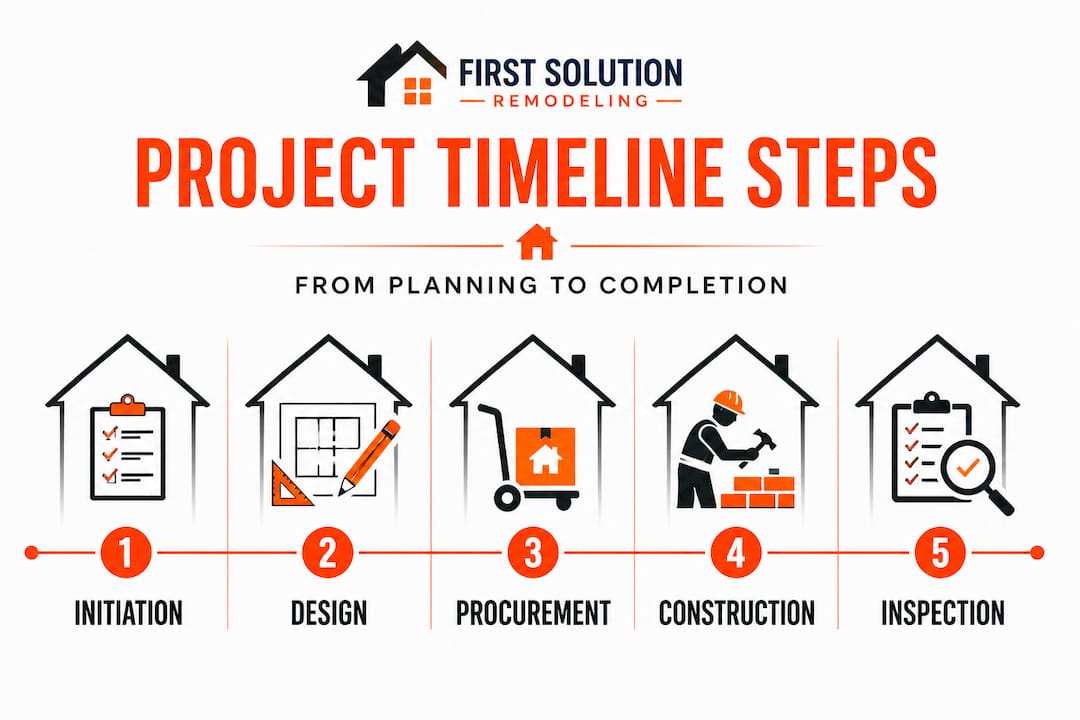
Here is a high-level look at how the phases stack up:
| Phase | What happens | Typical milestone |
|---|---|---|
| Project initiation | Goals defined, feasibility checked | Signed scope of work |
| Design | Drawings, permits submitted | Approved plans |
| Procurement | Materials ordered, contractors hired | Materials on site |
| Construction | Building, monitoring, inspections | Structural completion |
| Closeout | Final walkthrough, punch list done | Certificate of occupancy |
“A construction project without a timeline is just an expensive wish list.” Timelines are not red tape. They are the architecture of your decision-making.
The value of visualization in construction planning also plays a role here. When designers and owners can see what a project will look like before it is built, fewer changes occur mid-construction, and timelines stay tighter. That early investment in clarity pays off dramatically later.
The five main stages of a construction project
With the big picture defined, it helps to know exactly what happens in each phase and what your job as the owner actually is at every step. One commonly used framing covers five phases: pre-design and project initiation, design (preconstruction), procurement, construction and monitoring, and post-construction closeout. Here is what each stage actually looks like on the ground.
-
Pre-design and project initiation. This is where you define what you want and whether it is realistic. You review your budget, meet with contractors or architects, and set the scope of work. Do not rush this stage. Owners who skip thorough feasibility checks almost always discover mid-project surprises that cost more to fix than they would have to prevent.
-
Design (preconstruction). Architects and designers translate your goals into technical drawings. For commercial projects, this often includes engineering review. Permit applications are typically submitted at the end of this phase. This stage can take anywhere from two weeks on a simple bathroom remodel to several months on a full commercial build. The more complex the design, the longer this takes, and the longer the permit review that follows.
-
Procurement. Once plans are approved, materials get ordered and subcontractors get locked in. This phase is where supply chain problems bite hardest. Specialty items like custom windows, certain tile formats, or unique millwork can have lead times of eight to sixteen weeks. Knowing this in advance and ordering early is the difference between a smooth project and one that sits idle for a month waiting on a door frame.
-
Construction and monitoring. This is the phase most owners picture when they think of construction. It covers everything from breaking ground to framing, rough mechanical and electrical work, insulation, drywall, finishes, and fixtures. Throughout this phase, inspections occur at specific milestones. Your contractor schedules these, but you should know when they are happening.
-
Post-construction closeout. Do not underestimate this phase. The punch list (the final list of items that need correction or completion before you accept the space) can take days or weeks depending on how thorough the build was. Final inspections happen here, and the certificate of occupancy is issued at the end.
Pro Tip: Use your Illinois renovation checklist before you even hire a contractor. Knowing what approvals you will need for each phase saves you from discovering mid-project that you missed a required step.
Here is a breakdown of each stage’s responsibilities:
| Stage | Key tasks | Who leads | Owner’s role |
|---|---|---|---|
| Initiation | Scope, budget, feasibility | Owner and contractor | Set priorities and budget |
| Design | Drawings, permit applications | Architect or designer | Review and approve plans |
| Procurement | Material orders, subcontractor contracts | General contractor | Confirm selections quickly |
| Construction | Build, inspect, correct | Contractor and inspectors | Stay informed and available |
| Closeout | Punch list, final inspection | Contractor | Walk the space and sign off |
Permits and inspections: why Illinois timelines take longer
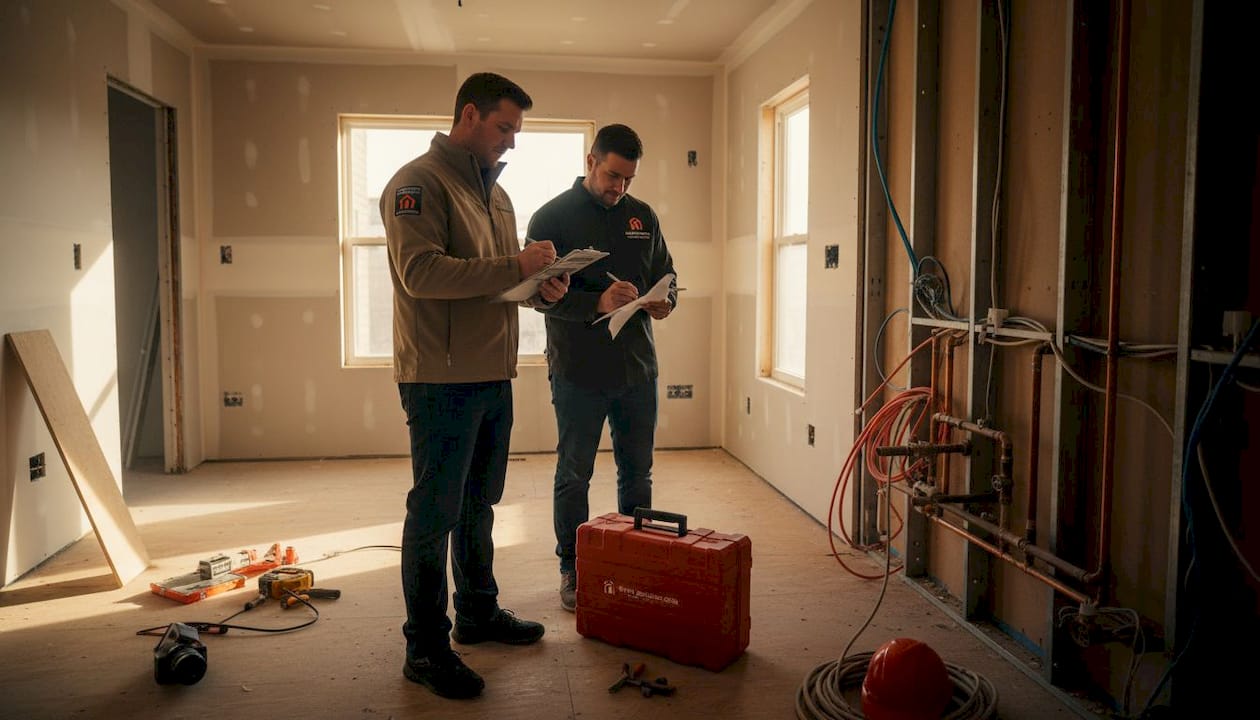
One of the biggest surprises for first-time renovators in Illinois is how much time permitting and inspections add to the overall schedule. This is not unique to Illinois, but the permitting and inspection process here generally adds time and drives sequencing because plan review must occur before any permit is issued, and inspections follow specific construction stages. A failed inspection means work stops, corrections are made, and a re-inspection is scheduled. That can add one to three weeks per occurrence.
Inspections in Illinois typically happen at these stages:
- Foundation inspection before concrete is poured
- Rough framing inspection before walls are closed
- Mechanical, electrical, and plumbing rough-in inspection before insulation goes in
- Insulation inspection before drywall is installed
- Final inspection after all work is complete
- Certificate of occupancy for new structures or major additions
Each of these is a hard stop. You cannot move forward until the inspector signs off. Understanding typical Illinois permit delays and planning your contractor schedule around these checkpoints is critical. For commercial work, commercial renovation permits often involve additional reviews and can add substantial time before a single wall comes down.
Here is how timelines compare when things go smoothly versus when they do not:
| Scenario | Permit review | Inspections | Typical added time |
|---|---|---|---|
| Clean application, no corrections | 2 to 4 weeks | Pass on first attempt | Minimal |
| Minor corrections required | 4 to 6 weeks | One re-inspection needed | 2 to 4 weeks added |
| Major plan revisions | 8 to 12 weeks | Multiple re-inspections | 6 to 12 weeks added |
| Incomplete initial application | Restart required | Inspection queue re-entered | Unpredictable |
Steps to reduce inspection-related delays:
- Submit complete, fully dimensioned drawings the first time
- Use a contractor or architect who knows Illinois building codes well
- Schedule inspections as soon as each phase is ready, not after
- Have all required documents on site during every inspection
- Ask your jurisdiction about digital or expedited plan review options
Using rendering tools to speed project approvals is increasingly common among experienced Illinois architects. When reviewers can clearly see what is being built, approvals move faster and requests for clarification drop significantly.
A failed inspection is not a disaster. It is a signal. But ignoring what it signals is a disaster.
What can delay your construction timeline and how to avoid it
Even a well-planned project can run into trouble. Knowing the most common delay triggers before you start puts you in a much stronger position to manage them instead of just reacting. Edge cases that affect construction timelines include permit plan-review lead times, correction cycles after incomplete applications, inspection scheduling, long-lead materials, weather and seasonality especially in northern Illinois, and scope changes during the project.
The most common delays Illinois property owners experience include:
- Incomplete permit applications that trigger a restart of the review process
- Material shortages or long lead times on specialty items not identified early
- Change orders mid-project that require design revisions or new permits
- Contractor scheduling gaps when one trade finishes late and the next cannot start
- Weather shutdowns during winter months or severe storms, especially in northern Illinois
- Failed inspections requiring corrections and re-inspection appointments
Pro Tip: Review your plans thoroughly before submission and lock in all design decisions before ordering materials. The number one cause of change orders is an owner deciding mid-project that they want something different. Each change feels small in the moment but can cascade into weeks of delay.
A realistic case example: a homeowner decides three weeks into framing that they want to move the kitchen island four feet to create an open walkway. That single change requires the contractor to revise structural plans, resubmit to the permit office, wait for review, reorder different cabinet configurations, and reschedule the plumber and electrician whose rough-in work is now in the wrong location. A two-day decision becomes a four-week delay.
Preparing for renovations in Illinois with a thorough pre-design review prevents most of these situations. Matching your choices to Illinois renovation standards from day one also eliminates costly code corrections during the build.
Understanding how early access to site conditions helps contractors sequence their work more efficiently is another angle experienced project managers use to shave time off the schedule without cutting corners.
A hard truth: why no two timelines are ever identical
Here is something most contractors will not say out loud: no template, no matter how detailed, fully predicts what your specific project will face. We have worked on Illinois projects where every box was checked and a surprise soil condition near the foundation added three weeks. We have seen supply chains deliver on time only for the wrong tile color to show up. We have watched city red tape add a month to a commercial build that was otherwise perfectly planned.
That is not a reason to despair. It is a reason to build flexibility into your mindset from day one. The property owners who handle construction best are not the ones with the perfect plan. They are the ones who communicate clearly and early, respond to surprises without panic, and understand that construction is a living process, not a factory conveyor belt.
What experienced project managers always double-check: local zoning overlays that add review layers, utility connection timelines that are controlled by third parties, and the actual lead times on every material before a single permit is filed. These are the details that separate a timeline that holds from one that collapses.
If you are managing an Illinois commercial project, this mindset is especially important. Commercial builds involve more stakeholders, more inspections, and more code layers than residential projects. Building in a 10 to 15 percent time contingency is not pessimism. It is professional standard practice.
The biggest shift you can make as an owner is to stop treating the timeline as a promise and start treating it as a living document. Your contractor updates it as conditions change. You stay informed. Decisions get made quickly when they need to be. That rhythm is what keeps projects on track more than any app or spreadsheet ever could.
Looking for expert help with your Illinois renovation?
Understanding the framework is a strong start. Having the right team behind you is what makes it real.

At First Solution IL, we work with both residential homeowners and commercial property owners across Illinois to build realistic schedules, navigate permit requirements, and keep projects moving through every phase. Whether you are exploring our renovation services for the first time or looking for guidance on smooth commercial renovations, our team brings the local knowledge and hands-on experience that makes a difference. Browse interior remodeling examples from our completed projects and reach out for a free estimate. A clear timeline starts with a straightforward conversation.
Frequently asked questions
How long does a typical construction project take in Illinois?
Small renovations may take a few weeks, while full builds often require several months, especially given that Illinois permitting and inspection steps add sequencing time that residential owners rarely account for in advance.
What are the main stages of a construction timeline?
The five main stages are pre-design and project initiation, design (preconstruction), procurement, construction and monitoring, and post-construction closeout, each with its own tasks and required sign-offs.
Why do permits and inspections delay my project?
Permits require plan review before they are issued, and each construction stage triggers required inspections. Any failed inspection means work stops until corrections are made and a re-inspection is completed.
How can I avoid common timeline delays?
Submit complete plans the first time, choose materials that are readily available, and avoid mid-project scope changes, since correction cycles after incomplete applications and long-lead materials are two of the most preventable delay causes.
Does Illinois weather affect construction timelines?
Yes. Winter and seasonality in northern Illinois regularly cause construction slowdowns or pauses, particularly for exterior work, foundation pours, and any work requiring stable ground temperatures.