
TL;DR:
- Strategic renovations in Illinois involve careful planning, including inspections, code compliance, and clear goal setting. Combining energy efficiency, historic preservation, and accessibility upgrades maximizes long-term value and tenant appeal. Using incentives like C-PACE and tax credits helps fund improvements while minimizing upfront costs and project disruptions.
Illinois business owners and commercial property managers are constantly weighing the same difficult question: which upgrades actually move the needle? With renovation budgets stretched thin, building codes evolving, and tenants demanding more from their spaces, the pressure to make the right call has never been higher. This article cuts through the noise by walking you through a practical decision framework, proven improvement strategies, and real financial data so you can invest with confidence. Whether you manage a warehouse on the South Side or a mixed-use building in the suburbs, the ideas here are grounded in Illinois-specific opportunities and real project outcomes.
Table of Contents
- How to choose the right commercial space improvements
- Maximize savings and impact with energy efficiency upgrades
- Preserve and profit: Historic rehabilitation and tax credits
- Comparison table: Improvement ideas for Illinois properties
- Our take: Why strategic improvements unlock long-term value
- Ready to transform your Illinois commercial space?
- Frequently asked questions
Key Takeaways
| Point | Details |
|---|---|
| Prioritize for impact | Start with a risk assessment and focus upgrades on business goals, compliance, and value. |
| Energy retrofits pay off | LED conversions and efficiency projects can deliver huge savings, fast ROI, and sustainability benefits. |
| Historic projects offer bonuses | Tax credits for qualified historic renovations can offset costs and enhance property image. |
| Compare options side-by-side | Use clear tables to evaluate cost, payback, and incentive eligibility among top improvement ideas. |
| Strategic planning beats trends | Smart, layered improvements create enduring value and flexibility for Illinois commercial properties. |
How to choose the right commercial space improvements
Before you pick a flooring material or schedule a contractor, you need a clear process for evaluating what your property actually needs. Skipping this step is one of the most common and costly mistakes we see on commercial projects across Illinois.
A solid planning commercial renovation process starts with a professional condition assessment. Walk the property with a licensed inspector who can identify moisture intrusion, pest damage, structural concerns, and existing code violations. These are your non-negotiables. Fixing a drainage problem before installing new flooring protects your investment and prevents rework.
Here is a numbered approach we recommend for Illinois commercial properties:
- Conduct a risk inspection to identify moisture, pests, fire hazards, and structural issues.
- Audit code compliance including ADA accessibility, electrical panels, and fire suppression systems.
- Define business goals such as energy reduction targets, brand modernization, or increased capacity.
- Separate needs from wants so essential work gets funded first and wish-list upgrades follow.
- Phase the project to minimize disruption to daily operations and spread costs over time.
- Build a realistic budget with a 15 to 20% contingency for surprises, which are common in older Illinois commercial buildings.
- Verify ADA and local code compliance before finalizing plans, especially for restrooms, entryways, and parking.
Pro Tip: Check building code accessibility requirements before your architect finalizes drawings. Retrofitting for compliance after construction starts doubles the cost.
“The most expensive renovation is the one you have to redo. Prioritizing inspections and compliance at the start of any commercial project saves far more than it costs in time and materials.”
Once you have a prioritized list of true needs, layering in improvements that deliver measurable financial returns becomes much simpler. A smooth renovation workflow keeps your tenants satisfied and your project on schedule. Think of the prioritization framework as your filter. Every improvement idea you consider passes through it before it makes the final plan.
Maximize savings and impact with energy efficiency upgrades
Energy efficiency is no longer just a sustainability talking point. It is a hard financial decision that pays back faster than most property owners expect.
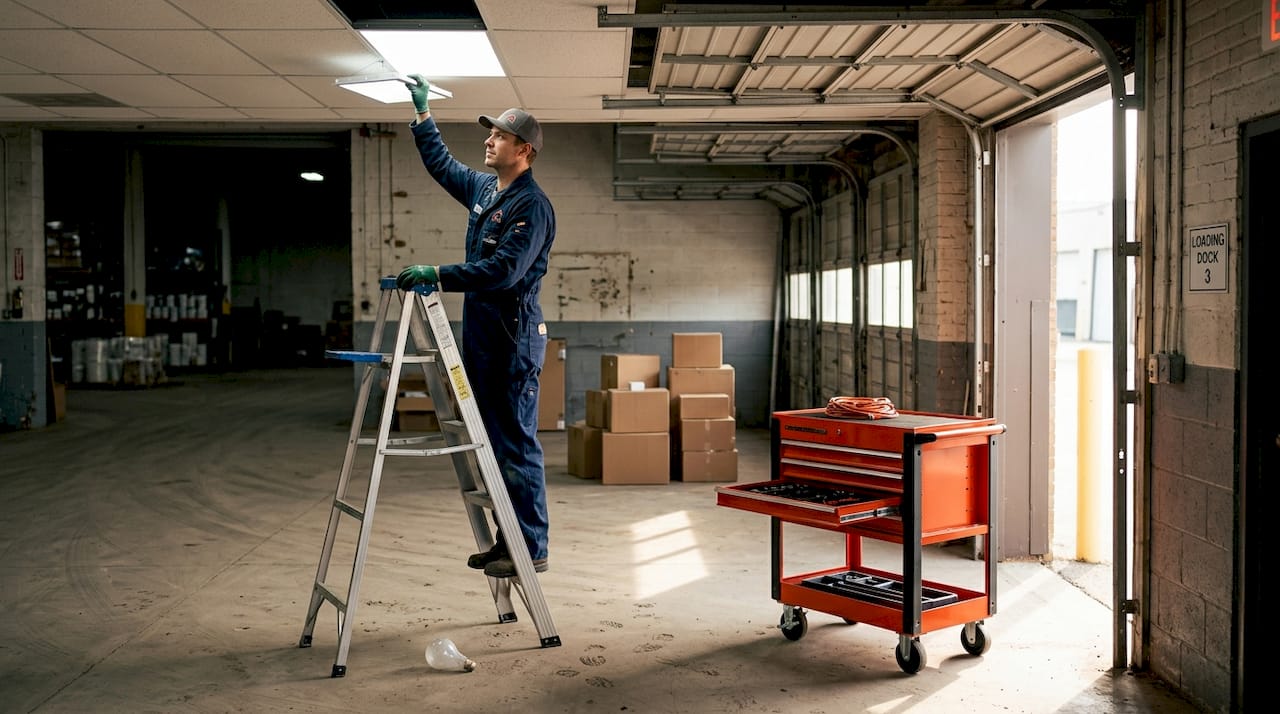
The most compelling example comes from the LED retrofit sector. A warehouse LED upgrade replacing 400-watt metal halide fixtures with 150-watt LED units achieved a 70% reduction in energy consumption, generated $41,000 in annual savings, and hit full ROI in just 14 months after a $12,000 rebate was applied. For Illinois properties where ComEd and Ameren both offer rebate programs, these numbers are realistic and repeatable.
| Upgrade type | Avg. upfront cost | Annual savings | Payback period | Incentive eligible |
|---|---|---|---|---|
| LED lighting retrofit | $8,000 to $25,000 | $10,000 to $41,000 | 12 to 24 months | Yes |
| HVAC modernization | $15,000 to $60,000 | $5,000 to $18,000 | 3 to 6 years | Yes |
| Building envelope insulation | $10,000 to $40,000 | $3,000 to $9,000 | 4 to 7 years | Partial |
| Smart building controls | $5,000 to $20,000 | $2,500 to $8,000 | 2 to 5 years | Yes |
Illinois C-PACE (Commercial Property Assessed Clean Energy) financing is one of the most powerful tools available to Illinois property owners. It requires no upfront capital because the financing ties directly to your property tax assessment. You can stack C-PACE with utility rebates, which means some projects see a 30 to 50% reduction in effective project cost before you ever touch your operating budget. This model makes large-scale energy improvements accessible even when capital reserves are limited.
Pro Tip: Pair your C-PACE application with a ComEd Energy Efficiency Program audit. The audit is often free and can identify additional rebate-eligible items you might have missed in your initial scope.
Looking into energy-efficient renovations for your property is not just about cutting utility bills. It signals to tenants and buyers that the building is well managed and forward-looking. Appraisers increasingly factor energy performance into commercial property valuations, especially for Class B and Class C buildings competing against newer inventory.
Preserve and profit: Historic rehabilitation and tax credits
Illinois has an enormous inventory of historic commercial buildings, from turn-of-the-century brick storefronts in Wicker Park to mid-century industrial spaces in Rockford. These properties carry a unique opportunity most owners do not fully use.
Qualifying historic properties are eligible for a 20% federal tax credit and a 25% Illinois state tax credit on qualified rehabilitation expenditures. These credits can also be syndicated, meaning you can sell them to investors if you do not have enough tax liability to use them directly. That makes historic rehab financially viable for a much wider range of property owners than most people realize.
Here is what makes a property eligible and how to maximize the benefit:
- The building must be listed on or eligible for the National Register of Historic Places.
- Renovation work must follow the Secretary of the Interior’s Standards for Rehabilitation.
- Qualified expenditures include walls, windows, roofing, and interior work tied to the certified rehabilitation.
- Non-qualifying expenses include acquisition costs, new additions, and furnishings.
- Working with a preservation architect from the start avoids costly scope changes later.
Pro Tip: Engage the Illinois Historic Preservation Agency early in your planning phase. Pre-application meetings are free and can save you from making rehabilitation decisions that disqualify your project.
“Restored historic buildings in Illinois consistently attract premium tenants willing to pay above-market rents for the character and story that no new construction can replicate.”
Beyond the tax credits, restored historic spaces contribute to neighborhood character and tend to appreciate faster than generic commercial properties. Exploring tax credits for historic spaces and combining them with sustainable renovation strategies creates a powerful combination. You preserve architectural integrity while meeting modern energy and accessibility standards, which is exactly what today’s sophisticated commercial tenants expect.
Comparison table: Improvement ideas for Illinois properties
With multiple improvement paths available, a side-by-side comparison helps you align your choices with budget, timeline, and business goals. This is where the decision gets practical.
Illinois C-PACE financing is non-recourse, meaning the lender cannot go after your other assets if the project underperforms. This makes it genuinely low-risk for large energy investments that would otherwise require significant capital deployment upfront. Stacking C-PACE with utility rebates can reduce effective project costs by 30 to 50%.
| Improvement type | Typical cost range | Payback period | Tax or incentive eligible | Impact on value | Disruption level |
|---|---|---|---|---|---|
| LED and energy systems | $10,000 to $80,000 | 1 to 3 years | Yes (C-PACE, rebates) | High | Low |
| Historic rehabilitation | $50,000 to $500,000+ | 5 to 15 years | Yes (20% fed, 25% state) | Very high | High |
| ADA compliance retrofit | $5,000 to $30,000 | 3 to 7 years | Possible tax deduction | Moderate to high | Low to medium |
| Curb appeal and exterior | $8,000 to $50,000 | 4 to 8 years | No | Moderate | Low |
| Flexible interior buildout | $15,000 to $100,000 | 3 to 6 years | Possible | High | Medium to high |
Several additional tips help you use this comparison effectively:
- Combine improvements where possible. An ADA retrofit during a historic rehab shares mobilization costs and often satisfies compliance requirements simultaneously.
- Use 3D visualization early in the design process. Tools like 3D visualization for planning help stakeholders approve scopes faster and reduce change orders.
- Align with your lease cycle. Major improvements timed to lease renewals reduce tenant disruption and can justify higher rents.
- Review your interior remodeling options before committing to a single improvement category. Many Illinois properties benefit most from a combination of functional and cosmetic updates rather than a single large investment.
The comparison table is not meant to rank improvements in universal order of importance. Your specific property condition, tenant mix, and financial position determine what rises to the top. Use the table as a conversation starter with your contractor and your accountant, not as a rigid formula.
Our take: Why strategic improvements unlock long-term value
Here is something we have seen repeatedly across Illinois commercial projects and it rarely gets discussed directly. The properties that build the most value over time are not the ones that chased the trendiest aesthetic or sank everything into one flashy renovation. They are the ones where the owner approached improvements as a layered, compounding strategy.
Think about what happens when you combine an energy retrofit with an ADA compliance upgrade and a refined exterior. Each improvement independently adds value. But together, they create a property that is cheaper to operate, legally compliant, visually competitive, and easier to lease. That compounding effect is significant and it is often invisible until you try to refinance or sell.
Most renovation articles focus on individual projects in isolation. That framing misses the point entirely. The real opportunity for Illinois commercial property owners is sequencing improvements in a way that makes each successive upgrade more valuable. Energy savings fund the next project. A historic tax credit syndication generates capital for an interior buildout. ADA compliance opens the property to a wider pool of tenants.
We also see owners make the mistake of waiting for a perfect budget moment that never arrives. Strategic improvements do not need to happen all at once. Phasing work intelligently, using C-PACE and incentive programs to reduce out-of-pocket costs, and working with a contractor who understands managing commercial projects in Illinois is what separates properties that appreciate from those that stagnate.
Future-proofing your space is not about predicting every trend. It is about building in flexibility, efficiency, and compliance today so that whatever the market demands in five years, your property is positioned to meet it.
Ready to transform your Illinois commercial space?
Knowing which improvements to prioritize is only half the work. The other half is having the right team execute the plan with precision, on time, and within Illinois code requirements.

At First Solution IL, we work with commercial property owners across Illinois to bring every stage of the improvement process to life. Whether you need construction services in Chicago for a large-scale project or targeted commercial remodeling services for a specific space, our team understands local codes, available incentives, and what tenants actually respond to. We handle everything from initial assessments through final finishing, so your project moves efficiently without the usual back-and-forth. Explore our full range of services and request a free estimate to get started with a team that treats your property like our own.
Frequently asked questions
What types of commercial space upgrades have the highest ROI in Illinois?
Energy efficiency retrofits, ADA compliance upgrades, and restoring historic buildings with tax credits often deliver the highest ROI for Illinois commercial properties. A warehouse LED retrofit alone can generate $41,000 in annual savings with ROI in under 14 months.
How do I know if my Illinois property qualifies for historic preservation tax credits?
Eligible properties must be certified historic structures and renovations must follow specific rehabilitation standards to qualify. Illinois offers both a 25% state tax credit and a 20% federal credit on qualified rehabilitation expenditures.
Can I finance large-scale improvements without significant upfront capital?
Illinois C-PACE financing ties repayment to property tax assessments so you can fund major energy projects without depleting reserves, and stacking it with rebates can reduce total project costs by 30 to 50%.
What is the best way to prioritize commercial space improvements?
Start with a risk and code inspection, then align upgrades with specific business goals before evaluating incentive eligibility. Following a structured renovation methodology that includes phasing and a 15 to 20% contingency budget will keep your project on track from day one.