
TL;DR:
- Structured exterior upgrades, like roofing and siding, prevent costly future repairs.
- Proper sequencing from roof to gutters optimizes durability and water protection.
- High-ROI updates include garage doors, entry doors, and durable siding.
Illinois homes with strong curb appeal sell 7% faster and higher than comparable properties with neglected exteriors. That’s not a cosmetic benefit. It’s a real financial advantage that shows up at closing. Whether you’re planning to sell within the year or simply want to feel proud pulling into your driveway, a structured exterior makeover delivers lasting results. The key word is structured. Without a clear sequence, the wrong order of work creates rework, moisture problems, and costly delays. This guide walks you through every step, from planning and permits to high-ROI upgrades and knowing when to hire a pro.
Table of Contents
- Plan your exterior makeover: what you need to know first
- Step-by-step exterior makeover sequence
- boost curb appeal with high-ROI upgrades
- DIY vs pro: what to tackle yourself and when to hire
- Expert perspective: why the right sequence (and pro help) trumps budget shortcuts
- upgrade your Illinois home with expert remodeling services
- frequently asked questions
Key Takeaways
| Point | Details |
|---|---|
| Start with planning | Strong ROI projects and legal compliance save money and reduce headaches. |
| Follow the right sequence | Roof, siding, windows, then gutters—this order protects your investment and avoids common pitfalls. |
| Prioritize high-value upgrades | Garage and entry door replacements offer the biggest returns in Illinois. |
| Know when to hire pros | DIY can work for basics, but complex work needs licensed contractors to ensure quality and compliance. |
Plan your exterior makeover: what you need to know first
Before diving into the actual renovation work, you’ll need a strong plan that covers both logistics and compliance. The planning phase is where most Illinois homeowners either save money or accidentally waste it.
Start by identifying which projects will return the most value for your specific situation. Not all upgrades are equal. A fresh coat of paint costs far less than new siding but delivers different results depending on your home’s current condition. Before spending a dollar, walk your property with a notebook and document what needs replacing versus what simply needs refreshing.
Permit requirements are a detail many homeowners overlook until it causes a problem. Illinois requires permits for structural exterior work like roofing and siding replacements, and local rules vary significantly between suburbs and cities. Chicago, for example, has stricter code enforcement than many rural counties. Getting caught without a permit can delay your project by weeks and trigger fines.
Pro tip: Before hiring anyone, ask your contractor for proof of their Illinois state license and general liability insurance. Request copies, not just verbal confirmation. This single step protects you from financial exposure if something goes wrong on your property.
Think carefully about contractor selection. A low bid often means cut corners on materials or labor. When vetting candidates, use this checklist to stay organized:
- License verification: Current Illinois contractor license on file
- Insurance documentation: General liability and workers’ comp certificates
- References: At least 3 completed projects similar to yours
- Written estimate: Line-item breakdown, not a vague total
- Timeline agreement: Start and projected end dates in writing
- Material specifications: Brand names and grades listed explicitly
For a deeper look at what solid Illinois renovation prep actually looks like before breaking ground, that resource walks through the logistics in detail.
| Project type | Illinois permit required? | Average permit timeline | Key compliance note |
|---|---|---|---|
| Full roof replacement | Yes | 2–4 weeks | Required inspection after install |
| New siding installation | Yes | 1–3 weeks | Must meet energy code in many counties |
| Window replacement | Sometimes | 1–2 weeks | Required if structural change involved |
| Entry door swap | Usually not | N/A | Check local ordinance for historic areas |
| Paint or stain | No | N/A | HOA approval may still be needed |
A solid Illinois renovation planning approach also means setting a realistic contingency budget of 10–15% above your estimate. Material prices in 2026 have fluctuated, and surprises happen even on well-managed projects. Having a detailed renovation checklist before your first contractor meeting keeps negotiations focused and protects you from scope creep.
Step-by-step exterior makeover sequence
With your prep and paperwork in order, you can move on to the construction. Here’s how to approach it step by step. The sequence matters enormously because each trade relies on the work completed before it.
The correct execution sequence begins with roofing, then moves to siding, followed by windows and doors, with gutters and downspouts handled last. This order isn’t arbitrary. If you install new windows before replacing your roof, the roof work can damage or contaminate your new window installations. Each phase protects the one that follows.
- Address the roof first. Replace or repair damaged shingles, flashing, and underlayment before any other work begins. The roof is your home’s primary weather shield, and every other exterior element sits beneath it.
- Move to siding replacement. Remove old material completely. Install a proper moisture barrier, then metal flashing at all joints and transitions. The new siding goes on last. This layer order is what keeps water out for decades.
- Replace windows and exterior doors. New windows and doors improve energy efficiency noticeably. In Illinois winters, older single-pane windows can account for up to 30% of heat loss. New units pay back in lower utility bills every season.
- Install gutters and downspouts. These go on last because they connect to both the roofline and the siding. Their job is to carry water safely away from your foundation, protecting all the work you’ve completed above.
“The sequence of exterior renovation is not a suggestion. It’s a system. When homeowners skip steps or reverse the order, they often end up paying twice for the same work.”
Here’s how professional and DIY approaches compare across each stage, helping you understand renovation stages that consistently create delays when mismanaged:
| Stage | Pro recommended? | DIY risk level | Why it matters |
|---|---|---|---|
| New roof | Yes | High | Wrong install voids shingle warranty |
| Full siding swap | Yes | High | Poor flashing causes rot and mold |
| Window replacement | Yes | Medium | Air sealing is technical; mistakes cost energy |
| Door installation | Pro preferred | Medium | Frame alignment affects security and sealing |
| New gutters | Either | Low | DIY feasible with proper slope and hangers |
For complex projects involving multiple trades, scheduling renovations correctly across contractors keeps your project on track and reduces costly idle time between phases.
boost curb appeal with high-ROI upgrades
Now that you know the right order of work, let’s zero in on the smartest upgrades for resale and day-to-day enjoyment. Some exterior investments dramatically outperform others when measured purely by return at sale time.
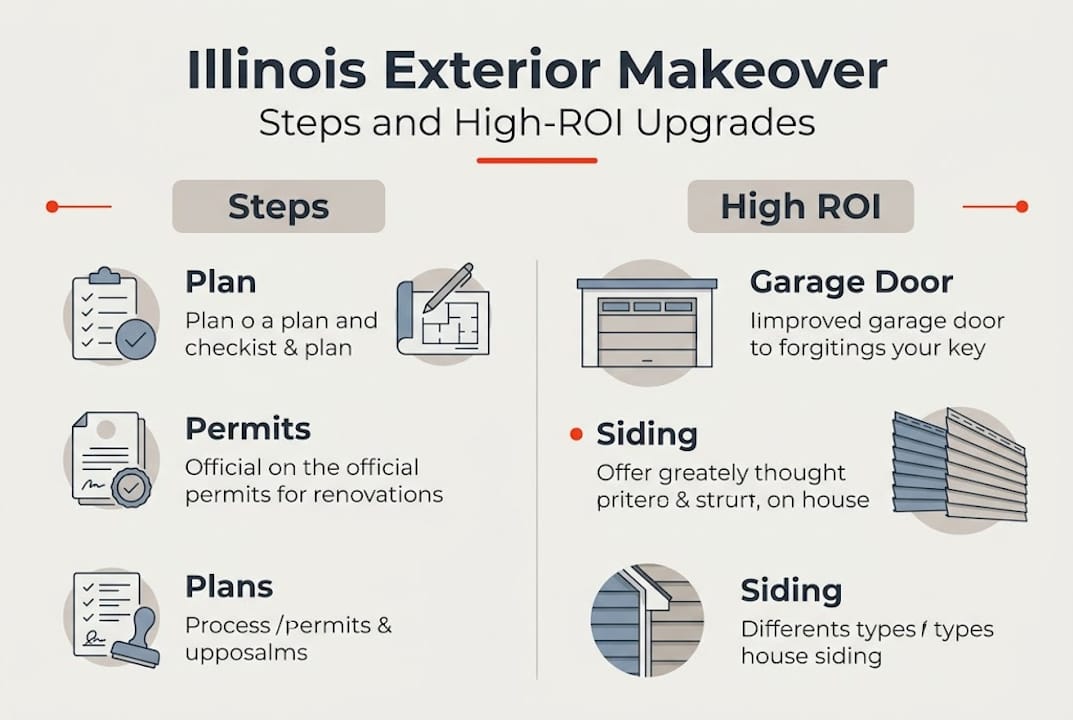
The 2025 Cost vs Value data is striking for Illinois homeowners: garage door replacement delivers a 267.7% ROI, steel entry door replacement comes in at 216.4%, manufactured stone veneer reaches 207.9%, and fiber-cement siding lands at 113.7%. These aren’t small improvements. They represent real dollars recovered at closing.
Garage doors and front entry doors top the list for one practical reason: they’re the first things buyers see. A dated, dented garage door signals deferred maintenance throughout the home, even if the interior is spotless. A new steel entry door, meanwhile, adds security, energy efficiency, and immediate visual impact for a relatively modest investment.
High-impact curb appeal upgrades worth prioritizing:
- New garage door (steel or insulated composite)
- Steel or fiberglass entry door with quality hardware
- Fresh fiber-cement or vinyl siding in a current color palette
- Stone or brick veneer accent at foundation or entryway
- Updated exterior lighting fixtures
- Professional landscaping with defined borders and mulch
| Project | Average cost | Average return | Net gain |
|---|---|---|---|
| New garage door | $4,500 | $12,000+ | High |
| Steel entry door | $2,200 | $4,750+ | High |
| Stone veneer accent | $11,000 | $22,800+ | Very high |
| New vinyl siding | $17,000 | $19,300+ | Strong |
| New fiber-cement siding | $21,000 | $23,900+ | Strong |
For a detailed breakdown of Illinois exterior ROI by project category, and guidance on matching upgrades to your neighborhood’s price range, that resource goes further into the numbers.
Homes in higher-value Illinois zip codes benefit more from premium materials like fiber-cement over vinyl. In entry-level markets, vinyl siding with upgraded trim delivers strong visual results without overspending relative to neighborhood values. Understanding the best renovation types for your specific area is what separates smart investment from wasted spending.
DIY vs pro: what to tackle yourself and when to hire
Not every exterior makeover task requires the same expertise or licensing. Here’s how to make smart choices based on risk, cost, and Illinois law.
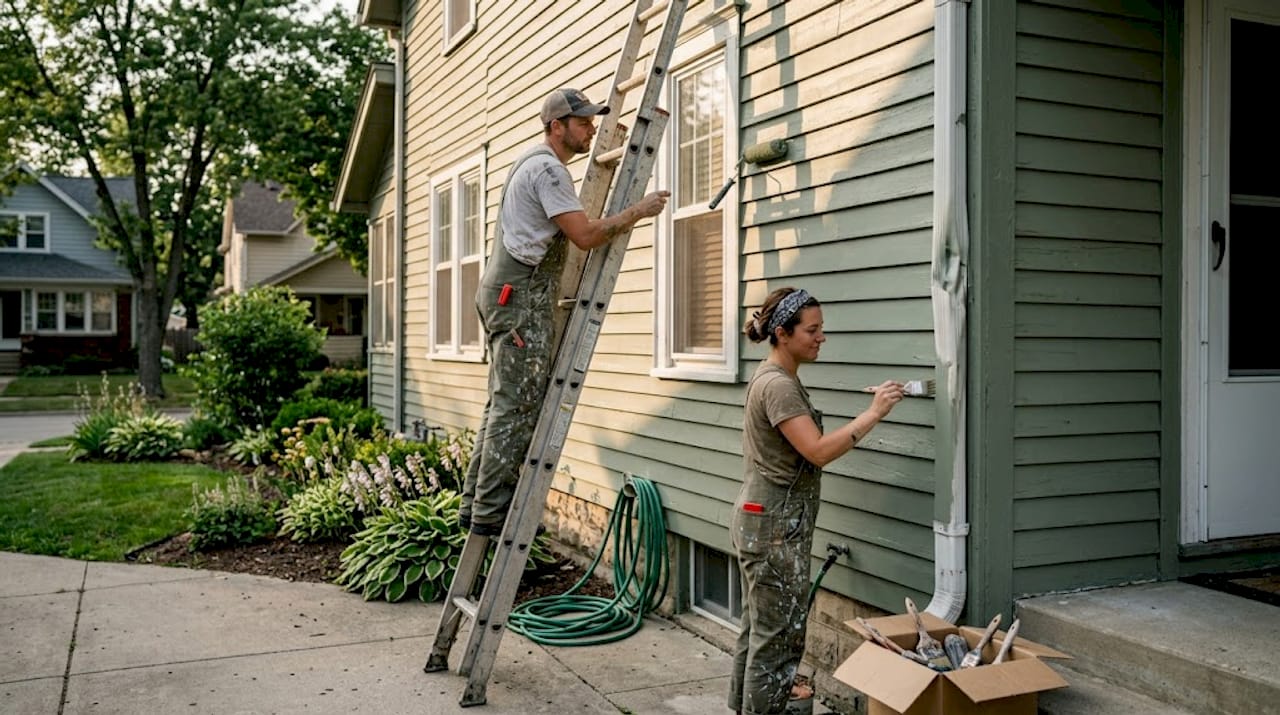
Some projects are genuinely appropriate for confident DIYers. Paint and landscaping are the clearest examples, while roofing and siding require pros to avoid voiding warranties or causing leaks. That’s not a sales pitch. It’s a practical boundary based on what goes wrong most often.
Painting, pressure washing, mulching, and minor caulking are low-stakes tasks. A mistake costs you time and a little material. The ceiling on damage is low. But when you move into roofing, full siding replacement, or window installation, the risk profile changes completely.
DIY roofing mistakes don’t just fail aesthetically. They allow water intrusion that can rot your sheathing, damage insulation, and grow mold inside walls you can’t see. By the time the problem surfaces visibly, you may be looking at a repair bill far larger than the professional install would have cost.
Pro tip: Illinois homeowners who DIY structural exterior work without pulling permits can face complications when selling. Title companies and buyers’ inspectors look for permitted work, and unpermitted repairs can derail a closing at the worst possible moment.
What to DIY and what to hand off:
- DIY appropriate: Interior and exterior painting, pressure washing, mulching, minor caulking, light fixture swaps, gutter cleaning
- Pro required: Full roof replacement, siding removal and installation, window replacement involving structural framing, exterior door installation in older frames
- Pro strongly recommended: Any work requiring an Illinois permit, any project affecting moisture barriers or structural elements
“The most expensive repair calls we see follow a predictable pattern: a homeowner saved money upfront by doing it themselves, but the hidden damage from improper installation cost three to five times the original savings.”
Working with licensed Illinois contractors isn’t just about following rules. Licensed pros carry errors and omissions coverage. If the work fails, you have recourse. With unlicensed labor, you often don’t.
Expert perspective: why the right sequence (and pro help) trumps budget shortcuts
Having reviewed DIY options, it’s worth considering the underlying principles that separate lasting value from costly mistakes.
In our experience working on Illinois homes across a wide range of budgets, the most expensive projects we’ve been called to fix share one common thread: someone skipped a step to save money or time. It’s almost never about cheap materials. It’s about skipped moisture barriers, flashing installed backward, or siding applied before the roof was watertight.
The counterintuitive truth is that maximizing renovation value actually requires slowing down in the planning phase. When the sequence is right and the right professionals handle the technical work, homeowners often find they have more room for genuine DIY involvement in the finishing touches, not less. A professional-led structural process creates a stable foundation where your own sweat equity on painting or landscaping actually shows up beautifully. Cut the wrong corner early, and no amount of curb appeal work covers what’s happening behind your siding.
upgrade your Illinois home with expert remodeling services
Ready to move from plan to flawless execution? First Solution IL is a one-stop resource for Illinois homeowners who want exterior transformations done right the first time.

Our teams handle everything from full exterior remodeling to permit navigation, material selection, and scheduling coordination. Whether you’re replacing a front door or tackling a complete siding and roofing project, we make sure every phase meets Illinois code and your personal vision. Browse our all exterior remodeling services to see the full range of what we offer. If door work is part of your plan, our guide on door installation tips walks through the details that make the difference between a draft-free, secure install and a frustrating callback.
frequently asked questions
Which exterior renovation gives the best ROI in Illinois?
garage door replacements currently top the ROI chart for Illinois homeowners at over 267%, making them the single highest-returning exterior project on the market today.
Do I need a permit for new siding or a roof?
Yes. Illinois requires permits for structural exterior work like roofing and siding replacements, with stricter local rules in cities like Chicago. Always check with your municipality before starting.
Are there any exterior projects suitable for DIY?
Painting, pressure washing, and landscaping are often DIY-friendly. roofing, siding, and windows should be left to professionals to protect warranties and avoid compliance issues.
How much does a professional exterior paint job cost?
Expect to pay between $3,000 and $8,000 for professional exterior painting of a 1,500 to 3,000 square foot home in Illinois, depending on prep work required and surface condition.