
TL;DR:
- Illinois property owners must comply with state and local building codes during renovations.
- Upgrades like lighting, acoustics, and flooring offer high tenant appeal with lower compliance complexity.
- Context-specific planning ensures renovations fit building constraints, saving costs and streamlining permits.
Illinois commercial property owners face a tighter set of constraints than most people realize. You’re balancing fresh statewide building codes that took effect in 2025, older building stock that may hide asbestos or outdated electrical systems, and tenants who now expect spaces designed for hybrid work. Getting this right means more than picking trendy finishes. It means making strategic choices that protect your investment, satisfy code inspectors, and give tenants a reason to sign long leases. This article walks you through exactly how to do that.
Table of Contents
- Key criteria for selecting office improvement ideas
- Popular office improvement ideas for Illinois buildings
- Designing for hybrid work and wellness
- Comparison table: Top office improvements by impact and complexity
- Making your decision: Matching improvements to your property
- A fresh take: Why context, not just trends, should drive your Illinois office improvements
- Take the next step with proven Illinois office renovation expertise
- Frequently asked questions
Key Takeaways
| Point | Details |
|---|---|
| Start with code compliance | Illinois statewide and Chicago-specific building codes drive all renovation planning. |
| Prioritize hybrid-ready spaces | Flexible layouts and acoustic solutions support today’s workforce demands. |
| Address legacy hazards | Mandatory asbestos abatement and structural audits can’t be skipped in older buildings. |
| Compare impact and complexity | Use side-by-side comparisons to match improvement ideas to your budget and goals. |
| Expert guidance pays off | Partnering with pros ensures compliance, maximizes ROI, and smooths the renovation process. |
Key criteria for selecting office improvement ideas
With these challenges in mind, here are the core criteria to consider before selecting specific improvement ideas.
Before you commit to any renovation, you need a clear framework for evaluating your options. Jumping straight to design choices without checking these factors is how projects end up over budget, delayed by permit issues, or requiring expensive rework.
Compliance with current Illinois codes
Illinois adopted statewide building codes effective January 1, 2025, based on 2021 ICC standards including the IBC, IEBC, and IECC for commercial renovations. Chicago has its own additional requirements that are stricter in several areas. Any improvement you plan must be reviewed against both the state standard and your municipality’s local amendments.
Staying current with Illinois building codes compliance is not optional. Violations can result in stop-work orders, fines, and required demolition of completed work.
Existing building conditions
Older office buildings in Illinois often carry grandfathered conditions, meaning certain outdated systems were allowed to remain because they met code at the time of original construction. The moment you trigger a renovation, those grandfathered protections can disappear. A full code and structural assessment before planning is essential.
Hybrid work demands
Today’s tenants need more than rows of desks. They need quiet zones for focused work, open areas for team collaboration, and flexible configurations that can adapt as their headcount shifts. Any improvement that ignores hybrid work realities will feel dated before the ink dries on the lease.
Property value and tenant appeal
Every dollar you spend on improvements should move the needle on either lease rates or tenant retention. Some upgrades, like modern lighting and acoustic panels, deliver fast, visible results. Others, like floor plan reconfigurations, carry higher upfront costs but can unlock significantly higher rent per square foot.
- Confirm compliance with 2025 Illinois statewide and local codes before finalizing any plans
- Identify grandfathered conditions that a renovation might void
- Map out what hybrid work zones your tenants actually need
- Calculate expected impact on lease rates or occupancy before committing budget
- Assess structural quirks like column placement, load-bearing walls, and utility locations
Pro Tip: Always start with a code and structural assessment before designing anything. Discovering a load-bearing wall or an asbestos-containing floor tile after demolition begins is far more expensive than finding it in a pre-renovation survey.
Popular office improvement ideas for Illinois buildings
Armed with these criteria, you can explore which specific improvements deliver the best blend of compliance, functionality, and value.
Here are the most impactful upgrades Illinois commercial property owners are implementing right now, along with the practical details that make each one work.
1. Modern lighting upgrades
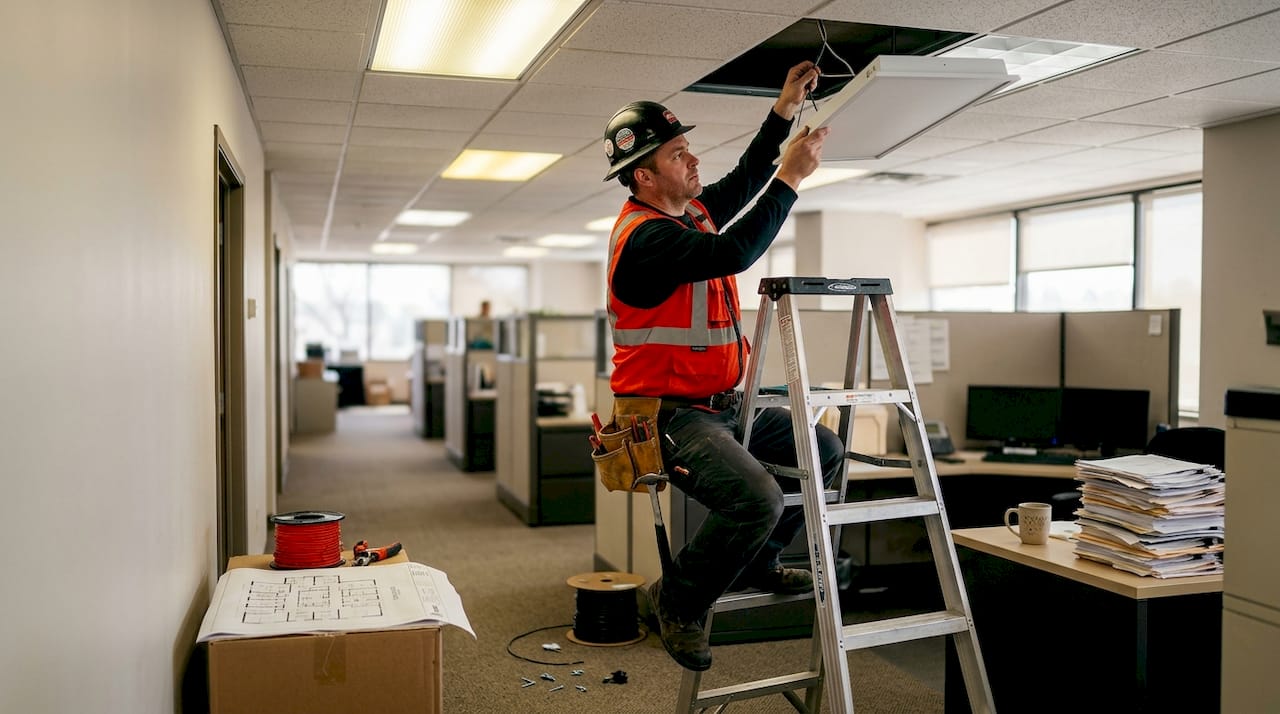
Switching to LED fixtures with occupancy sensors and daylight harvesting controls satisfies IECC energy efficiency requirements while cutting operating costs significantly. Tenants notice lighting quality immediately. Poor lighting is one of the top complaints in office satisfaction surveys, and it is also one of the cheapest problems to fix relative to its impact.
2. Flexible wall systems
Demountable partition walls allow tenants to reconfigure their floor plan without a full construction project. These systems are especially valuable in multi-tenant buildings where occupants change over time. They also reduce waste compared to traditional drywall demolition, which aligns with sustainability goals that many corporate tenants now require in their leases.
3. Floor plan modernization
Removing underused private offices and adding breakout zones, focus pods, and collaborative areas transforms how a space feels and functions. This is where enhancing office spaces in Illinois requires the most careful planning, because structural changes trigger the broadest range of code reviews.
4. Resilient flooring upgrades
Luxury vinyl tile (LVT) and polished concrete are popular choices for Illinois office renovations because they are durable, easy to maintain, and visually modern. However, in buildings constructed before 1980, floor tile removal often uncovers asbestos-containing materials.
Important: Asbestos abatement is mandatory for commercial renovations in Illinois when asbestos-containing materials are present. Skipping this step is not just a code violation. It is a serious liability and health risk. Budget for testing and remediation before any flooring work begins.
5. Acoustic improvements
Open floor plans create noise problems that frustrate employees and reduce productivity. Suspended acoustic ceiling panels, wall-mounted baffles, and white noise systems are cost-effective solutions that do not require structural changes. These upgrades are particularly valuable for workspace renovation trends in hybrid environments where some employees are on video calls while others need deep focus.
6. HVAC and air quality upgrades
Post-pandemic tenants pay close attention to air quality. Upgrading to MERV-13 or higher filtration, adding UV air purification, and ensuring proper ventilation rates per ASHRAE 62.1 standards all contribute to tenant wellness and code compliance simultaneously.
Pro Tip: Before finalizing any floor plan changes, conduct a column buffer and door swing audit. Columns and structural elements limit where walls can go, and door swing clearances are a frequent code issue that causes expensive redesigns late in the process.
Designing for hybrid work and wellness
While structural and material upgrades are vital, supporting flexible workstyles can set your property apart from competing buildings.
The shift to hybrid work is not a temporary trend. It is a permanent change in how companies use office space, and Illinois property owners who design for it will attract and keep better tenants.
Activity-based zoning
The most effective hybrid offices divide space into distinct zones based on activity type. Balancing open collaboration with quiet pods is one of the most common design challenges in 2025 and 2026. A well-designed floor plan typically includes:
- Open collaboration areas with writable walls and flexible furniture
- Quiet focus zones with acoustic separation and minimal visual distraction
- Private pods or phone booths for calls and video meetings
- Social spaces like coffee bars and informal lounge areas
- Bookable conference rooms in multiple sizes
Wellness features
Biophilic design, which incorporates natural elements like plants, natural light, and organic materials, has measurable effects on employee well-being and productivity. Adding planters, maximizing window exposure, and using natural wood tones in finishes are relatively low-cost ways to achieve this. Ergonomic furniture choices, standing desk infrastructure, and improved air quality round out a wellness-focused renovation.
Noise control for hybrid offices
When half the team is remote on any given day, the people in the office are constantly on video calls. Without proper acoustic planning, the noise spillover between zones becomes a serious problem. Privacy systems, including acoustic curtains, glass partition systems with sound dampening, and sound-masking technology, are worth budgeting for in any hybrid-focused renovation.
Pro Tip: Design your space for peak usage days, not average occupancy. If your tenant expects 80% of their team in the office on Tuesdays and Wednesdays, those two days define your space requirements, not the quiet Fridays when only 20% show up.
Connecting these 2026 office remodeling trends to your renovation plan also helps you meet tenant expectations for modern amenities that boost Illinois commercial interiors and command higher lease rates.
Comparison table: Top office improvements by impact and complexity
For a side-by-side look, compare these top improvement ideas based on what matters most to Illinois owners.
Note that Illinois’s 2025 statewide building codes affect compliance complexity differently for each improvement type. Cosmetic upgrades carry the lightest code burden, while structural changes and MEP (mechanical, electrical, plumbing) work require the most thorough permitting.
| Improvement | Compliance complexity | Est. cost per SF | Tenant appeal | Typical install time |
|---|---|---|---|---|
| LED lighting upgrade | Low | $3 to $8 | High | 1 to 3 days |
| Acoustic ceiling panels | Low | $4 to $10 | High | 2 to 5 days |
| Resilient flooring (LVT) | Medium (asbestos risk) | $6 to $14 | High | 3 to 7 days |
| Demountable wall systems | Medium | $25 to $60 | Very high | 1 to 2 weeks |
| Floor plan reconfiguration | High | $40 to $120 | Very high | 3 to 8 weeks |
| HVAC and air quality upgrades | High | $15 to $35 | High | 2 to 6 weeks |
| Biophilic and wellness features | Low | $5 to $20 | Medium to high | 1 to 2 weeks |
The data above reflects general Illinois market ranges. Your actual costs will vary based on building age, existing conditions, and local labor rates. The key takeaway is that low-complexity improvements like lighting and acoustics offer an excellent return relative to their cost and installation time. They are also the easiest to get through the permitting process, especially in Chicago.
For a deeper look at how these improvements fit into a full renovation workflow, explore commercial interior remodeling options that match your building’s specific profile.
Making your decision: Matching improvements to your property
To narrow your options, map the improvement ideas to your building type and renovation scenario.
Not every improvement makes sense for every property. A vintage 1920s downtown Chicago building has completely different constraints than a 1990s suburban office campus or a modern mid-rise built in the last decade.
Checklist for evaluating improvement fit
- Building age and original construction type (steel frame, masonry, wood)
- Presence of hazardous materials (asbestos, lead paint)
- Current HVAC capacity and electrical panel capacity
- Structural quirks like column grids and load-bearing wall locations
- Lease goals (short-term tenant flexibility vs. long-term anchor tenant)
- Budget timeline and phasing options
Scenario-based recommendations
| Building type | Key challenge | Recommended improvements |
|---|---|---|
| Vintage downtown (pre-1960) | Asbestos, grandfathered systems, tight column grids | Lighting, acoustics, flooring with abatement, HVAC upgrades |
| Suburban campus (1980s to 1990s) | Dated aesthetics, oversized private offices | Floor plan reconfiguration, demountable walls, wellness features |
| Modern mid-rise (2000s onward) | Hybrid work adaptation, tenant churn | Activity-based zoning, acoustic pods, flexible furniture systems |
The structural planning details that matter most, including column buffers, door swing clearances, and floor box audits, are especially critical in vintage buildings where the original layout was never designed for modern open-plan work.
Even small upgrades carry real impact. Replacing outdated fluorescent fixtures with LED panels and adding two or three acoustic baffles to a noisy open area can dramatically improve tenant satisfaction without a major construction project. For guidance on managing Illinois remodeling projects from start to finish, working with a licensed contractor who understands both the code landscape and the practical realities of older Illinois buildings is the most reliable path forward.
A fresh take: Why context, not just trends, should drive your Illinois office improvements
After reviewing the landscape of options, here is why a context-first approach is critical for Illinois commercial owners.
The renovation industry produces a steady stream of trend reports, and it is tempting to use them as a shortcut for decision-making. Biophilic design is trending. Activity-based zoning is trending. Demountable walls are trending. The problem is that trends are averaged across thousands of buildings in dozens of markets. Your building is not average.
We have seen Chicago property owners spend significant money chasing open-plan layouts in buildings where the column grid makes true open plans impossible without structural work that triples the budget. The trend was right. The context was wrong.
The smarter approach is to start with what your building can actually support, then layer in trend-aligned improvements where they fit naturally. A vintage downtown building with tight column spacing might be a better candidate for acoustic upgrades and lighting modernization than a full floor plan reconfiguration. Those improvements cost a fraction of structural work, clear code review faster, and deliver visible results that tenants appreciate immediately.
There is also a compliance argument for context-first thinking. Improvements that work with your building’s existing systems and structure are far less likely to trigger cascading code requirements. The moment you start moving walls or upgrading HVAC, you can trigger accessibility, fire suppression, and energy code reviews that add months and significant cost to the project.
The renovation trends for 2026 are worth knowing. But the best Illinois office renovation is the one that fits your specific building, your specific tenant market, and your specific compliance situation. Trends are a menu, not a prescription.
Take the next step with proven Illinois office renovation expertise
Ready to move from ideas to solutions? Here is how the right partner can help you implement smart, code-ready improvements.
Navigating Illinois building codes, asbestos regulations, permit timelines, and modern workspace design simultaneously is a lot to manage. First Solution IL works with commercial property owners across Illinois to turn renovation goals into permitted, completed projects that attract and retain quality tenants.

Whether you are starting with a single floor or planning a full building renovation, our team can help you identify the right improvements for your specific property, manage the permitting process, and deliver results that hold up to inspection. Explore our Illinois office remodeling solutions to see what is possible, review our commercial remodeling workflow to understand how we manage projects from start to finish, and get clear on Illinois renovation permit guidance before your first planning meeting. Contact us today to schedule a consultation and get a free estimate tailored to your property.
Frequently asked questions
What building codes apply to office renovations in Illinois?
Illinois uses statewide codes based on 2021 ICC standards for all commercial renovations, effective January 1, 2025, with local variations that are especially stricter in Chicago. Always verify requirements with your municipality before finalizing renovation plans.
How can I make sure my office renovation addresses hybrid work needs?
Design for activity-based zones that separate collaboration, focus, and social areas, and include acoustic privacy solutions to prevent noise spillover between zones. Planning for peak-day occupancy rather than average attendance ensures the space works when it matters most.
Do I need to remove asbestos during a renovation?
Yes. Asbestos abatement is mandatory for commercial renovations in Illinois when asbestos-containing materials are identified, and skipping it exposes you to serious legal and health liability.
Which office improvements have the biggest impact on tenant retention?
Upgrades that support hybrid work, including flexible zones, acoustic improvements, and modernized lighting, consistently rank highest in tenant satisfaction surveys and have the strongest effect on lease renewal decisions.
What is the first step before starting an office improvement project?
Conduct a thorough assessment of your building’s current condition and confirm that your improvement plans meet current Illinois code requirements before committing to any design or budget.
Recommended
- Office renovation trends: elevate your Illinois workspace in 2026
- Modern Office Design Ideas for Illinois Workspaces 2026
- Office remodeling trends 2026: Illinois commercial guide
- Office Renovation: Enhancing Commercial Spaces in Illinois
- Illinois – Sparklepro Commercial Cleaning
- How To Visualize Floor Plans For Impactful Presentations