

Most commercial leaders view office remodeling as upgrading aesthetics and fitting more desks. That misses the bigger picture in 2026. Modern office transformation centers on human experience, smart technology integration, and flexibility that adapts to hybrid work realities. Illinois commercial property owners planning remodels now face unprecedented opportunities to create workspaces that genuinely support employee well-being while meeting market demands. This guide equips you with actionable insights on design trends, technology integration, sustainability standards, and strategic investment approaches shaping successful office remodeling projects across Illinois.
Table of Contents
- Human-Centric Design: Enhancing Well-Being And Collaboration
- Technology And Data-Driven Spaces: Smart Offices Of 2026
- Flexible And Sustainable Layouts: Adapting To Hybrid Work And ESG Goals
- Market Context And Strategic Remodeling Investments In Illinois
- Partner With Expert Construction Services For Your 2026 Office Remodel
Key takeaways
| Point | Details |
|---|---|
| Human-centric design | Office spaces now prioritize employee well-being, collaboration, and user sentiment over traditional occupancy metrics. |
| Smart technology integration | AI agents, occupancy sensors, and circadian lighting optimize space use and employee experience dynamically. |
| Flexible sustainable layouts | Hybrid work demands adaptable zones with LEED certification becoming standard for Illinois commercial properties. |
| Data-driven planning | Predictive analytics and peak-pulse scheduling replace passive facility management approaches. |
| Strategic market positioning | Targeted reinvestments in amenities and flexible suites unlock value despite elevated Chicago office vacancies. |
Human-centric design: enhancing well-being and collaboration
The office remodeling landscape has fundamentally shifted. Workplaces now prioritize human connection and user sentiment over simple occupancy metrics. This transformation reflects growing recognition that employee satisfaction directly impacts productivity and retention.
Successful 2026 designs focus on flexibility supporting evolving career stages and varied collaboration needs. Activity-based working zones provide distinct areas for focused concentration, team collaboration, and social interaction. Strategic zoning allows employees to choose environments matching their immediate work requirements rather than forcing everyone into identical spaces.
Biophilic elements deliver measurable benefits beyond aesthetics. Incorporating natural design increases productivity by up to 8% while reducing stress and fatigue. Living walls, natural light optimization, and organic materials create environments supporting physiological stability throughout workdays.
Ergonomic furniture selection has evolved beyond basic chair adjustments. Modern offices incorporate micro-movement calibrated workstations encouraging subtle position changes that improve circulation and reduce musculoskeletal strain. Standing desk integrations, collaborative furniture arrangements, and acoustic treatments create holistic environments supporting diverse work activities.
Pro Tip: Combine biophilic design with circadian lighting systems that adjust color temperature throughout the day, supporting natural human rhythms and reducing afternoon energy crashes.
Commercial leaders planning office renovation in Illinois should audit current spaces against employee feedback on comfort, collaboration effectiveness, and amenity satisfaction. This human-centered approach yields better returns than traditional square footage optimization. For detailed planning strategies, review our 2026 workplace trends analysis.
Technology and data-driven spaces: smart offices of 2026
Technology integration has moved from luxury upgrade to baseline expectation. AI now functions as an integrated team member rather than passive search tool, participating in meetings, managing schedules, and optimizing resource allocation.
Predictive facility management represents the biggest operational shift. Smart occupancy sensors and lighting recipes replace reactive maintenance approaches. Sensors track space utilization patterns, environmental conditions, and employee movement flows. This data enables proactive adjustments optimizing comfort while reducing energy waste.
Key technology integrations transforming 2026 offices include:
- Occupancy sensors providing real-time space utilization data for dynamic room booking and climate control
- Circadian lighting systems automatically adjusting color temperature and intensity supporting cognitive performance
- Integrated AV systems enabling seamless hybrid meeting experiences for remote and in-office participants
- Predictive HVAC management reducing energy consumption while maintaining optimal comfort zones
- Mobile apps allowing employees to reserve spaces, control environmental settings, and provide immediate feedback
Data strategies have evolved from volume collection to actionable insight generation. Modern facility managers analyze employee experience metrics alongside traditional utilization statistics. Peak-pulse planning accommodates hybrid work occupancy surges by identifying patterns in weekly attendance and space demands.
Successful implementations require planning technology infrastructure during initial office remodeling workflow phases rather than retrofitting afterward. Conduit pathways, power distribution, and network capacity must support current needs while allowing future expansion.
For comprehensive guidance on integrating smart systems, consult our 2026 office layouts guide covering sensor placement, network requirements, and phased technology rollout strategies.
Flexible and sustainable layouts: adapting to hybrid work and ESG goals
Hybrid work models demand fundamentally different spatial approaches. Flexible office space demand increased 20% across Midwest markets by 2026, driven by organizations supporting varied employee schedules and work preferences.
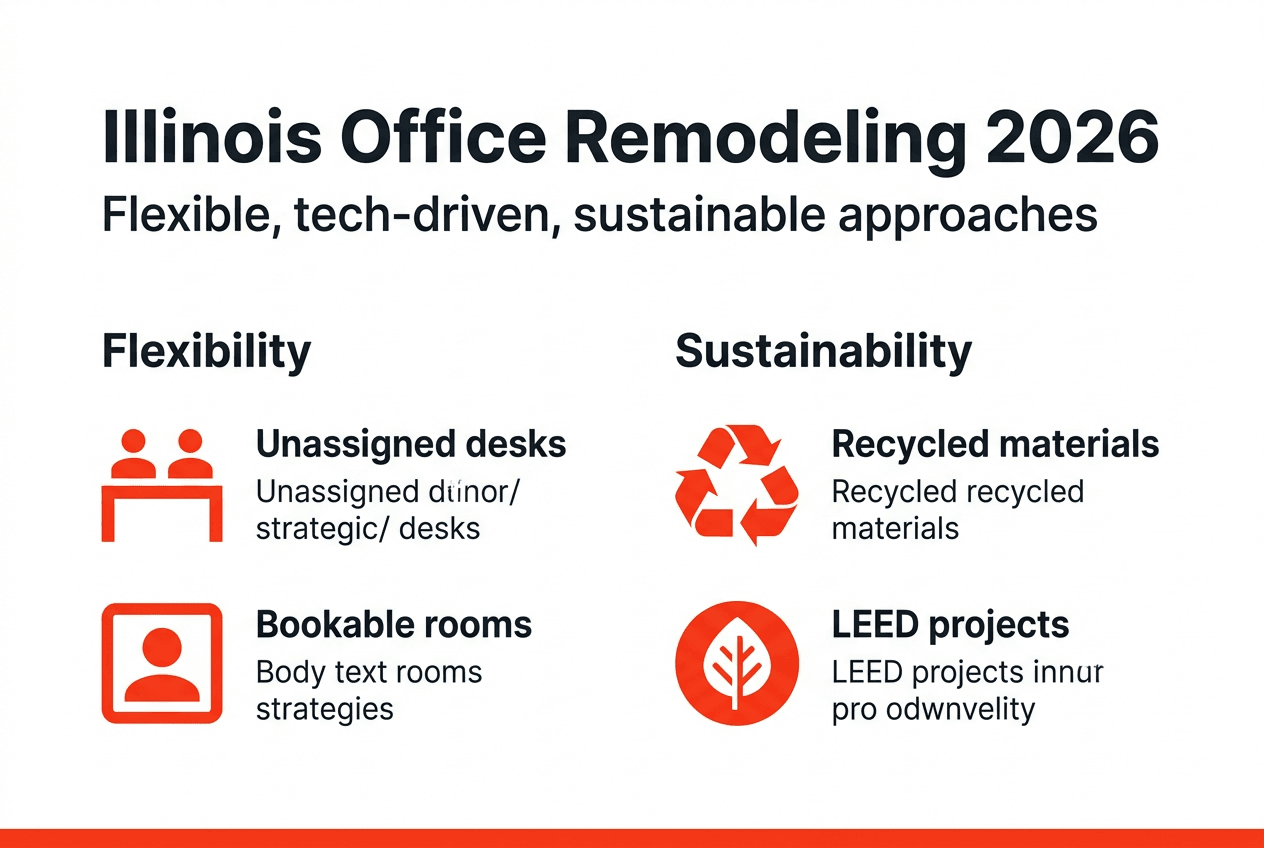
Successful flexible designs incorporate unassigned seating zones, bookable collaboration spaces, and focus rooms accommodating different daily occupancy levels. Acoustic planning becomes critical as activity levels fluctuate. Circulation routes and sound barriers are designed based on observed occupant behavior patterns rather than theoretical models.
Sustainability has transitioned from differentiator to baseline expectation. LEED-certified office projects in Illinois increased 30% between 2023 and 2024, reflecting tenant demands for environmentally responsible spaces. Energy efficiency, responsibly sourced materials, and waste reduction programs represent standard specifications rather than optional upgrades.

| Feature | Traditional Office | 2026 Hybrid-Flexible Model |
|---|---|---|
| Desk allocation | Assigned permanent workstations | Activity-based unassigned zones |
| Meeting spaces | Fixed conference rooms | Bookable pods in varied sizes |
| Sustainability | Optional green initiatives | LEED certification standard |
| Technology | Static AV systems | Integrated smart sensors |
| Layout changes | Rare major renovations | Modular furniture allowing reconfiguration |
Material selection balances durability with environmental impact. Reclaimed wood, low-VOC finishes, and recycled content carpeting improve indoor air quality while reducing carbon footprints. These choices deliver tangible health benefits alongside sustainability credentials.
Pro Tip: Pursue LEED certification early in your remodeling planning process. The framework guides sustainable decision-making while improving property marketability and reducing long-term operational costs through energy efficiency.
Commercial property owners should evaluate current layouts against flexibility requirements and ESG objectives. Our commercial interior remodeling expertise helps balance adaptability with budget realities. For budget-conscious approaches maintaining quality, explore our cost-effective remodeling solutions guide. Additional sustainability standards and certification processes are detailed at green building resources.
Market context and strategic remodeling investments in Illinois
Understanding Illinois office market dynamics helps prioritize remodeling investments strategically. Chicago’s office market has bifurcated sharply. Class A+ buildings with modern amenities attract tenants while older inventory struggles despite competitive pricing. Downtown Chicago office vacancy remains elevated around 25%, creating both challenges and opportunities.
Net absorption stabilized through second half 2025 as space returns slowed. Tenants adjusted to hybrid work realities, rightsizing commitments rather than making dramatic reductions. This stabilization signals market bottoming rather than recovery acceleration.
| Submarket | Vacancy Rate | Net Absorption Q4 2025 | Average Asking Rent |
|---|---|---|---|
| Chicago Loop | 24.8% | +45,000 sq ft | $38.50/sq ft |
| Suburban North | 18.2% | +22,000 sq ft | $28.75/sq ft |
| Suburban West | 16.5% | +18,000 sq ft | $26.50/sq ft |
| Oak Brook | 15.9% | +12,000 sq ft | $27.25/sq ft |
Strategic reinvestment unlocks significant value despite challenging conditions. Glenstar’s $30 million renovation of 200 South Wacker Drive demonstrates this approach. The project combines luxury amenities with move-in-ready flexible suites targeting tenants seeking turnkey solutions.
Effective remodeling strategies for maximizing asset value include:
- Amenity upgrades creating distinctive tenant experiences beyond basic workspace
- Flexible suite configurations allowing quick customization for varying tenant sizes
- Technology infrastructure supporting hybrid work and smart building management
- Sustainability certifications meeting corporate ESG requirements and reducing operating costs
- Common area enhancements fostering collaboration and employee engagement
Property owners should analyze tenant feedback, competitive positioning, and submarket trends before committing remodeling budgets. Targeted improvements addressing specific tenant pain points deliver better returns than broad aesthetic refreshes.
Our commercial remodeling guide provides frameworks for evaluating investment priorities, phasing projects to minimize disruption, and measuring success through tenant satisfaction and leasing velocity improvements.
Partner with expert construction services for your 2026 office remodel
Transforming office design concepts into functional realities requires experienced construction partners who understand both current trends and Illinois commercial real estate dynamics. First Solution IL brings comprehensive remodeling expertise to commercial projects across Chicago and surrounding markets.

Our team stays current on emerging office design trends, sustainability standards, and smart technology integration approaches. We work collaboratively with property managers and commercial owners to develop remodeling plans balancing innovation with budget realities. From initial concept through final walkthrough, our skilled craftsmen ensure seamless workflows minimizing tenant disruption.
We specialize in flexible space configurations, technology infrastructure upgrades, and sustainable material implementation meeting LEED standards. Our construction services in Chicago cover everything from targeted amenity enhancements to comprehensive floor renovations. Whether you’re repositioning an older asset or refreshing a modern building, our commercial interior remodeling capabilities deliver results that attract and retain quality tenants.
Contact First Solution IL today to discuss how we can modernize your workspace with forward-looking solutions tailored to 2026 market demands.
Frequently asked questions
What are the top office remodeling trends for 2026?
Hybrid work drives demand for flexible spaces with unassigned seating and adaptable meeting zones supporting varied occupancy patterns. Smart technologies like occupancy sensors and AI integration optimize comfort and operational efficiency automatically. Sustainability practices including LEED certification and biophilic design improve employee well-being while reducing long-term costs. Design priorities have shifted from maximizing occupancy rates to enhancing user sentiment and experience, boosting employee engagement and retention. Strategic reinvestment in amenities and technology can unlock significant value in Illinois office assets despite elevated market vacancies.
How can hybrid work models impact my office remodeling plan?
Hybrid work requires flexible, technology-enabled spaces accommodating fluctuating daily occupancy. Peak-pulse planning helps manage occupancy surges by analyzing attendance patterns and providing bookable zones rather than assigned desks. Activity-based layouts with varied collaboration spaces, focus rooms, and social areas support diverse work modes throughout the week.
What sustainable design practices are best for Illinois offices?
Implement energy-efficient HVAC and lighting systems reducing operational costs while meeting tenant ESG requirements. Pursue LEED certification guiding material selection, waste reduction, and indoor air quality standards. Incorporate biophilic design elements like natural light, living walls, and organic materials improving employee well-being and productivity measurably.
Why is integrating technology important in 2026 office remodels?
Technology integration supports predictive facility management through occupancy sensors and environmental controls optimizing comfort automatically. Smart systems enhance collaboration with seamless hybrid meeting capabilities and resource booking. AI-enabled analytics provide actionable insights about space utilization and employee experience, allowing continuous improvement adapting to evolving workforce needs efficiently.
How do I choose the right contractor for my Illinois office remodel?
Select contractors with specific commercial remodeling experience demonstrating knowledge of current office trends, technology integration, and sustainability standards. Review portfolios showing flexible space configurations and minimal-disruption workflows. Verify licensing, insurance, and client references from similar commercial projects. Choose partners offering collaborative planning approaches balancing innovation with budget realities while maintaining quality craftsmanship throughout execution.
Recommended
- Commercial remodeling guide: manage Illinois projects
- Office Renovation: Enhancing Commercial Spaces in Illinois
- Commercial Interior Remodeling Explained: Boost Value and Functionality
- Cost-effective remodeling solutions for Illinois 2026
- Top 7 Commercial Cleaning Companies in 2026 for Offices in Melbourne
- Apparel Trends for Businesses 2026: Workplace Impact