Many Illinois office buildings outgrow their original purpose long before leases expire, leaving property managers facing tough decisions about renovation. Navigating office updates is about more than fresh paint or better lighting. Today’s commercial tenants expect workspaces that reflect user experience and support evolving organizational needs. This article clarifies the common myths about renovations and outlines actionable strategies that lead to better tenant satisfaction and long-term value for property managers.
Table of Contents
- Office Renovation Defined and Common Myths
- Types of Office Renovation Projects
- Major Steps in Office Renovation Process
- Legal and Safety Considerations in Illinois
- Costs, Risks, and Tenant Satisfaction Factors
Key Takeaways
| Point | Details |
|---|---|
| Myths about Office Renovation | Common misconceptions include the belief that renovations are solely aesthetic and that employee input is unnecessary. Successful renovations require comprehensive planning and consideration of various aspects beyond just visual appeal. |
| Types of Renovation Projects | Key projects include Ergonomic Improvements, Technological Upgrades, and Sustainability Retrofits. Each type targets specific needs and outcomes, enhancing both employee experience and organizational performance. |
| Critical Renovation Steps | Effective office renovations involve systematic steps such as initial assessment, goal alignment, and stakeholder communication. A detailed approach minimizes disruptions and maximizes the impact of changes made. |
| Legal and Safety Compliance | Strict adherence to building codes and safety regulations is essential during renovations in Illinois. This ensures workplace safety and prevents legal issues that could impede project progress. |
Office Renovation Defined and Common Myths
Office renovation represents a strategic transformation of commercial workspaces designed to enhance functionality, aesthetics, and employee productivity. At its core, the process involves systematically upgrading and reimagining existing office environments to meet evolving business needs and workplace trends.
Understanding office renovation requires dispelling common misconceptions. Academic research on workspace quality challenges several prevailing myths about renovation strategies, emphasizing that successful transformations are about much more than cosmetic changes.
Common myths about office renovation include:
- Renovations are purely aesthetic improvements
- Minimal planning is required for successful workspace updates
- All office spaces can be renovated using a standardized approach
- Cost is the only significant factor in renovation decisions
- Employee input is unnecessary during the renovation process
In reality, effective office renovations demand a comprehensive approach that integrates multiple critical considerations. Modern renovation strategies prioritize user experience, functional design, and long-term workplace performance. These approaches go beyond surface-level improvements to create holistic work environments that support organizational goals and employee well-being.
Key Renovation Principles include:
- Conducting thorough needs assessments
- Gathering comprehensive employee feedback
- Analyzing workflow and spatial requirements
- Incorporating flexible and adaptable design elements
- Considering energy efficiency and sustainability
Successful office renovations transform workspaces from mere physical environments into strategic tools for organizational success.
Pro tip: Engage employees early in the renovation planning process to ensure the redesigned space genuinely meets their functional and psychological workplace needs.
Types of Office Renovation Projects
Office renovation projects encompass a wide range of strategic transformations designed to enhance workplace functionality, employee productivity, and organizational performance. Academic research on renovation approaches reveals multiple categories of renovation initiatives that address diverse organizational needs.
The primary types of office renovation projects include:
- Ergonomic Improvements: Redesigning workspaces to support employee health and comfort
- Technological Upgrades: Integrating modern infrastructure and digital capabilities
- Aesthetic Redesigns: Transforming visual environments to boost morale and brand representation
- Sustainability Retrofits: Implementing energy-efficient systems and green design principles
- Spatial Reconfiguration: Restructuring office layouts to optimize workflow and collaboration
Sustainability has become a critical consideration in modern office renovations. Methodological frameworks for sustainable renovations demonstrate how organizations can strategically approach environmentally conscious workplace transformations.

Here’s a summary comparing major office renovation project types and their typical business outcomes:
| Renovation Type | Main Focus | Typical Challenges | Expected Business Impact |
|---|---|---|---|
| Ergonomic Improvements | Enhancing employee well-being | Physical constraints | Higher productivity and morale |
| Technological Upgrades | Modernizing digital systems | Integration issues | Improved efficiency and flexibility |
| Aesthetic Redesigns | Refreshing workspace visuals | Brand coherence | Stronger client impression |
| Sustainability Retrofits | Energy savings, eco-friendliness | Upfront costs | Lower operating expenses |
| Spatial Reconfiguration | Optimizing space and workflow | Layout limitations | Better collaboration and agility |
Key Renovation Categories include:
- Minor Cosmetic Updates
- Comprehensive Structural Remodels
- Technology and Infrastructure Overhauls
- Energy Efficiency Implementations
- Adaptive Reuse Transformations
Modern office renovations are not just about physical changes, but strategic investments in organizational performance and employee experience.
Pro tip: Conduct a comprehensive needs assessment before initiating any renovation project to ensure alignment with organizational goals and employee requirements.
Major Steps in Office Renovation Process
Comprehensive office renovation strategies require a systematic approach that transforms workplace environments strategically and efficiently. The renovation process involves multiple interconnected phases designed to minimize disruption while maximizing organizational performance and employee satisfaction.
The primary steps in a successful office renovation include:
- Initial Assessment: Evaluating current workspace limitations and organizational needs
- Goal Alignment: Defining clear renovation objectives and desired outcomes
- Design Development: Creating detailed architectural and functional plans
- Budget Preparation: Establishing financial parameters and securing funding
- Contractor Selection: Identifying and hiring qualified renovation professionals
- Implementation Planning: Scheduling renovation activities to minimize operational disruptions
Detailed Renovation Workflow:
- Comprehensive Space Evaluation
- Stakeholder Consultation and Feedback Collection
- Conceptual Design and Preliminary Drawings
- Detailed Project Scheduling
- Phased Implementation Strategy
- Quality Control and Final Inspection
Professional renovation guides emphasize the critical importance of maintaining clear communication throughout the renovation process. Successful transformations require meticulous planning, flexible approaches, and continuous stakeholder engagement.
Effective office renovations are strategic investments that balance aesthetic improvements, functional optimization, and organizational culture.
Pro tip: Create a detailed communication plan to keep all stakeholders informed and minimize potential disruptions during the renovation process.
Legal and Safety Considerations in Illinois
Illinois building code regulations establish comprehensive legal frameworks that commercial property managers must carefully navigate during office renovation projects. These complex requirements demand meticulous attention to detail and strict compliance to ensure workplace safety and regulatory adherence.
Key legal and safety considerations for Illinois office renovations include:
- Building Code Compliance: Adhering to statewide construction standards
- Permit Requirements: Securing necessary documentation before starting renovation
- Safety Regulation Adherence: Following occupational health guidelines
- Accessibility Standards: Ensuring spaces meet Americans with Disabilities Act requirements
- Environmental Regulations: Managing waste and material disposal responsibly
Critical Regulatory Elements:
- Obtain appropriate municipal and state renovation permits
- Schedule mandatory inspections at critical project stages
- Verify contractor licensing and insurance credentials
- Document all modifications and compliance evidence
- Maintain comprehensive safety protocols during renovation
Illinois Occupational Safety Standards mandate strict worker protection measures during construction activities. Commercial property managers must prioritize comprehensive safety training, implement robust risk management strategies, and maintain transparent communication with all stakeholders.
Legal compliance is not optional—it’s a fundamental requirement that protects businesses, workers, and future occupants.
Pro tip: Consult with a local legal professional specializing in commercial construction to ensure complete regulatory compliance throughout your renovation project.
Costs, Risks, and Tenant Satisfaction Factors
Tenant satisfaction research demonstrates that strategic office renovations directly impact financial performance and occupancy rates. Commercial property managers must carefully balance investment costs with potential returns and tenant experience improvements.
Key financial and satisfaction factors include:
- Initial Investment Costs: Determining renovation budget and scope
- Return on Investment: Calculating potential value appreciation
- Tenant Retention Rates: Measuring impact on lease renewals
- Productivity Improvements: Assessing workplace environment enhancements
- Risk Mitigation: Identifying and managing potential renovation challenges
Critical Financial Considerations:
- Develop comprehensive cost-benefit analysis
- Establish realistic budget contingencies
- Evaluate long-term value versus short-term expenses
- Calculate potential productivity gains
- Assess market competitiveness after renovation
Economic effects of office renovations reveal that strategic improvements can significantly enhance property value and tenant attractiveness. Successful renovations require a nuanced approach that considers both financial constraints and tenant experience optimization.
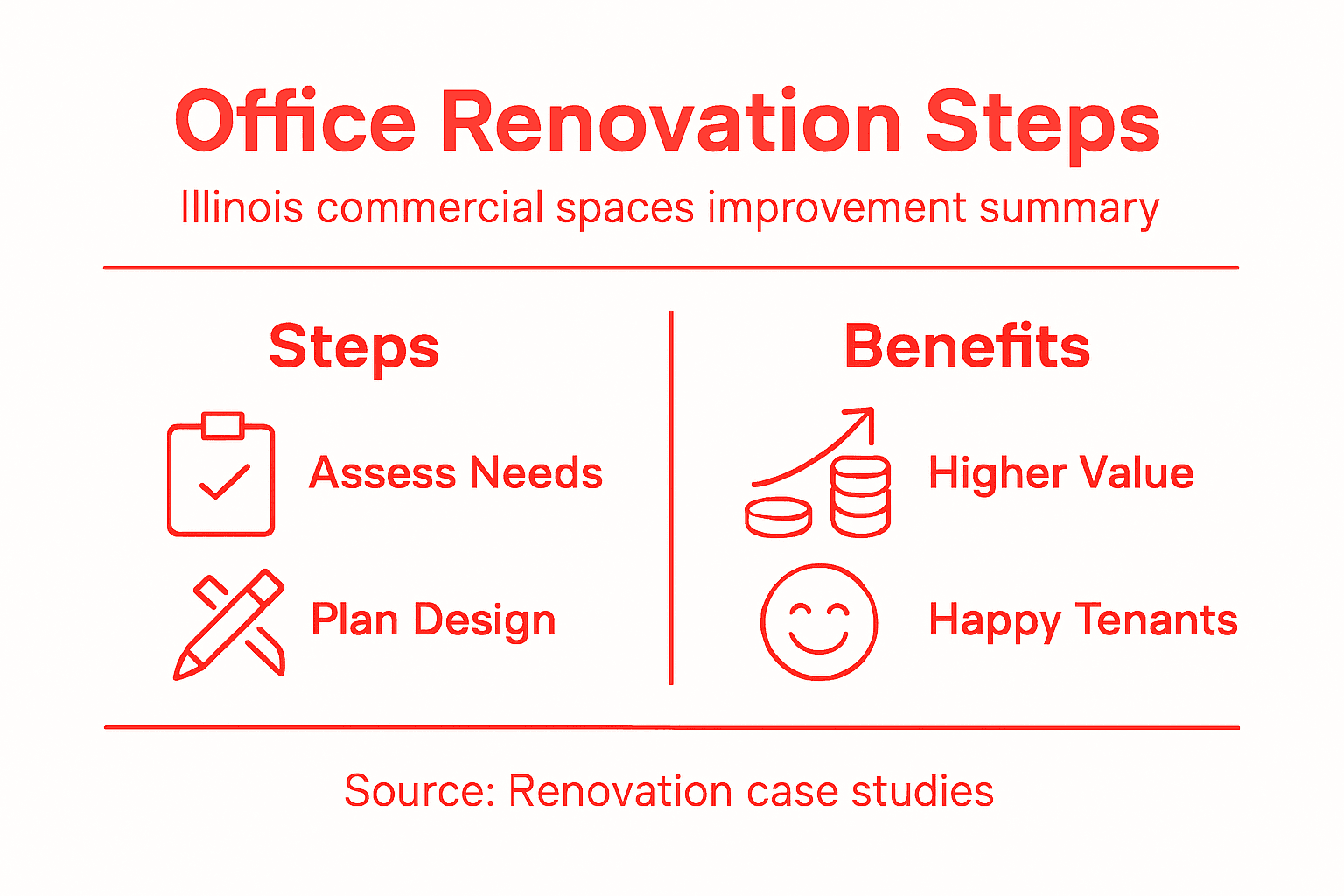
For quick reference, here’s how key financial, tenant, and risk factors interconnect in office renovations:
| Key Factor | Strategic Consideration | Potential Organizational Benefit |
|---|---|---|
| Initial Investment | Budget allocation | Informed decision-making |
| Tenant Satisfaction | Survey before/after changes | Higher retention and loyalty |
| Risk Mitigation | Early contingency planning | Fewer project delays and setbacks |
| Productivity Gains | Workflow analysis | Boosted employee output |
| Market Competitiveness | Asset improvement focus | Enhanced leasing and property value |
Effective office renovations transform cost centers into strategic investments that drive organizational success and tenant satisfaction.
Pro tip: Conduct comprehensive tenant surveys before and after renovation to quantify the direct impact of improvements on workplace satisfaction and perceived value.
Transform Your Illinois Office with Expert Renovation Solutions
Office renovations can be daunting when facing challenges like compliance with Illinois building codes, optimizing workspace functionality, and enhancing tenant satisfaction. If you want to avoid common pitfalls such as insufficient planning or ignoring employee needs, it is essential to partner with experienced professionals who understand how to align ergonomic improvements, technological upgrades, and sustainability retrofits with your organizational goals.
At First Solution IL, we specialize in commercial renovation projects that prioritize both aesthetics and long-term performance. From comprehensive space reconfiguration to painting services designed to refresh your workspace atmosphere, we deliver precise craftsmanship with attention to every detail. Explore our Commercial Services Archives – First Solution iL to learn how we can elevate your office environment while maintaining strict safety and legal standards.

Ready to enhance your commercial space and boost tenant satisfaction through strategic renovation? Visit First Solution IL today to request a free consultation and discover how our expert team can make your vision a reality. Don’t wait because a well-executed renovation improves productivity, employee morale, and property value.
Frequently Asked Questions
What are the main types of office renovation projects?
Office renovation projects typically include ergonomic improvements, technological upgrades, aesthetic redesigns, sustainability retrofits, and spatial reconfigurations. Each type focuses on different aspects of enhancing workplace functionality and employee productivity.
How can I ensure employee satisfaction during an office renovation?
To ensure employee satisfaction, engage employees early in the renovation planning process. Collect their feedback on workspace design and functionality to create an environment that genuinely meets their needs.
What are the key steps involved in the office renovation process?
The main steps in the office renovation process include initial assessment of current workspace limitations, goal alignment for clear objectives, design development, budget preparation, contractor selection, and implementation planning to minimize disruptions.
What legal and safety regulations should I consider during an office renovation?
When renovating an office, you must comply with building code regulations, secure necessary permits, adhere to safety regulations, ensure accessibility standards, and manage environmental regulations related to waste disposal and materials.