

TL;DR:
- Successful apartment remodeling in Illinois relies on clear goals, thorough assessment, and understanding HOA rules.
- Budgeting should include permit fees, HOA approvals, and a 15% contingency to handle unexpected costs.
- Following a step-by-step process and documenting every phase minimizes stress and ensures legal and project closure.
Remodeling your apartment in Illinois sounds exciting until the reality hits. You’re dealing with HOA approval forms, city permits, contractor estimates that vary wildly, and design decisions that feel endless. Many Illinois homeowners stall at this stage, unsure where to begin or afraid of making a costly mistake. The good news is that apartment remodeling becomes far less stressful when you follow a clear, proven process. This guide gives you that process, walking you through every stage from initial assessment to final inspection, so you can move forward with confidence and turn your space into exactly what you’ve envisioned.
Table of Contents
- Evaluate your space and set clear goals
- Create a budget and timeline that work in Illinois
- Step-by-step remodeling process
- Verify results and wrap up your remodel
- The overlooked truth about apartment remodeling in Illinois
- Ready to remodel? Next steps for Illinois homeowners
- Frequently asked questions
Key Takeaways
| Point | Details |
|---|---|
| Set clear remodeling goals | Begin with a vision and a plan to avoid costly changes and delays. |
| Budget with Illinois in mind | Account for regional costs, permits, HOA rules, and always add a buffer for surprises. |
| Follow a proven process | Step-by-step organization prevents mistakes and promotes smoother renovations. |
| Always verify results | Final checks and proper documentation protect your investment and ensure safety. |
Evaluate your space and set clear goals
Now that you know what to expect, let’s start where every successful remodel begins: clear goals.
Before you hire anyone or buy a single tile, you need an honest look at your apartment. Walk through every room with fresh eyes. Ask yourself what’s genuinely bothering you and what’s actually working fine. Is the kitchen cramped because of poor layout, or just outdated cabinets? Is the bathroom a real problem or just cosmetically tired? This distinction matters because it separates a full remodel from a minor refresh, and those are very different projects in terms of cost, time, and stress.
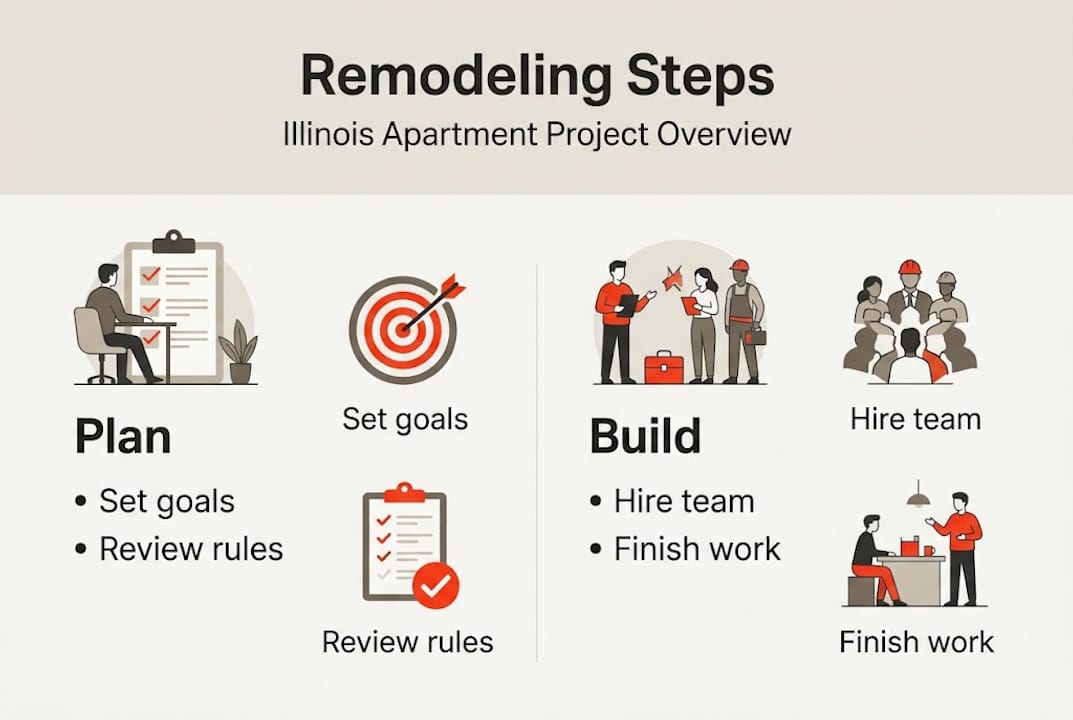
Start your assessment by identifying your apartment’s strengths and limitations. Note natural light, ceiling height, storage capacity, and how traffic flows through the space. Then make two lists: must-haves and nice-to-haves. Must-haves are the changes that genuinely affect your daily life, like a broken ventilation system or a bathroom with no storage. Nice-to-haves are the things that would improve your quality of life but aren’t urgent, like a kitchen island or new flooring throughout.
Key areas to evaluate in your apartment:
- Structural walls and load-bearing elements (affects what you can change)
- Plumbing and electrical systems (age and condition)
- Natural light and ventilation
- Storage and closet space
- Flooring condition and type
- Kitchen and bathroom fixtures and layout
One element Illinois homeowners often skip is reviewing their HOA or building policies before planning anything. Your HOA may restrict certain materials, limit work hours, or require pre-approval for any changes to shared walls or plumbing. Some HOAs prohibit hardwood floors on upper-level apartments due to sound transmission. Understanding these rules early saves you from expensive redesigns later. Good preparing for renovations habits always start with reading those documents first.
| Scope | What it includes | Best for |
|---|---|---|
| Minor refresh | Paint, fixtures, cosmetic updates | Renters or short-term owners |
| Partial remodel | One or two rooms, new flooring | Owners wanting targeted improvements |
| Full remodel | Kitchen, baths, layout changes | Long-term owners maximizing value |
When planning your renovation, note that while some sources highlight full gut rehabs through HUD loan programs for major projects, most Illinois condo and apartment owners focus on private remodels coordinated with their HOA rather than government-backed financing structures.
Pro Tip: Before anything else, photograph every room from multiple angles. These photos serve as your legal and creative baseline. If a contractor damages something, you have proof of its original condition. They also help you communicate your vision clearly to designers and tradespeople.
Create a budget and timeline that work in Illinois
With your vision clear, the next step is building a budget and timeline you can stick to.
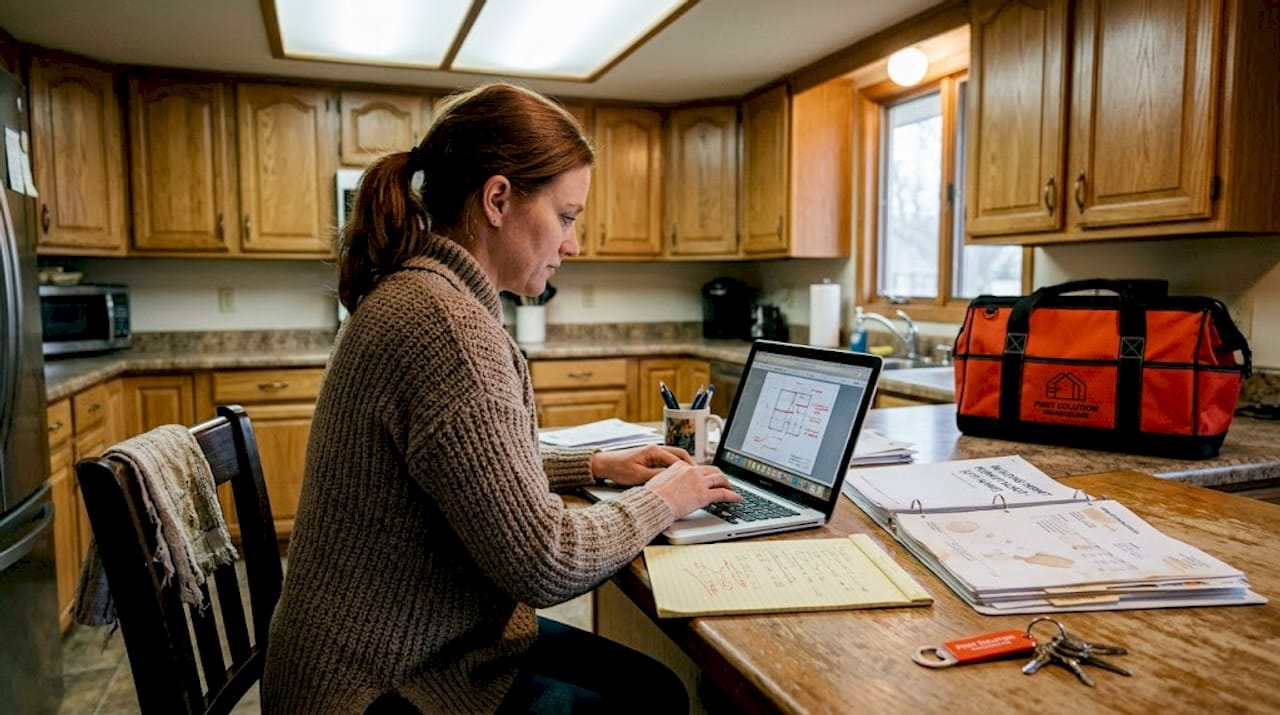
Budgeting for an Illinois apartment remodel isn’t just about materials and labor. You’re also accounting for permit fees, building management coordination, potential HOA inspection fees, and the reality of living in or near a construction zone. Illinois cities like Chicago, Evanston, and Naperville each have their own permitting structures, and costs vary considerably by municipality.
| Remodel type | Estimated cost range (Illinois) | Typical timeline |
|---|---|---|
| Bathroom refresh | $4,000 to $9,000 | 2 to 4 weeks |
| Full bathroom remodel | $10,000 to $25,000 | 4 to 8 weeks |
| Kitchen refresh | $5,000 to $12,000 | 3 to 5 weeks |
| Full kitchen remodel | $20,000 to $60,000 | 6 to 12 weeks |
| Full apartment remodel | $50,000 to $150,000+ | 10 to 20 weeks |
These figures reflect 2026 Illinois market rates, where labor costs have risen alongside material prices. Don’t treat these numbers as fixed. They’re starting points for your planning conversations with contractors.
Hidden costs that catch Illinois homeowners off guard:
- Permit application and inspection fees (varies by city)
- HOA architectural review or approval fees
- Building elevator reservation fees during material delivery
- Temporary storage for furniture during construction
- Unexpected water damage or mold found behind walls
- Upgraded electrical panels when adding modern appliances
- After-hours or weekend premiums for contractors in condo buildings
Scheduling is equally important. Most Illinois apartment remodels run longer than homeowners initially expect. Material lead times for custom cabinetry, specialty tile, or specific fixtures can add three to six weeks to any project. Building management may also limit work hours, often restricting noise-generating work to weekdays between 8 a.m. and 5 p.m. Good scheduling renovation projects means accounting for these constraints from day one.
The difference between projects that stay on budget and those that spiral often comes down to the financing structure. Private remodels in HOA units require a different financial approach than gut rehabs using government programs, so consult your financial advisor about the right funding approach for your situation.
Pro Tip: Always add a 15% buffer on top of your total estimated budget. If your project comes in at $40,000, keep $46,000 available. Experienced contractors know that surprises happen, and having that buffer ready means you can handle them without stopping work mid-project.
Step-by-step remodeling process
Once your financial and logistical plans are in place, it’s time for the hands-on work. Here’s how to proceed, step by step.
Knowing what to do and when to do it removes most of the anxiety from the remodeling process. Illinois apartment remodels follow a fairly consistent sequence, and understanding that sequence helps you stay in control throughout.
- Contact your HOA in writing. Submit a formal request describing your planned work before hiring anyone. Ask for their approval timeline, any required documentation, and noise or work-hour restrictions.
- Get at least three contractor estimates. Compare scope of work, not just price. A lower bid that excludes permit fees or cleanup costs isn’t actually cheaper.
- Select your contractor and sign a detailed contract. The contract should specify materials, timeline, payment schedule, and what happens if delays occur.
- Submit design plans for HOA approval. Many HOAs require detailed drawings or product specifications before granting permission for structural or plumbing changes.
- Pull all required permits. Your contractor typically handles this, but confirm it in writing. Never skip permits.
- Prepare your apartment for construction. Remove furniture, protect floors and walls in non-construction areas, and arrange temporary accommodations if needed.
- Begin demolition (if applicable). Demolition happens before any new work. This phase often reveals hidden problems that require adjustments to your plan.
- Complete rough-in work. Electrical, plumbing, and HVAC changes happen inside the walls before they’re closed up.
- City or building inspections. Required inspections must happen at specific stages. Skipping these can result in required tear-outs.
- Finish work: drywall, flooring, cabinets, fixtures, and paint. This is the visible transformation phase.
- Final walkthrough and punch list. Review all completed work before releasing the final payment.
Using a proven apartment renovation guide framework ensures you don’t skip critical steps, especially during the approval and inspection phases. Having a clear remodeling workflow also helps you communicate timelines to your building management and neighbors.
Caution: Skipping HOA approval is one of the most expensive mistakes an Illinois apartment owner can make. If your HOA discovers unauthorized work, they can require you to restore the apartment to its original condition at your own expense. That means tearing out work you already paid for. Get written approval before any work begins, and keep that document with your other project records.
For private apartment remodels in Illinois, the process differs significantly from gut rehabs using HUD financing structures. HOA involvement shapes every major decision, from material choices to work hours, so treat your HOA as a partner throughout the process.
Pro Tip: Create a single folder (physical or digital) for all project documentation. Include your HOA approval letter, permits, contractor contract, material receipts, inspection records, and warranty documents. When something goes wrong (and occasionally something will), having organized records speeds up the resolution dramatically.
Verify results and wrap up your remodel
After the work is complete, your new space is almost ready to enjoy, but a few last steps are crucial.
Many homeowners get so excited about their finished space that they skip the verification phase. This is a mistake. The final steps of your remodel protect your investment, ensure compliance with building and HOA policies, and give you legal protection if problems surface later. Rushing through this phase can mean discovering a code violation months down the line or losing your deposit on unreturned materials.
Start with a systematic review of all completed work. Check every fixture, outlet, and surface against your original project scope. Verifying against HOA and building policies at every stage matters, but the final check is especially important because this is your last opportunity to hold the contractor accountable before releasing final payment.
Essential documentation to keep after your remodel:
- Final permit sign-off from the city or municipality
- HOA written acknowledgment that work is complete and approved
- Contractor’s final invoice marked paid
- Warranties for all installed fixtures, appliances, and materials
- Before-and-after photographs
- Any manufacturer instructions for new equipment or systems
- Contact information for all subcontractors who worked on your unit
Your punch list is a written record of every item that isn’t quite right at the end of the project. A scratch on a cabinet door, a light switch that doesn’t sit flush, grout that needs touch-up: these details belong on your punch list. Give the list to your contractor in writing and set a clear deadline for completion. Don’t release final payment until every item is addressed.
Tasks to complete before calling your remodel done:
- Walk every room and check all work against the original contract.
- Test all electrical outlets, switches, and fixtures.
- Run all plumbing to check for leaks.
- Confirm all permits are closed and signed off.
- Send formal written notice to your HOA that the project is complete.
- Review avoiding renovation delays documentation for any outstanding items.
- File all documentation in your records folder.
- Photograph the completed space for insurance and future reference.
Taking these steps turns a finished remodel into a properly closed project, with documentation that protects you for years to come.
The overlooked truth about apartment remodeling in Illinois
With the process complete, let’s take a step back and look at what really makes apartment remodeling work, or where it can fall apart.
Most people assume remodeling success is about design taste or budget size. Having worked on countless Illinois apartments, we’ve learned something different: success comes down to process and relationships, not aesthetics.
The homeowners who regret their remodels almost always made one of two mistakes. They either skipped documentation (approvals, contracts, photos) or they ignored the people around them: their HOA board, their neighbors, or their building manager. A neighbor who feels blindsided by construction noise can file complaints that halt your project for days. An HOA board that feels bypassed can make your life genuinely difficult, even after the work is done.
Some sources push gut rehab financing approaches that don’t apply to the typical Illinois condo owner. The reality is that most apartment remodels here are private projects built on trust: trust between you, your contractor, your HOA, and your neighbors. Building that trust proactively, not reactively, is what separates smooth projects from nightmare ones. A smooth remodeling workflow isn’t just about construction sequencing. It’s about human coordination.
There’s no shortcut. But homeowners who invest in the process, communicate clearly, and document everything consistently end up with better results and far less stress.
Ready to remodel? Next steps for Illinois homeowners
If you’re feeling inspired and ready to begin, here’s how to connect with the right experts and resources.
At First Solution IL, we work with Illinois apartment owners at every stage of the remodeling journey, from early planning to final walkthrough. Whether you’re tackling a single bathroom or a full-unit transformation, our team brings local expertise, licensed craftsmanship, and a clear process that respects your time and your building’s requirements.

Browse our remodeling step-by-step guide to see exactly how we structure projects for maximum efficiency. You can also explore real remodeling examples from Illinois homes we’ve transformed, so you can see the quality of our work before making any decisions. Reach out for a free estimate and let’s talk about what your apartment could become.
Frequently asked questions
Do I need HOA approval for all remodeling projects in my Illinois apartment?
Most projects that affect shared walls, plumbing, or structure require HOA approval, even if the work is entirely inside your unit. Cosmetic changes like painting or replacing light fixtures typically don’t require approval, but always confirm with your specific HOA before starting.
How long does a typical apartment remodel take in Illinois?
Apartment remodels often take 4 to 12 weeks, but timing varies significantly based on project scope, permit processing times, and building restrictions. Always build buffer time into your schedule to account for material delays and inspection scheduling.
What is the first step before starting my apartment remodel?
Assess your needs, review your HOA rules, and set clear renovation goals before contacting anyone. Starting with needs assessment and a thorough review of building policies helps you avoid redesigning your project after approvals are denied.
Are there financing options for apartment remodeling in Illinois?
HUD loans are available for major gut rehabs, but most Illinois condo and apartment owners fund smaller remodels through personal loans, home equity lines of credit, or savings. Your HOA’s rules often shape which financing paths are practical for your specific project.