
TL;DR:
- Hiring uninsured contractors in Illinois exposes property owners to legal liability and financial risks.
- Verified insurance coverage with proper certificates and direct insurer confirmation is essential before work begins.
- Using insured contractors ensures project professionalism, legal compliance, and protection against costly lawsuits.
Many Illinois property owners assume that if something goes wrong on a job site, the contractor is automatically responsible. That assumption can cost you everything. Illinois law classifies construction as extra-hazardous and places direct financial liability on property owners who hire uninsured workers, even when the owner had no role in causing the injury. Whether you’re renovating a kitchen in Naperville or managing a commercial buildout in Chicago, understanding contractor insurance isn’t optional. It’s the difference between a smooth project and a lawsuit that drains your savings.
Table of Contents
- Understanding the risks of uninsured contractors in Illinois
- Legal insurance requirements for contractors and property owners
- Key benefits of hiring insured contractors for your project
- How to verify a contractor’s insurance the right way
- The hidden costs of skipping insured contractors: What most property owners overlook
- Find trusted, insured contractors for your renovation in Illinois
- Frequently asked questions
Key Takeaways
| Point | Details |
|---|---|
| Uninsured contractors increase liability | Hiring uninsured contractors may leave property owners facing lawsuits and high costs for injuries and damages. |
| Insurance is legally required | Illinois law mandates contractors carry specific insurance to protect both the contractor and the property owner. |
| Verify coverage before work begins | Always request and directly confirm Certificates of Insurance to ensure real protection. |
| Peace of mind and professionalism | Insured contractors provide reliability, minimize risk, and are recognized as more trustworthy. |
Understanding the risks of uninsured contractors in Illinois
Most people focus on price when hiring a contractor. That’s understandable. But the real cost of hiring someone without insurance often doesn’t show up until something goes wrong, and by then, it’s usually too late to fix it cheaply.
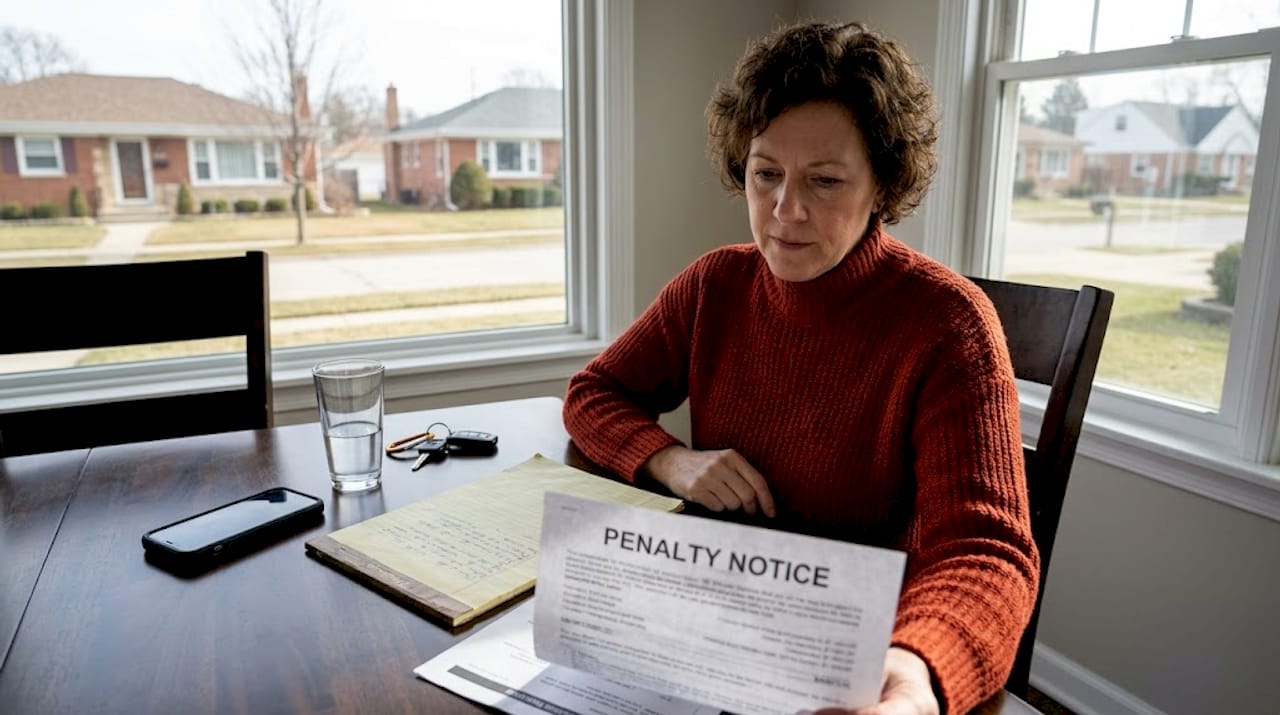
When a contractor gets hurt on your property and lacks workers’ compensation coverage, you become the responsible party. Illinois law requires workers’ comp for employers with even one employee, and when a contractor doesn’t carry it, courts often treat the property owner as the employer of record. That means their medical bills, lost wages, and rehabilitation costs could land directly on your plate.
Here’s what most property owners don’t realize: their homeowner’s insurance policy typically won’t save them. Many standard policies exclude or significantly limit coverage when injuries involve uninsured contractors. You could file a claim and still find yourself denied. On top of that, hiring uninsured contractors opens the door to lawsuits covering medical bills, lost wages, and property damage that your policy may not fully cover even if it doesn’t outright reject the claim.
The risks go beyond physical injuries. Consider these scenarios:
- A worker falls from scaffolding and fractures two vertebrae. Without workers’ comp, his attorney names you in the lawsuit.
- A subcontractor causes a fire while doing electrical work. His liability policy lapsed. Your homeowner’s insurer denies the claim because you used an uninsured contractor.
- A contractor damages a neighbor’s property. No insurance means you’re fielding the neighbor’s claim personally.
“Property owners rarely anticipate worst-case scenarios until they’re already in the middle of one. By that point, no amount of regret changes the legal outcome.”
The statistics make this even more sobering. Construction accounts for 21% of workplace fatalities in Illinois, making it the most dangerous major industry in the state. That’s not a number to ignore when a crew is working in your home or commercial space.
Learning about the advantages of insured contractors early in your search is the smartest first step. It shapes how you evaluate bids and prevents you from getting drawn in by suspiciously low prices. You should also know how to properly evaluate contractor credentials before signing anything.
Now that you understand the unexpected risks and consequences, let’s look at the specific legal requirements for contractor insurance in Illinois.
Legal insurance requirements for contractors and property owners
Illinois doesn’t leave contractor insurance up to chance. There’s a legal framework in place, and both contractors and property owners are expected to know it. Ignorance of the law doesn’t reduce your liability.
Here’s what Illinois law generally requires from contractors working in the state:
- General liability insurance: Covers property damage and third-party bodily injury. Most municipalities and commercial clients require at least $1 million per occurrence.
- Workers’ compensation insurance: Required by state law for any contractor with one or more employees. No exceptions for most construction firms.
- Commercial auto insurance: Required if company vehicles are used on or to and from job sites.
- Umbrella or excess liability: Often required for larger projects or commercial contracts with higher risk exposure.
As a property owner, your job is to verify that the contractor actually carries these policies. The best way to do that is to verify contractor licensing and request a Certificate of Insurance (COI). The COI should name you as an additional insured, which means their policy extends some protection to you if a claim arises from work done on your property.
Illinois strongly recommends verifying that the COI lists coverage minimums of at least $1 million in general liability and confirms active workers’ comp. Don’t just take the contractor’s word for it. Call the insurer directly.
The penalties for getting this wrong are serious. Uninsured operation can result in fines of $500 per day with a minimum of $10,000, and Class 4 felony charges in some cases. Property owners who knowingly hire uninsured contractors face similar legal exposure. Ignoring the risks of ignoring insurance requirements isn’t a calculated risk. It’s an uninformed one.
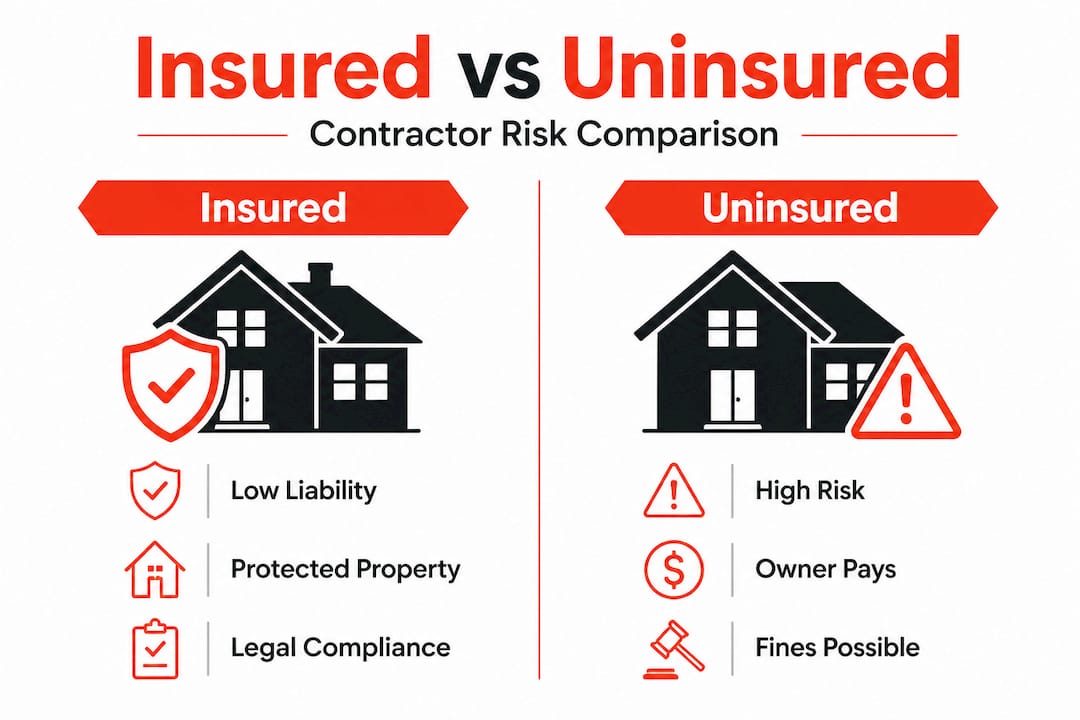
| Factor | Insured contractor | Uninsured contractor |
|---|---|---|
| Injury liability | Covered by contractor’s policy | Falls on property owner |
| Property damage | Covered by general liability | Owner absorbs the cost |
| Legal standing | Meets Illinois requirements | Violates state law |
| Homeowner insurance impact | Claims typically honored | Claims often denied |
| Municipal permit approval | Generally approved | Often rejected |
| Professionalism signal | High | Significant red flag |
Pro Tip: Always ask for the COI before work begins, not after. Some contractors will show a policy that’s lapsed or doesn’t cover the specific type of work you’re hiring them for. A quick call to the insurance carrier to confirm takes five minutes and can save you years of legal headaches.
One more important note: some sole proprietors are legally exempt from carrying workers’ comp for themselves. But that doesn’t mean they’re exempt from your contract. You can and should require insurance coverage as a condition of any agreement, regardless of their sole proprietor status.
With these legal and insurance basics in place, it’s important to consider what sets insured contractors apart for both residential and commercial projects.
Key benefits of hiring insured contractors for your project
Choosing an insured contractor isn’t just about avoiding lawsuits. It directly affects how smoothly your project runs from start to finish.
Insured contractors signal professionalism to municipalities, general contractors, and clients. When they pull permits, inspectors know they’re dealing with a legitimate operation. That matters because unpermitted work can void your homeowner’s insurance, complicate future property sales, and create code violations that cost thousands to correct.
Here’s what you gain by choosing insured professionals:
- Liability shift: When a worker is injured or causes damage, the claim goes through their policy, not yours.
- Faster permit approvals: Most Illinois municipalities require proof of insurance before issuing construction permits.
- Fewer project delays: Insured contractors tend to be more organized and professionally managed, which reduces mid-project surprises.
- HOA and lender compliance: Many HOAs and mortgage lenders require documented proof that all contractors working on a property are insured.
- Quality accountability: When contractors carry insurance, they have a financial stake in doing the job right. Claims drive up their premiums.
For commercial property owners, the stakes are even higher. Insured contractors shift liability through their own policies, protecting you under premises liability law. A slip-and-fall by an uninsured worker during a commercial renovation can expose your business to enormous legal costs.
| Benefit | Residential impact | Commercial impact |
|---|---|---|
| Injury liability coverage | Protects family finances | Protects business assets |
| Permit compliance | Avoids code violations | Maintains zoning integrity |
| Lender requirements | Satisfies mortgage terms | Preserves commercial loans |
| Project professionalism | Fewer delays and disputes | Stronger contractor accountability |
| Resale or lease value | Clean title and records | Uninterrupted operations |
Learn more about verifying contractor licensing before any project starts, and understand why licensed contractors matter for both your investment and your safety.
Pro Tip: Ask your contractor to name you as an additional insured on their general liability policy, not just list you on the COI. Additional insured status means their insurer is contractually obligated to defend you if a covered claim arises from their work.
Now that you know the benefits, how do you make sure your contractor is actually insured before the work begins?
How to verify a contractor’s insurance the right way
Verifying insurance sounds simple. In practice, many property owners skip steps that would have caught serious problems. Here’s exactly how to do it correctly.
-
Request the full COI before any work starts. The certificate should list general liability coverage, workers’ compensation, and any other policies relevant to your project. Don’t accept a promise to send it later.
-
Check coverage amounts. Illinois recommends minimums of at least $1 million per occurrence in general liability and compliant workers’ comp. For larger commercial projects, $2 million or more may be appropriate.
-
Call the insurer directly. Don’t just trust the certificate the contractor hands you. Policies can lapse after the certificate is issued. A quick call to the insurance company confirms whether coverage is current and active.
-
Confirm you’re listed as additional insured. This isn’t automatic. You must specifically request it, and the COI should show it. Without this, you have no direct claim rights against the contractor’s insurer.
-
Review policy exclusions. Some policies exclude mold remediation, certain types of demolition, or environmental work. Make sure the policy actually covers what your project involves.
-
Re-verify for long projects. If your renovation spans several months, check midway through that coverage hasn’t lapsed. Annual policy renewals can create gaps.
-
Never assume sole proprietor exemptions apply to your contract. Even if a solo contractor is legally exempt from carrying workers’ comp for themselves, you can require it as a contract condition, and for larger projects, you absolutely should.
When you properly evaluate contractor credentials, you’re not being paranoid. You’re being a responsible property owner. Most reputable contractors expect this level of diligence and welcome it because it confirms they’re dealing with an informed client.
By following these steps, you safeguard your investment and peace of mind. But what do most guides miss about contractor insurance in Illinois?
The hidden costs of skipping insured contractors: What most property owners overlook
Here’s something that gets skipped in most conversations about contractor insurance: the emotional and financial cost doesn’t hit immediately. It shows up six months later when a lawsuit lands in your mailbox, or when your insurance company denies a claim you thought was covered, or when a municipal inspector shuts down your project because the contractor you hired couldn’t pull a permit.
We’ve seen property owners try to save $1,500 on a bathroom renovation by hiring an uninsured operator. Then a worker is injured. The property owner is named in a lawsuit seeking $300,000 in medical costs and damages. Their insurer confirms the claim is excluded because the contractor lacked workers’ comp. The “savings” evaporated and then some.
The uncomfortable truth is that all sources consistently confirm the risks of uninsured hires far outweigh any short-term cost savings. There’s no contrarian case to be made here. The data, the law, and real-world outcomes all point in the same direction.
What legitimate contractors understand, and what most property owners don’t, is that insurance isn’t an added cost. It’s built into responsible business practice. When a contractor tells you they “don’t carry insurance to keep costs down,” what they’re really saying is that they’re transferring their business risk onto you. That’s not a deal. That’s a trap.
The benefits of licensed and insured contractors go far beyond a checkbox on a form. They reflect a contractor’s commitment to operating a real business with real accountability. That accountability protects you throughout the project and long after it’s complete.
One more often-overlooked cost: project delays. When an uninsured contractor is involved in an incident, work stops entirely while liability is sorted out. Depending on the project stage, that delay could cost thousands in temporary accommodations, business interruption, or material waste. Insured contractors keep projects moving because incidents are handled through their policies, not through drawn-out personal disputes.
Find trusted, insured contractors for your renovation in Illinois
Working through the details of contractor insurance can feel overwhelming, especially when you’re trying to manage a renovation or buildout at the same time. The good news is that finding properly licensed and insured professionals in Illinois doesn’t have to be a guessing game.

First Solution IL operates as a fully insured and licensed contractor serving residential and commercial clients across Illinois. Whether you’re exploring top commercial renovation contractors for a large-scale buildout or browsing interior remodeling examples for inspiration on your next home project, you’ll find a team that treats insurance and licensing as non-negotiable. Request a free estimate and start your project with full confidence that every step is covered legally, professionally, and completely.
Frequently asked questions
What happens if an uninsured contractor is injured on my Illinois property?
You may be held financially responsible for their medical bills and lost wages, as Illinois law classifies construction as extra-hazardous and requires coverage from employers with even one worker.
Can my homeowner’s insurance cover accidents caused by uninsured contractors?
Often, homeowner’s insurance excludes or significantly limits coverage for contractor-related injuries and damages, leaving you financially exposed even if you file a claim.
How do I verify if my contractor’s insurance policy is valid and sufficient?
Request a Certificate of Insurance, ensure you’re named as additional insured, and call the insurer directly to verify current coverage meets Illinois minimums of at least $1 million in general liability.
What penalties can property owners face for hiring uninsured contractors in Illinois?
Owners can face fines, felony charges, and personal lawsuits. Uninsured operation fines start at $500 per day with a $10,000 minimum, and Class 4 felony charges are possible in serious cases.