

TL;DR:
- A solid renovation schedule protects your budget, accountability, and project clarity.
- Early planning, clear sequencing, permit timelines, and comunicação are crucial for stay on track.
- Building a culture of transparency with your contractor reduces delays caused by miscommunication.
Renovation projects in Illinois go sideways fast when there’s no solid schedule behind them. Costs spike, contractors sit idle, and what started as a six-week kitchen remodel bleeds into four months of chaos. The good news is that most of these problems are preventable. A well-built renovation schedule doesn’t just organize tasks on a calendar. It protects your budget, keeps your contractor accountable, and gives you a clear picture of what happens next. This guide walks you through exactly how to build one, from the first planning conversation to the final punch list walkthrough.
Table of Contents
- What you need before creating a renovation schedule
- Step-by-step process: How to schedule your renovation project
- Navigating permits and Illinois-specific hurdles
- Keeping your renovation on track: Monitoring and adapting your timeline
- The surprising reason most renovation schedules derail
- Get expert support for your Illinois renovation
- Frequently asked questions
Key Takeaways
| Point | Details |
|---|---|
| Prep comes first | Gather plans, permits, and budgets before starting your schedule for a smoother project. |
| Sequence tasks methodically | Planning each stage and their order avoids costly overlaps and delays during renovation. |
| Account for Illinois permits | Chicago permit approvals routinely take 7-9 weeks, so build this into your timeline. |
| Monitor progress weekly | Consistent check-ins and updates keep the project on track and reveal issues early. |
| Communication prevents derailments | Clear, frequent coordination is the best defense against delays and budget overruns. |
What you need before creating a renovation schedule
Before you write a single date on a calendar, you need to gather the right information. Jumping straight into scheduling without this groundwork is one of the most common mistakes Illinois homeowners make. Think of it like trying to give someone directions without knowing where they’re starting from.
Start by defining your project scope. What exactly are you renovating? Which rooms, which systems, which finishes? Write it all down. Then build a priority list so you know which tasks are non-negotiable and which ones can flex if the budget tightens. Set a firm budget before talking to contractors, not after.
Next, understand how renovation tasks actually flow in sequence. Renovation task sequencing follows a consistent pattern: planning and design take 2 to 8 weeks, permits take 2 to 10 weeks, demolition and site prep take 1 to 2 weeks, rough-ins take 2 to 4 weeks, finishes take 3 to 8 weeks, and the punch list wraps up in 1 to 3 weeks. Knowing this upfront shapes every scheduling decision you make.
Here’s a quick reference for typical Illinois renovation phases:
| Phase | Typical Duration |
|---|---|
| Planning and design | 2 to 8 weeks |
| Permits | 2 to 10 weeks |
| Demo and site prep | 1 to 2 weeks |
| Rough-ins (electrical, plumbing) | 2 to 4 weeks |
| Finishes (flooring, paint, fixtures) | 3 to 8 weeks |
| Punch list and final inspection | 1 to 3 weeks |
Before you finalize anything, make sure you’ve checked off these essentials:
- Finalized design plans and material selections
- At least three contractor quotes with written timelines
- Confirmed permit requirements for your municipality
- Lead times for key materials (cabinets, tile, windows)
- A contingency fund of at least 10 to 15 percent of your total budget
Getting solid on preparing for Illinois renovations before you schedule anything will save you weeks of backtracking. For a broader look at the planning process, the complete Illinois renovation planning resource covers everything from design decisions to contractor vetting.
Step-by-step process: How to schedule your renovation project
Now that you’ve gathered the essentials, you’re ready to create a schedule. Here’s how to do it, step by step.
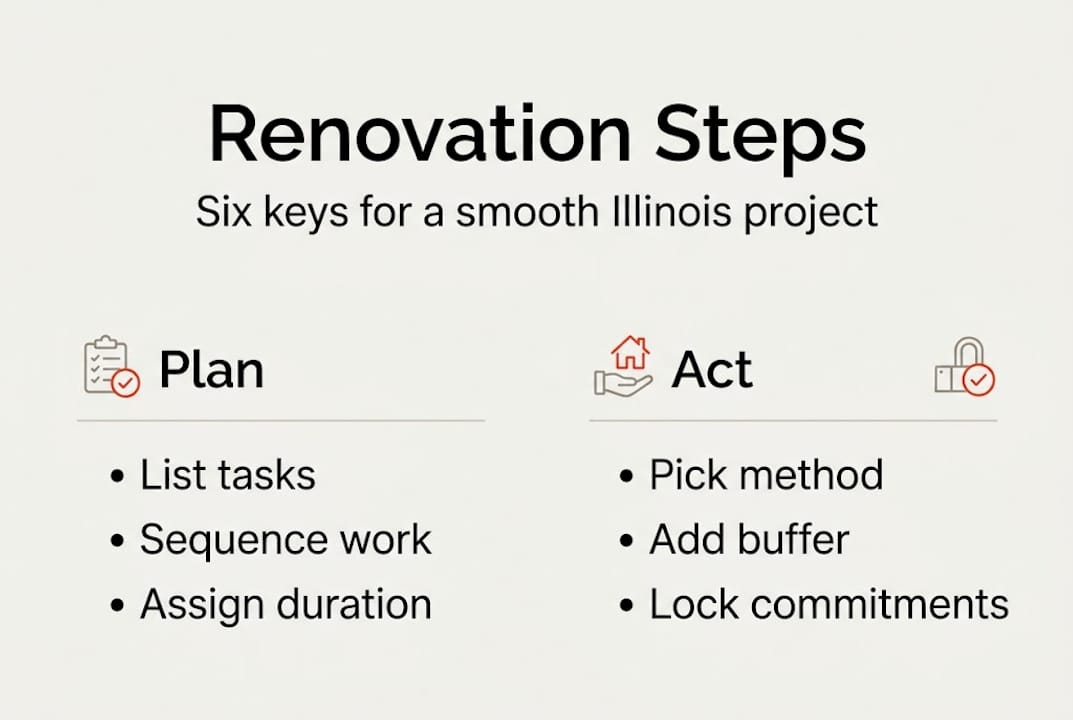
Step 1: List every task in your project. Break the work into individual tasks, not just phases. “Kitchen renovation” is not a task. “Install cabinet uppers” is.
Step 2: Sequence the tasks correctly. Some tasks can’t start until others finish. Drywall can’t go up until rough-in inspections pass. Flooring can’t go down until walls are painted. Map these dependencies carefully.
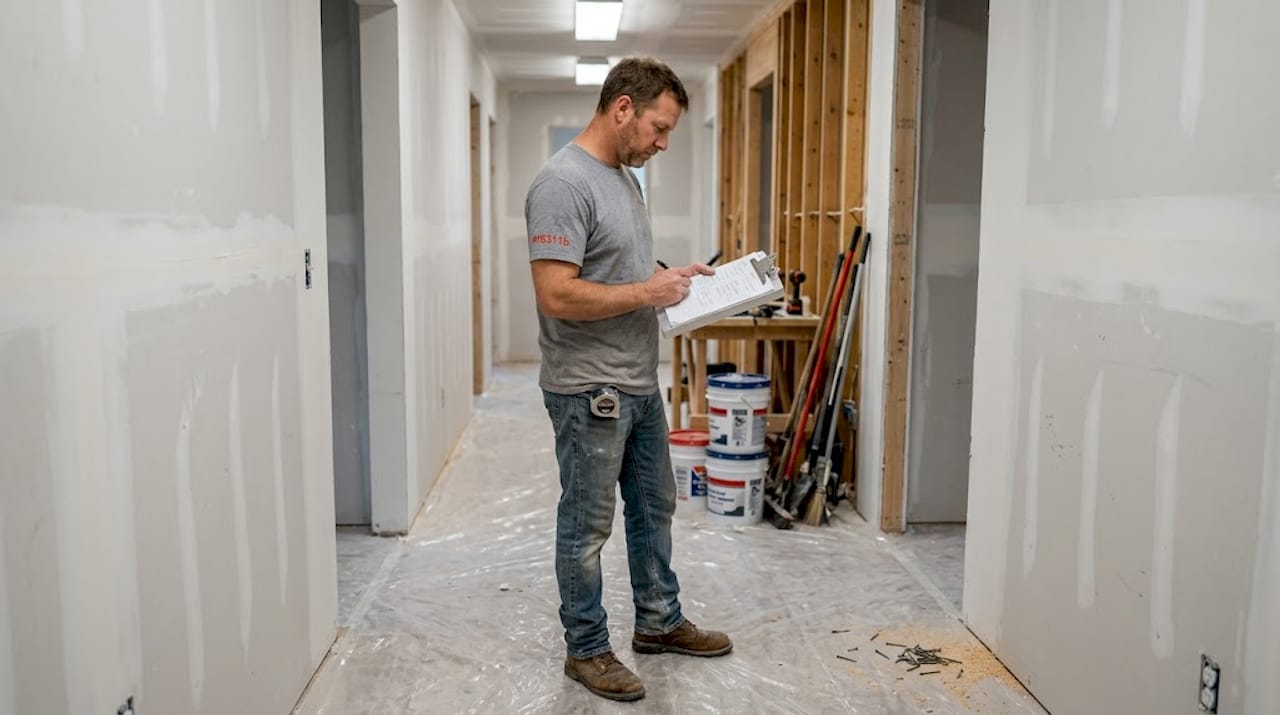
Step 3: Assign realistic durations. Use the phase durations in the table above as your baseline. Adjust based on your contractor’s actual availability and your project’s complexity.
Step 4: Choose a scheduling method. Construction scheduling methods include the Critical Path Method (CPM), which identifies the longest chain of dependent tasks, Gantt charts for visual timeline tracking, resource leveling to prevent your contractor from being double-booked, and weekly check-ins to maintain accountability. For most homeowners, a simple Gantt chart in a spreadsheet works well.
Step 5: Add buffer time. Every phase takes longer than expected at some point.
Pro Tip: Add 10 to 15 percent extra time to each phase. If drywall is scheduled for five days, plan for six. This buffer absorbs small surprises without blowing up your entire timeline.
Step 6: Lock in contractor and material commitments. A schedule is only as reliable as the people and products behind it. Get written confirmations.
Here’s how two common scheduling approaches compare:
| Method | Best for | Complexity |
|---|---|---|
| Gantt chart | Visual learners, most homeowners | Low to medium |
| Critical Path Method (CPM) | Large, multi-trade projects | Medium to high |
Following clear renovation stages for fewer delays is one of the highest-impact decisions you can make. You can also explore remodeling workflow strategies for additional approaches to keeping trades coordinated.
Navigating permits and Illinois-specific hurdles
With your schedule roughed out, it’s time to tackle Illinois’s legal and regulatory factors, which can be major sources of delay.
Permits are not optional, and in Illinois they are not fast. If you’re renovating in Chicago, plan for permit processing to take 7 to 9 weeks consistently in 2026. That’s nearly two months before a single wall comes down. If you haven’t factored that into your schedule, your entire project timeline shifts the moment you submit your application.
Key fact: 35% of renovations go over budget due to poor sequencing, and Chicago permit timelines consistently run 7 to 9 weeks in 2026. Ignoring either of these realities in your schedule is a costly mistake.
Here’s what Illinois homeowners need to review before starting any permitted work:
- Building permits: Required for structural changes, additions, and most mechanical work
- Electrical permits: Needed for panel upgrades, new circuits, and major rewiring
- Plumbing permits: Required for moving or adding supply or drain lines
- Zoning compliance: Especially important for additions or changes to your home’s footprint
- HOA restrictions: If applicable, these can affect materials, colors, and timelines
- Inspection scheduling: Book inspections in advance. Inspectors are often booked out 1 to 2 weeks.
Missing an inspection window doesn’t just mean rescheduling. It can mean tearing open finished walls to give an inspector access to rough-in work that’s already been covered. That’s a real cost, in both time and money.
For a detailed breakdown of how permit timelines affect your project, the Illinois renovation permit timeline guide is worth reviewing. You should also check renovation permit compliance resources and stay current with Illinois renovation standards before you break ground.
Keeping your renovation on track: Monitoring and adapting your timeline
Once your renovation is underway, staying on track is about proactive monitoring and flexible adjustments.
A schedule you build once and never look at again is not a schedule. It’s a wish list. Real project management means checking in regularly and updating the plan as reality unfolds.
Step 1: Set a weekly check-in. Weekly accountability check-ins are one of the most effective tools for keeping construction projects on schedule. Block thirty minutes every week to review what was completed, what’s coming up, and whether any tasks are running behind.
Step 2: Track milestone completions. Milestones are the big markers: permits approved, rough-ins complete, drywall done, cabinets installed. When a milestone slips, everything downstream shifts. Catch it early.
Step 3: Communicate with your contractor and suppliers constantly. Don’t wait for problems to surface on their own. Ask directly: Is the tile arriving on time? Is the electrician still scheduled for Tuesday? Proactive questions prevent reactive scrambling.
Pro Tip: Use a free project management tool like Trello or Asana to give your contractor a shared view of the schedule. When everyone sees the same timeline, accountability goes up and surprises go down.
Step 4: Update your schedule when things change. A delay in one phase doesn’t have to cascade into every phase if you adjust quickly. Move tasks, notify your trades, and reset expectations before the gap grows.
Step 5: Document everything. Keep a simple log of decisions, changes, and communications. If a dispute arises later, your notes are your protection.
Staying connected to the planning a renovation process even after construction begins is what separates homeowners who finish on time from those who don’t.
The surprising reason most renovation schedules derail
Most homeowners blame permits, weather, or material shortages when their renovation falls apart. Those things matter. But after working on projects across Illinois, we’ve seen a different pattern emerge consistently. The real schedule killer is a breakdown in communication, usually small and usually early.
A contractor assumes you approved a change. You assume they’ll flag a delay. Neither of you says anything for a week. That week turns into two. By the time the issue surfaces, you’ve lost a month. This is the domino effect of early-stage silence, and it’s far more destructive than any permit delay.
The fix isn’t complicated, but it does require a mindset shift. Treat your renovation like a team project where everyone shares accountability, not a service transaction where you hand over money and wait for results. Following stages that reduce delays helps, but the bigger win comes from building a culture of transparency with your contractor from day one. Ask questions. Expect answers. Make it normal to talk about problems before they become crises.
Get expert support for your Illinois renovation
If you’re ready to take your schedule from paper to reality, expert resources can make the difference between a smooth project and a stressful one.

At First Solution IL, we work with Illinois homeowners every day to turn renovation plans into finished spaces. Whether you’re tackling a full interior remodel or updating your home’s exterior, our team brings the scheduling expertise and local knowledge to keep your project moving. Explore our step-by-step interior renovation guide to see how we approach each phase, or review the exterior remodeling benefits that come with a well-planned project. Request a free estimate and let’s build a timeline that actually works for you.
Frequently asked questions
How long does it typically take to complete a home renovation project in Illinois?
Most renovation projects span from 10 to 30 weeks in Illinois depending on scope, since each phase from permits to punch list adds up quickly across a full project.
What is the biggest cause of renovation schedule delays in Chicago?
Permit processing and early sequencing errors cause the most significant delays, with Chicago permits running 7 to 9 weeks in 2026 before construction can even begin.
How can I keep my renovation project from going over budget?
Accurate task sequencing and buffer time are your best tools, since poor planning causes 35% budget overruns on renovation projects across the board.
Are there tools I can use to help manage and schedule my renovation?
Yes. Homeowners rely on Gantt charts and CPM diagrams along with digital project management apps to track timelines and keep all parties accountable throughout the project.