

Most homeowners planning a renovation face the same frustrating reality: final costs often exceed initial estimates by 20% or more. Whether you’re updating a kitchen, adding a bathroom, or remodeling your entire home, budget overruns can derail even the most exciting projects. The good news? With proper planning, active tracking, and smart contingency strategies, you can keep your Illinois renovation on budget while achieving the results you want. This practical guide walks you through every stage of budget management, from initial preparation to final verification, so you can avoid costly surprises and make informed decisions throughout your project.
Table of Contents
- Preparing Your Renovation Budget: What You Need Before You Start
- Executing Your Budget: Tracking And Keeping Costs Under Control
- Managing Common Budgeting Challenges And Pitfalls
- Verifying Your Renovation Budget Success And Next Steps
- Plan Your Illinois Home Renovation With Expert Support
- Frequently Asked Questions
Key takeaways
| Point | Details |
|---|---|
| Preparation prevents surprises | Research Illinois-specific costs for materials, labor, and permits before starting your budget. |
| Active tracking controls spending | Monitor every expense against your budget categories to catch overruns early. |
| Contingency funds manage unknowns | Set aside 10-15% of your total budget for unexpected structural or material issues. |
| Prioritization optimizes value | Focus spending on essential renovations first, adjusting scope if costs escalate. |
| Documentation improves future planning | Keep detailed records of actual costs versus estimates to refine your next project. |
Preparing your renovation budget: what you need before you start
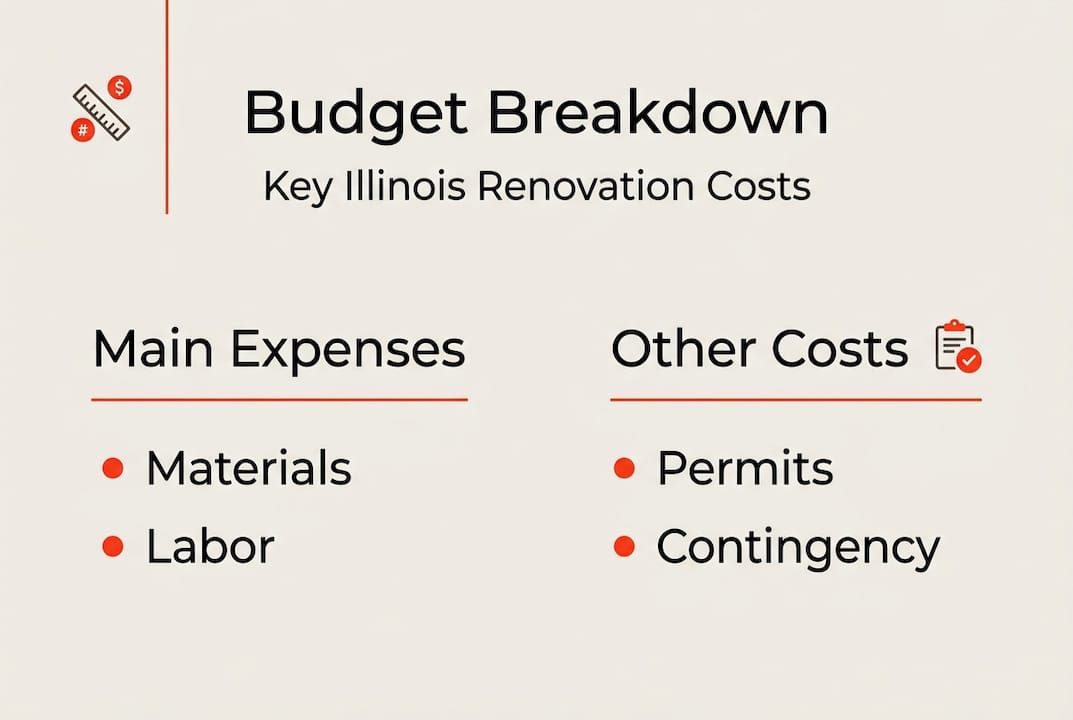
Before you spend a single dollar on your renovation, you need a comprehensive budget foundation. This means identifying every cost category your project will touch. Start by breaking down your scope into materials, labor, design fees, permits, and inspections. Each element requires research specific to Illinois markets, where material costs and labor rates vary significantly between Chicago suburbs and downstate regions.
Research average costs for your specific renovation type. Kitchen remodels, bathroom updates, and whole-home renovations each have different cost structures. Talk to local suppliers about current material prices, which can fluctuate based on supply chain conditions. Get multiple contractor quotes to understand the labor market in your area. Renovation cost estimation techniques reduce budgeting surprises during residential renovation projects.
Pro Tip: Request itemized estimates from contractors rather than lump-sum bids. This transparency helps you understand where your money goes and makes it easier to adjust scope if needed.
Permit and inspection fees add up quickly but are non-negotiable for most substantial renovations. Illinois municipalities have different fee structures, so check with your local building department early. Some projects require multiple inspections at different stages, each with associated costs. Factor these into your fixed costs category.
Create your initial budget draft using major expense categories:
- Materials (flooring, fixtures, cabinetry, countertops)
- Labor (general contractor, specialized trades)
- Design and planning (architect, designer fees)
- Permits and inspections
- Contingency reserve (10-15% of total)
- Project management and cleanup
Here’s a sample budget breakdown for a typical Illinois kitchen renovation:
| Category | Percentage of Budget | Example Amount (on $50,000) |
|---|---|---|
| Materials | 35-40% | $17,500-20,000 |
| Labor | 30-35% | $15,000-17,500 |
| Design fees | 5-10% | $2,500-5,000 |
| Permits/inspections | 2-3% | $1,000-1,500 |
| Contingency | 10-15% | $5,000-7,500 |
Use previous project data if you’ve renovated before, or rely on professional estimates for your first major project. Experienced contractors can provide realistic numbers based on hundreds of similar jobs. Don’t rely solely on online calculators, which often miss local market variations and project-specific complexities.
Executing your budget: tracking and keeping costs under control
Once your renovation starts, budget management shifts from planning to active control. Set up a tracking system immediately, whether that’s a detailed spreadsheet, budgeting software, or a dedicated app. Record every expense the day it occurs, categorizing it according to your budget breakdown. This real-time tracking prevents the shock of discovering cost overruns weeks into the project.

Compare actual spending against planned amounts weekly. This regular review helps you spot trends before they become problems. If materials are running 10% over budget in week two, you can adjust other categories or negotiate alternatives before the gap widens. Homeowners who actively track renovation expenses reduce budget overruns by up to 15%.
Follow this execution process:
- Document every payment with receipts and invoices
- Update your tracking system within 24 hours of each expense
- Calculate running totals for each budget category weekly
- Compare actual versus planned spending every Friday
- Identify variances exceeding 5% and investigate causes
- Adjust remaining project scope if necessary to stay on target
Communicate with your contractor frequently about cost updates. Request weekly summaries of completed work and upcoming expenses. Good contractors appreciate clients who stay engaged without micromanaging. If material prices change or unexpected issues arise, you’ll know immediately rather than at invoice time.
Pro Tip: Take photos of all work in progress, especially anything that gets covered up like plumbing or electrical. This documentation helps verify charges and provides records for future maintenance.
Prioritize essential renovations if costs start escalating. Distinguish between must-haves and nice-to-haves. That premium tile might be beautiful, but standard tile in the right color achieves 90% of the visual impact at 60% of the cost. Focus your budget on structural improvements, quality installation, and elements that affect daily function. Save decorative upgrades for later if funds get tight.
Use cost-saving strategies that maintain quality. Buy materials during sales or clearance events when possible. Consider alternative products that deliver similar performance at lower prices. However, never compromise on structural elements, waterproofing, or safety features. Cheap fixes in these areas cost far more long-term.
Managing common budgeting challenges and pitfalls
Even well-planned budgets face challenges during execution. The most common budget buster? Unplanned structural issues discovered once walls open up. That water damage behind the shower or outdated wiring in the kitchen wasn’t visible during planning but demands immediate attention. These discoveries can add thousands to your project cost.
Material price fluctuations present another challenge, especially for longer renovations. Lumber, steel, and petroleum-based products can swing 10-20% in price over a few months. Lock in prices for major materials early when possible, or build price variation assumptions into your contingency fund. Some suppliers offer price guarantees for 30-60 days, which helps stabilize costs.
Project delays extend labor costs in ways homeowners often overlook. If your contractor’s crew sits idle waiting for a delayed material shipment, you might still pay for their time. Weather delays, permit approval slowdowns, and supply chain disruptions all push timelines and budgets. Including contingency funds up to 10-15% of the budget helps homeowners manage unforeseen renovation expenses.
The premium versus standard decision appears constantly during renovations. Here’s how to evaluate these choices:
- Calculate the actual cost difference, not just percentage
- Assess impact on daily use and long-term durability
- Consider resale value if you plan to sell within five years
- Evaluate whether the upgrade affects multiple rooms or just one space
- Determine if you can add the upgrade later without major disruption
Know when to stick to your plan versus when flexibility makes sense. Structural improvements discovered during renovation usually can’t wait. If your contractor finds foundation issues or dangerous electrical panels, address them immediately. However, aesthetic changes like switching tile patterns mid-project often add costs without proportional value. Set clear decision criteria with your contractor upfront.
Common pitfalls to avoid:
- Skipping the contingency fund to maximize finishes
- Making frequent scope changes after work begins
- Selecting materials without verifying lead times
- Failing to account for temporary living costs during major renovations
- Underestimating disposal and cleanup fees
- Ignoring the cost of replacing damaged landscaping or driveways
Manage scope creep ruthlessly. That extra cabinet or upgraded faucet seems minor individually, but five small additions can blow your budget by $5,000. Every change order should go through your tracking system with a clear cost impact analysis. Ask yourself whether each addition is truly essential or just appealing in the moment. Refer back to your interior renovation budgeting tips when tempted to expand scope.
Verifying your renovation budget success and next steps
As your renovation wraps up, shift focus to verification and learning. Gather every final invoice, receipt, and payment record. Organize these documents by category matching your original budget structure. This comprehensive collection serves multiple purposes: tax records, warranty documentation, and future reference for similar projects.
Compare actual costs against initial budget line items systematically:
- Create a final expense summary with actual amounts in each category
- Place your original budget estimates beside actual spending
- Calculate variance percentages for every major category
- Identify which estimates were accurate and which missed significantly
- Document explanations for major variances (market changes, scope additions, discoveries)
- Note which contractors or suppliers delivered on budget versus those who didn’t
Analyze the reasons behind budget deviations. Did material costs spike due to market conditions beyond your control? Did you make mid-project scope changes that added expenses? Were initial estimates unrealistic? Understanding these factors improves your budgeting accuracy for future projects. Reviewing completed renovation expenses compared to initial budgets helps improve future budgeting accuracy.
Document lessons learned while details remain fresh. Write notes about contractor performance, material quality versus cost, and which upgrades delivered the most value. Record what you’d do differently next time. This knowledge becomes invaluable whether you tackle another renovation in five years or help a friend plan their project.
Pro Tip: Create a digital folder with all renovation documents, photos, and notes. Include product manuals, warranty information, and paint colors. You’ll thank yourself when you need this information for repairs or future updates.
Plan financial reserves for ongoing maintenance and future improvements. Even perfectly executed renovations require upkeep. New appliances need eventual replacement, painted surfaces require refreshing, and systems need servicing. Set aside a percentage of your home’s value annually for these predictable expenses. This planning prevents future renovation emergencies from derailing your finances.
Evaluate whether your renovation delivered the expected value. Beyond budget numbers, assess functional improvements, aesthetic satisfaction, and potential resale impact. If you stayed on budget but compromised too much on quality, that’s valuable feedback. If you exceeded budget but gained features that significantly improve daily life, that context matters for future decisions.
Share your experience with your contractor through reviews and referrals. Contractors who helped you stay on budget deserve recognition. Those who consistently missed estimates or failed to communicate cost changes need constructive feedback. Your honest assessment helps other homeowners make informed hiring decisions.
Plan your Illinois home renovation with expert support
Managing a renovation budget effectively requires planning, tracking, and expertise. First Solution IL brings years of experience helping Illinois homeowners navigate the complexities of residential remodeling projects. Whether you’re planning a kitchen update, bathroom renovation, or whole-home transformation, having expert guidance makes the difference between budget success and costly surprises.

Explore our comprehensive interior renovation step by step guide for detailed planning frameworks that keep your project organized and on track. Get accurate budget expectations with our Illinois renovation estimates guide, designed specifically for local market conditions. Ready to start your renovation with professional support? Discover our full range of First Solution IL renovation services and connect with experienced contractors who prioritize transparency, quality, and budget accountability throughout your project.
Frequently asked questions
How do I calculate a realistic budget for my renovation?
Start by itemizing all project components including materials, labor, permits, and design fees. Research current Illinois market prices for your specific renovation type through multiple contractor quotes and supplier estimates. Add all costs together, then include a 10-15% contingency fund for unexpected expenses. Use professional estimates rather than online calculators for accuracy.
What percentage should I set aside for unexpected renovation costs?
A contingency fund of 10-15% of total budget is recommended to manage surprises like hidden structural issues or material price increases. For older homes or complex renovations, consider 15-20% contingency. This buffer prevents budget overruns from derailing your project when unforeseen problems arise.
How can I track my renovation expenses effectively?
Use a spreadsheet or budgeting app to record every expense immediately, categorizing each cost according to your budget breakdown. Review spending weekly by comparing actual costs against planned amounts in each category. This regular monitoring helps you catch overruns early and make adjustments before small variances become major problems.
When should I pay my contractor during a renovation?
Never pay the full amount upfront. Standard practice involves a deposit of 10-20%, progress payments tied to completed milestones, and a final payment after project completion and your satisfaction. Each payment should correspond to verified work completion. Hold back at least 10% until all punch list items are finished.
How do I handle budget overruns mid-project?
First, identify the specific cause of the overrun through detailed expense review. Prioritize essential work and consider reducing scope in non-critical areas to compensate. Communicate openly with your contractor about cost concerns and explore alternative materials or methods. If overruns stem from legitimate unforeseen issues, your contingency fund should cover them.