

It is easy for every Illinois commercial property owner to feel overwhelmed when renovation decisions stack up and tenant complaints keep coming. Smart renovations are more than cosmetic fixes—they drive property value and boost tenant satisfaction. This guide explains how effective renovation planning starts with a clear assessment and structured goals, provides actionable budgeting and hiring strategies, and ensures your project runs smoothly from start to finish.
Table of Contents
- Step 1: Assess Renovation Needs And Set Clear Goals
- Step 2: Develop A Detailed Renovation Budget And Timeline
- Step 3: Hire Skilled Contractors And Secure Permits
- Step 4: Coordinate Renovation Activities And Monitor Progress
- Step 5: Verify Renovation Quality And Finalize Project
Quick Summary
| Key Message | Explanation |
|---|---|
| 1. Assess renovation goals carefully | Conduct a thorough inspection to document issues and define success, which prevents overspending and delays during renovations. |
| 2. Develop a detailed budget and timeline | Create an itemized budget with all expenses and a realistic timeline that includes contingencies to manage costs effectively. |
| 3. Choose qualified contractors | Hire licensed and insured contractors who are familiar with local codes to ensure compliance and quality work throughout the project. |
| 4. Monitor project progress actively | Maintain oversight by coordinating activities and tracking progress against the budget and timeline to address issues promptly. |
| 5. Verify quality before final payment | Conduct a meticulous final inspection and ensure all issues are resolved before processing final payments to protect your investment. |
Step 1: Assess renovation needs and set clear goals
Before you spend a dollar on your commercial renovation, you need to understand exactly what your property requires. This step separates successful projects from ones that spiral over budget and timeline. Your goal here is to document the current state of your building and define what success looks like when the work is complete.
Start by conducting a thorough physical inspection of your space. Walk through every area and note structural issues, mechanical systems, safety concerns, and cosmetic wear. Look for water damage, foundation cracks, aging HVAC units, outdated electrical systems, and interior finishes that no longer serve your needs. Take photos and measurements. This isn’t about making decisions yet—it’s about gathering facts.
Next, identify your renovation priorities by asking these critical questions:
- What problems are affecting tenant satisfaction or property value?
- Are there safety or code compliance issues that must be addressed?
- What improvements would reduce operating costs or attract higher-quality tenants?
- What is your timeline and budget range for this project?
- How will this renovation impact your long-term business goals?
Effective renovation planning requires understanding that building renovation strategies focus on long-term sustainability alongside immediate improvements. Document your findings in a clear renovation scope that outlines what will be done, why it matters, and what outcomes you expect.
Clear goals eliminate scope creep and keep your project aligned with your business objectives.
Work with experienced contractors to validate your assessment. They can identify hidden issues that typical inspections miss and suggest practical solutions. Understanding the commercial remodeling workflow helps you plan realistic timelines and resource allocation.
Set measurable goals rather than vague intentions. Instead of “improve the space,” aim for “reduce vacancy by 15% and increase lease rates by 10%.” Instead of “update the lobby,” specify “modernize flooring, lighting, and entry features to current market standards.” Specificity drives decision-making throughout your project.
Pro tip: Create a simple priority matrix listing all identified needs, then rank them by impact on tenant experience, revenue, and safety—this prevents spending money on cosmetic upgrades when critical systems need attention.
Step 2: Develop a detailed renovation budget and timeline
Now that you understand what needs to be done, you need to quantify the cost and establish when work will occur. A realistic budget and timeline are the foundation of project control. Without them, your renovation becomes a moving target that frustrates tenants and drains resources.

Start by gathering detailed cost estimates from qualified contractors. Don’t settle for rough numbers. Request itemized quotes that break down labor, materials, permits, and contingencies for each major component of your project. Compare estimates from multiple contractors to understand market rates. When reviewing costs, remember that renovation estimates include labor, materials, and overhead considerations that vary by project scope and contractor experience.
Build your budget with these key elements:
- Direct construction costs (labor, materials, equipment)
- Permits and inspections required by local authorities
- Professional fees for architects, engineers, or consultants
- Contingency reserve (typically 10-15% for unexpected issues)
- Temporary operating costs if tenants remain during renovation
Create your timeline by identifying major project phases and sequencing work logically. Detailed budgeting and scheduling are fundamental to managing complex projects successfully. Establish start and end dates for each phase, accounting for material delivery times, contractor availability, and weather dependencies. Be realistic about how quickly work can happen without sacrificing quality.
A contingency buffer separates projects that absorb surprises from those that spiral into crisis mode.
Understanding the interior remodeling workflow helps you build accurate timelines because you’ll see where sequential dependencies exist. Some tasks must finish before others can start. Labor can’t proceed on flooring until walls and electrical are complete.
Document your budget and timeline in a format you can reference throughout the project. Include cost tracking columns and actual versus planned completion dates for each phase. Share this document with your contractor and key stakeholders so everyone operates from the same plan.
Pro tip: Add a 5-10% time buffer to each phase beyond your contingency estimate—reality always introduces delays, and padding the schedule prevents panic when they occur.
Here’s a summary of common renovation project risks and strategies to manage them:
| Risk Type | Example Issue | Management Strategy |
|---|---|---|
| Budget Overruns | Unanticipated structural repair | Include 10-15% contingency fund |
| Permit Delays | Slow local approvals | Hire contractors experienced with codes |
| Scheduling Slippage | Material delivery setbacks | Add 5-10% buffer to each phase |
| Quality Shortfalls | Subpar workmanship | Use third-party inspections |
| Disputes with Contractors | Unclear payment terms | Document agreements in writing |
Step 3: Hire skilled contractors and secure permits
Your project’s success depends entirely on who you hire and whether your work complies with local regulations. Skilled contractors understand Illinois building codes and can navigate the permitting process efficiently. This step protects your investment and ensures quality work that meets legal standards.
Start by vetting potential contractors thoroughly. Verify that they hold valid licenses and current insurance coverage. Ask for references from recent commercial projects similar in scope to yours. Check online reviews and the Better Business Bureau. Request detailed proposals from at least three contractors so you can compare approaches, timelines, and costs. Look for contractors who ask thoughtful questions about your goals rather than simply quoting a price.
When evaluating contractors, prioritize these factors:
- Valid Illinois contractor license and bonding
- Current liability and workers’ compensation insurance
- References from recent commercial renovation projects
- Clear communication and responsiveness to questions
- Experience with projects matching your scope and budget
Address permit responsibility explicitly in your contract. While you bear legal responsibility for permits as the property owner, licensed contractors typically manage the permitting process due to their expertise with codes and applications. Clarify who pays permit fees, who submits applications, and who coordinates inspections. This prevents confusion and delays later.
A contractor unfamiliar with local codes will cost you more in rework and delays than you’ll save on their bid.
Ensure your selected contractor understands clear and transparent permit processes and maintains strong relationships with local building departments. Review the advantages of hiring licensed and insured contractors to understand why these requirements protect you legally.
Once hired, work with your contractor to identify all required permits for your scope of work. Building permits, electrical permits, plumbing permits, and mechanical permits may all apply depending on your renovation’s nature. Budget time and money for permit applications, inspections, and potential code compliance improvements your inspector identifies.
Pro tip: Request your contractor’s permit history from the city—experienced contractors who pull permits regularly tend to have fewer violations and faster approval timelines than those unfamiliar with the process.
Step 4: Coordinate renovation activities and monitor progress
Once work begins, active oversight keeps your project on track and prevents costly missteps. Coordination between trades, regular site visits, and clear communication prevent surprises. This step separates projects that finish on time from those that hemorrhage money and frustrate everyone involved.
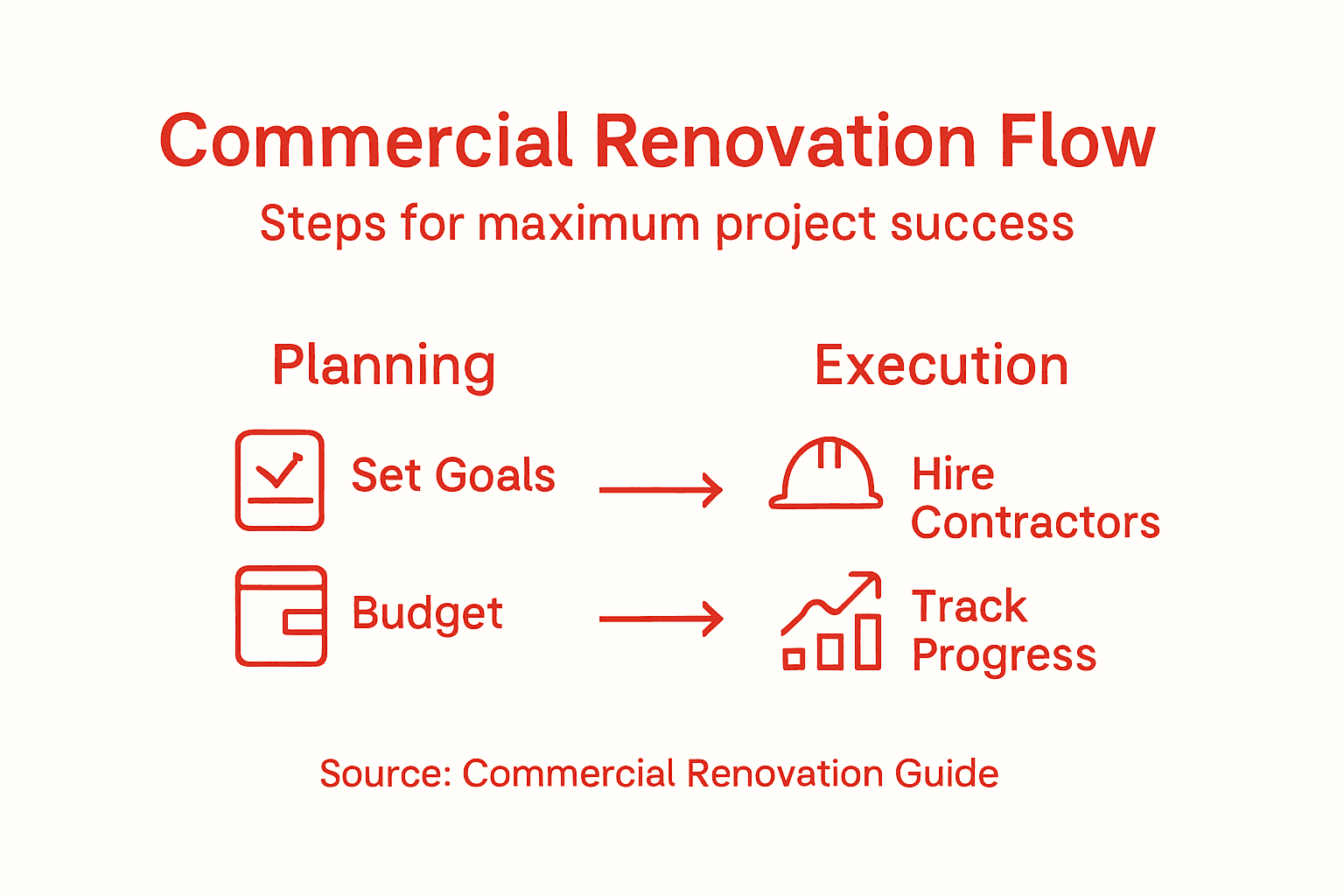
Establish a project management structure from day one. Designate a single point of contact on your side—someone who communicates with the contractor regularly and tracks decisions. Your contractor should assign a project manager who oversees daily operations and coordinates different trades. Schedule weekly check-in meetings to discuss progress, upcoming work phases, and any emerging issues.
The table below highlights which project stakeholders are responsible for critical renovation tasks:
| Task | Property Owner | Contractor |
|---|---|---|
| Goal Setting and Scope Definition | Leads | Provides input |
| Budget and Timeline Creation | Approves | Supplies estimates |
| Permit Application and Management | Shares legal responsibility | Manages process and paperwork |
| On-site Work Coordination | Monitors | Directs daily activities |
| Final Inspection and Punch-List Completion | Confirms | Completes corrections |
Implement these monitoring practices:
- Visit the site weekly to observe progress firsthand
- Compare actual progress against your timeline
- Document work completion with photos at key milestones
- Review invoices against completed work before approving payment
- Address quality concerns or schedule deviations immediately
Use clear project management structures with ongoing communication to assure projects stay on schedule and budget while achieving quality targets. Maintain a shared project log where the contractor documents daily activities, weather delays, material deliveries, and inspection results. This creates accountability and gives you a paper trail if disputes arise.
Problems discovered in weekly meetings cost far less to fix than defects hidden until project completion.
Understanding the office remodeling workflow for minimal downtime helps you anticipate coordination challenges and sequence work efficiently. Different trades must work in logical order—plumbing before walls close, electrical before drywall finishes, finishes last.
Schedule required inspections with your local building department before work progresses. Building inspectors will examine framing, electrical, plumbing, and final completion. Failures at inspection mean rework and delays. Ensure your contractor understands each inspection’s requirements and prepares accordingly.
Maintain financial control by tracking actual costs against your budget. Request monthly invoices that itemize work completed and materials supplied. Pay only for finished work, holding back final payment until all punch-list items are resolved.
Pro tip: Create a simple spreadsheet tracking each phase’s planned versus actual completion dates and costs—it provides early warning when schedules slip or spending accelerates, giving you time to address issues before they become catastrophic.
Step 5: Verify renovation quality and finalize project
As work nears completion, your focus shifts to quality verification and project closeout. This step protects your investment by ensuring all work meets specifications before you pay final invoices. Rushing through this phase invites regret and costly rework later.
Conduct a thorough final inspection of completed work alongside your contractor and a third-party inspector if desired. Walk every area systematically and compare finished work against your original scope and specifications. Test all systems—HVAC, electrical, plumbing, doors, and fixtures. Document any deficiencies with photos and a detailed punch-list that outlines what still needs correction.
Use this quality verification checklist:
- All interior finishes match specifications and quality standards
- Building systems operate correctly and pass inspection
- No safety hazards or code violations remain
- Cleanliness meets acceptable standards
- All contracted features and upgrades are complete
Apply quality assurance practices and inspection regimes to ensure renovation work complies fully with specifications and your requirements before final acceptance. Request that your contractor provide warranty documentation for all materials and workmanship. Understanding renovation contract details ensures you know exactly what protections and remedies apply if defects emerge after completion.
A comprehensive punch-list prevents arguments about what was completed and protects you if problems surface later.
Require your contractor to complete all punch-list items before final payment. Address deficiencies promptly—contractors become less responsive after receiving their final check. Obtain final sign-offs from building inspectors confirming all code requirements are satisfied. Request lien waivers from your contractor and any subcontractors confirming they’ve been paid in full.
Schedule a final walkthrough with your contractor and key staff who will manage the space. Discuss operation and maintenance of new systems, warranties, and how to report issues. Request comprehensive operation manuals and warranty cards for all equipment and systems installed.
Process final payment only after verifying all punch-list items are corrected and final inspections pass. Hold back a small percentage (typically 5 percent) for 30 days to ensure no defects emerge under normal operations before releasing the final holdback amount.
Pro tip: Create a detailed photo record of all completed work with dates—it provides invaluable documentation if warranty disputes arise and helps you track the condition of your newly renovated space over time.
Transform Your Commercial Renovation Vision Into Reality with First Solution IL
Planning a commercial renovation can feel overwhelming with so many moving parts like budgeting, timelines, contractor selection, and permit management. This article highlights the common challenges of assessing renovation needs clearly and managing each step without costly surprises. Whether you aim to enhance tenant satisfaction, improve safety compliance, or boost property value, having a trusted partner to guide you makes all the difference.
Explore how First Solution IL specializes in delivering tailored commercial remodeling solutions that align perfectly with your goals. From coordinating skilled contractors familiar with Illinois building codes to providing transparent project management and quality assurance, we turn complex renovation workflows into smooth, controlled processes. Visit our Uncategorised Archives for helpful insights or dive into specialized services like Concrete foundational work to ensure your space’s stability and durability.

Ready to take the stress out of your commercial renovation and maximize your success? Connect with First Solution IL today for a free consultation and find out how our experienced team can help you plan, execute, and complete your project on time and within budget. Discover peace of mind at https://firstsolutionil.com and start transforming your commercial property now.
Frequently Asked Questions
What are the first steps to plan a successful commercial renovation?
To plan a successful commercial renovation, begin by assessing the needs of your property. Conduct a thorough physical inspection, documenting structural issues, mechanical systems, and safety concerns to outline a clear renovation scope.
How can I create a detailed renovation budget?
Create a detailed renovation budget by gathering itemized quotes from qualified contractors. Ensure your budget includes direct construction costs, permits, professional fees, and a contingency reserve of 10-15% for unexpected issues.
What should I consider when setting renovation priorities?
When setting renovation priorities, evaluate what problems impact tenant satisfaction or property value. Ask yourself how different improvements can reduce operating costs or attract high-quality tenants to make informed decisions.
How do I monitor progress during the renovation project?
Monitor progress by visiting the site weekly and maintaining regular communication with your contractor. Keep track of both planned and actual completion dates to identify any schedule slips early and address issues before they escalate.
What is a punch list and why is it important in renovations?
A punch list is a detailed checklist of items that need completion or correction before final project acceptance. Creating a thorough punch list ensures all work meets specifications and protects you from disputes about completed work after final payment.
How can I ensure the quality of work during the renovation?
Ensure quality by conducting a final inspection with your contractor and potentially a third-party inspector. Test all systems and document any deficiencies to ensure that all work aligns with your original scope and specifications.