

TL;DR:
- Interior updates in Illinois can significantly boost property value, lease rates, and energy savings.
- Maximizing incentives like rebates, tax deductions, and C-PACE financing reduces renovation costs dramatically.
- Strategic, energy-efficient renovations improve long-term tenant retention, operational efficiency, and market competitiveness.
Most commercial property owners in Illinois think of interior updates as a cost center, not a profit driver. That assumption is expensive. Energy-efficient upgrades can qualify for Section 179D deductions up to $5 per square foot, plus utility rebates through programs like ComEd and Ameren, stacking savings that transform your renovation budget. In this article, we walk you through the real financial, operational, and competitive gains from updating your commercial interior, with a clear breakdown of Illinois-specific incentives, compliance rules, and the upgrades that deliver the strongest return.
Table of Contents
- The ROI of updating commercial interiors
- Energy efficiency upgrades: Costs, incentives, and key programs
- Compliance and tax benefits for interior renovations
- Long-term impact: Attracting tenants, clients, and talent
- Why strategic updates matter more than ever in Illinois
- Next steps for updating your Illinois commercial interiors
- Frequently asked questions
Key Takeaways
| Point | Details |
|---|---|
| Maximize ROI with updates | Strategic interior upgrades deliver significant financial, operational, and aesthetic benefits for Illinois commercial properties. |
| Tap Illinois incentives | Rebates, C-PACE financing, and tax deductions can dramatically lower the cost of qualifying improvements. |
| Prioritize compliance | Following Illinois and federal guidelines ensures you maximize savings and avoid costly mistakes. |
| Enhance workplace appeal | Modern interiors attract tenants, clients, and talent, boosting your business’s competitive edge. |
The ROI of updating commercial interiors
Concrete financial returns, not just aesthetics, are what make interior updates worth prioritizing for Illinois commercial property owners. When you approach renovations with ROI in mind, the numbers speak clearly.
Property value and lease rates rise with quality upgrades. Modernized interiors attract higher-quality tenants and justify premium lease rates. A well-executed renovation, especially one that improves energy performance and layout functionality, directly supports enhancing property value in ways that appraisers and potential tenants both recognize. A building with updated HVAC, efficient lighting, and a reconfigured floor plan simply commands more in the market than a dated space with deferred maintenance.

Energy savings are measurable and fast. Illinois property owners who invest in lighting upgrades, insulation, and HVAC improvements routinely see utility bills drop by 20 to 40 percent within the first year. That is recurring savings, every single month, that compounds over the life of the building.
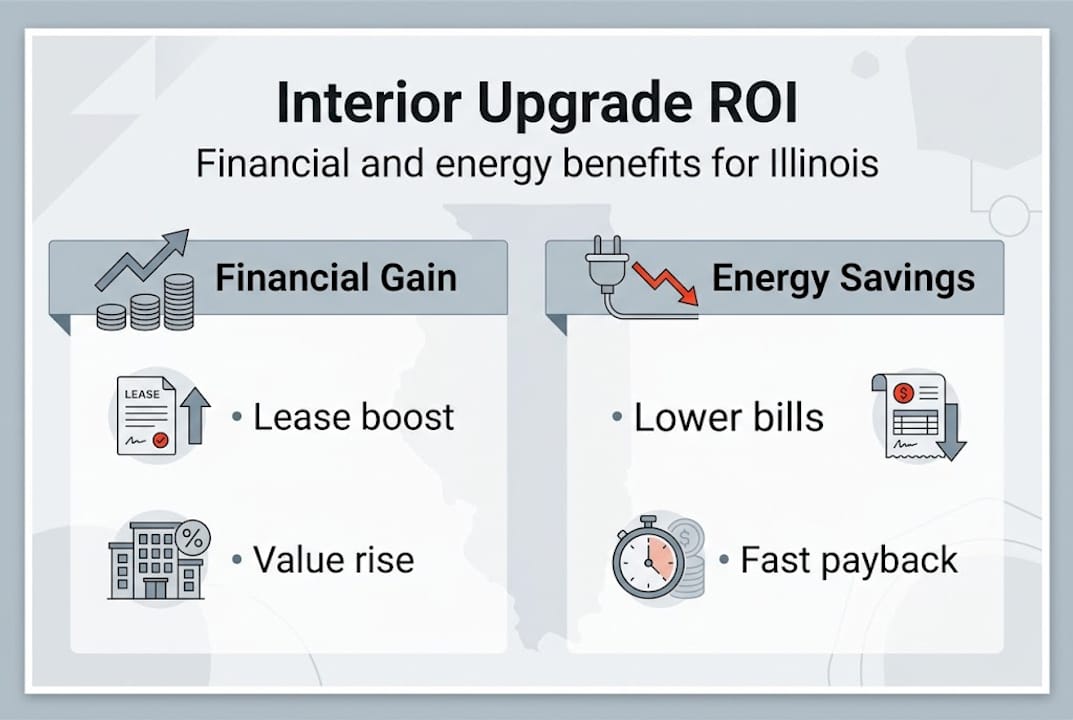
Illinois-specific incentives multiply your returns. The state’s rebate ecosystem is unusually strong. When you stack ComEd and Ameren rebates with federal Section 179D deductions, the effective cost of qualifying upgrades drops significantly. This means your real upfront investment is often much smaller than the sticker price of the renovation.
Common interior upgrade ROI at a glance
| Upgrade type | Typical cost range | Estimated annual savings | Simple payback period |
|---|---|---|---|
| LED lighting retrofit | $2 to $8 per sq ft | 30 to 50% energy reduction | 2 to 4 years |
| HVAC system upgrade | $15 to $25 per sq ft | 20 to 40% HVAC cost cut | 5 to 8 years |
| Insulation and envelope | $3 to $10 per sq ft | 15 to 25% overall savings | 3 to 6 years |
| Interior reconfiguration | $10 to $30 per sq ft | Productivity and lease gains | 4 to 7 years |
These payback periods shorten dramatically when you factor in available rebates and tax deductions.
Operational gains are just as real as energy savings. A well-designed commercial space reduces wasted movement, improves workflow, and cuts the friction that costs businesses productivity every day. Reconfiguring break rooms, adding acoustic panels, or updating lighting quality are small investments that affect employee output in measurable ways. Understanding the full picture of remodeling benefits helps you frame every dollar spent as an investment, not an expense.
Key operational benefits from interior updates include:
- Reduced utility costs through efficient systems
- Lower maintenance frequency and emergency repair costs
- Improved tenant satisfaction and longer lease terms
- Better compliance with current building codes and ADA requirements
- Increased marketability and faster occupancy turnover
The bottom line is simple. Illinois commercial interior updates pay for themselves over time, especially when you plan them strategically from the start.
Energy efficiency upgrades: Costs, incentives, and key programs
Financial gains from renovations go even further when you tap into the Illinois incentive landscape. The state offers one of the most layered sets of energy upgrade programs in the Midwest, and most property owners only use one or two of them. Combining programs is where the real savings happen.
Major Illinois incentive programs
ComEd and Ameren rebates cover a wide range of commercial improvements. Lighting upgrades, motor replacements, HVAC retrofits, and building controls all qualify. Rebates are paid directly to you or your contractor after installation and inspection. These programs are ongoing, but funding levels can change, so moving quickly on planned projects is smart.
Section 179D is a federal tax deduction that rewards energy-efficient renovations in commercial buildings. As of 2026, qualifying buildings can receive deductions up to $5 per sq ft, which for a 10,000-square-foot property means up to $50,000 in deductions from a single renovation cycle. To qualify, your building must be certified to meet specific energy reduction thresholds compared to a baseline reference building. A qualified energy auditor must certify the improvements.
C-PACE financing is a game changer for properties that need large-scale upgrades but lack the upfront capital. Illinois C-PACE allows property owners to finance up to 25% of property value for energy improvements, with repayment terms stretching up to 40 years and tied to property tax assessments rather than personal credit. This is non-recourse financing, meaning if the property is sold, the obligation transfers to the new owner. It is one of the most favorable financing structures available for commercial energy projects.
Comparing your options
| Program | What it covers | How you receive the benefit | Key requirement |
|---|---|---|---|
| ComEd/Ameren rebates | Lighting, HVAC, controls | Direct rebate payment | Qualifying equipment |
| Section 179D | Full building energy systems | Federal tax deduction | Third-party energy certification |
| C-PACE | Major capital improvements | Long-term property tax repayment | Illinois-eligible property |
Eligible improvements for Illinois programs
- LED lighting and smart lighting controls
- High-efficiency HVAC and mechanical systems
- Building envelope improvements including insulation, windows, and air sealing
- Rooftop solar and on-site renewables (C-PACE eligible)
- Building automation and energy management systems
When you pair C-PACE financing with utility rebates, the net cash required upfront can drop to near zero on large projects. Add Section 179D on top, and you may actually see a net financial positive in year one. Exploring a sustainable renovation path makes that outcome more achievable than most property owners realize.
Pro Tip: Stack your incentives intentionally. Apply for utility rebates first, use C-PACE to cover remaining capital costs, then claim Section 179D at tax time. Each program is compatible with the others, and using all three can cut your effective project cost by 30 to 50 percent.
The productivity side of these upgrades should not be overlooked either. Better lighting, improved air quality from modern HVAC systems, and comfortable temperatures year round all contribute to measurable productivity improvements for your tenants and their employees. A healthier, more comfortable workspace directly supports employee retention and client satisfaction.
Compliance and tax benefits for interior renovations
Beyond rebates, regulatory compliance and tax guidance are vital to successful renovations. Illinois commercial properties face a layered set of local, state, and federal requirements. Getting ahead of compliance not only avoids fines, it also positions you to capture the most valuable tax benefits.
Why compliance matters financially
Non-compliant buildings can face fines, forced retrofits, and loss of occupancy permits. More importantly, non-compliant properties are increasingly difficult to lease to quality tenants, who now routinely scrutinize building certifications, ADA compliance, and environmental standards before signing leases. Staying current with Illinois renovation standards protects your income stream and your property’s marketability.
Key tax benefits in 2026
100% bonus depreciation is one of the most powerful tools available right now. Following recent IRS guidance, qualified interior improvements placed in service after January 19, 2025 can be fully expensed in the first year. That means lighting, HVAC, cabinetry, flooring, and furniture can all potentially be deducted 100 percent in the year you spend the money rather than depreciated over 15 to 39 years. For a $200,000 renovation, the difference in first-year tax impact is dramatic.
Section 179D stacks with bonus depreciation in certain structures. Work with a tax professional who understands commercial real estate to determine the optimal sequencing for your specific situation.
“Qualified improvement property placed in service after January 19, 2025 may be eligible for 100% bonus depreciation, allowing full first-year expensing rather than multi-year depreciation schedules.” Lavelle Law
Upgrades that commonly qualify for these benefits include:
- Interior lighting and electrical improvements
- Mechanical systems including HVAC and plumbing
- Flooring, ceiling, and partition updates that do not expand building footprint
- Built-in furniture and fixtures
- Fire protection and security systems
Pro Tip: Keep meticulous records of every improvement. Photograph work before and after, save all invoices and contractor certificates, and document energy certifications. The IRS requires thorough substantiation for bonus depreciation and Section 179D claims, and missing paperwork can cost you the entire deduction.
One practical tool that helps is working from a clear project management guide that tracks milestones, documentation, and compliance checkpoints from day one. When your renovation is organized from the start, the documentation that tax and compliance requirements demand comes naturally.
Long-term impact: Attracting tenants, clients, and talent
With compliance and savings covered, let’s look at broader business advantages that interior renovations deliver over the long run. The competitive landscape for commercial real estate in Illinois has shifted. Tenants, clients, and employees now expect more from the spaces they occupy, and buildings that deliver on those expectations hold a clear advantage.
Tenant expectations have risen sharply. Remote work trends pushed many companies to downsize, but those that kept or expanded physical offices want high-quality environments that justify the cost. Modern interiors with energy-efficient systems, flexible layouts, and thoughtful design are no longer a premium feature. They are a baseline expectation for competitive lease negotiations. Properties that cannot meet this standard struggle with higher vacancy rates and longer lease-up periods.
Client and customer perception starts at the front door. For owner-occupied commercial spaces, the condition of your interior sends a direct signal about your brand. A dated, poorly lit reception area or worn flooring in a meeting room signals to clients that you may not invest in quality elsewhere. Upgrading your interiors is a tangible way to communicate professionalism and attention to detail. Following current office renovation trends helps you make choices that resonate with today’s clients rather than following outdated design assumptions.
Employee satisfaction and retention improve with better environments. Research consistently shows that workplace quality affects how people feel about their jobs. Comfortable temperatures, adequate lighting, good acoustics, and functional layouts all reduce daily friction and signal that the employer values their people. This is especially important in competitive hiring markets where top candidates have options.
Key long-term business benefits from interior renovations include:
- Higher lease rates and lower vacancy periods
- Stronger tenant retention and fewer costly turnovers
- Improved employee productivity and reduced absenteeism
- Better client impressions and stronger brand perception
- Eligibility for green building certifications that command market premiums
Energy-efficient spaces command a sustainability premium. Tenants with corporate sustainability goals actively seek spaces that help them meet their own environmental commitments. A building with certified energy-efficient systems is a competitive advantage in that tenant pool. As more Illinois companies formalize their environmental, social, and governance programs, your building’s efficiency profile becomes a direct factor in their site selection decisions.
Staying informed about emerging workspace trends in 2026 keeps your renovation decisions aligned with where the market is heading rather than where it has been. The properties that attract the best tenants are those where the owner made strategic decisions two to three years before the competition caught on.
Why strategic updates matter more than ever in Illinois
Here is an uncomfortable truth many property owners learn too late: cosmetic renovations almost never deliver sustained ROI. A fresh coat of paint and new carpet might make a space look better for two years, but they do not lower utility bills, reduce maintenance costs, or qualify for a single dollar in tax deductions or rebates.
We see this pattern repeatedly. A property owner spends $50,000 on surface improvements, then finds that tenants still leave because the HVAC is unreliable, the lighting is harsh, and the space does not function efficiently. The $50,000 is gone, and the underlying problems remain.
Strategic updates start with the question: what does this building need to perform better over the next decade? That means prioritizing energy systems, compliance, and functional layout before aesthetics. It means using Illinois’s incentive programs to reduce net costs before committing renovation dollars. And it means treating every improvement as a line item with a measurable return, not just a feel-good upgrade.
Illinois property owners who combine smart renovation tips with a clear understanding of available incentives consistently outperform those who renovate reactively. The data is clear. Strategic, evidence-led updates produce stronger financial outcomes than cosmetic overhauls every time.
Next steps for updating your Illinois commercial interiors
Ready to put these insights into action? First Solution IL works with commercial property owners and managers across Illinois to plan and execute interior updates that maximize ROI, meet compliance requirements, and capture every available incentive.

Whether you are upgrading flooring, reconfiguring layouts, or tackling a full interior renovation, our team guides you through every step. From initial planning to final inspection, we help you document improvements properly for tax purposes, identify eligible rebate programs, and complete work to Illinois code standards. Explore our Chicago construction services to see how we serve commercial clients across the region, or review our detailed interior renovation guide to understand the full process before your first consultation. Request a free estimate today and start building a stronger return on your commercial property.
Frequently asked questions
What upgrades qualify for Illinois rebates and tax deductions?
Lighting, HVAC, and building envelope improvements are eligible for ComEd/Ameren rebates and Section 179D deductions up to $5 per square foot, provided they meet program-specific efficiency thresholds and certification requirements.
How does C-PACE financing work for Illinois commercial properties?
C-PACE provides up to 100% financing for energy improvements, with repayment tied to property tax assessments and terms up to 40 years, making it a non-recourse option that transfers to the new owner upon sale.
Can I deduct the full cost of interior improvements in 2026?
Yes, 100% bonus depreciation allows full first-year expensing for qualified interior improvements placed in service after January 19, 2025, including lighting, HVAC, and furniture.
What are common pitfalls when updating commercial interiors?
Missing incentive program deadlines, skipping energy certification for Section 179D eligibility, and focusing only on cosmetic upgrades rather than functional and energy improvements are the three most costly mistakes Illinois commercial property owners make.