
Many Illinois homeowners mistakenly believe renovation only involves demolition and construction. This misunderstanding contributes to 40% of home renovations experiencing delays due to incomplete planning or permit issues. Missing the planning, permitting, and finishing stages creates costly setbacks. This guide explains each renovation stage and expected timelines for Illinois projects, helping you avoid common pitfalls and manage your renovation estimates for Illinois homeowners effectively.
Table of Contents
- Introduction To Home Renovation Stages
- Detailed Breakdown Of Each Renovation Stage
- Permits And Approvals: Navigating Local Illinois Regulations
- Common Pitfalls, Delays, And How To Avoid Them
- Budgeting And Timeline Management Through Understanding Stages
- Conceptual Framework: Organizing Renovation Stages For Effective Management
- Summary And Practical Recommendations For Illinois Homeowners
- Streamline Your Illinois Home Renovation With First Solution IL
- Frequently Asked Questions About Renovation Stages
Key Takeaways
| Point | Details |
|---|---|
| Five essential stages | Renovation includes planning/design, permitting, demolition, construction, and finishing, each with specific durations. |
| Permits add significant time | Illinois permits typically add 2 to 6 weeks to project timelines and are legally mandatory. |
| Planning reduces overruns | Detailed upfront planning substantially reduces delays and cost overruns during renovation. |
| Finishing takes longer than expected | Material availability and change orders often extend finishing beyond initial estimates. |
| Communication drives success | Regular contractor updates and contingency planning improve project outcomes significantly. |
Introduction to Home Renovation Stages
Understanding the five core renovation stages transforms how you approach your Illinois home project. Each stage serves a distinct purpose and requires specific attention.
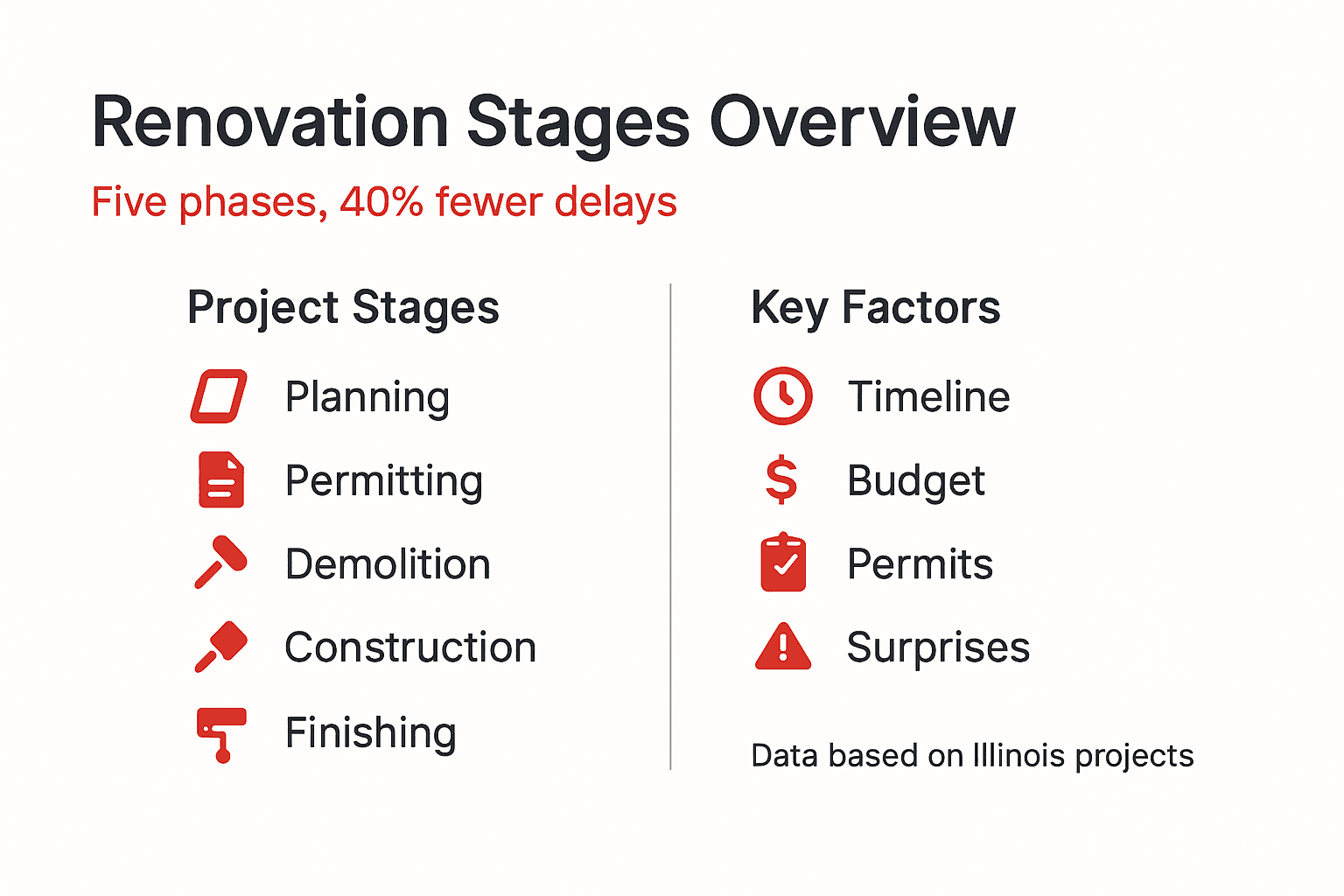
Home renovation projects divide into five essential stages: planning and design (2 to 4 weeks), permits (2 to 6 weeks), construction (3 to 9 months), and finishing (1 to 2 weeks). These typical duration ranges help you set realistic expectations and coordinate schedules effectively.
Knowing these stages improves your scheduling, budgeting, and communication with contractors. Planning includes goal setting, design finalization, and budget preparation. Permitting ensures legal compliance and helps you avoid costly fines or project shutdowns.
Here’s what each stage accomplishes:
- Planning and Design: Define project scope, select materials, finalize blueprints, establish budget
- Permitting: Obtain required approvals from local Illinois authorities for structural, electrical, plumbing work
- Demolition: Remove existing structures, uncover hidden issues, prepare workspace for construction
- Construction: Execute framing, install systems, complete structural work, pass inspections
- Finishing: Apply paint, install flooring, add fixtures, complete final touch ups
Refer to renovation contract guidance to understand how stages map to contractor obligations. Clear remodeling service definitions help you identify which stages your project requires. Reviewing the essential stages of home renovations provides deeper context for planning your timeline.
Detailed Breakdown of Each Renovation Stage
Each renovation phase involves specific tasks, challenges, and timelines that demand your attention and preparation.
Stage 1: Planning and Design (2 to 4 weeks)
This initial phase defines your project scope, material selections, and budget parameters. You’ll work with designers or architects to create detailed plans. Rushed planning leads to expensive changes later.
Stage 2: Permitting (2 to 6 weeks)
Permitting typically takes 2 to 6 weeks in Illinois, varying by municipality and project complexity. Complete applications submitted early prevent timeline extensions. Skipping this stage risks legal penalties and forced project halts.
Stage 3: Demolition (1 to 2 weeks)
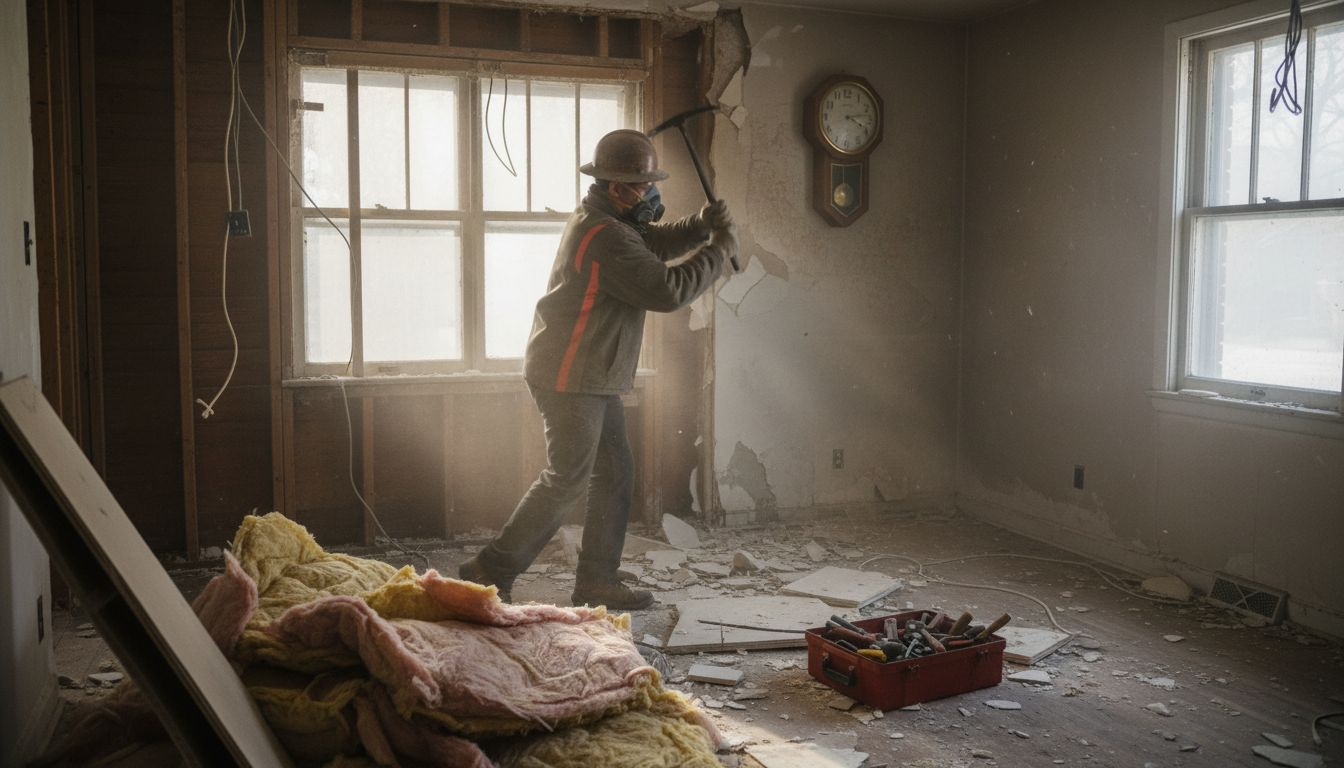
Demolition uncovers hidden issues like outdated wiring, water damage, or structural problems. These discoveries often require plan adjustments and budget increases. Proper demolition prepares your space for quality construction.
Stage 4: Construction (3 to 9 months)
Construction represents the most time intensive phase. It includes framing, installing electrical and plumbing systems, HVAC work, and passing multiple inspections. Timeline varies dramatically based on project scope and material availability.
Stage 5: Finishing (1 to 2 weeks, often longer)
Finishing covers painting, flooring installation, and final adjustments, frequently delayed by material shortages or last minute changes. This stage makes your renovation feel complete but often takes longer than estimated.
Pro Tip: Order finishing materials early in the construction phase and minimize changes during final weeks to avoid delays.
Explore homeowner tips by renovation stage for phase specific guidance. Understanding typical renovation timelines helps you anticipate bottlenecks and plan accordingly.
Permits and Approvals: Navigating Local Illinois Regulations
Permitting represents a critical stage that directly impacts your renovation timeline and legal compliance in Illinois.
Common Illinois permits include:
- Electrical permits: Required for wiring changes, panel upgrades, new circuits
- Plumbing permits: Needed for pipe modifications, fixture installations, water heater replacements
- Structural permits: Mandatory for load bearing wall removal, foundation work, additions
- HVAC permits: Required for heating, cooling, and ventilation system changes
Skipping permits creates serious risks. You face fines, forced rework, and project shutdowns. Unpermitted work also complicates future home sales when disclosure is required.
Permit approvals in Illinois generally take 2 to 6 weeks, depending on municipality workload and project complexity. Urban areas like Chicago often require longer review periods. Rural jurisdictions may process applications faster.
You should consult local building authorities early in project planning. Each municipality maintains specific requirements and submission processes. Early engagement prevents surprises and allows time for application preparation.
Pro Tip: Submit permit applications with complete documentation, including detailed plans, engineering stamps when required, and accurate fee payments to avoid review delays.
Review Illinois permit process delays to understand common bottlenecks. Check Illinois renovation permit requirements for comprehensive compliance guidance. Verify official Illinois permit requirements with your local building department before starting work.
Common Pitfalls, Delays, and How to Avoid Them
Renovation projects face predictable problems that careful planning and communication can prevent or minimize.
Underestimating Permitting Time
Many homeowners allocate insufficient time for permit approvals. This pushes entire schedules back and creates contractor availability conflicts. Always add buffer time beyond minimum permit estimates.
Hidden Issues During Demolition
Hidden demolition issues like outdated systems or structural damage can extend projects by 15% or more. Older homes particularly face this risk. Budget and schedule contingencies accommodate these discoveries.
Communication Breakdowns
Poor communication between homeowners and contractors increases cost and time overruns substantially. Misunderstood expectations lead to rework and relationship strain. Regular updates and clear role definitions reduce these risks.
Here’s how to prevent common delays:
- Start permit applications immediately after finalizing designs
- Conduct pre demolition inspections when possible to identify potential issues
- Schedule weekly contractor meetings to review progress and address concerns
- Document all changes in writing with cost and timeline impacts
- Maintain organized project files with permits, invoices, and correspondence
Pro Tip: Build contingency time (add 15% to 20% to estimates) and budget reserves (10% to 15% of total cost) for unexpected discoveries common in renovation work.
Working with properly licensed contractors in Illinois reduces defects and delays significantly. Understanding common renovation pitfalls helps you prepare proactive solutions before problems emerge.
Budgeting and Timeline Management Through Understanding Stages
Detailed knowledge of renovation stages empowers you to create accurate budgets and realistic schedules that prevent overruns.
Awareness of renovation stages improves budgeting accuracy and limits cost overruns common in poorly planned projects. When you understand each phase’s requirements, you allocate funds appropriately and avoid surprise expenses.
Common overruns occur when homeowners neglect planning and permitting stages. Rushing design decisions leads to expensive mid project changes. Skipping permit research creates fine expenses and rework costs.
The finishing stage often requires extra time and costs when changes occur. Material selections made hastily during construction create delays when items arrive damaged or incorrect. Last minute design preferences add labor charges and extend timelines.
| Approach | Budget Accuracy | Timeline Reliability | Change Management |
|---|---|---|---|
| Traditional (minimal stage planning) | Low, frequent 20%+ overruns | Poor, delays common | Reactive, expensive changes |
| Project managed (detailed stage awareness) | High, within 10% of estimates | Good, milestones met | Proactive, controlled costs |
This comparison shows how structured stage planning delivers measurable benefits. Project managed renovations reduce financial surprises and schedule disruptions.
Pro Tip: Include a 10% to 15% contingency budget for surprises, especially in homes built before 1980 where hidden issues appear more frequently.
Explore Illinois renovation budgeting tips for detailed cost planning strategies aligned with each project stage.
Conceptual Framework: Organizing Renovation Stages for Effective Management
Applying a structured project management model to renovation phases helps you monitor progress, communicate effectively, and navigate your project smoothly.
Frame your renovation using five management stages:
- Initiation: Define goals, establish budget, select contractor
- Planning: Finalize designs, submit permits, order long lead materials
- Execution: Complete demolition, construction, system installations
- Monitoring: Track progress, manage changes, maintain quality standards
- Closure: Finish details, conduct final inspection, settle payments
Each management stage corresponds to renovation phases. Initiation and planning align with design and permitting. Execution covers demolition and construction. Monitoring runs throughout. Closure matches the finishing stage.
Applying a structured five stage project management framework reduces renovation overruns by 20% compared to unstructured approaches. Clear milestones, defined roles, and managed expectations drive these improvements.
| Framework Stage | Homeowner Tasks | Goals |
|---|---|---|
| Initiation | Interview contractors, set priorities | Clear vision, realistic budget |
| Planning | Review designs, track permit status | Complete approvals, material orders |
| Execution | Monitor daily progress, approve changes | Quality work, schedule adherence |
| Monitoring | Attend weekly meetings, document issues | Proactive problem solving |
| Closure | Inspect work, verify warranties | Satisfactory completion |
This framework helps you anticipate task dependencies and adjust plans proactively when circumstances change.
Pro Tip: Use this framework to schedule regular check ins with your contractor at each stage transition, ensuring alignment before moving forward.
Refer to project management for home renovations for implementation guidance. The renovation project management framework provides academic foundation for these practical applications.
Summary and Practical Recommendations for Illinois Homeowners
Successful Illinois renovations start with understanding the five essential stages and applying structured management practices.
You now know the five renovation stages: planning and design (2 to 4 weeks), permits (2 to 6 weeks), demolition (1 to 2 weeks), construction (3 to 9 months), and finishing (1 to 2 weeks, often longer). These timeframes guide your scheduling and expectation setting.
Prepare with this essential checklist:
- Define clear renovation goals with specific outcomes and priorities
- Select qualified, licensed contractors with Illinois renovation experience
- Plan permit requirements early and submit complete applications
- Establish realistic budgets with 10% to 15% contingency reserves
- Create communication schedules for regular contractor updates
Maintain ongoing clear communication with your contractor throughout every stage. Weekly meetings, documented changes, and transparent problem solving prevent misunderstandings and costly rework.
Expect challenges during your renovation. Hidden issues emerge during demolition. Material deliveries face delays. Permit approvals take longer than estimated. Include contingency time and budget to absorb these normal complications without derailing your project.
Being proactive and informed dramatically improves your renovation outcomes. You control project success through preparation, communication, and realistic planning. Review Chicago home remodeling tips for location specific guidance as you move forward.
Streamline Your Illinois Home Renovation with First Solution IL
Understanding renovation stages is essential, but executing them successfully requires experienced professional guidance.
First Solution IL offers comprehensive home remodeling and construction services in Illinois tailored specifically for homeowners like you. We guide you through every renovation stage, from initial planning through final finishing touches, minimizing delays and budget surprises.

Our team brings deep expertise in Illinois permits and local regulations, ensuring compliance and smoother approval processes. We maintain transparent communication throughout your project and apply structured management approaches that keep work on schedule and within budget. Our interior renovation step by step guide shows how we execute each phase with precision.
Contact First Solution IL today to discuss your renovation vision and receive detailed renovation estimates for Illinois homeowners that align with your goals and timeline.
Frequently Asked Questions About Renovation Stages
What is the typical waiting time for permits in Illinois?
Permit approval times in Illinois range from 2 to 6 weeks depending on your municipality and project complexity. Urban areas like Chicago often require longer review periods, while smaller jurisdictions may process applications faster.
How can I prepare for hidden issues during demolition?
Budget an additional 10% to 15% of your total project cost as contingency for unexpected discoveries. Schedule pre demolition inspections when possible and work with experienced contractors who can identify potential problems early.
Is finishing usually shorter than other renovation stages?
Finishing typically estimates at 1 to 2 weeks but often extends longer due to material availability, delivery delays, or last minute changes. Order materials early and minimize changes during final weeks to keep this stage on track.
How important is communication with my contractor?
Regular communication proves essential for renovation success. Schedule weekly progress meetings, document all changes in writing, and maintain open dialogue about concerns. Clear communication prevents misunderstandings that lead to costly rework and timeline extensions. Review Illinois renovation contracts to understand communication requirements.
Can I start construction before permits are approved?
No, starting construction before obtaining required permits is illegal in Illinois and creates serious risks. You face stop work orders, fines, forced rework, and complications when selling your home. Always secure all necessary permits before beginning any regulated work.