
Most homeowners believe every dollar spent on renovations adds equal value at resale, but the reality is far more nuanced. Some projects, like garage door replacements, can return over 302% in Illinois markets, while luxury kitchen overhauls may recoup less than 60%. Understanding how renovation ROI is calculated and which upgrades deliver the strongest returns in Illinois can save you thousands and help you make smarter remodeling decisions. This guide breaks down the data, dispels common myths, and provides actionable strategies tailored to Illinois homeowners planning their next renovation.
Table of Contents
- What is renovation ROI?
- How is renovation ROI determined? Methods and benchmarks
- Top renovation projects by ROI in Illinois: What the data says
- What drives renovation ROI up or down? Key factors and Illinois quirks
- Financial vs. functional ROI: Should you always chase resale value?
- Takeaways and action steps: Maximizing your renovation ROI in Illinois
- Get expert help for your Illinois renovation ROI
- Frequently asked questions
Key Takeaways
| Point | Details |
|---|---|
| ROI varies by project | Exterior and mid-range updates often return over 100% in Illinois, while upscale interiors lag behind. |
| Local market matters | Compare with local home sales to avoid over-improving or missing top ROI opportunities. |
| Functional value counts | Enjoyment and utility pay off even if resale ROI is moderate, so balance personal and financial goals. |
| Expert advice helps | Professional planning and estimates can prevent costly ROI mistakes and guide you to the right investments. |
What is renovation ROI?
Renovation ROI measures the percentage of your remodeling investment you recoup when selling your home. The formula is straightforward: divide the value added to your property by the total project cost, then multiply by 100. For example, if a $10,000 kitchen update increases your home’s appraised value by $8,500, your ROI is 85%.
Not all renovations deliver equal returns. Exterior and curb appeal projects typically outperform interior upgrades because they create immediate visual impact and appeal to the broadest buyer pool. Mid-range projects consistently beat luxury remodels in ROI terms, since they align better with neighborhood property values and buyer expectations.
Annual reports like the Cost vs. Value study provide benchmark ROI data by analyzing real estate transactions across 150+ U.S. markets. These benchmarks help you compare your planned project against proven performance data.
Pro Tip: Before committing to any major renovation, request Illinois renovation estimates from local contractors to understand true project costs and avoid budget surprises that erode ROI.
Quick ROI calculation example
| Project Type | Cost | Value Added | ROI |
|---|---|---|---|
| Entry door replacement | $2,500 | $5,650 | 226% |
| Minor kitchen remodel | $28,000 | $23,520 | 84% |
| Major kitchen remodel | $85,000 | $42,500 | 50% |
| Bathroom addition | $65,000 | $39,000 | 60% |
Key factors affecting your ROI
- Project scope: Mid-range upgrades typically outperform luxury renovations
- Timing: Selling within 1-2 years of completion maximizes value capture
- Market conditions: Strong seller’s markets boost ROI across all project types
- Neighborhood alignment: Projects that match local property values perform best
How is renovation ROI determined? Methods and benchmarks
Real estate appraisers establish ROI figures using the sales comparison approach, analyzing homes with and without specific renovations to isolate value differences. They compare recent sales of similar properties, adjusting for variables like location, size, and condition, then attribute value increases to specific upgrades.
The Cost vs. Value Report compiles data from thousands of real estate professionals nationwide, breaking down ROI by region and project type. This methodology provides reliable benchmarks because it reflects actual market behavior rather than theoretical estimates.
Illinois data often shows higher returns for exterior projects compared to national averages, particularly in competitive suburban markets around Chicago, Naperville, and Aurora. Regional climate factors also influence ROI, with projects addressing harsh winters or humid summers delivering stronger returns.
“ROI benchmarks vary significantly by region. What works in California may underperform in Illinois, making local data essential for planning decisions.”
How to use ROI benchmarks effectively
- Start with regional data: National averages provide context, but Illinois-specific figures predict your actual returns more accurately
- Compare similar neighborhoods: A project that works in a $300,000 neighborhood may flop in a $600,000 area
- Factor in market timing: Cost vs. Value trends shift annually based on economic conditions
- Adjust for property type: Single-family homes and condos show different ROI patterns
National vs. Illinois ROI comparison
| Project | National ROI | Illinois ROI | Difference |
|---|---|---|---|
| Garage door replacement | 267% | 303% | +36% |
| Entry door replacement | 216% | 226% | +10% |
| Minor kitchen remodel | 112% | 94% | -18% |
| Manufactured stone veneer | 208% | 195% | -13% |
These variations highlight why consulting exterior remodeling tips specific to Illinois markets matters when planning your project. Understanding local preferences and climate considerations helps you maximize Illinois remodeling ROI effectively.
Top renovation projects by ROI in Illinois: What the data says
Data from 2025-2026 reveals clear winners and losers in the Illinois renovation market. Curb appeal projects dominate the top tier, with garage and entry door replacements delivering returns that exceed 200%. These projects succeed because they’re visible to every potential buyer and signal overall home maintenance quality.
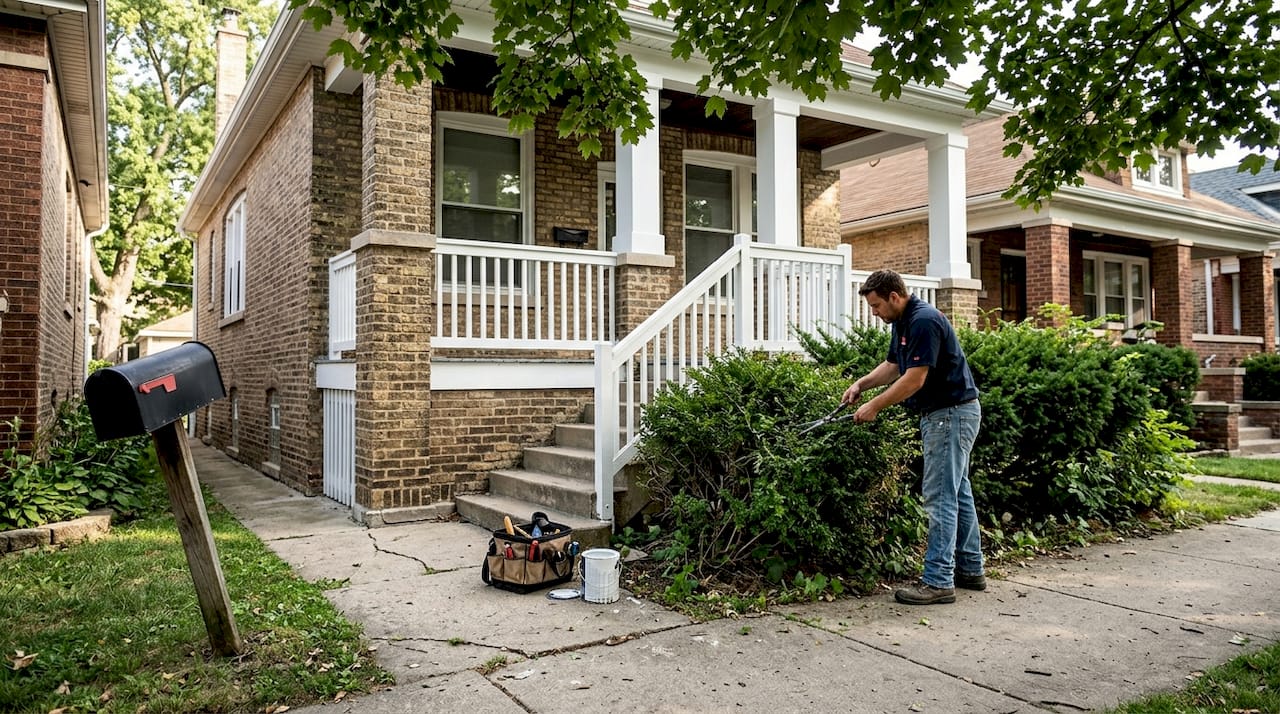
Mid-range kitchen remodels in hot Illinois markets can achieve 70-85% ROI, particularly when focusing on functional improvements like updated appliances, cabinet refacing, and modern lighting rather than luxury finishes. The key is matching upgrades to neighborhood standards without overbuilding.
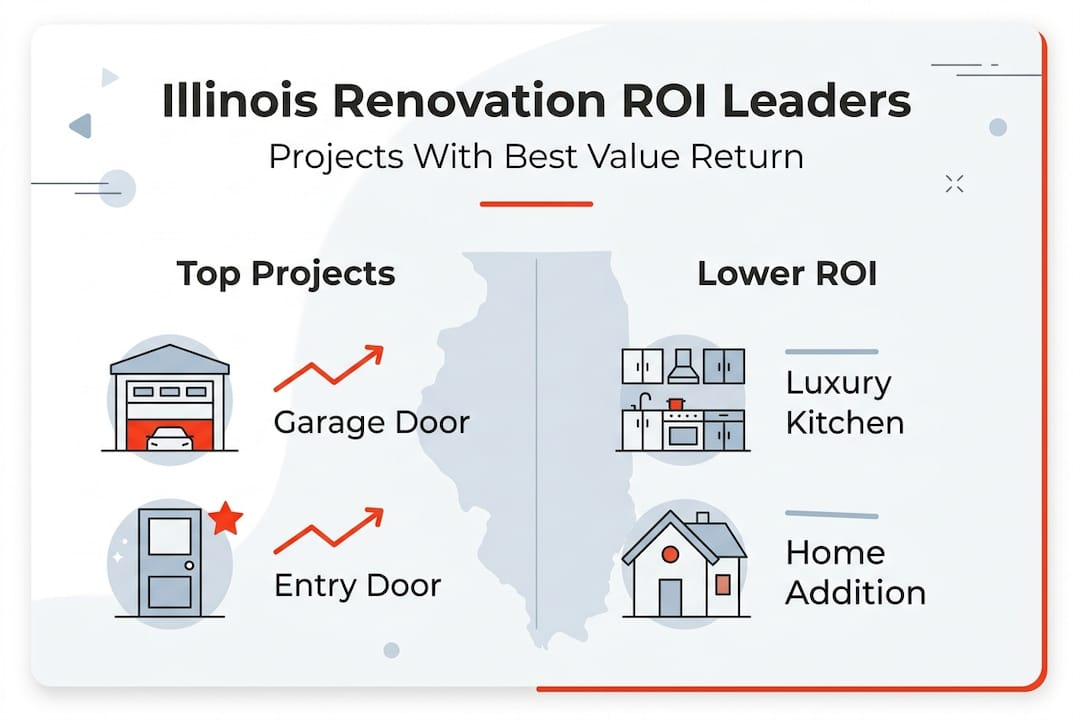
Luxury and upscale interior projects consistently underperform. A $150,000 gourmet kitchen may only add $75,000 to $90,000 in appraised value, especially if surrounding homes lack comparable features. Highly personalized upgrades like wine cellars, home theaters, or custom built-ins rarely recoup costs unless your property is already in the luxury tier.
Illinois ROI rankings for 2026
| Rank | Project | Average Cost | Value Added | ROI |
|---|---|---|---|---|
| 1 | Garage door replacement | $4,800 | $14,500 | 302% |
| 2 | Entry door replacement | $2,500 | $5,650 | 226% |
| 3 | Manufactured stone veneer | $12,000 | $23,400 | 195% |
| 4 | Minor kitchen remodel | $28,000 | $23,520 | 84% |
| 5 | Roof replacement | $32,000 | $24,000 | 75% |
| 6 | Bathroom remodel | $35,000 | $23,100 | 66% |
| 7 | Major kitchen remodel | $85,000 | $42,500 | 50% |
Why these projects win
- Immediate visual impact: Buyers notice exterior upgrades before entering the home
- Universal appeal: These improvements attract the broadest buyer demographic
- Perceived maintenance: Updated exteriors suggest the entire property is well-maintained
- Cost efficiency: Lower investment thresholds make percentage returns easier to achieve
Pro Tip: Focus your budget on projects that enhance curb appeal and address deferred maintenance before tackling interior luxury upgrades. Explore kitchen remodel ROI Illinois strategies and exterior ROI Illinois approaches to understand which types of property renovations boost Illinois home value most effectively.
What drives renovation ROI up or down? Key factors and Illinois quirks
Your project’s ROI depends heavily on how well it aligns with local property values and buyer expectations. A $50,000 bathroom renovation in a $200,000 home will likely underperform because it exceeds what comparable properties offer. Conversely, the same project in a $500,000 home might deliver strong returns by bringing the property up to neighborhood standards.
Market timing dramatically affects ROI. Projects completed during strong seller’s markets, when inventory is low and buyer competition is high, capture more value than identical renovations during buyer’s markets. ROI varies with market conditions, making timing as important as project selection.
Renovation age matters more than most homeowners realize. A kitchen remodeled three years before sale will recoup less than one completed six months prior. Finishes show wear, styles shift, and buyers discount older work when making offers.
Common ROI mistakes Illinois homeowners make
- Overbuilding for the neighborhood: Installing luxury features that exceed local standards
- Ignoring buyer preferences: Choosing highly personal design elements that limit appeal
- Poor timing: Completing renovations too far in advance of selling
- Skipping maintenance: Focusing on cosmetic upgrades while ignoring structural issues
“The biggest ROI killer is treating your home like it exists in isolation. Every renovation decision should consider what buyers expect in your specific neighborhood and price range.”
Pro Tip: Before starting any major project, plan your Illinois renovation by researching recent sales of comparable homes in your area. Look for patterns in which upgrades commanded premium prices and which were ignored by buyers. This research phase prevents costly mistakes and helps you identify cost-effective Illinois remodeling opportunities.
Illinois-specific considerations
- Climate resilience: Upgrades addressing harsh winters or summer humidity deliver stronger returns
- Energy efficiency: Illinois buyers increasingly value lower utility costs
- Suburban vs. urban: Chicago urban properties favor different upgrades than suburban homes
- Property tax impact: Some renovations trigger reassessments that affect long-term ownership costs
Financial vs. functional ROI: Should you always chase resale value?
Pure resale ROI matters most when you’re selling within one to three years. In this scenario, every dollar counts, and focusing on high-ROI projects like entry doors, garage doors, and minor kitchen updates makes financial sense. Your goal is maximizing sale price, not personal enjoyment.
But if you’re staying in your home for five, ten, or twenty years, functional ROI becomes equally important. A $40,000 primary bathroom renovation might only recoup 60% at resale, but if it delivers daily comfort, accessibility improvements, or solves chronic problems, the quality of life return justifies the investment.
Long-term owners benefit from functional ROI that pure resale calculations miss. Energy-efficient windows may show modest resale returns but save thousands in utility costs over a decade. A finished basement might recoup only 70% of costs but provides essential living space for a growing family.
When to prioritize resale ROI
- Selling within 1-3 years: Focus exclusively on high-ROI projects
- Investment properties: Maximize returns for rental income or quick flips
- Market-driven decisions: When home values are rising rapidly
- Limited budgets: When you can only afford one major project
When functional ROI matters more
- Long-term ownership: You’ll enjoy the benefits for many years
- Quality of life: The upgrade solves daily frustrations or safety issues
- Family needs: Growing families or aging-in-place considerations
- Energy savings: Projects that reduce ongoing operating costs
“The best renovation decisions balance financial returns with personal value. A project that makes your daily life better while maintaining reasonable resale value often beats a high-ROI upgrade you’ll never enjoy.”
Consider must-have Illinois features that serve both purposes, delivering strong resale potential while enhancing your current lifestyle. For investment property renovations, pure financial ROI should drive every decision.
Takeaways and action steps: Maximizing your renovation ROI in Illinois
Successful renovation planning starts with clear priorities. If resale value is your primary goal, concentrate your budget on curb appeal and mid-range projects that deliver proven returns. Avoid the temptation to over-personalize or install luxury features that exceed neighborhood standards.
Research comparable properties in your specific Illinois market before committing to any major project. Look at recent sales, noting which upgrades commanded premium prices and which were overlooked. This competitive analysis prevents costly mistakes and helps you identify opportunities other sellers missed.
Balance financial ROI with functional value based on your timeline. Short-term owners should prioritize high-ROI projects, while long-term residents can justify lower-return upgrades that enhance daily living. Neither approach is wrong, but mixing strategies without clear priorities wastes money.
Your Illinois renovation ROI action plan
- Define your timeline: Selling soon or staying long-term determines project selection
- Research local comps: Identify which upgrades command premiums in your neighborhood
- Start with exterior projects: Garage doors, entry doors, and siding deliver strongest returns
- Match neighborhood standards: Avoid overbuilding or underbuilding for your area
- Get professional estimates: Accurate cost projections prevent budget overruns that kill ROI
- Consider functional value: Balance resale returns with quality of life improvements
- Time your projects: Complete renovations close to sale date for maximum value capture
Pro Tip: Create a spreadsheet comparing projected costs, estimated value added, and ROI percentages for each potential project. This visual comparison makes trade-offs clear and helps you allocate your budget to projects delivering the best combination of financial and functional returns. Consult the comprehensive Illinois ROI guide for detailed planning frameworks.
Final considerations
- Permit requirements: Some high-ROI projects need permits that add time and cost
- Contractor selection: Quality work maintains value; poor execution destroys ROI
- Material choices: Mid-grade materials often deliver better ROI than luxury options
- Maintenance planning: Factor in ongoing upkeep costs when calculating true ROI
Get expert help for your Illinois renovation ROI
Navigating renovation ROI requires balancing market data, neighborhood dynamics, and personal priorities. Professional guidance helps you avoid the costly mistakes that erode returns, like overbuilding for your area or choosing projects with poor resale potential. Local contractors familiar with Illinois markets provide realistic cost estimates and identify opportunities you might miss.
Exploring proven remodeling approaches gives you concrete examples of what works in real Illinois homes. Seeing how other homeowners balanced financial returns with functional improvements helps you make confident decisions about your own projects.
Whether you’re planning a single high-impact upgrade or a comprehensive renovation, understanding the full scope of remodeling services available helps you make informed choices. Review examples of Illinois interior remodeling to see finished projects and understand quality standards. Learn about remodeling services Illinois contractors offer to match your specific needs. Follow a proven remodeling workflow guide to understand each phase from planning through completion, ensuring your project stays on track and delivers the returns you expect.
Frequently asked questions
How do I calculate renovation ROI for my Illinois home?
Divide the appraised value added to your home by the total project cost, then multiply by 100 to get the ROI percentage. For example, a $10,000 project adding $8,500 in value yields 85% ROI.
What renovation projects offer the highest ROI in the Midwest?
Garage door and entry door replacements, minor kitchen remodels, and curb appeal upgrades consistently rank highest, with some exterior projects returning over 200% in strong Illinois markets.
Does ROI depend on the Illinois real estate market?
Yes, ROI varies with neighborhood comps and market conditions. Projects that work in competitive suburban markets may underperform in slower rural areas, making local research essential.
Is it worth remodeling if I’m not selling soon?
If you’ll live in your home for several years, functional value and enjoyment justify projects even with lower resale ROI. Balance financial returns with quality of life improvements based on your timeline.
How long do renovation ROI benefits last?
Renovations lose value over time as finishes age and styles change. Projects completed within one to two years of selling capture maximum value, while older renovations may recoup significantly less at resale.