
TL;DR:
- Effective office design relies on data, employee input, and tailored zoning to improve productivity.
- Modern trends like hybrid layouts, biophilic elements, and smart tech are shaping Illinois workspaces in 2026.
- Customizing design based on business needs and local factors ensures successful, cost-effective office renovations.
Choosing the right office design elements is one of the most consequential decisions a business owner or property manager in Illinois can make right now. Talent competition is fierce, hybrid work has permanently shifted how people use space, and employees expect more from their physical environment than ever before. A poorly designed office costs you in turnover, lost focus, and missed collaboration. This guide walks you through how to evaluate your options, which modern ideas are worth your budget, and how to match each trend to your specific workspace situation so every dollar you invest actually moves the needle.
Table of Contents
- How to evaluate modern office design trends
- Top modern office design ideas for 2026
- Advantages and drawbacks of each design option
- Matching modern design ideas to your workspace needs
- Our take: Why Illinois leaders shouldn’t just follow design trends
- Get expert help with your Illinois office transformation
- Frequently asked questions
Key Takeaways
| Point | Details |
|---|---|
| Start with analytics | Use data-driven planning and employee input to avoid costly redesign missteps. |
| Prioritize flexible layouts | Hybrid workspaces and modular features boost efficiency and adaptability in modern offices. |
| Invest in wellness | Biophilic and wellness-focused elements improve productivity and employee satisfaction. |
| Plan for change management | Successful redesigns require proactive communication and phased implementation to prevent productivity loss. |
How to evaluate modern office design trends
Before you start ordering standing desks or knocking down walls, you need a clear framework. Jumping straight to aesthetics without understanding how your team actually uses the space is one of the most expensive mistakes we see Illinois businesses make.
Here are the essential steps to evaluate which design ideas fit your workspace:
- Conduct a space audit. Walk every square foot. Measure which areas are consistently occupied, which sit empty, and where bottlenecks form. You may discover that 40% of your conference rooms are booked but only 20% are actually used.
- Survey your employees. Ask specific questions about where they struggle to focus, where they feel energized, and what tools or spaces they wish existed. Generic surveys produce generic answers, so ask about real daily friction.
- Define functional zones. Separate collaboration areas from deep-focus zones before choosing furniture or finishes. Zoning is the backbone of any effective redesign.
- Use data to guide decisions. Data-driven office planning involves space audits, employee surveys, activity-based zoning, and phased execution with stakeholder engagement. Skipping this step leads to redesigns that look great in photos but frustrate employees within weeks.
- Budget with a contingency. Set aside 10 to 15% above your projected cost. Structural surprises, permit delays, and material lead times are common in Illinois commercial renovations.
Pro Tip: Before finalizing any design plan, review essential office renovation tips to avoid common pitfalls that add cost and delay timelines.
Balancing aesthetics with practical outcomes is where most redesigns either succeed or stall. A beautiful open floor plan means nothing if your legal team cannot hold a confidential call. Always tie every design decision back to a functional goal. If you need help structuring the sequence of changes, remodeling workflow guidance can help you phase the work so your team stays productive throughout the process.
Top modern office design ideas for 2026
With a solid evaluation framework in place, here are the design ideas that are genuinely shaping Illinois workspaces right now.
- Hybrid-flexible layouts. These reduce total desk count by up to 30% by replacing assigned seating with shared workstations and bookable zones. They work especially well for companies with rotating remote and in-office schedules.
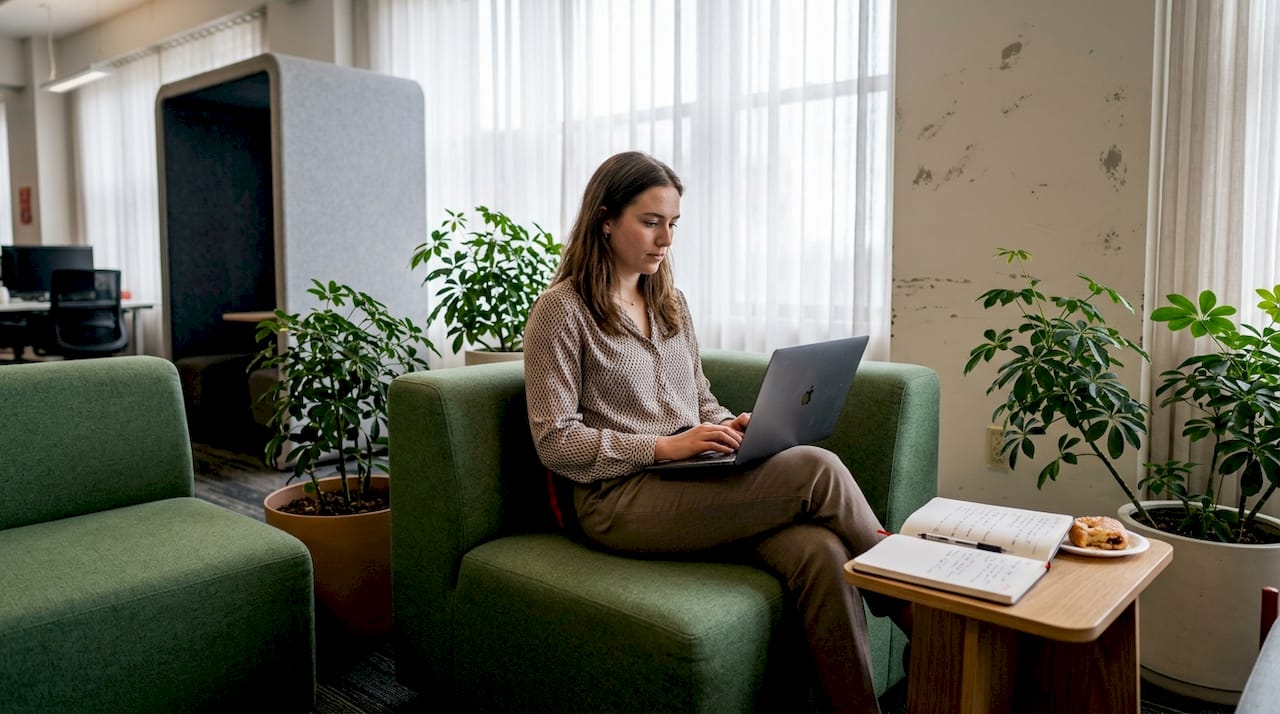
- Biophilic design. Incorporating plants, natural light, wood textures, and green walls connects employees to nature indoors. Biophilic elements boost productivity by 15%, making this one of the highest-ROI changes you can make.
- Sustainable materials. Recycled content flooring, low-VOC paints, and energy-efficient lighting reduce operating costs and support ESG reporting goals. Illinois businesses with sustainability targets are prioritizing this heavily.
- Modular furniture. Reconfigurable desks, movable partitions, and stackable seating let you adapt the space as your team grows or shrinks without a full renovation.
- Wellness-centric spaces. Dedicated quiet rooms, meditation corners, and ergonomic workstations address burnout and reduce absenteeism.
- Acoustic solutions. Sound-absorbing panels, white noise systems, and enclosed phone booths are no longer optional in open-plan offices.
- Smart technology integration. Occupancy sensors, automated lighting, and app-based room booking make the space more efficient and give you real data on how it is being used.
The top design trends for 2026 confirm that hybrid-flexible workspaces, biophilic design, and smart technology are leading the shift across commercial sectors. You can see how these trends are playing out locally in the latest office renovation trends for Illinois and review office renovation types to understand which scope of work fits your goals.
Pro Tip: Start with one high-impact change rather than overhauling everything at once. Modular furniture is often the best first move because it is reversible, relatively affordable, and immediately visible to your team.
Advantages and drawbacks of each design option
Every design idea comes with trade-offs. Knowing them upfront protects your investment and your team’s wellbeing.
| Design option | Key advantages | Watch out for |
|---|---|---|
| Hybrid-flexible layout | Reduces desk count by 30%, cuts real estate cost | Requires micro-zoning and strong booking systems |
| Biophilic elements | 15% productivity boost, improves mood | Ongoing maintenance, higher upfront cost |
| Sustainable materials | Lower operating costs, ESG benefits | Longer lead times, premium pricing |
| Modular furniture | Adaptable, cost-effective, easy to reconfigure | Aesthetic limitations, may feel temporary |
| Wellness spaces | Reduces burnout, lowers absenteeism | Requires dedicated square footage |
| Acoustic solutions | Reduces distraction in open plans | Installation disruption, visible hardware |
| Smart technology | Real-time usage data, energy savings | Integration complexity, staff training needed |
The psychosocial impacts of office design are real and measurable. Open-plan layouts boost collaboration but increase noise-related distraction significantly. Modular and flexible designs are praised for adaptability but require intentional change management or employees will resist the shift.
“The biggest risk in any office redesign is not the construction. It is the failure to prepare employees for a new way of working. Neuro-inclusive zoning, which means designing for different cognitive and sensory needs, is the difference between a space that energizes people and one that quietly drains them.”
Reviewing best renovation services can help you identify which contractors in Illinois have experience managing both the physical build and the change management communication that goes with it.
Matching modern design ideas to your workspace needs
Not every trend fits every business. Here is how to match the right ideas to your specific situation.
| Business scenario | Recommended design features | Expected outcome |
|---|---|---|
| Law firm, open plan | Acoustic panels, enclosed offices | Confidentiality, focus improvement |
| Tech startup, 20 to 50 staff | Modular furniture, hybrid layout | 30% desk reduction, flexible growth |
| Creative agency | Biophilic design, collaborative zones | Mood boost, stronger ideation sessions |
| Medical office | Wellness spaces, smart lighting | Staff retention, patient experience |
| Mid-size corporate office | Sustainable materials, smart tech | ESG compliance, energy savings |
Follow these steps to match design ideas to your actual needs:
- Identify your primary pain point. Is it noise, lack of collaboration, or wasted space? That pain point should drive your first design decision.
- Map your team’s work patterns. Do most employees focus independently, or do they need frequent group interaction? This determines your zone ratio.
- Consider local context. Chicago offices often prioritize density and transit access. Smaller Illinois markets like Peoria or Rockford may have more square footage but fewer specialized contractors.
- Check psychosocial risk factors. Pre-existing collaboration and decision control issues predict post-renovation productivity loss. Address these in your design, not after.
- Plan for ongoing measurement. Use occupancy sensors and quarterly surveys to track whether the changes are working.
Pro Tip: Pilot one new zone, such as a focus pod or a biophilic corner, before committing to a full floor redesign. Measure employee satisfaction and usage data for 60 days before scaling. This approach to planning work zones dramatically reduces the risk of costly reversals.
For Illinois-specific guidance, explore enhancing Illinois commercial spaces and learn how thoughtful design choices can boost workplace productivity in measurable ways.
Our take: Why Illinois leaders shouldn’t just follow design trends
Here is something most design guides will not tell you: trend-chasing is one of the fastest ways to waste your renovation budget. We have worked on enough Illinois office build-outs to know that what performs brilliantly in a San Francisco tech campus can completely misfire in a mid-size Midwest professional services firm.
The real differentiator is not which trend you pick. It is whether you have the data and the employee buy-in to make it work. Analytics and employee involvement consistently outperform aesthetic decisions made in isolation. A beautifully designed space that ignores how your team actually works will underperform a modest renovation built around real feedback.
Illinois also has specific regulatory, climate, and cultural factors that affect design outcomes. Energy codes, HVAC requirements for older buildings, and the practical reality of harsh winters all shape what works here. Follow the modern Illinois office trends that are grounded in local context, not just national publications. Pilot before you scale, measure before you commit, and always ask your employees first.
Get expert help with your Illinois office transformation
Translating design ideas into a finished, functional workspace takes more than inspiration. It takes experienced hands who understand Illinois building codes, commercial timelines, and how to minimize disruption to your team during construction.
At First Solution IL, we specialize in commercial interior remodeling for businesses across Illinois, from full build-outs to targeted upgrades. Our team guides you through every phase, starting with planning and ending with a space your employees actually want to work in. Explore our remodeling workflow to see how we keep projects on schedule, and review our guide on planning commercial renovation to start your project on the right foot. Contact us today for a free consultation.
Frequently asked questions
What is the most popular office design trend in Illinois for 2026?
Hybrid-flexible workspaces are leading in 2026, giving companies the ability to optimize their floor plan for both in-person collaboration and remote work schedules without expanding square footage.
How much space per employee is considered ideal in modern offices?
Current space planning guidelines recommend 125 to 250 square feet per employee, depending on the nature of the work and how frequently staff are in the office simultaneously.
Does adding biophilic elements really help productivity?
Yes. Incorporating plants and natural light has been shown to increase productivity by 15%, making biophilic design one of the most cost-effective upgrades for any office environment.
What’s one cost-effective way to modernize an office?
Modular furniture is widely praised for its adaptability and efficiency, allowing you to reconfigure your workspace as your team’s needs change without major construction costs.
How can I avoid productivity loss during office renovations?
Engage employees early in the process, phase your changes to avoid full disruptions, and use data to guide every design decision. Employee involvement is the single most effective way to reduce psychosocial risk during workspace transitions.