

Office renovations rarely follow a smooth path, especially when every hour offline impacts your bottom line. For managers across Illinois, mastering efficient workflows and minimizing downtime during remodeling can make or break the project. By focusing on clear renovation goals and proactively coordinating layouts, sourcing, and schedules, you transform chaos into a structured process that keeps your team productive and your business thriving.
Table of Contents
- Step 1: Assess Current Office Needs And Set Renovation Goals
- Step 2: Plan Layout Changes And Organize Material Sourcing
- Step 3: Coordinate Schedules And Secure Work Zones
- Step 4: Execute Renovations And Monitor Daily Progress
- Step 5: Inspect Completed Work And Address Final Adjustments
Quick Summary
| Key Point | Explanation |
|---|---|
| 1. Assess Current Needs Thoroughly | Document office layout and identify inefficiencies before planning renovations to avoid costly mistakes later. |
| 2. Set Specific, Measurable Goals | Define clear objectives such as increasing collaboration space or improving energy efficiency to guide your renovation effectively. |
| 3. Prioritize Goals by Impact | Rank renovation goals based on their effect on productivity and budget constraints to ensure an efficient approach. |
| 4. Organize Material Sourcing Early | Create a comprehensive material list and secure reliable suppliers ahead of time to prevent delays in the renovation timeline. |
| 5. Monitor Progress and Quality Daily | Conduct regular check-ins and a daily log to track construction progress and quickly address any issues that arise. |
Step 1: Assess current office needs and set renovation goals
Before you swing a hammer or call contractors, you need a clear picture of where your office stands and where you want it to go. This step separates successful remodeling projects from the chaotic ones that eat up budgets and extend timelines indefinitely. Spending time on this foundation now will save you weeks of confusion later.
Start by walking your office like you’ve never seen it before. Grab a notepad or use your phone to document what you’re seeing. Look at everything: which areas feel cramped? Where do employees cluster because there’s nowhere else to work? Are there outdated HVAC units straining to keep the space comfortable? Notice the lighting, the flooring condition, and how traffic flows through your space. Pay attention to areas that generate complaints or create bottlenecks in daily operations. This isn’t about aesthetics yet, it’s about function and workflow.
Next, identify what’s actually broken or inefficient. Is your current layout forcing your team into a cramped configuration that kills productivity? Are your meeting rooms too small or too many? Does your IT infrastructure support modern work styles, or are cables running everywhere? Look at utility usage patterns and identify where money might be leaking away. Consider comprehensive building evaluations that assess energy efficiency and operational costs, which can reveal hidden opportunities for improvement while reducing long-term expenses.
Once you understand the current state, define your renovation goals clearly. Your goals need to be specific, not vague. Instead of “make the office better,” aim for measurable outcomes like these:
- Increase collaboration space by creating 3 additional meeting areas
- Improve energy efficiency to reduce utility costs by 25 percent
- Update flooring in high-traffic areas like your epoxy flooring options for durability
- Enhance employee comfort by upgrading HVAC and lighting systems
- Modernize the reception area to create a better client impression
- Reduce bottlenecks by reorganizing workflow from back office to front desk
Think about how each goal connects to your business. Does your renovation support how your team actually works, or are you just copying what another office did? Your team spends 40 plus hours per week in this space, so their input matters. Quick conversations with department heads often surface issues you hadn’t considered. Maybe your accounting team desperately needs quiet focus areas, while your sales team thrives on open communication.
Prioritize your goals. You probably can’t tackle everything at once without creating total chaos. Rank them by impact on operations and budget constraints. Some renovations, like updating office furniture for better ergonomics, might improve productivity immediately. Others, like converting a storage room to a quiet phone booth, address specific pain points. Be realistic about what you can handle while keeping your team productive.
Also consider the timing implications. Which renovations will cause the most disruption, and which can happen during off hours or phased in gradually? If you’re renovating your reception area, that impacts client impressions daily. If you’re upgrading back office space, you have more flexibility in scheduling. Understanding these factors now helps you plan your execution strategy later.
Document everything in a simple renovation brief, even if it’s just a Word document or spreadsheet. Write down your assessment findings, list your goals, and note your priorities. This becomes your reference point throughout the project and keeps everyone aligned on what you’re actually trying to achieve.
To help prioritize renovation goals, here’s a table summarizing how improvements can support various business outcomes:
| Renovation Goal | Key Business Benefit | Example Impact |
|---|---|---|
| Increase collaboration space | Boost team synergy | Faster project completion |
| Update HVAC and lighting | Enhance comfort, energy savings | Reduced sick days, lower bills |
| Modernize reception area | Improve client impressions | Higher visitor satisfaction |
| Reorganize workflow | Reduce bottlenecks | Smoother daily operations |
| Upgrade flooring | Improve durability | Lower maintenance costs |
Here’s a quick reference table highlighting common renovation challenges and practical solutions:
| Challenge | Business Impact | Practical Solution |
|---|---|---|
| Unclear renovation goals | Cost overruns, confusion | Create detailed, measurable objectives |
| Material sourcing delays | Extended downtime | Organize suppliers and track deliveries |
| Disruptive construction | Lost productivity | Phase renovations, use work zone barriers |
| Missed quality issues | Repeated fixes, dissatisfaction | Establish daily inspections, photo logs |
| Poor communication | Frustrated staff, project slowdowns | Designate a single contact, regular updates |
Clear goals eliminate endless decision making later. When you hit questions about paint colors or layout changes mid-project, you can measure them against your stated objectives instead of guessing.
Pro tip: Interview your team members one on one about pain points in their current workspace, then map these complaints against your goals to catch friction areas you might have missed during your physical walkthrough.
Step 2: Plan layout changes and organize material sourcing
Now that you know what needs to change, it’s time to visualize your new layout and figure out where everything comes from. This step transforms your goals into a concrete plan that your contractors can actually execute. Without a solid layout design and organized material sourcing, you’ll face delays, cost overruns, and frustrated employees dealing with last-minute changes.
Start by sketching your proposed layout. You don’t need architectural drawings at this stage, just a clear visual representation of how space will flow. Measure your current office dimensions and note structural elements you can’t move, like load-bearing walls, plumbing, and electrical panels. Then think about what changes you want to make. Are you removing walls to create open collaboration space? Adding a conference room? Reorganizing your reception area? If you’re unsure about structural possibilities, this is when to consult with a contractor from First Solution IL’s office renovation services who can advise on what’s feasible.
Consider traffic flow carefully. Your new layout should guide people naturally through the space without creating congestion or awkward dead zones. Think about how your team moves through the office during a typical day. Do they pass through a bottleneck to reach the break room? Does everyone funnel through one narrow hallway? These observations from your earlier assessment should inform your redesign. Test your layout mentally by walking through it in your mind. Does it make sense? Could you improve it further?
Once you have a layout direction, start organizing your material sourcing. This is where planning prevents chaos. Create a comprehensive list of everything you’ll need: flooring, paint, fixtures, doors, hardware, HVAC components, lighting, and any specialty items relevant to your renovation goals. For high-traffic areas, you might specify durable options like epoxy flooring that withstand heavy use while remaining easy to maintain.
Priority one is finding reliable suppliers and getting accurate quotes. Don’t just call one vendor and assume their pricing is standard. Get quotes from at least three suppliers for major materials. Compare not just price, but also lead times, quality ratings, and warranty coverage. Some suppliers offer bulk discounts or can negotiate on terms if your project is substantial. Document everything in a spreadsheet with columns for item, supplier, unit cost, total cost, lead time, and delivery date.
Consider sustainable building material sourcing strategies that balance environmental responsibility with budget constraints. Sourcing locally reduces transportation costs and carbon emissions, while certified sustainable materials often provide better long-term durability, which protects your investment. In Illinois, local suppliers can deliver faster and provide better support if issues arise during installation.
Nextly, coordinate delivery timing with your project schedule. This is critical. Materials arriving too early waste storage space and risk damage. Materials arriving too late halt work and extend your downtime. Talk with your contractors about when they’ll need specific items on site. Create a delivery calendar that aligns with the construction phases. Order long-lead items first, especially if they’re custom or need to come from out of state.
Also account for material compatibility. If you’re updating flooring, make sure your new flooring works with existing baseboards or if those need replacement too. If you’re installing new doors and frames, confirm they’ll fit your existing doorways without costly modifications. Small oversights create expensive changes mid-project.
Organize your material information in one central location, whether that’s a shared drive, a notebook, or a project management tool. Include product specifications, installation requirements, warranty information, and supplier contact details. When your contractors arrive, they’ll know exactly what materials they’re working with and any special handling requirements.
Material delays are the number one cause of renovation timeline blowouts. Organizing sourcing upfront prevents the scrambling that eats into your minimal downtime strategy.
Pro tip: Request material samples for flooring, paint colors, and fixtures weeks before installation so your team can weigh in on decisions in natural office lighting, not under fluorescent showroom conditions.
Step 3: Coordinate schedules and secure work zones
Scheduling coordination and work zone security are what separate smooth renovations from chaotic ones. This step determines whether your team can continue working while contractors hammer away, or if you need to shut down entire sections of your office. Getting this right means your employees stay productive, your clients don’t walk into a construction zone, and your project stays on track.
Start by meeting with your contractors to establish a realistic timeline. This isn’t just about asking how long the project takes overall, it’s about understanding the sequence of work phases. What happens first, second, and third? Which tasks can happen simultaneously, and which must wait for others to finish? For example, electrical work typically happens before flooring installation, and painting usually comes after structural changes. Ask your contractors for a detailed phase breakdown with dates and what work happens during each phase.
Once you understand the workflow, map it against your office operations. When will the most disruptive work occur? Painting an entire floor? Removing walls? Installing new HVAC systems? These activities create noise, dust, and require restricted access. Identify when your business can tolerate that disruption with minimal impact. If you’re an accounting firm, mid-month might be terrible while early month works fine. If you’re a sales office, you might need morning hours clear for client calls. Build your contractor schedule around your business rhythm, not the other way around.

Establish clear work zone boundaries that everyone understands. Contractors need dedicated space to store materials, stage equipment, and move supplies without constantly disrupting your team. You don’t want customers accidentally walking into an active construction area, and you don’t want employees getting in the way of heavy machinery. Use temporary barriers, signage, and clear communication to define what’s a work zone and what’s off-limits. Effective work zone safety countermeasures including clearly defined areas and communication strategies protect both workers and your staff while keeping projects on schedule.
Consider phasing your renovation strategically. Rather than closing your entire office, maybe you can complete one section at a time. Your contractors could renovate the back office in phase one while employees work normally in the front. Then in phase two, they move to the front while everyone relocates temporarily. This approach extends the total project timeline slightly but allows your business to continue functioning throughout. The minimal downtime approach you’re targeting often requires this kind of phased execution.
Create a communication plan so everyone knows what’s happening and when. Inform employees about the renovation schedule well in advance. Let them know which areas will be affected during specific weeks, what noise or disruption to expect, and where they’ll work during any temporary relocations. Send calendar invites for the major phases so people can plan around them. Nothing creates employee frustration faster than being surprised by unexpected construction noise during an important meeting.
Also coordinate with your contractors about working hours. Standard 8 a.m. to 5 p.m. construction might destroy your client-facing hours. Could they start earlier and finish by 2 p.m.? Could they focus on evening work for certain phases? Could they skip Saturdays and work Sundays instead? These negotiations upfront prevent conflicts later. Some contractors are flexible with scheduling if you’ve clearly communicated your needs during the planning phase.
Designate one person as the point of contact between your office and the contractors. This person handles daily questions, approves any changes, and communicates schedules to your team. Without a single contact point, you’ll get conflicting messages and confusion spreads quickly. Your designated contact should visit the work site regularly, understand the project timeline, and know how to reach your contractors immediately if issues arise.
Set up a system for managing schedule changes. Renovations rarely follow the original plan perfectly. Weather delays happen. Unexpected structural issues emerge. Material deliveries slip. When changes occur, require your contractors to communicate them immediately and provide a revised timeline. Build a small buffer into your schedule for unexpected problems so you’re not immediately behind when issues arise.
Clear scheduling prevents the chaos that destroys your minimal downtime strategy. When everyone knows exactly when and where work happens, disruptions become manageable instead of surprising.
Pro tip: Schedule a pre-renovation walkthrough with key staff members and contractors so everyone sees the work zones and understands the plan, reducing confusion and questions once construction begins.
Step 4: Execute renovations and monitor daily progress
Execution is where planning meets reality. Your contractors are on site, work is happening, and things will inevitably differ from your perfect plan. Daily progress monitoring keeps minor issues from becoming major problems and ensures your renovation stays on track for minimal downtime. Without active oversight, you’ll discover problems too late to fix them without extending your timeline and budget.
Start by establishing a daily communication routine with your contractors. A brief 15-minute check-in each morning works best, before the day’s work begins. Discuss what they’re tackling that day, what’s on track, and if any issues surfaced from the previous day. Ask about material arrivals, staffing levels, and whether they’re hitting the planned schedule. These conversations keep you informed and signal that you’re paying attention. Contractors who know you’re monitoring progress tend to stay more focused and accountable.
Create a simple daily tracking system. This doesn’t need to be complicated, but it should document what happened each day. Track which work phases are complete, which are in progress, and what’s upcoming. Note any issues encountered and how they were resolved. Record material deliveries and any quality concerns. Take photos regularly so you have a visual record of progress. Photos are especially valuable if questions arise later about work quality or timeline accuracy. Your point of contact should maintain this log consistently.
Monitor quality as work progresses, not after it’s finished. If flooring is being installed incorrectly, you want to catch it on day one, not day seven when the entire floor is wrong. Walk the site yourself several times per week. Look at finished areas critically. Are paint lines clean? Are doorways plumb and level? Does flooring sit flat without gaps? Is electrical work neat and properly secured? If something doesn’t look right, ask your contractor about it immediately. Small quality issues often indicate bigger problems developing.
Track budget and schedule metrics consistently. Real-time progress monitoring across quality, cost, and schedule domains enables early detection of problems and supports proactive decision-making. Use your daily logs to identify trends. If material deliveries consistently slip by two days, you now know to plan for that delay. If certain contractors work slower than estimated, you can adjust future phases. If costs are running higher than budgeted, you can identify which items are culprits and make adjustments before you’re significantly over.
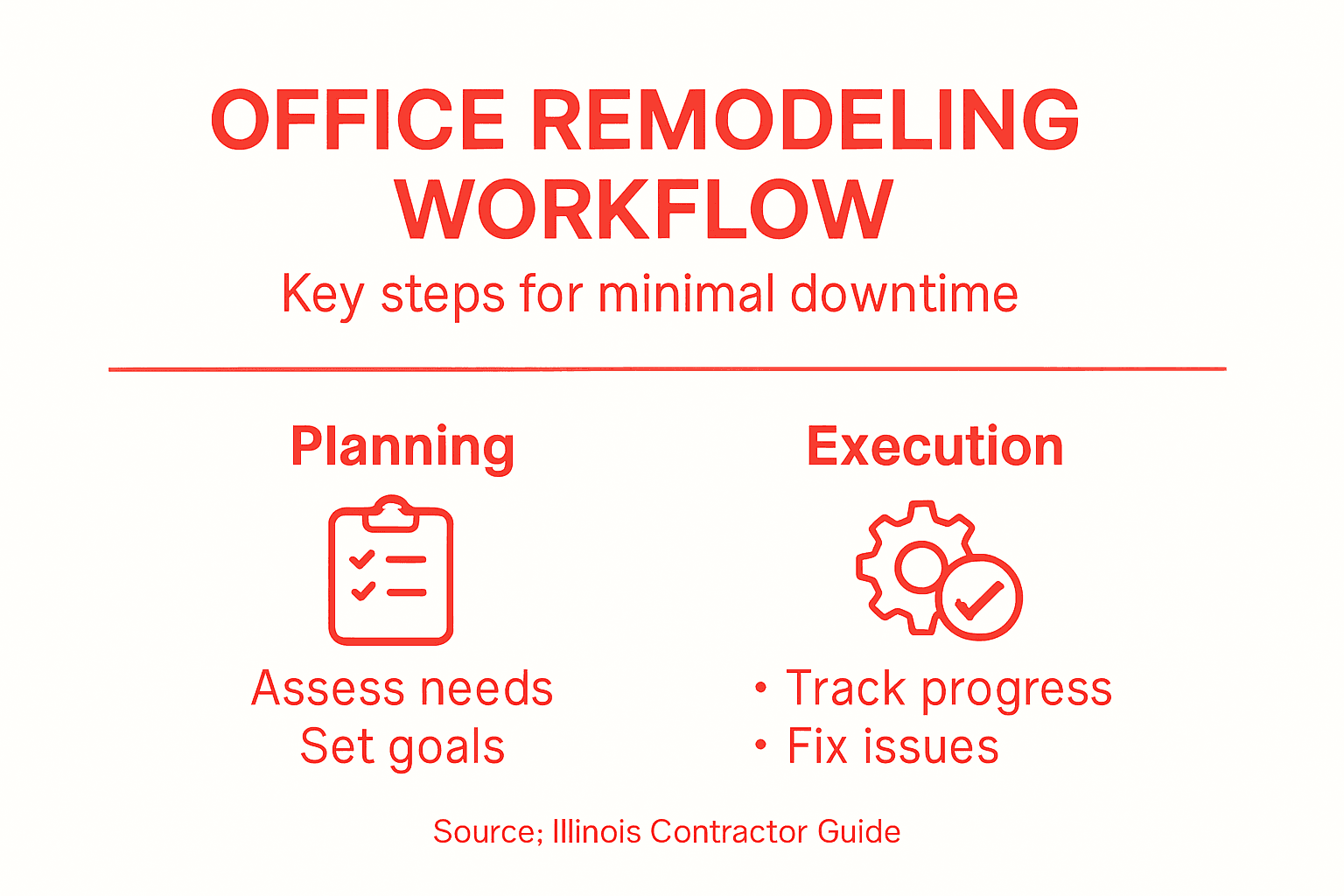
Manage changes carefully and document everything. Your contractors will inevitably discover something that requires a different approach. Maybe they open a wall and find unexpected structural issues. Maybe a material specification changes because your original choice is discontinued. When changes occur, require a change order that specifies what’s changing, why, how much it costs, and how it affects the schedule. Never authorize changes verbally. Written documentation prevents disputes later and keeps both parties on the same page.
Maintain clear communication channels between your office staff and contractors. When employees have questions or concerns about construction noise, dust, or access issues, they should know who to contact. This should be your designated contractor point of contact. Without clear channels, frustrated employees complain to the wrong people and information gets garbled. Providing a direct contact prevents frustration from escalating.
Watch for safety issues and address them immediately. If you notice contractors working without proper safety equipment, materials stored unsafely, or procedures that seem risky, speak up. Your contractor’s insurance and liability coverage depend on maintaining safe practices. More importantly, safety lapses can injure workers or damage your office. If a contractor consistently ignores safety concerns, that’s a serious problem requiring escalation or contractor replacement.
Schedule weekly progress meetings with your main contractor if the project is substantial. Use these meetings to review the past week, discuss the upcoming week, and address any concerns. Bring your point of contact, key staff members affected by the renovation, and the contractor’s project manager. These meetings create shared accountability and ensure everyone understands progress and next steps.
Prepare your team for the realities of construction. Dust will find its way into areas that seem sealed off. Noise will be louder than expected. Schedules will slip sometimes. Preparing employees mentally prevents morale from plummeting when minor issues occur. Regular updates about progress and expected disruptions help people tolerate the temporary chaos better.
Daily monitoring catches problems early when they’re cheap to fix, not late when they’re expensive. Small discrepancies on day two are easy to correct; the same issue discovered on day twelve derails your timeline.
Pro tip: Take timestamped photos at the same time each day from the same vantage points to create a visual timeline of progress that makes schedule adherence obvious and provides documentation if disputes arise later.
Step 5: Inspect completed work and address final adjustments
Your renovation is nearing completion, but this step separates a successful project from a mediocre one. A thorough inspection of all completed work ensures everything meets your standards and functions properly before you sign off and your contractors leave. This is your final opportunity to catch issues and get them corrected while your contractors are still on site and accountable.
Begin with a systematic walkthrough of every renovated area. Don’t rush through this. Spend time examining each section methodically. Look at flooring for gaps, uneven surfaces, or discoloration. Check paint for drips, uneven coverage, or color inconsistencies. Test all doors and windows to ensure they open and close smoothly. Verify that light switches, outlets, and fixtures work correctly. Check that HVAC systems function and maintain consistent temperatures. Look at baseboards, trim, and caulking for neat, clean installation. If you installed new flooring like epoxy, ensure it’s properly sealed and free of imperfections.
Bring a checklist and your original renovation goals with you. Reference what you agreed to at the start. Did they install the three additional meeting areas you planned? Is the reception area modernized as discussed? Does the layout match your design? Are energy efficiency improvements in place? This ensures you’re evaluating against your actual objectives, not shifting expectations mid-project. Document any discrepancies you find.
Test functionality thoroughly. Open and close every door multiple times. Flush toilets if applicable. Run water at sinks. Toggle light switches repeatedly. Set thermostats and verify they maintain temperature. Use outlets with devices. If something has a warranty or operational manual, test everything the manual specifies. Cosmetic issues are one thing, but functional problems need immediate attention. A door that sticks slightly might seem minor until you realize it will stick for the next five years.
Invite key staff members to walk through completed areas that affect their work. They’ll notice things you might miss because they understand how these spaces will actually be used daily. An employee working in a renovated area can immediately tell you if sight lines are wrong, acoustics are problematic, or something doesn’t function as promised. Their real-world perspective catches issues that purely visual inspection misses.
Address inspection requirements for regulatory compliance to verify that completed work meets safety and quality standards. Depending on your renovation scope, you may need official inspections for electrical work, structural changes, or mechanical systems. Illinois may require inspections before you can occupy renovated spaces. Verify with your contractor and local authorities whether inspections are needed. Don’t skip this step assuming everything is fine. Regulatory compliance issues discovered later create major problems.
Create a punch list of all items needing correction or completion. Be specific. Instead of “fix paint,” write “repaint north wall, second coat needed, color looks too light.” Instead of “door problem,” write “conference room door sticks when opening from inside.” Specific descriptions prevent misunderstandings about what needs fixing. Prioritize items by importance. Critical functional issues go at the top. Minor cosmetic touch-ups go at the bottom.
Provide your punch list to your contractor in writing. Don’t just point things out verbally. Written documentation creates accountability and prevents disputes about what was discussed. Your contractor should acknowledge receipt and provide a timeline for completing items. Minor touch-ups might happen immediately. More substantial corrections might take a few days. Agree on a deadline and hold them to it.
Verify that all warranty documentation and operational manuals are provided before your contractors leave. You’ll need these for future reference if equipment fails or you have questions about maintenance. Ask about warranty periods for different components. Some items might have 1-year warranties while others have 5-year warranties. Having this information documented prevents confusion later.
Take final photos of completed areas once punch list items are done. These photos document the finished project condition and serve as a reference point if issues develop later. They’re also valuable for your records and can help with insurance claims if damage occurs.
Schedule a final walkthrough with your contractor once all punch list items are complete. This confirms everything is done to your satisfaction. Only at this point do you authorize final payment. Never pay in full before confirming all work is complete. Most contractor agreements specify holding back 10 percent of payment until final inspection is passed.
Don’t accept mediocre work because you’re tired of the renovation. You’ll live with the consequences of cutting corners for years to come.
Pro tip: Walk through completed areas at different times of day to see how natural and artificial lighting affects the space, catching issues like poor paint coverage or flooring imperfections that might not be obvious under one lighting condition.
Streamline Your Office Remodel with Expert Guidance and Quality Craftsmanship
Facing the challenge of remodeling your office with minimal downtime requires clear goals, precise scheduling, and reliable execution. If you are looking to reduce disruptions, improve workspace functionality, and ensure high-quality results like durable epoxy flooring and efficient drywall installations, First Solution IL is here to help. We understand how crucial it is to coordinate renovations that align with your business needs and keep your operations running smoothly.

Take the stress out of your next office renovation by partnering with a trusted Illinois contractor who specializes in comprehensive commercial remodeling solutions. From meticulous planning to daily progress monitoring and final inspections, our skilled team delivers the transformation your workspace deserves. Explore our Drywall Archives – First Solution iL for insights into critical structural improvements and visit our homepage at https://firstsolutionil.com to request your free consultation today. Let First Solution IL turn your master office remodeling workflow into a seamless success.
Frequently Asked Questions
How can I assess my current office needs before remodeling?
Begin by walking through your office and taking notes on areas that feel cramped or inefficient. Look for bottlenecks in workflow and gather input from employees to identify specific needs and goals for your renovation.
What should be included in my renovation goals?
Define specific, measurable objectives like increasing collaboration space by adding three meeting areas or reducing utility costs by 25 percent. Ensure these goals align with how your team works and address actual pain points.
How can I create an effective layout for my office renovation?
Sketch a proposed layout that considers your office dimensions and existing structural elements. Focus on optimizing traffic flow and ensuring spaces suit the needs of your team, such as open collaboration areas versus quiet zones for focused work.
What steps can I take to minimize downtime during renovations?
Coordinate your project schedule with disruptions in mind by planning construction around your business’s peak hours. Phasing the renovation allows parts of your office to remain operational, potentially reducing downtime by up to 50%.
How do I monitor daily progress during the renovation?
Establish daily check-ins with your contractors to review progress and address issues immediately. Create a log to track completed tasks and any deviations from the schedule to stay informed and on track.
What should I do after the renovations are complete?
Conduct a thorough inspection of the completed work to ensure it meets your specified goals. Create a punch list of items that need correction and confirm that all warranty documentation is provided before authorizing final payment.