
TL;DR:
- Only upgrades meeting verified performance standards qualify for Illinois incentives.
- Focus on building envelope, HVAC, and airtightness for maximum efficiency gains.
- Deep retrofits offer the highest savings but require significant initial investment.
Swapping out an old refrigerator or installing a smart thermostat feels productive. But those moves alone won’t qualify your home for Illinois energy incentives, and they won’t come close to the savings that a real energy-efficient renovation delivers. Many homeowners in Illinois are leaving thousands of dollars on the table because they confuse surface-level upgrades with code-compliant, performance-based improvements. This article breaks down exactly what qualifies as an energy-efficient renovation under Illinois law, which components matter most, how different upgrade strategies compare, and how to navigate the unique challenges older Illinois homes present.
Table of Contents
- What defines an energy-efficient renovation in Illinois?
- Core components: Building envelope, HVAC, and beyond
- Deep retrofits, phased upgrades, and code compliance
- Navigating edge cases and maximizing value in Illinois
- A fresh perspective on energy-efficient renovations in Illinois
- Upgrade your Illinois home with expert-led renovations
- Frequently asked questions
Key Takeaways
| Point | Details |
|---|---|
| Go beyond appliances | True efficiency starts with improving your home’s shell and systems, not just replacing washers and lights. |
| Follow Illinois standards | Energy-efficient renovations must meet or exceed IECC and ENERGY STAR codes to maximize incentives and value. |
| Deep retrofits pay off | Whole-home upgrades provide the greatest comfort and long-term value, with large energy and bill savings. |
| Plan for your unique home | Address special challenges like basements, older construction, and unusual features by starting with an audit and phased approach. |
What defines an energy-efficient renovation in Illinois?
Not every upgrade that lowers your bill qualifies as an energy-efficient renovation under Illinois standards. To earn that designation, and the rebates and tax credits that come with it, your project must meet verified performance thresholds set by recognized programs and codes.
Energy-efficient renovations must meet standards like ENERGY STAR, the International Energy Conservation Code (IECC), or Illinois-specific codes, focusing on the building envelope, HVAC systems, lighting, and appliances. These aren’t suggestions. They’re the benchmarks that separate a qualifying renovation from a routine repair.
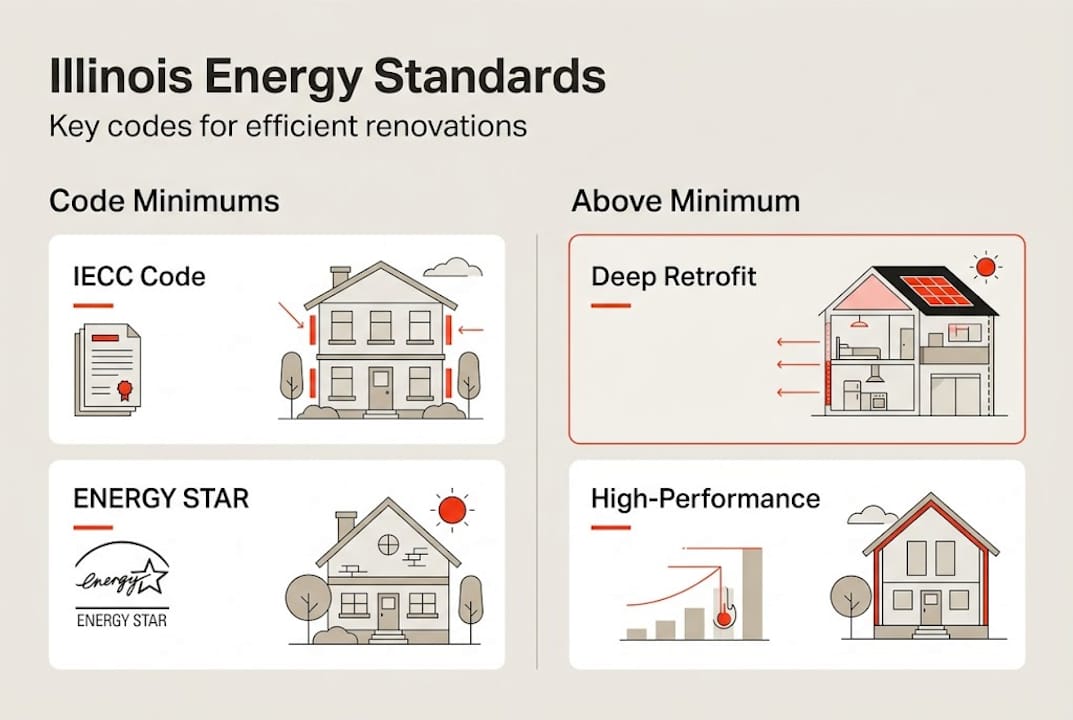
Illinois has raised the bar significantly. The state adopts 2024 IECC standards for new construction and major renovations, setting strict requirements including wall insulation at R-30, attic insulation at R-49, and windows rated at U-0.30 or better. Reviewing the Illinois Energy Code details is a smart first step before planning any major project.
Understanding Illinois renovation standards helps you plan projects that actually qualify for incentives rather than falling short at inspection.
Homes upgraded to meet or exceed IECC 2024 standards can reduce energy consumption by 30 to 50 percent compared to code-minimum construction, translating to hundreds of dollars saved annually.
Conventional vs. energy-efficient features at a glance:
| Feature | Conventional | Energy-efficient |
|---|---|---|
| Wall insulation | R-13 batt | R-30 continuous |
| Attic insulation | R-30 | R-49 or higher |
| Windows | Double-pane, U-0.45 | Triple-pane, U-0.30 or better |
| HVAC system | Standard efficiency | SEER 15+, variable speed |
| Air sealing | Minimal | ACH50 ≤ 4 to 5 |
| Lighting | Mixed incandescent/CFL | 100% LED |
Top qualifying renovation types in Illinois:
- Continuous insulation installation in walls, attic, and basement
- Air sealing to meet ACH50 thresholds
- High-performance window and door replacement
- HVAC system replacement with ENERGY STAR-rated equipment
- Heat pump installation (air source or ground source)
- LED lighting upgrades throughout the home
- ENERGY STAR-rated appliance installation
A sustainable renovation for value approach means thinking beyond the utility bill and considering resale value, comfort, and long-term durability as part of your return.
Core components: Building envelope, HVAC, and beyond
With standards established, let’s break down which components truly drive efficient performance and compliance.
The building envelope is the single most impactful area. This includes your walls, attic, floors over unconditioned spaces, and foundation. Continuous insulation, meaning insulation that runs unbroken across framing members, eliminates the thermal bridging that makes standard batt insulation underperform. Pair that with aggressive air sealing at penetrations, rim joists, and top plates, and you’ve addressed the biggest source of energy loss in most Illinois homes.
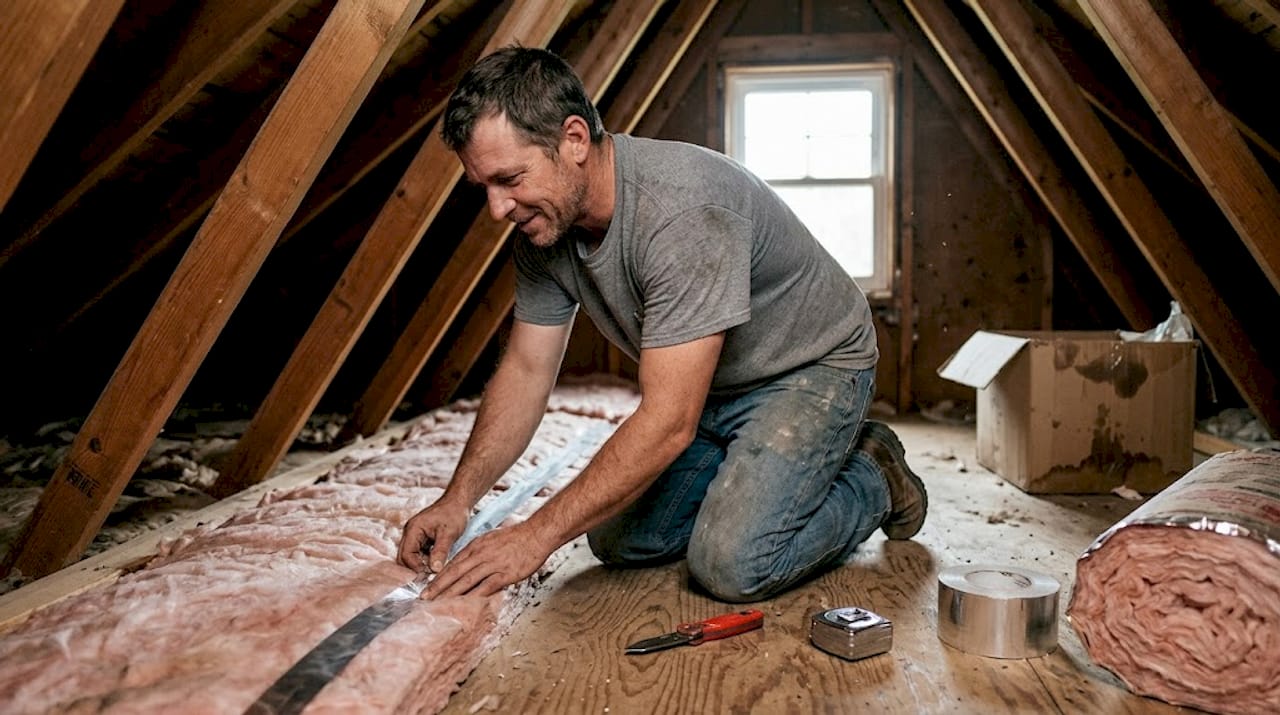
Deep Energy Retrofits target 30 to 75% energy reduction through whole-building upgrades including the envelope, high-performance windows, and efficient HVAC systems working together as a system.
High-performance windows rated at U-0.30 or lower reduce heat transfer dramatically during Illinois winters. When you replace windows, also check the frame material and installation quality. A well-insulated wall with a poorly installed window is a weak link that undermines the whole system.
For HVAC, key metrics like ACH50 ≤ 4 to 5 set the code-minimum airtightness target, while deep retrofits push for ACH50 ≤ 1.5. Heat pumps rated at SEER 15 or higher now qualify for federal tax credits and Illinois utility rebates. Variable-speed furnaces adjust output to match actual demand, cutting energy waste significantly compared to single-stage units.
Lighting and appliances round out the picture. The ENERGY STAR requirements for certified homes include 100% LED lighting and ENERGY STAR-rated appliances throughout. These upgrades are lower cost but still contribute to the overall performance score that determines rebate eligibility.
Pro Tip: Always start with the shell before upgrading mechanical systems. A leaky, under-insulated home will force even the best HVAC system to work harder than it should, reducing efficiency and shortening equipment life.
Evaluating your upgrades in the right order matters. Here’s a practical process:
- Schedule a professional energy audit to identify the biggest losses
- Address air sealing throughout the entire building envelope
- Install continuous insulation to meet or exceed R-value targets
- Replace windows and doors if they fall below U-0.30
- Upgrade HVAC to a high-efficiency heat pump or variable-speed system
- Switch all lighting to LED and replace major appliances with ENERGY STAR models
- Verify performance with a blower door test before closing walls
Good quality inspection practices during and after each phase protect your investment and confirm you’re hitting the targets that unlock incentives.
Deep retrofits, phased upgrades, and code compliance
Knowing the renovation components, it’s important to compare major strategies and how they fit the Illinois landscape.
A Deep Energy Retrofit (DER) is a whole-home overhaul targeting 30 to 75% energy reduction. It treats the house as a system, upgrading the envelope, mechanicals, and controls together. The result is dramatic: lower bills, better indoor air quality, and a home that performs reliably through Illinois winters. The tradeoff is upfront cost, which can run $50,000 or more for a full retrofit on an older home.
Deep retrofits achieve 60 to 75% savings but carry higher upfront costs, while phased and hybrid approaches offer flexibility and more affordable pathways for homeowners working within a budget.
Phased upgrades let you spread costs over several years while still moving toward a high-performance outcome. You might start with air sealing and attic insulation in year one, replace the HVAC in year two, and tackle windows in year three. This approach works well for older Illinois homes where budget constraints are real.
Illinois incentives offset 30 to 75% of project costs through programs like ComEd and Ameren rebates, combined with federal tax credits under the Inflation Reduction Act.
Comparing approaches:
- Deep Energy Retrofit: Pros: Maximum savings, best comfort, highest resale value. Cons: High upfront cost, complex coordination, longer project timeline
- Phased upgrades: Pros: Budget-friendly, flexible pacing, each phase delivers immediate savings. Cons: Risk of mismatched systems if not planned holistically
- Code-minimum compliance: Pros: Lowest upfront cost, meets permit requirements. Cons: Minimal long-term savings, may not qualify for top-tier rebates
Pro Tip: Before starting any phase, check current utility rebate programs. ComEd and Ameren update their offerings regularly, and timing your upgrades to align with available rebates can save thousands.
Understanding building code compliance requirements before you begin prevents costly surprises at inspection. Pairing that knowledge with cost-saving tips specific to Illinois homeowners helps you stretch every dollar further.
Navigating edge cases and maximizing value in Illinois
While broad strategies work for many homes, certain Illinois properties face unique hurdles requiring tailored solutions.
Older Illinois homes, particularly those built before 1980, present real complications. Knob-and-tube wiring, plaster walls, and unvented attic spaces all affect how and where insulation can be installed. Overhangs and bay windows complicate insulation continuity, and older homes often require combustion safety testing and ventilation updates before tightening the envelope.
Combustion safety is non-negotiable. When you seal a home tightly, you reduce the natural air infiltration that older gas appliances rely on for combustion air. A certified energy auditor will test for backdrafting and recommend solutions, which might include sealed-combustion furnaces or dedicated combustion air supplies.
Homeowners should start with an energy audit and target code compliance as the baseline, since verified upgrades are what qualify for rebates and deliver lasting value.
Starting with a professional energy audit is the single most effective step any Illinois homeowner can take before spending money on upgrades. It tells you exactly where your home is losing energy and which fixes deliver the best return.
Common pitfalls and how to avoid them:
- Insulating without air sealing first: Air sealing must come before insulation for either to work properly
- Skipping a blower door test: Without measurement, you can’t confirm you’ve hit ACH50 targets
- Oversizing new HVAC equipment: A properly sealed home needs a smaller system. Oversizing causes short cycling and humidity problems
- Ignoring moisture management: Tight homes need controlled ventilation (HRV or ERV) to prevent condensation and mold
- Choosing upgrades based on rebate availability alone: Rebates change; prioritize the upgrades with the best long-term performance first
Using a solid home renovation checklist keeps every phase organized and ensures nothing critical gets skipped. And if you’re thinking about the financial return, maximizing renovation ROI in Illinois means combining energy savings with increased property value for a double payoff. You can also explore deep retrofit edge cases for guidance on complex situations specific to older or irregularly shaped homes.
A fresh perspective on energy-efficient renovations in Illinois
Here’s something most renovation guides won’t tell you: the biggest mistake Illinois homeowners make isn’t choosing the wrong product. It’s focusing on equipment instead of the building shell.
A new heat pump in a leaky, under-insulated house is like putting high-performance tires on a car with a broken suspension. The equipment can’t compensate for a failing structure. We’ve seen this pattern repeatedly on Illinois projects. Homeowners invest in premium HVAC units, then wonder why their bills barely budge.
The real value of an energy-efficient renovation isn’t just the utility savings. It’s the health benefits from better air quality, the comfort of consistent temperatures room to room, and the resale premium that comes with a verified high-performance home. Performance frameworks like HERS (Home Energy Rating System) and ERI (Energy Rating Index) give you a flexible, measurable way to prove your home’s performance to future buyers and appraisers, regardless of which specific products you used.
Going beyond code-minimum isn’t just idealism. It’s a smarter financial decision. Understanding renovation ROI insight shows why the homes that hold their value longest are the ones built or renovated to perform, not just to comply.
Upgrade your Illinois home with expert-led renovations
Knowing what qualifies is half the battle. Executing it correctly, in the right sequence, with the right materials and verified results, is where professional expertise makes the difference.

At First Solution IL, we plan, design, and complete energy-efficient renovations that meet Illinois code requirements and qualify for available incentives. You can browse examples of efficient remodeling to see how these upgrades look in real Illinois homes. If you want to understand every step before committing, our remodeling workflow guide walks you through the entire process from audit to final inspection. Reach out for a free consultation and let’s build a plan that fits your home, your budget, and your goals.
Frequently asked questions
What qualifies as an energy-efficient renovation in Illinois?
A renovation qualifies when it exceeds Illinois code minimums using verified upgrades for insulation, HVAC, and other systems, meeting IECC or ENERGY STAR standards. Documentation and third-party verification are typically required for rebate eligibility.
Which parts of my home should I upgrade first for best efficiency?
Start with air sealing and insulation in the attic and walls before touching mechanical systems, since the building envelope has the largest impact on overall performance. HVAC and windows come after the shell is tight.
How do Illinois incentives help offset renovation costs?
Illinois programs through ComEd and Ameren, combined with federal tax credits, can cover 30 to 75% of costs for approved energy-efficient upgrades. Eligibility depends on meeting verified performance thresholds.
What is the difference between a code-compliant renovation and a deep energy retrofit?
A code-compliant renovation meets Illinois minimum standards, while a deep energy retrofit surpasses them, targeting 30 to 75% energy use reduction and delivering measurably better comfort and indoor air quality.