
TL;DR:
- Contractor credibility is built on reliability, transparency, and proven expertise, not just licensing.
- In Illinois, local experience and knowledge of regional codes enhance project quality and legal compliance.
- Verify credibility through references, proper licensing, insurance, clear contracts, and consistent communication.
Most Illinois homeowners assume that a contractor’s license is the finish line. If someone has a piece of paper from the state, they must be trustworthy, right? That assumption costs homeowners thousands of dollars every year. A license proves a contractor met minimum requirements at a specific point in time. It says nothing about how they communicate, whether they show up on schedule, or if they stand behind their work. Licensing alone does not guarantee quality workmanship or reliable practices. This guide will show you what contractor credibility actually looks like, why it matters specifically in Illinois, and how to evaluate it before you sign anything.
Table of Contents
- What is contractor credibility?
- Why does contractor credibility matter in Illinois?
- How to evaluate contractor credibility
- Comparison: Credible vs. non-credible contractors
- Our take: Why contractor credibility is non-negotiable
- Find a credible contractor for your next project
- Frequently asked questions
Key Takeaways
| Point | Details |
|---|---|
| Credibility is more than licenses | A contractor’s true reliability comes from proven history, transparent communication, and positive reviews. |
| Local risks demand credible hiring | Illinois homeowners face unique renovation challenges best addressed by trustworthy, established contractors. |
| Verify before you hire | Always check licenses, references, and insurance to protect yourself from renovation headaches. |
| Red flags matter | Pushy behavior, unclear estimates, and no references are warning signs of low credibility. |
What is contractor credibility?
Contractor credibility is the combination of proven reliability, consistent transparency, demonstrated expertise, and earned trust. It is not a certificate you can frame on a wall. It is built over time through how a contractor handles every project, every phone call, and every problem that comes up mid-renovation.
Many homeowners confuse credibility with licensing and insurance. Those two things are the legal floor, the bare minimum required to operate. Credibility means more than meeting minimum state requirements. A contractor can be fully licensed and insured while still delivering shoddy work, missing deadlines, or disappearing after the final payment clears.
So what does a credible contractor actually look like in practice? Here are the traits that separate genuinely credible professionals from those who simply check the legal boxes:
- Clear, written contracts that spell out scope, timeline, materials, and payment schedule before a single nail is driven
- Consistent communication with regular updates, fast responses, and honest answers when problems arise
- Verifiable references from recent clients who had similar projects completed
- A documented project history with photos, timelines, and outcomes you can review
- Transparent pricing with no vague line items or surprise fees buried in the fine print
- Professional behavior from the first contact through the final walkthrough
When you are choosing a general contractor, these traits should be your primary filter, not just whether the license number checks out.
Credibility is the foundation of worry-free renovations. Without it, even the most detailed contract becomes a source of stress rather than protection.
Think of it this way: a license tells you a contractor can legally work in Illinois. Credibility tells you they actually will, and that they will do it well. The difference between the two is the difference between a renovation that adds value to your home and one that leaves you dealing with repairs, disputes, and regret.
Building credibility takes years of consistent performance. That is why established contractors with long track records in a specific region carry a different kind of weight than someone who recently got licensed and is still building their portfolio.
Why does contractor credibility matter in Illinois?
Illinois presents specific challenges that make contractor credibility even more important than in other states. The climate alone creates serious demands on construction quality. Freeze-thaw cycles, heavy snowfall, and humid summers mean that any shortcuts in materials or technique will surface faster here than in milder climates. A credible contractor understands these local conditions and builds accordingly.
Permitting in Illinois also requires knowledge of local codes that vary by municipality. Chicago has different requirements than Naperville or Rockford. A contractor who skips permits or misfiles paperwork can leave you with unpermitted work that creates legal headaches when you try to sell your home.
Here is the number that should get your attention: licensed contractors reduce renovation defects by 40%. When you layer credibility on top of licensing, that number improves further because credible contractors do not cut corners even when no one is watching.
The consequences of hiring a low-credibility contractor are predictable and painful:
- Projects that run weeks or months past the promised completion date
- Hidden costs that appear after work has already started
- Substandard materials substituted without your knowledge or approval
- Work that fails inspection, requiring expensive corrections
- Legal disputes when the contractor disappears or refuses to honor warranty claims
On the other side, the advantages of licensed contractors who are also credible are just as concrete:
- Reduced stress because you are not chasing updates or wondering if work will resume on Monday
- Investment protection because quality work holds up over time and passes inspection
- Increased home value because properly permitted and documented renovations add to your property’s market price
- Long-term savings because you are not paying twice to fix what was done wrong the first time
For Illinois homeowners, choosing local contractors with established regional reputations adds another layer of protection. Local contractors have more to lose from a bad reputation in a specific community, which creates a natural incentive to perform well.
How to evaluate contractor credibility
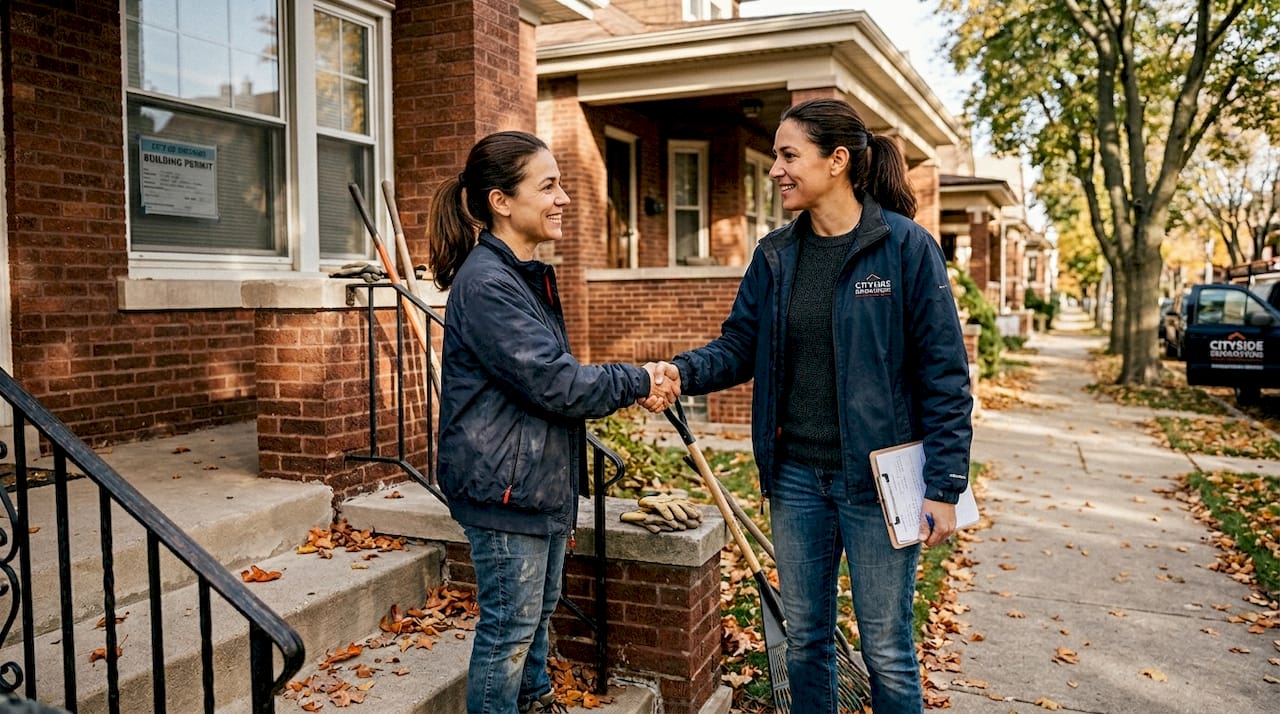
With stakes this high, how can you actually ensure your contractor is credible? Follow this proven framework before you commit to anyone.
- Verify the license through the state database. Illinois maintains public records of licensed contractors. A quick search confirms the license is active, not expired or suspended.
- Request proof of insurance. Ask for a certificate of insurance directly from the insurer, not just a document the contractor hands you.
- Check references from recent, similar projects. Ask specifically for clients who had work done in the past 12 months. Older references may not reflect current performance.
- Review their project portfolio. Look for work that matches the scope of your project. A contractor who specializes in flooring may not be the right fit for a full kitchen remodel.
- Confirm a physical business address. Credible contractors have a real location, not just a phone number and a website.
Verification practices protect homeowners from costly mistakes that are entirely avoidable with a few hours of due diligence.
Pro Tip: Call the contractor with a simple question about your project before you request a formal quote. How quickly they respond, how clearly they answer, and whether they ask smart follow-up questions tells you more about their credibility than any portfolio photo.
Here is a quick reference for the credibility signals you should check:
| Credibility signal | Why it matters | How to confirm |
|---|---|---|
| Active state license | Confirms legal authority to work | Illinois IDFPR public database |
| Current insurance certificate | Protects you from liability | Request directly from insurer |
| Verified references | Shows real-world performance | Call past clients directly |
| Written estimate | Reveals transparency and detail | Compare line items carefully |
| Physical business address | Indicates established operation | Google Maps or in-person visit |
| Permit history | Shows compliance with local codes | Ask your local building department |
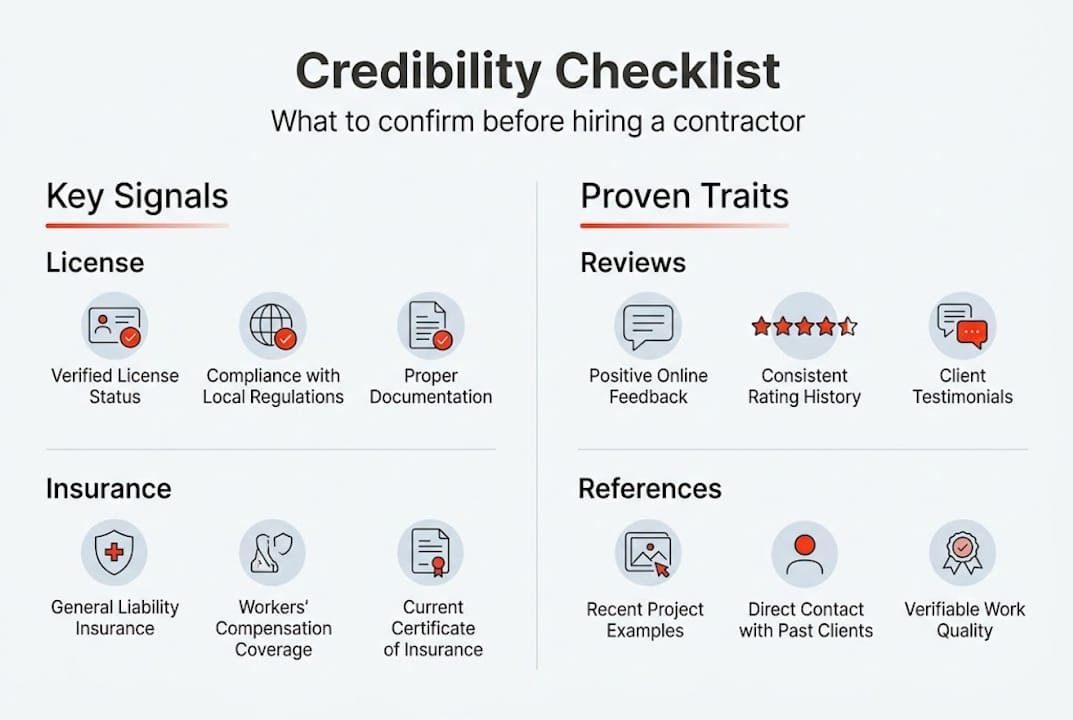
Red flags to watch for include contractors who push for large cash payments upfront, give vague or verbal-only estimates, cannot name a physical office, or dodge direct questions about their license number. Knowing how to choose a contractor means recognizing these warning signs early, before you hand over any money. Reviewing contractor hiring mistakes that other homeowners have made can also sharpen your instincts.
Comparison: Credible vs. non-credible contractors
Let’s make the difference concrete with a direct side-by-side look at what you can expect from each type.
| Factor | Credible contractor | Non-credible contractor |
|---|---|---|
| Contract | Detailed, written, signed before work starts | Verbal or vague, often changed later |
| Communication | Regular updates, fast responses | Hard to reach, inconsistent updates |
| Pricing | Transparent with itemized estimates | Lump sums with frequent add-ons |
| Permits | Pulls required permits proactively | Skips permits or asks you to pull them |
| Warranty | Written warranty on labor and materials | No warranty or refuses to honor it |
| Project timeline | Realistic schedule with milestones | Vague start dates and shifting deadlines |
| References | Multiple recent, verifiable clients | Few references or reluctance to share |
Homeowners who choose credible contractors experience fewer disputes and better results across every category in that table.
Pro Tip: Ask for a written estimate even if you are just exploring options. A credible contractor will provide one without hesitation. A non-credible one will stall, give a ballpark number, or pressure you to commit before anything is in writing.
The homeowner experience also differs in ways that go beyond the finished product:
- Peace of mind during the project because you know what is happening and why
- Enjoyment of the process instead of dread every time your phone rings
- Long-term trust that leads to repeat work and confident referrals to neighbors and family
- Confidence when selling because your renovation documentation is clean and complete
When you compare this to the stress, cost overruns, and potential legal exposure that come with non-credible contractors, the choice becomes obvious. If you are weighing DIY vs. hiring a contractor, the same credibility standards apply to understanding your own skill level and the real scope of the project.
Our take: Why contractor credibility is non-negotiable
After years of working on residential and commercial projects across Illinois, here is what we have learned that most guides miss: the paperwork matters far less than the person behind it.
We have seen contractors with spotless credentials deliver frustrating experiences and contractors with modest portfolios who treat every project like it is their own home. The difference almost always shows up in the first interaction. How quickly do they call back? Do they ask smart questions about your goals, or do they jump straight to a price? Do they explain things clearly, or do they use jargon to keep you at a distance?
Most credibility guides tell you to check the license database and ask for references. That is good advice, but it is incomplete. The most reliable signal is how a contractor makes you feel when you have a question you are embarrassed to ask. A credible contractor makes you feel informed, not stupid.
Trust your instincts. If something feels off during the estimate process, it will feel worse during demolition. Discomfort and confusion are not just feelings. They are data. Why licensed contractors matter is a topic worth reading, but real credibility shows up in the day-to-day, not just the credentials.
Find a credible contractor for your next project
Choosing the right contractor is the single most important decision you will make before a renovation begins. Everything else, the materials, the design, the timeline, depends on the person you trust to execute it.

At First Solution IL, we believe that credibility is earned on every project, not just claimed on a website. Whether you are exploring interior remodeling examples to get inspired, reviewing our services to find the right fit, or researching commercial remodeling options for your business space, we are here to answer your questions honestly and help you move forward with confidence. Reach out for a free estimate whenever you are ready.
Frequently asked questions
What makes a contractor credible?
A credible contractor consistently demonstrates reliability, transparency, expertise, and positive customer feedback, not just licenses or insurance. Credibility is shown through proven history and communication, beyond just paperwork.
Is a licensed contractor always credible in Illinois?
Licensing is just a starting point; homeowners should also check for references, reviews, and clear communication. Licensing helps but does not guarantee quality or dependability on its own.
How can I verify a contractor’s credibility?
Check for proper licensing, review recent work, talk to past clients, and confirm that they have insurance. Verification steps include checking state databases and asking for proof of insurance directly from the provider.
What are common red flags indicating a non-credible contractor?
Beware if a contractor avoids written contracts, pushes for cash payments, or cannot provide references. Vague estimates and reluctance to share references are warning signs that should stop you before you commit.
Recommended
- Renovation Contract Explained: Protecting Illinois Homeowners
- Illinois Contractor Licenses Cut Renovation Defects 40%
- Why Review Renovation Contracts – Protect Your Investment
- Blog – First Solution IL
- 7 Expert Tips for Hiring Contractors with Confidence
- Licensed contractors in Vancouver: liability, quality, peace of mind