Updating a commercial property in Illinois is never as simple as swapping out furnishings or slapping on a new coat of paint. Owners and investors face unique demands when it comes to interior remodeling—from balancing workflow efficiency to navigating strict building codes and ensuring durability focus for high-traffic spaces. This guide explains the strategic methods, core goals, and practical steps behind commercial interior remodeling that help maximize asset value and create functional, appealing environments for tenants and customers alike.
Table of Contents
- Defining Commercial Interior Remodeling
- Types of Interior Remodeling Projects
- Step-by-Step Remodeling Process Explained
- Permitting and Legal Compliance in Illinois
- Costs, Risks, and Common Mistakes to Avoid
Key Takeaways
| Point | Details |
|---|---|
| Understanding Commercial Remodeling | It involves strategic renovations that enhance functionality and increase asset value in business spaces. |
| Core Goals | Successful projects aim to improve workflow, boost property value, and support brand identity. |
| Permitting Importance | Compliance with local regulations is crucial to avoid legal issues and ensure safety standards are met. |
| Common Mistakes | Avoid neglecting detailed planning, communication errors, and disregarding building codes to prevent budget overruns. |
Defining Commercial Interior Remodeling
Commercial interior remodeling is far more than just updating a few walls and furniture. It’s a strategic renovation approach that transforms business spaces to boost both functionality and asset value simultaneously.
At its core, commercial interior remodeling encompasses redesigning and upgrading the interior environments where work happens and revenue is generated. This includes offices, retail stores, restaurants, warehouses, and hospitality venues throughout Illinois.
Unlike residential renovations focused on personal comfort, commercial projects balance multiple competing priorities. A successful remodel must optimize workflow, enhance brand perception, meet strict building codes, and deliver measurable return on investment.
Why Commercial Interior Remodeling Differs from Residential
Commercial spaces demand a different approach than your home. Here’s why:
- Durability focus: Flooring, walls, and fixtures must withstand heavy daily use from multiple people
- Code compliance: Commercial projects face stricter building, safety, and accessibility regulations
- Business interruption: Downtime costs money, so scheduling and phasing matter intensely
- Scale of investment: Projects typically cost more but must generate quantifiable business benefits
- Multiple stakeholders: Property owners, tenants, employees, and customers all have input
Commercial interior design operates as a strategic discipline that optimizes functionality while enhancing brand identity and driving business success across diverse commercial environments.
Understanding the terminology and scope of these projects is crucial. Learning about commercial renovation terminology helps property owners communicate clearly with contractors and make informed decisions.
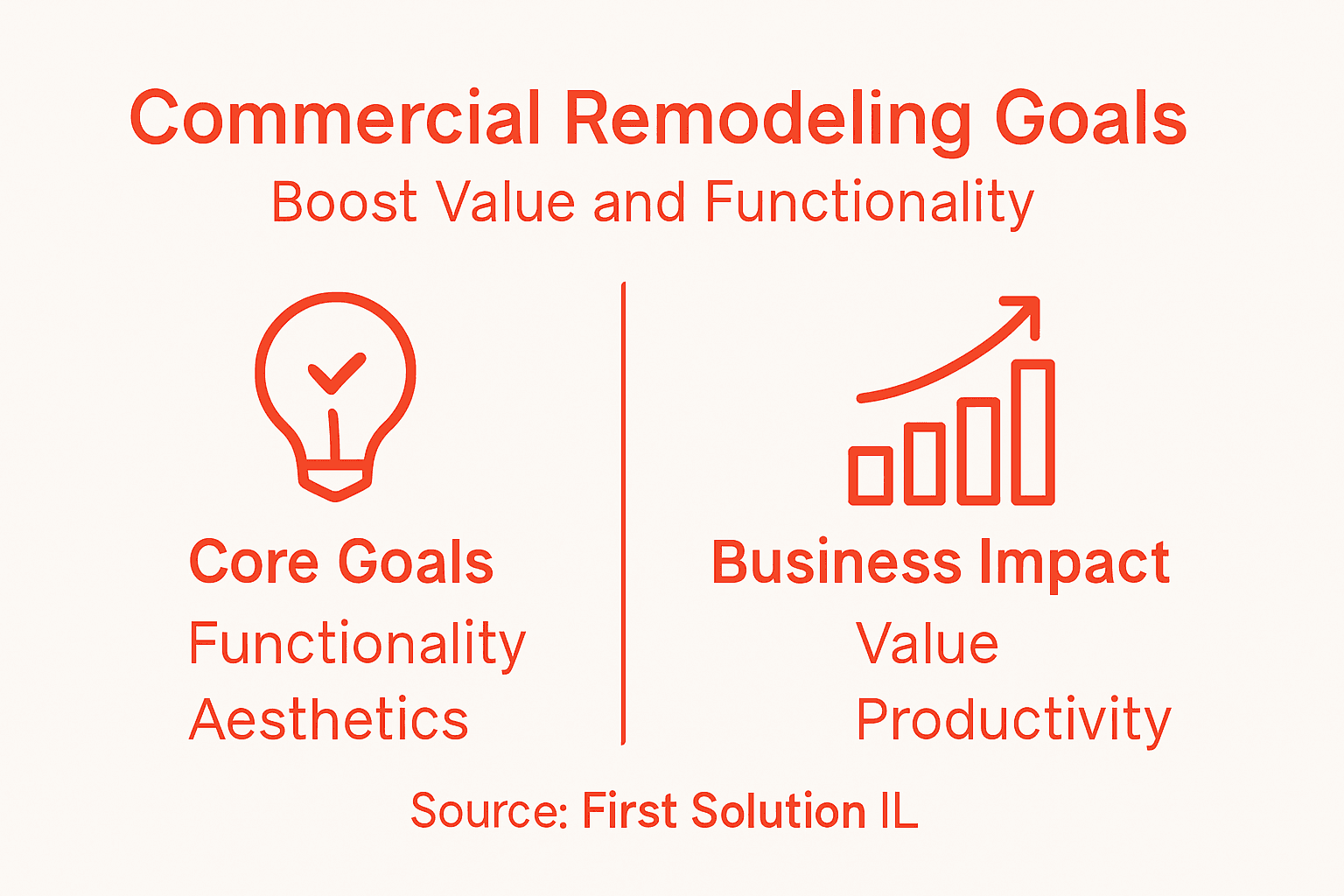
The Three Core Goals of Commercial Remodeling
Every successful commercial remodel addresses three essential objectives:
- Enhance functionality – Improve workflow, accessibility, and operational efficiency for daily business operations
- Boost property value – Increase the asset’s worth and appeal to future tenants or buyers
- Support brand identity – Align the physical space with your company’s image and customer experience vision
A well-executed commercial remodel transforms how a business operates while creating lasting financial returns through increased property value and operational improvements.
Commercial spaces must balance practical requirements with aesthetic appeal. This means selecting durable flooring solutions, creating efficient layouts, and ensuring every design decision serves business objectives.
Property owners and investors in Illinois benefit significantly from understanding what makes a commercial interior remodel successful. The difference between a basic refresh and a strategic renovation can mean thousands of dollars in additional tenant revenue or resale value.
Pro tip: Define your remodel’s primary goal—whether increasing tenant appeal, improving employee productivity, or modernizing outdated systems—before discussing scope with contractors, as this shapes material choices, timelines, and budget allocation.
Types of Interior Remodeling Projects
Commercial interior remodeling isn’t one-size-fits-all. Different project types serve distinct business purposes and require different approaches, timelines, and budgets.
Your specific remodeling type depends on what your property needs most. Are you trying to attract premium tenants? Modernize aging systems? Or completely transform the space? Each type addresses different goals.
Common Commercial Interior Remodeling Types
Most commercial projects fall into these primary categories:
- Office space renovations – Updating work environments with modern layouts, improved lighting, and collaborative areas
- Retail store upgrades – Enhancing customer experience through fixtures, lighting, flooring, and visual merchandising displays
- Tenant improvement projects – Customizing leased spaces to match specific business operations and brand standards
- Restroom and break room updates – Modernizing facilities that directly impact employee satisfaction and hygiene standards
- Lobby and entrance remodels – Creating professional first impressions that reflect your brand identity
- Flooring system overhauls – Replacing worn surfaces with durable, attractive options suited to high-traffic commercial use
Interior remodeling projects aim to improve function, aesthetics, and property value through targeted upgrades that address specific business needs.
Here’s a concise comparison of common commercial interior remodeling project types and their primary business impacts:
| Project Type | Main Objective | Typical Business Impact |
|---|---|---|
| Office Renovation | Improve productivity | Boosts employee output and morale |
| Retail Store Upgrade | Enhance customer experience | Increases foot traffic and sales |
| Tenant Improvements | Customize leased space | Attracts quality tenants, raises rents |
| Lobby & Entrance Remodel | Elevate brand perception | Improves first impressions, attracts clients |
| Restroom/Break Room Update | Modernize staff facilities | Enhances satisfaction, supports hygiene |
| Flooring System Overhaul | Improve durability & safety | Reduces maintenance, extends lifespan |
Office Space Renovations
Office remodels focus on productivity and employee experience. Modern commercial offices often include open floor plans, designated collaboration zones, and updated technology infrastructure.

When updating an office environment, consider workflow efficiency. Poor layouts waste time and frustrate employees. Strategic space planning can increase productivity by reducing unnecessary movement and creating zones for focused work versus collaboration.
Lighting matters significantly in office spaces. Natural light exposure boosts mood and focus, while quality artificial lighting reduces eye strain and headaches during long work days.
Retail Store Upgrades
Retail projects emphasize customer experience and sales optimization. This includes fixture placement, product display areas, checkout counter design, and lighting that highlights merchandise.
Retail spaces demand high-traffic flooring solutions that withstand constant foot traffic while maintaining visual appeal. Durability and cleanliness are non-negotiable in retail environments.
Tenant Improvement Projects
Tenant improvements customize spaces for specific business tenants. These might include adding walls, installing specialized systems, or creating custom layouts that match operational needs.
Tenant improvements directly impact your ability to attract quality tenants and command higher lease rates. A well-designed space tailored to tenant specifications increases occupancy and tenant retention significantly.
The remodeling type you choose should align with your property’s immediate market demands and long-term investment strategy.
Flooring System Upgrades
Flooring is one of the most visible and functional elements in any commercial space. Options include epoxy coatings for warehouses, vinyl flooring for offices, and tile for retail environments.
Durable flooring impacts maintenance costs, safety, and aesthetics for years. Selecting the right material for your space type prevents costly replacements and keeps spaces looking professional.
Pro tip: Assess your current space’s biggest pain point—whether it’s outdated appearance, inefficient layout, or worn finishes—and prioritize that problem area first, as solving your most pressing issue typically delivers the highest return on investment and employee or tenant satisfaction boost.
Step-by-Step Remodeling Process Explained
A successful commercial interior remodel doesn’t happen by accident. It follows a structured process that moves from initial vision to completed project, with clear phases and decision points along the way.
Understanding each phase helps you stay organized, manage costs, and avoid surprises. Most commercial remodels take 8-16 weeks depending on scope and complexity.
Phase 1: Initial Consultation and Site Assessment
Every project starts with a conversation about your goals. This is where you define what success looks like for your property.
During this phase, contractors evaluate your current space thoroughly:
- Measure existing conditions and layout
- Identify structural limitations or code compliance issues
- Assess mechanical, electrical, and plumbing systems
- Take photographs and notes for reference
- Discuss your budget, timeline, and priorities
The commercial interior remodeling process begins with initial consultation to understand client goals and site assessment, establishing the foundation for all subsequent design and construction decisions.
This phase typically takes 1-2 weeks. Being thorough here prevents costly changes later.
Phase 2: Concept Design and Space Planning
Once your goals are clear, designers develop conceptual layouts and mood boards showing the design direction. This includes preliminary floor plans and visual representations of the finished space.
Concept design focuses on how the space will function for your business operations. Poor planning at this stage creates problems during construction.
Key deliverables include:
- Preliminary floor layouts
- Space flow and traffic patterns
- Mood boards showing design aesthetic
- Initial material and color selections
- Budget estimates
Phase 3: Detailed Design Development
Once you approve the concept, designers create comprehensive technical drawings. These include lighting plans, electrical layouts, mechanical systems, and finish specifications.
Detailed design translates the concept into construction-ready documents. Your contractor uses these plans to bid accurately and build correctly.
3D renderings help you visualize the final result before construction begins. This is your last chance to request changes without significant cost increases.
Phase 4: Budgeting and Design Approval
With detailed plans complete, contractors provide firm pricing and timelines. This is when you finalize all decisions about materials, finishes, and scope.
Approval at this stage commits you to the design and budget, so review all details carefully before signing off.
Once approved, your project moves into procurement and construction scheduling phases.
Phase 5: Procurement and Construction
Your contractor orders materials and schedules trades—electricians, plumbers, flooring specialists, and others. Coordination among multiple contractors ensures smooth workflow and on-time completion.
On-site supervision prevents mistakes and addresses issues immediately. Quality oversight protects your investment.
Phase 6: Final Inspection and Handover
Before project completion, final inspections verify compliance with building codes and contract specifications. Contractors complete punch-list items addressing any minor issues.
You receive documentation, warranties, and operating instructions for all new systems. The space is then ready for occupancy.
Pro tip: Request a detailed project schedule during Phase 1 showing all milestones and critical dates, then review weekly progress against it to catch delays early and prevent costly extensions that impact your business operations.
Permitting and Legal Compliance in Illinois
Skipping permits might seem like a shortcut, but it creates massive legal and financial problems. Illinois takes building code compliance seriously, and your project must follow state and local regulations.
Non-compliance can result in fines, forced demolition, project shutdowns, or inability to sell the property. Getting permits right protects your investment and ensures the space is safe for occupants.
Why Permits Matter
Permits aren’t bureaucratic obstacles. They’re safety checkpoints that verify your project meets code standards.
Building permits ensure:
- Structural safety and integrity
- Electrical system safety and proper installation
- Plumbing code compliance
- Fire safety and emergency exits
- Accessibility standards for all occupants
- Energy conservation compliance
Illinois has recently enacted statewide building codes effective January 1, 2025, requiring compliance with International Building Code standards for commercial buildings. These standards address energy conservation, accessibility, fire safety, and plumbing requirements uniformly across the state.
The Permitting Process in Illinois
Obtaining building permits is mandatory for commercial remodeling projects to ensure compliance with zoning laws, safety codes, and local building regulations. The process varies by municipality but generally follows these steps:
- Submit detailed plans prepared by licensed architects or engineers
- Coordinate with your local municipal or county building department
- Pay applicable permit fees based on project scope and cost
- Undergo inspections at key construction phases
- Receive final approval before occupancy
Key Compliance Areas for Commercial Remodels
Focus on these critical areas to stay compliant:
- Fire safety – Emergency exits, fire-rated walls, sprinkler systems, and evacuation signage
- Accessibility – ADA-compliant bathrooms, doorways, hallways, and parking areas
- Electrical systems – Licensed electrician installation, proper grounding, circuit capacity
- HVAC and ventilation – Adequate air quality, temperature control, and exhaust systems
- Plumbing – Code-compliant fixtures, proper venting, and backflow prevention
Failing to obtain permits before starting work can result in fines, project delays, forced corrections, or legal action from your municipality.
Working with Licensed Contractors
Hiring a licensed and insured contractor simplifies permit navigation. They understand Illinois requirements and manage submissions on your behalf.
Licensed contractors carry liability insurance protecting you from costly accidents. They also guarantee their work meets code standards.
Verify contractor licenses through the Illinois Department of Financial and Professional Regulation before signing contracts.
Timeline Considerations
Permitting adds 2-4 weeks to your project timeline depending on complexity. Plan this into your schedule to avoid business disruption surprises.
Simple cosmetic updates may require fewer inspections than structural changes or system upgrades. Discuss timeline implications during initial planning with your contractor.
Pro tip: Submit permit applications immediately after finalizing your detailed design plans so the review process runs in parallel with contractor scheduling, reducing overall project delays and keeping your remodel on track.
Costs, Risks, and Common Mistakes to Avoid
Commercial remodeling projects frequently exceed budgets and timelines. Understanding common pitfalls helps you avoid expensive delays and disappointing results.
Proper planning and realistic expectations separate successful projects from costly failures. Most problems are preventable with the right approach.
Understanding Remodeling Costs
Commercial interior remodels typically cost between $50 to $200+ per square foot depending on scope and finishes. A 5,000 square foot office space could run $250,000 to $1,000,000 or more.
Costs break down into these categories:
- Design and engineering – 5-15% of total project cost
- Materials and finishes – 30-40% of total cost
- Labor and trades – 35-45% of total cost
- Permits and compliance – 5-10% of total cost
- Contingency reserve – 10-20% for unexpected issues
Underestimating costs is the leading cause of project problems. Always build in a contingency buffer of at least 10-15% for surprises.
Below is a quick reference for cost allocations and risk mitigation strategies for commercial interior remodeling:
| Cost Category | Typical % of Total | Key Risk Mitigation Strategy |
|---|---|---|
| Design & Engineering | 5-15% | Hire experienced professionals |
| Materials & Finishes | 30-40% | Specify durable, code-compliant products |
| Labor & Trades | 35-45% | Vet contractor credentials thoroughly |
| Permits & Compliance | 5-10% | Start applications early |
| Contingency | 10-20% | Include in budget for unexpected issues |
Common Mistakes That Drain Budgets
Commercial renovation projects commonly face challenges such as insufficient budgeting, poor project management, and neglecting compliance with building codes. These mistakes create cascading problems throughout projects.
Most costly errors include:
- Skipping detailed planning – Vague scope leads to constant changes and cost overruns
- Poor communication – Miscommunication between owner, designer, and contractor creates rework
- Ignoring building codes – Code violations force expensive corrections after completion
- Changing designs mid-project – Design changes during construction multiply costs exponentially
- Hiring based on price alone – Cheapest bids often mean cutting corners and lower quality
- Not getting proper permits – Fines and forced corrections cost far more than permits
The most expensive mistake is hiring the wrong contractor to save money upfront, ultimately costing thousands more in rework and corrections.
Contractor Selection Risks
Choosing the right contractor dramatically impacts your results. Avoid these contractor-related mistakes:
Unlicensed contractors may offer lower bids but create liability risks. Insurance gaps leave you exposed if accidents occur on your property. Verify licensing through the Illinois Department of Financial and Professional Regulation before hiring.
Referencing common mistakes when hiring contractors helps you identify red flags early and make informed decisions about who manages your project.
Check references thoroughly. Ask previous clients about budget adherence, timeline performance, and communication quality.
Schedule and Timeline Risks
Rush timelines cost more money. Compressed schedules force overtime, reduce quality control, and increase errors requiring corrections.
Build realistic timelines accounting for permitting, inspections, and material delivery delays. Illinois weather can impact outdoor work and material deliveries during winter months.
Risk Mitigation Strategies
Minimize costly surprises with these proven approaches:
- Get detailed written proposals from multiple contractors
- Include contingency funding of 10-15% in your budget
- Establish clear communication protocols with weekly check-ins
- Document all decisions and changes in writing
- Require performance bonds and liability insurance from contractors
- Schedule inspections at each project phase
- Plan realistic timelines with buffer time
Pro tip: Build a detailed line-item budget with unit costs and quantities before obtaining bids, then require contractors to match your specifications exactly so you can accurately compare proposals and identify which contractor provides the best value, not just the lowest price.
Elevate Your Commercial Space with Expert Remodeling Solutions
Understanding the challenges of commercial interior remodeling means recognizing the importance of balancing enhanced functionality, code compliance, and brand identity. If your goal is to improve workflow efficiency or boost your property value while avoiding costly permits and contractor pitfalls, you need a trusted partner committed to delivering quality results. Whether you require durable flooring solutions, precise finish carpentry, or comprehensive space planning, addressing these pain points early ensures a smoother remodeling journey.
Explore our Finish Carpentry Archives – First Solution iL for insights on skilled craftsmanship that can transform your interiors. Ready to see how strategic improvements translate into lasting value and a productive workspace?
Contact First Solution IL now to get your free consultation and discover tailored remodeling options that align with your business goals. Visit our main website at First Solution IL and start your journey toward a commercial space that truly works for you. For broader remodeling ideas and updates, explore our Uncategorised Archives – First Solution iL and take the first step today.
Frequently Asked Questions
What is commercial interior remodeling?
Commercial interior remodeling refers to the strategic renovation of business spaces to enhance functionality and increase property value. It involves redesigning and upgrading interiors for places like offices, retail stores, and restaurants, focusing on workflow optimization and brand identity.
How does commercial remodeling differ from residential remodeling?
Commercial remodeling prioritizes durability, code compliance, and minimizing business interruptions. Unlike residential projects that primarily focus on personal comfort, commercial renovations must address multiple stakeholders’ needs and generate measurable returns on investment.
What are the primary goals of a commercial remodel?
The primary goals of a commercial remodel are to enhance functionality, boost property value, and support brand identity. These objectives help improve workflow, increase asset worth, and align the physical space with the company’s image and customer experience.
What types of projects are included in commercial interior remodeling?
Common types of commercial interior remodeling projects include office space renovations, retail store upgrades, tenant improvement projects, restroom and break room updates, lobby remodels, and flooring upgrades. Each type serves distinct business purposes and requires different approaches and timelines.