Choosing the right remodeling services in Illinois can feel overwhelming when every renovation decision impacts both your daily comfort and your home’s long-term value. Many homeowners believe remodeling is only for cosmetic changes, but recent research shows these projects often address crucial repairs, energy efficiency, and lasting improvements. This overview helps you cut through common myths and understand the true benefits of professional remodeling for kitchens and bathrooms.
Table of Contents
- Remodeling Services Explained And Common Myths
- Major Types Of Remodeling Projects In Illinois
- Key Features And Steps Of The Remodeling Process
- Illinois Laws And Regulations For Remodelers
- Costs, Risks, And Homeowner Responsibilities
- Frequent Mistakes And How To Avoid Them
Key Takeaways
| Point | Details |
|---|---|
| Professional Remodeling vs. DIY | Professional services offer quality assurance, regulatory compliance, and predictable costs, unlike DIY projects. |
| Misunderstood Remodeling Goals | Homeowners often believe remodeling is only for resale, but motivations include comfort and practicality. |
| Importance of Strategic Planning | Comprehensive planning ensures that projects meet functional needs and adhere to building standards. |
| Critical Legal Compliance | Understanding local regulations and obtaining permits are essential to avoid costly setbacks and legal issues. |
Remodeling services explained and common myths
Remodeling services represent far more than simple home upgrades. These professional interventions encompass strategic improvements that enhance both the functionality and value of residential properties. From critical repairs to aesthetic transformations, remodeling goes beyond surface-level changes, addressing fundamental aspects of home maintenance and modernization.
Understanding the scope of remodeling requires dispelling several common misconceptions. According to recent industry research, homeowners often misunderstand the depth and purpose of renovation projects. Key myths include:
- Remodeling is only about cosmetic upgrades
- More expensive projects always guarantee better returns
- Home improvements are primarily done to prepare for selling
- DIY projects are equivalent to professional remodeling services
In reality, professional remodeling services address multiple critical aspects of home improvement. Comprehensive renovation involves strategic planning that considers:
Here’s how professional remodeling compares to DIY projects across several crucial dimensions:
| Aspect | Professional Remodeling | DIY Projects |
|---|---|---|
| Quality Assurance | Backed by warranties and codes | Highly variable, may lack checks |
| Cost Control | Predictable with contracts | Often risk of budget overruns |
| Regulatory Compliance | Permits and code compliance | Can overlook key requirements |
| Time Investment | Project managed schedules | Dependent on individual effort |
- Structural integrity
- Energy efficiency
- Functional layout optimization
- Long-term property value enhancement
- Compliance with current building standards
The National Association of Remodeling Industry (NARI) highlights that homeowner motivations for remodeling are diverse. Contrary to popular belief, renovation decisions are complex and often driven by personal comfort, functionality improvements, and lifestyle changes rather than purely financial considerations.
Remodeling services typically encompass several key areas:
- Kitchen renovations
- Bathroom upgrades
- Whole-house remodeling
- Structural modifications
- Energy efficiency improvements
Professional remodeling transforms living spaces by addressing both aesthetic desires and practical requirements.
Pro tip: Always consult multiple professional contractors and request detailed project scopes before committing to any home renovation project.
Major types of remodeling projects in Illinois
Illinois homeowners engage in diverse remodeling projects that range from essential repairs to transformative aesthetic upgrades. Home repair programs across the state support critical initiatives aimed at maintaining residential properties and improving overall living conditions. These projects not only enhance individual homes but contribute to broader community revitalization efforts.
According to national building industry research, the most prevalent remodeling projects in Illinois typically include:
- Kitchen renovations
- Bathroom upgrades
- Whole-house remodeling
- Window and door replacements
- Deck additions
- Enclosed porch constructions
Strategic home improvements focus on several key objectives:
- Increasing property value
- Enhancing energy efficiency
- Improving functional living spaces
- Addressing structural maintenance needs
- Modernizing outdated home systems
Homeowners in Illinois particularly prioritize projects that offer both aesthetic appeal and practical functionality. Remodeling initiatives often target specific areas that provide the most significant return on investment, such as kitchens and bathrooms, which can dramatically transform a home’s overall appearance and utility.
Professional remodeling transforms living spaces by addressing both immediate needs and long-term property value considerations.
Critical project considerations for Illinois homeowners include:
- Local building code compliance
- Energy efficiency standards
- Regional climate adaptation requirements
- Potential tax incentives for specific improvements
- Impact on property assessment values
Pro tip: Before starting any major remodeling project, consult local Illinois building regulations and obtain necessary permits to ensure smooth, compliant renovation processes.

Key features and steps of the remodeling process
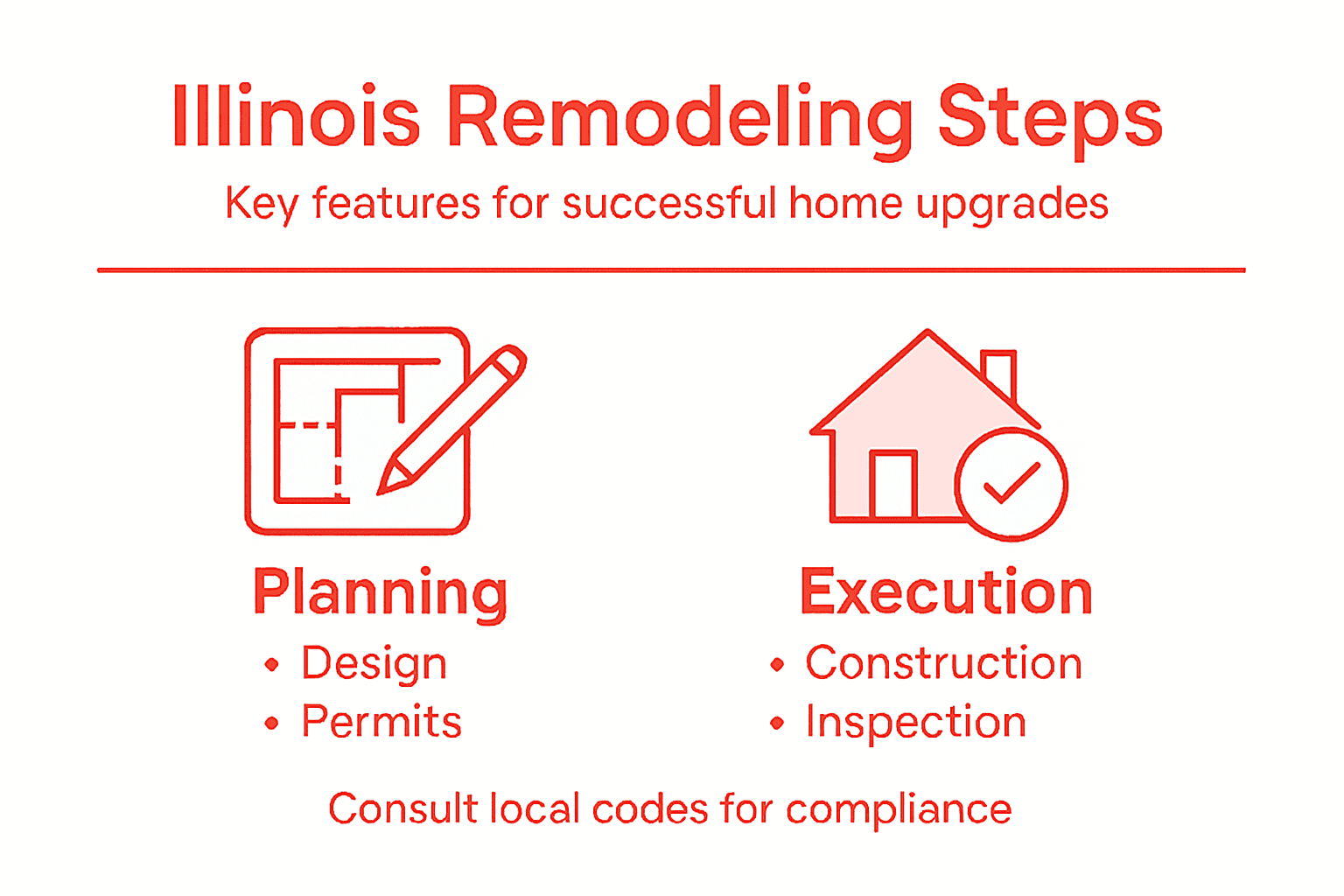
Remodeling a home requires strategic planning and careful execution. Home remodeling begins with clear project objectives, which might include enhancing living spaces, improving energy efficiency, or updating outdated design elements. Understanding the comprehensive process helps homeowners navigate complex renovation challenges and achieve their desired outcomes.
The typical remodeling process involves several critical stages:
- Initial project conceptualization
- Detailed design and planning
- Budget development
- Contractor selection
- Permit acquisition
- Actual renovation execution
- Final inspection and project completion
Strategic planning requires comprehensive consideration of multiple factors:
- Functional requirements
- Aesthetic preferences
- Budget constraints
- Material selections
- Potential return on investment
- Timeline expectations
Professional remodeling projects demand meticulous attention to multiple details. Homeowners must carefully evaluate their specific needs, research potential design options, and develop a realistic budget that accounts for unexpected challenges. Successful renovations require balancing creative vision with practical implementation strategies.
Effective remodeling transforms living spaces by aligning homeowner aspirations with technical feasibility and budgetary considerations.
Key project management elements include:
- Establishing clear communication channels
- Maintaining flexible yet structured timelines
- Monitoring quality control
- Managing potential unexpected complications
- Ensuring regulatory compliance
Pro tip: Create a comprehensive project documentation folder containing design plans, contractor agreements, permit copies, and budget tracking sheets to maintain organization throughout your remodeling journey.
Illinois laws and regulations for remodelers
Remodeling contractors in Illinois must navigate a complex landscape of legal requirements and building standards. Statewide building codes mandate strict compliance across multiple aspects of construction and renovation work. These regulations ensure safety, accessibility, and quality for homeowners throughout the state.
Key legal requirements for Illinois remodelers include:
- Obtaining proper permits
- Following state building codes
- Maintaining required insurance
- Providing written contracts
- Adhering to consumer protection laws
Regulatory compliance encompasses several critical areas:
- Illinois Energy Conservation Code
- Illinois Plumbing Code
- Illinois Accessibility Code
- Local municipal building regulations
- State-mandated inspection protocols
Homeowners are protected by comprehensive legal frameworks. Home Repair and Remodeling Act provides specific consumer safeguards, including:
- Right to a written contract for projects over $1,000
- Three-day cancellation period for certain contracts
- Mandatory disclosure of contractor licensing
- Required insurance documentation
- Clear remedies for unsatisfactory work
Successful remodeling depends on understanding and meticulously following Illinois regulatory requirements.
Critical legal considerations for contractors include:
Consider these quick references for Illinois homeowners when planning remodeling projects:
| Key Legal Requirement | What It Means for Homeowners | Impact if Neglected |
|---|---|---|
| Written Contracts | Legal protection for both parties | Disputes difficult to resolve |
| Permit Acquisition | Ensures project meets regulations | Fines or project halts |
| Insurance Verification | Covers unexpected damages | Homeowner assumes liability |
| Compliance with Codes | Meets safety and energy standards | Costly retrofits required |
- Maintaining current professional licensing
- Carrying appropriate liability insurance
- Understanding local permit requirements
- Providing transparent cost estimates
- Documenting all project specifications
Pro tip: Always request and verify a contractor’s current Illinois state license and insurance documentation before beginning any remodeling project.
Costs, risks, and homeowner responsibilities
Remodeling projects represent significant financial and logistical commitments that require careful planning and strategic decision-making. Homeowner responsibilities extend far beyond initial project conception, encompassing comprehensive risk management and financial preparation.
Key financial considerations for homeowners include:
- Establishing realistic project budgets
- Creating contingency funds
- Understanding potential return on investment
- Evaluating financing options
- Tracking ongoing project expenses
Potential project risks involve multiple dimensions:
- Budget overruns
- Unexpected structural complications
- Contractor reliability issues
- Potential permit and regulatory challenges
- Potential reduction in home resale value
Homeowners must anticipate and proactively manage financial uncertainties. Remodeling impact studies demonstrate that personal satisfaction does not always correlate directly with project cost or potential resale value. Understanding these nuanced dynamics helps homeowners make more informed decisions.
Successful home remodeling requires balancing emotional desires with practical financial considerations.
Critical financial management strategies include:
- Obtaining multiple contractor estimates
- Thoroughly reviewing contract terms
- Maintaining detailed project documentation
- Understanding insurance and warranty provisions
- Monitoring project progress systematically
Pro tip: Set aside an additional 15-20% of your total project budget as a contingency fund to manage unexpected expenses and potential complications.
Frequent mistakes and how to avoid them
Home remodeling can quickly become complicated, with numerous potential pitfalls that can derail even the most carefully planned projects. Common remodeling mistakes often stem from inadequate planning, unrealistic expectations, and insufficient research about project requirements and challenges.
Most significant remodeling mistakes include:
- Underestimating total project costs
- Skipping comprehensive home inspections
- Hiring unqualified contractors
- Neglecting necessary permits
- Overlooking long-term maintenance requirements
Critical error prevention strategies involve:
- Conducting thorough initial property assessments
- Creating comprehensive budget contingencies
- Verifying contractor credentials
- Understanding local building regulations
- Prioritizing functional design over purely aesthetic choices
Homeowner remodeling guidance emphasizes the importance of maintaining clear communication, documenting every stage of the project, and remaining flexible when unexpected challenges arise. Successful renovations require proactive management and realistic expectations.
Mistakes are expensive; prevention is significantly more cost-effective than correction.
Common risk areas homeowners should carefully evaluate:
- Material quality and durability
- Contractor communication and transparency
- Potential hidden structural issues
- Energy efficiency considerations
- Alignment with neighborhood standards
Pro tip: Create a detailed project documentation folder containing contracts, permit copies, material specifications, and communication records to protect yourself against potential misunderstandings.
Transform Your Illinois Home with Expert Remodeling Services
Understanding the true value of remodeling is the first step toward creating a home that offers comfort, efficiency, and lasting beauty. This article highlights common remodeling challenges such as ensuring regulatory compliance, managing budgets, and achieving the perfect balance between aesthetics and functionality. At First Solution IL, we recognize these pain points and are dedicated to delivering quality craftsmanship and strategic solutions that enhance your property’s value and livability.
Whether you are planning a kitchen renovation or a whole-house remodel, our skilled team handles every detail with care and professionalism. Explore our Home Remodeling Archives – First Solution iL to see how we transform spaces that align with your personal goals.

Ready to turn your remodeling vision into reality? Visit First Solution IL today for a free consultation. Discover how our comprehensive service range, including Finish Carpentry Archives – First Solution iL, can exceed your expectations while ensuring compliance with Illinois standards. Start enhancing your home now to enjoy the comfort and value you deserve.
Frequently Asked Questions
What are the most common types of remodeling projects?
Remodeling projects commonly include kitchen renovations, bathroom upgrades, whole-house remodeling, window and door replacements, and deck additions. These projects enhance both functionality and aesthetic appeal in homes.
How can homeowners ensure compliance with local remodeling regulations?
Homeowners can ensure compliance by obtaining the necessary permits, following local building codes, and understanding energy efficiency standards. Consulting local regulations before beginning any project is crucial.
What are the benefits of hiring professional remodeling services over DIY?
Professional remodeling services provide quality assurance, regulatory compliance, and project management. They also offer warranties and complete detailed work within an established timeframe, which can save homeowners time and reduce the risk of costly mistakes.
How can a homeowner effectively manage costs during a remodeling project?
Homeowners can manage costs by establishing a realistic budget, creating a contingency fund for unexpected expenses, obtaining multiple contractor estimates, and monitoring the project expenses throughout the renovation process.