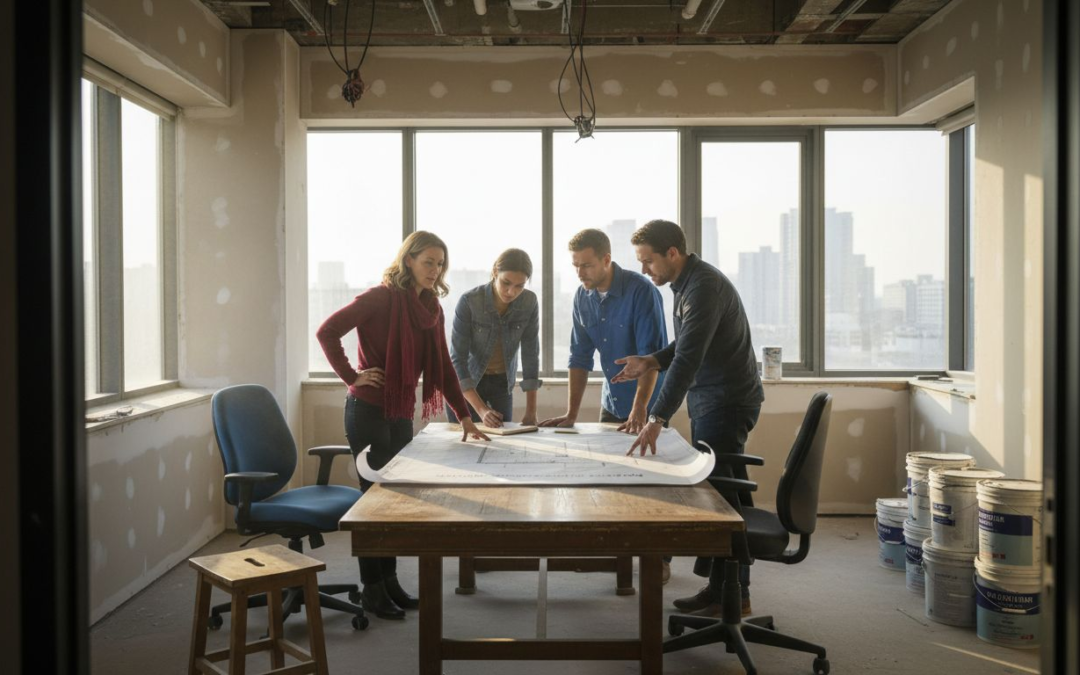
Office renovations can feel overwhelming when you want your upgrades to actually improve productivity and satisfaction. Outdated layouts, cramped meeting rooms, or underused spaces make it harder for your team to communicate and work comfortably. The right transformation strategies can change this by tackling real workplace challenges head-on and creating environments that truly support how people work today.
In the next sections, you will find actionable insights backed by research—from flexible layouts that enhance energy efficiency to tech-integrated meeting spaces that make hybrid work easier. You will discover practical office renovation ideas that help you create a workspace where performance, collaboration, and well-being thrive. Explore each transformation step to see how you can turn your office into a place where your team actually wants to be.
Table of Contents
- 1. Space Optimization And Layout Renovations
- 2. Open Concept Design Transformations
- 3. Private Office And Meeting Room Upgrades
- 4. Breakroom And Lounge Area Improvements
- 5. Restroom And Facility Modernization
- 6. Reception And Entryway Remodeling
- 7. Flooring And Finishing Enhancements
Quick Summary
| Key Message | Explanation |
|---|---|
| 1. Optimize workspace for productivity | Redesign office layouts to enhance efficiency, employee collaboration, and satisfaction through flexible workstations and dedicated zones. |
| 2. Embrace open concept for interaction | Transition to open designs that foster collaboration while balancing noise and privacy for better workplace dynamics. |
| 3. Upgrade meeting rooms with technology | Integrate advanced tech in meeting spaces to streamline collaboration and improve hybrid meeting experiences. |
| 4. Improve breakroom and lounge areas | Transform these spaces into multifunctional environments that encourage relaxation and team connectivity, investing in comfort and amenities. |
| 5. Modernize restrooms for wellness | Implement innovative fixtures and sustainable materials in restrooms to enhance hygiene and user experience, reflecting a commitment to employee health. |
1. Space Optimization and Layout Renovations
Space optimization is the strategic approach to transforming office layouts that maximize productivity, efficiency, and employee satisfaction. By reimagining how physical workspace can be utilized, managers can create environments that adapt to changing workplace dynamics and support diverse work styles.
Modern office renovations focus on creating flexible and dynamic environments that respond to various work needs. Research demonstrates that computational floor plan alternatives can significantly improve workplace efficiency by addressing both underutilization and overcrowding challenges.
Key strategies for effective space optimization include:
- Implementing adaptable workstations that can be easily reconfigured
- Creating designated collaboration zones
- Utilizing vertical space with modular furniture and storage solutions
- Designing multi-purpose areas that support different work activities
- Incorporating technology-friendly layouts with integrated power and connectivity
Strategic space design can increase workplace productivity by up to 25% through intelligent layout planning.
By understanding employee workflow patterns, managers can develop office layouts that support both individual focus and collaborative interactions. This approach goes beyond simple furniture arrangement – it’s about creating an ecosystem that promotes creativity, communication, and comfort.
Energy efficiency is another critical consideration in modern office renovations. Flexible spatial layouts improve building energy performance, enhancing thermal comfort and operational efficiency throughout the workspace.
Pro tip: Conduct a workplace utilization study before renovating to understand precisely how your current space is being used and identify optimization opportunities.
2. Open Concept Design Transformations
Open concept design transformations represent a radical reimagining of workplace environments, moving beyond traditional cubicle-based layouts to create more dynamic and interactive spaces. These innovative design approaches prioritize collaboration, flexibility, and employee engagement.
Collaborative spaces are at the heart of modern open concept transformations. Workplace design now integrates advanced technologies such as IoT, virtual reality, and augmented reality to support hybrid workforces and encourage creativity.
Key elements of successful open concept design include:
- Flexible workstations that can be easily reconfigured
- Dedicated collaboration zones with adaptable furniture
- Noise-reduction strategies like acoustic panels and sound-masking technologies
- Mixed-use spaces that support different work styles and tasks
- Integration of natural lighting and sustainable materials
Open concept designs are not just about physical space – they represent a fundamental shift in how organizations view workplace interaction and productivity.
The transformation goes beyond aesthetics. Research indicates that open-plan offices trigger complex adaptive behaviors among employees, revealing how physical environments shape workplace dynamics.
Managers must carefully balance the benefits of open designs with potential challenges like noise and privacy. Successful implementation requires thoughtful planning, employee input, and strategic design that supports both collaborative and individual work needs.
Pro tip: Conduct employee surveys and pilot testing before full implementation to understand specific workspace requirements and potential adaptation challenges.
3. Private Office and Meeting Room Upgrades
Private office and meeting room upgrades are critical transformations that can dramatically enhance workplace communication, productivity, and employee satisfaction. These strategic renovations go far beyond simple aesthetic improvements to create functional, technology-enabled spaces that support modern work dynamics.
Advanced meeting room technologies now integrate sophisticated solutions like AI meeting assistants, wireless presentation systems, and all-in-one video conferencing bars. These innovations streamline collaboration and make hybrid meetings more seamless and efficient.
Key considerations for effective meeting room and private office upgrades include:
- Implementing flexible, modular furniture designs
- Installing state-of-the-art audiovisual equipment
- Creating acoustically optimized spaces
- Integrating smart room control systems
- Ensuring robust technological infrastructure
Modern meeting spaces are no longer just rooms – they are dynamic communication hubs that adapt to changing workplace needs.
Contemporary design principles now emphasize ergonomic and collaborative workspace features such as adaptable partitions, comfortable seating, and optimal lighting. These elements transform meetings from mundane gatherings into creative, engaging experiences.
Successful upgrades require a holistic approach that balances technological integration with human-centric design. Managers must consider both functional requirements and the psychological impact of workspace environments on employee performance and well-being.
Pro tip: Conduct a comprehensive technology and workflow audit before renovating to ensure your upgrades precisely match your team’s specific communication and collaboration needs.
4. Breakroom and Lounge Area Improvements
Breakrooms and lounge areas are no longer afterthoughts in modern office design but strategic spaces that significantly impact employee productivity, creativity, and overall workplace satisfaction. These environments have transformed from basic utility areas to dynamic zones that support employee well-being and organizational culture.
Small design changes can yield substantial workplace improvements through thoughtful renovations that prioritize comfort and engagement. Managers can create spaces that not only provide respite but also foster collaboration and rejuvenation.
Key strategies for effective breakroom and lounge area improvements include:
- Implementing ergonomic and flexible furniture designs
- Creating multi-functional spaces supporting both relaxation and collaboration
- Integrating natural elements like plants and organic materials
- Providing technology-enabled amenities
- Designing with cohesive color schemes and inspiring artwork
Modern breakrooms are more than rest areas – they are strategic investments in employee satisfaction and organizational performance.
Office lounge areas now balance technology and comfort by offering amenities like high-speed Wi-Fi, refreshment stations, and adaptable seating arrangements. These spaces encourage informal interactions and provide employees with environments that support both individual rejuvenation and team connectivity.
Successful renovations require understanding your specific workforce’s needs and creating spaces that reflect your organization’s unique culture and work dynamics.
Pro tip: Conduct anonymous employee surveys to gather insights about preferred breakroom features and design preferences before initiating renovations.
5. Restroom and Facility Modernization
Restroom and facility modernization represent far more than cosmetic upgrades – they are strategic investments in workplace health, sustainability, and employee experience. Contemporary renovations focus on creating environments that balance functionality, hygiene, and technological innovation.
Touchless fixtures reduce contamination risks by minimizing direct contact points and supporting improved sanitation standards. These technological innovations transform restrooms from basic facilities into smart, health-conscious spaces.
Key considerations for comprehensive restroom modernization include:
- Implementing sensor-activated fixtures
- Ensuring universal accessibility design
- Integrating energy-efficient technologies
- Selecting sustainable and durable materials
- Creating privacy-enhanced layouts
- Incorporating advanced ventilation systems
Modern restroom renovations are investments in workplace wellness, not just aesthetic improvements.
Accessibility and safety remain critical renovation priorities for facility managers. Inclusive design principles ensure that restroom upgrades accommodate diverse user needs while maintaining structural integrity and operational efficiency.
Successful modernization requires a holistic approach that considers technological innovation, user experience, sustainability, and long-term maintenance requirements.
Pro tip: Conduct a comprehensive audit of existing restroom facilities, gathering employee feedback and analyzing usage patterns before initiating renovation plans.
6. Reception and Entryway Remodeling
Reception and entryway remodeling is a critical first impression strategy that communicates an organization’s brand identity, professionalism, and commitment to excellence. These spaces serve as the initial touchpoint for visitors, clients, and potential employees, making their design and functionality paramount.
Modular design approaches enable efficient renovations with minimal operational disruption. By utilizing pre-engineered, customizable components, organizations can rapidly transform their reception areas while maintaining functionality and aesthetic appeal.
Key strategic considerations for reception and entryway remodeling include:
- Creating intuitive navigation and wayfinding
- Designing welcoming and comfortable waiting areas
- Incorporating brand-aligned color schemes and design elements
- Ensuring accessibility for all visitors
- Integrating advanced technological infrastructure
- Optimizing natural lighting and spatial flow
A well-designed reception area communicates organizational values before a single word is spoken.
Sustainable renovation strategies now emphasize eco-friendly materials, green design principles, and energy-efficient solutions. These approaches not only reduce environmental impact but also demonstrate organizational commitment to responsible practices.
Successful reception area transformations balance aesthetic appeal, functional efficiency, technological integration, and brand representation. Managers must view these spaces as strategic communication platforms that extend far beyond mere physical environments.
Pro tip: Conduct a comprehensive user experience audit before renovation, gathering insights from employees, visitors, and stakeholders to inform design decisions.
7. Flooring and Finishing Enhancements
Flooring and finishing enhancements represent a critical investment in workplace aesthetics, functionality, and long-term performance. These strategic upgrades go beyond superficial improvements, directly impacting employee productivity, workplace comfort, and overall organizational image.
Sustainable flooring materials contribute to energy savings by reducing environmental impact and supporting broader organizational sustainability goals. Modern renovation strategies prioritize materials that balance durability, aesthetic appeal, and ecological responsibility.
Key strategic considerations for flooring and finishing enhancements include:
- Selecting materials with high durability and low maintenance requirements
- Balancing acoustic performance with aesthetic design
- Choosing surfaces that support ergonomic workplace needs
- Integrating materials with excellent thermal and sound insulation
- Prioritizing environmentally friendly and recyclable options
- Considering long-term lifecycle costs
Intelligent flooring choices are investments in workplace performance, not just aesthetic upgrades.
User-focused design principles highlight flooring quality as a critical factor in occupant comfort and satisfaction. High-quality finishes improve indoor environmental quality, contributing to healthier and more productive work environments.
Successful flooring renovations require comprehensive analysis of workplace dynamics, employee needs, and organizational culture. Managers must view these enhancements as strategic tools for improving workplace experience and performance.
Pro tip: Consult with workplace ergonomics experts and conduct employee surveys to understand specific flooring requirements before finalizing renovation plans.
Below is a comprehensive table summarizing the main strategies and considerations for optimizing modern workplace environments and their respective benefits discussed in the article.
| Topic | Key Strategies | Main Benefits |
|---|---|---|
| Space Optimization and Layout Renovation | Adaptable workstations, collaboration zones, modular furniture for vertical space usage | Increased productivity, space efficiency, and enhanced employee satisfaction |
| Open Concept Design Transformation | Flexible layout, collaborative zones, noise reduction technologies, natural lighting | Boosted collaboration, adaptability, and employee engagement |
| Private Office and Meeting Upgrades | Advanced A/V tech, modular furniture, smart controls, and acoustics | Enhanced collaboration and seamless communication |
| Breakroom and Lounge Area Enhancements | Ergonomic furniture, multi-functional spaces, natural elements, inspiring layouts | Improved employee well-being and organizational culture |
| Restroom and Facility Modernization | Touchless features, universal accessibility, energy-efficient technologies, ventilation | Heightened hygiene, sustainability, and user experience |
| Reception and Entryway Remodeling | Intuitive navigation, welcoming spaces, advanced technology integration | Communicates brand identity and supports visitor comfort |
| Flooring and Finishing Enhancements | Durable and ergonomic materials, acoustic performance, environmentally friendly options | Improved workplace aesthetics and environmental contribution |
Transform Your Office with Expert Renovation Solutions
Managing a successful office renovation involves addressing multiple challenges such as optimizing space, upgrading meeting rooms with smart technology, and creating welcoming reception areas that embody your brand. The article highlights how thoughtful redesigns focusing on flexible layouts, ergonomic finishes, and modern facilities can boost productivity and employee satisfaction. If you are aiming to overcome these pain points and bring your renovation vision to life with precision craftsmanship and sustainable solutions, First Solution IL is your trusted partner.
Explore our comprehensive Commercial Services Archives – First Solution iL to discover how we transform workspaces with adaptable flooring, interior remodeling, and state-of-the-art fixture installations. Act now to elevate your office environment with custom renovations designed to meet your organization’s unique needs and future-proof your workspace. Visit First Solution IL today to request a free consultation and start your project with confidence.
Frequently Asked Questions
What are the key benefits of space optimization renovations in an office?
Space optimization renovations enhance workplace productivity, employee satisfaction, and operational efficiency. To realize these benefits, assess current space usage through a workplace utilization study to identify opportunities for improvements.
How can I create effective open concept designs to improve collaboration?
Effective open concept designs prioritize flexible workstations and dedicated collaboration zones. Start by gathering employee input through surveys to tailor the design to their needs and preferences before implementing changes.
What features should I include in upgraded meeting rooms to support modern workstyles?
Upgraded meeting rooms should include flexible furniture, advanced audiovisual equipment, and optimal acoustics to enhance functionality. Conduct a technology and workflow audit to ensure the upgrades align with your team’s specific communication requirements.
How can I transform breakrooms into spaces that improve employee well-being?
To transform breakrooms, focus on ergonomic furniture, multi-functional spaces, and integrating natural elements. Begin by collecting feedback from employees on their preferred breakroom features to ensure the renovations meet their needs.
What should I consider when modernizing restrooms in my office?
When modernizing restrooms, focus on touchless fixtures, universal accessibility, and energy-efficient technologies to enhance hygiene and user experience. Conduct a comprehensive audit of existing facilities and gather employee feedback to inform your renovation plans.
How do I effectively remodel a reception area to reflect my organization’s brand?
To effectively remodel a reception area, prioritize intuitive navigation, welcoming designs, and brand-aligned aesthetics. Start by completing a user experience audit to gather insights from employees and visitors, ensuring the space truly represents your organization’s values.