

Planning a major renovation can feel overwhelming when every detail counts. For Illinois homeowners, understanding the core purpose of renovation contracts is the first step toward protecting your investment and ensuring project quality. These agreements, governed by the Illinois Home Repair and Remodeling Act, form a clear legal framework that defines expectations, outlines costs, and addresses risk. By learning how renovation contracts work, you can prevent misunderstandings and minimize disputes before work begins.
Table of Contents
- Core Purpose Of Renovation Contracts
- Types And Key Features Of Contracts
- Essential Clauses For Homeowners
- Illinois Legal Requirements And Compliance
- Risks, Disputes, And How To Avoid Scams
Key Takeaways
| Point | Details |
|---|---|
| Importance of Renovation Contracts | Renovation contracts establish clear expectations and legal protections, minimizing misunderstandings between homeowners and contractors. |
| Types of Contracts | Understanding various contract types, such as Lump Sum and Time and Materials, helps homeowners manage costs and risks effectively. |
| Essential Clauses | Key clauses like Scope of Work and Payment Schedule are crucial for safeguarding homeowner interests and ensuring project clarity. |
| Legal Compliance | Homeowners in Illinois must ensure contracts comply with state regulations to avoid fraudulent practices and protect their investments. |
Core Purpose of Renovation Contracts
Renovation contracts are critical legal documents that establish a clear framework for home improvement projects in Illinois. These agreements serve as comprehensive roadmaps defining the expectations, responsibilities, and protections for both homeowners and contractors. By establishing precise project parameters, renovation contracts help prevent misunderstandings and potential disputes.
The core purpose of a renovation contract extends far beyond a simple transaction document. These contracts provide critical protections by outlining several essential elements:
- Detailed scope of work and project specifications
- Exact cost breakdown and payment schedules
- Project timeline and milestone expectations
- Materials and quality standards
- Change order procedures
- Warranty and guarantee terms
- Insurance and liability provisions
Moreover, renovation contracts in Illinois are governed by specific legal standards designed to protect homeowners. The Illinois Home Repair and Remodeling Act establishes clear guidelines that ensure fair, transparent transactions between residential property owners and contractors. These regulations mandate specific disclosures and consumer protections that help prevent potential fraud or inadequate work.
Renovation contracts transform verbal agreements into legally binding documents that protect both parties’ interests and provide a clear roadmap for successful project completion.
Homeowner Protection is the ultimate goal of a well-crafted renovation contract. By clearly defining expectations, establishing performance standards, and providing legal recourse, these documents give Illinois homeowners peace of mind during complex home improvement projects.
Pro tip: Always review the entire renovation contract carefully and consider consulting a legal professional to understand all terms and conditions before signing.
Types and Key Features of Contracts
Renovation contracts come in various forms, each designed to address different project complexities and risk management strategies. Construction contract types range from straightforward to highly nuanced, offering homeowners multiple options for structuring their home improvement agreements.
The primary types of renovation contracts include:
-
Lump Sum (Fixed Price) Contracts
- Predetermined total project cost
- Minimal financial risk for homeowner
- Clear budget expectations
-
Time and Materials Contracts
- Flexible pricing based on actual work performed
- Hourly labor rates plus material costs
- Best for projects with uncertain scope
-
Guaranteed Maximum Price (GMP) Contracts
- Sets a ceiling on total project expenses
- Contractor absorbs costs exceeding the maximum
- Provides cost protection for homeowners
-
Cost-Plus Contracts
- Reimburses contractor for actual project expenses
- Includes predetermined percentage markup
- Offers transparency in project spending
Each contract type carries unique advantages and potential risks. Homeowners must carefully evaluate their specific project requirements, budget constraints, and comfort level with financial uncertainty when selecting a contract structure. The choice depends on factors such as project complexity, anticipated changes, and desired level of financial predictability.
The following table summarizes how various renovation contract types impact homeowners in terms of cost control and risk management:
| Contract Type | Cost Predictability | Homeowner Risk Level | Best Use Case |
|---|---|---|---|
| Lump Sum | Highest, fixed amount | Low, mostly contractor | Clearly defined projects |
| Time and Materials | Low, costs can vary | Higher, depends on scope | Uncertain or evolving renovations |
| Guaranteed Max Price | Moderate, cost ceiling | Low, limited overages | Larger, complex projects |
| Cost-Plus | Moderate, transparent | Moderate, shared overruns | Custom projects needing flexibility |
Selecting the right contract type is crucial in managing project expectations, financial risks, and potential disputes.
Understanding the nuanced features of different contract types empowers homeowners to make informed decisions. Key considerations include cost allocation, risk management, performance expectations, and flexibility for potential project modifications.
Pro tip: Consult with a professional contractor or legal advisor to determine the most appropriate contract type for your specific renovation project.
Essential Clauses for Homeowners
Navigating the complexities of renovation contracts requires a keen understanding of key legal protections that safeguard homeowner interests. Illinois law mandates specific contract provisions designed to protect consumers during home improvement projects, making it crucial to understand the essential clauses that can prevent potential disputes and financial risks.
Critical clauses every homeowner should demand in their renovation contract include:
-
Scope of Work
- Detailed description of all project elements
- Specific materials to be used
- Exact areas of renovation
- Precise measurements and specifications
-
Payment Schedule
- Clear milestones tied to project progress
- Specific payment amounts and dates
- Percentage-based payments linked to completion stages
- Methods of payment verification
-
Warranty Provisions
- Duration of workmanship warranty
- Coverage for materials and labor
- Process for addressing defects
- Conditions of warranty validity
-
Change Order Procedures
- Written documentation requirements
- Approval process for project modifications
- Impact on project timeline and budget
- Signatures required for changes
Homeowners must pay special attention to additional legal requirements. Illinois law stipulates that home improvement contracts exceeding $1,000 must include specific disclosures, such as total project cost, estimated timeline, and comprehensive contact information for the contractor.
Comprehensive contract clauses are your primary defense against potential misunderstandings, financial risks, and substandard workmanship.
Understanding these essential clauses empowers homeowners to create robust legal protections. Each clause serves as a critical safeguard, ensuring transparency, defining expectations, and providing clear recourse in case of potential conflicts or project complications.

Pro tip: Always have a legal professional review your renovation contract before signing to ensure all necessary protective clauses are included and your interests are fully represented.
Illinois Legal Requirements and Compliance
Illinois has established comprehensive legal frameworks to protect homeowners during renovation projects through specific statutory protections. The Illinois Home Repair and Remodeling Act sets clear guidelines that contractors must follow to ensure fair, transparent, and legally compliant home improvement transactions.
Key legal requirements for home renovation contracts in Illinois include:
-
Contract Documentation
- Written agreement required for projects over $1,000
- Detailed scope of work
- Complete contractor contact information
- Precise cost breakdowns
-
Consumer Protection Provisions
- Mandatory consumer rights brochure
- Clear cancellation rights
- Licensing verification requirements
- Disclosure of potential additional costs
-
Financial Safeguards
- Itemized payment schedules
- Maximum deposit limits
- Performance bond requirements
- Transparency in billing practices
-
Contractor Compliance
- Proof of current licensing
- Insurance documentation
- Professional certifications
- Compliance with state building codes
Illinois law mandates that contractors must provide comprehensive information before contract signing. This includes a detailed explanation of work to be performed, exact costs, estimated timelines, and complete contact information. Homeowners have the right to receive a consumer rights brochure that outlines their legal protections and potential recourse options.
Compliance with Illinois home improvement regulations is not optional – it’s a legal requirement designed to protect homeowners from potential fraud and substandard work.
Understanding these legal requirements empowers homeowners to make informed decisions and protect their investments. Each provision is carefully crafted to ensure transparency, fairness, and accountability in home renovation projects.
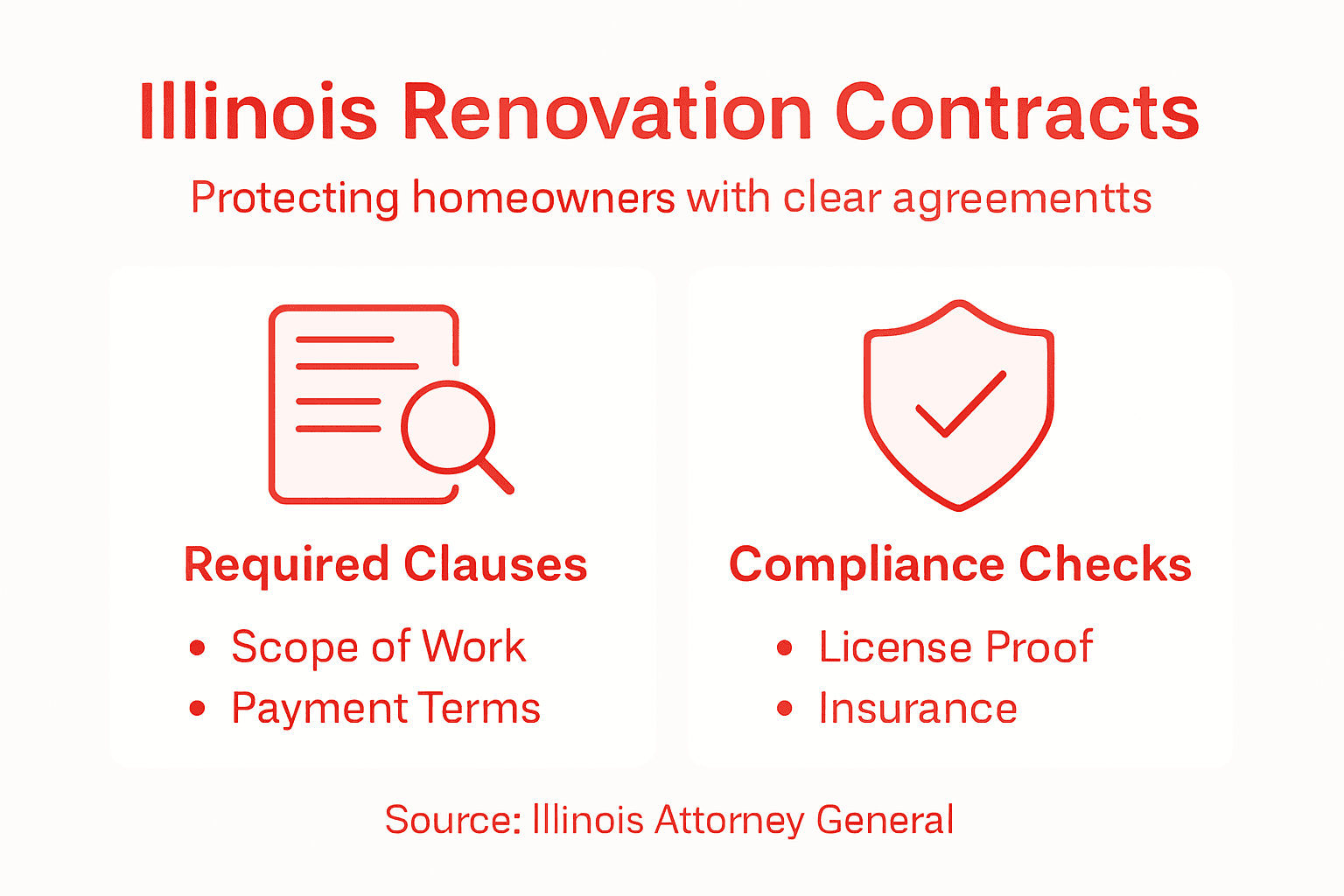
Pro tip: Request and verify a contractor’s current license and insurance documentation before signing any renovation contract to ensure full legal compliance.
Risks, Disputes, and How to Avoid Scams
Homeowners face numerous potential risks during renovation projects, and understanding how to protect against contractor fraud is crucial for a successful home improvement experience. Illinois has established robust consumer protection mechanisms designed to safeguard homeowners from unscrupulous contractors and potential renovation nightmares.
Common risks and potential scam indicators include:
-
Financial Red Flags
- Requesting full payment upfront
- Avoiding written estimates
- Pressuring for immediate decisions
- Demanding cash-only transactions
-
Credential Warning Signs
- No verifiable business license
- Lack of insurance documentation
- Limited or nonexistent references
- Reluctance to provide proof of previous work
-
Contract Manipulation Tactics
- Vague project descriptions
- Undefined scope of work
- Missing payment schedules
- Unclear termination conditions
-
Performance-Related Risks
- Unexplained project delays
- Substandard material quality
- Unauthorized work modifications
- Incomplete project completion
Disputes in home renovation often arise from miscommunication, unclear expectations, or deliberate contractor misconduct. Illinois law provides multiple avenues for homeowners to address and resolve potential conflicts, including mediation, arbitration, and legal recourse through consumer protection agencies.
Thorough documentation, clear communication, and understanding your legal rights are the best defenses against renovation project risks.
Effective dispute resolution requires maintaining meticulous records, understanding contractual obligations, and being prepared to assert your consumer rights. Homeowners should approach renovation projects with a combination of due diligence, professional skepticism, and proactive communication.
Here’s a quick guide to common dispute resolution options for Illinois homeowners:
| Approach | Description | When To Use |
|---|---|---|
| Mediation | Neutral third party facilitates | Early-stage disagreements |
| Arbitration | Independent arbitrator decides | Contract requires arbitration |
| Small Claims | Court hears minor cases | Damages below court limits |
| Legal Action | Formal lawsuit in state court | Severe disputes, large sums |
Pro tip: Always conduct comprehensive background checks on contractors, including license verification, insurance confirmation, and reference validation, before signing any renovation contract.
Secure Your Home Renovation with Trusted Expertise in Illinois
Understanding the importance of a well-structured renovation contract is the first step to protecting your investment and peace of mind. The article highlights the challenges Illinois homeowners face, such as unclear scope of work, financial risks, and potential disputes. At First Solution IL, we recognize these pain points and emphasize clear communication, detailed contract terms, and transparent pricing to eliminate uncertainty from your renovation journey.
Don’t leave your home renovation to chance. With our professional craftsmanship and dedication to quality, we help you navigate every stage of your project confidently. Explore our extensive services starting from precise home renovation to expert finish carpentry that bring your vision to life while keeping your contract obligations clear and fair.

Ready to safeguard your home with a trusted Illinois contractor who values transparency and your satisfaction? Visit First Solution IL today for a free consultation and discover how our detailed project planning and contract precision can protect you from renovation risks. Take action now to ensure your home improvement journey is smooth and secure.
Frequently Asked Questions
What is a renovation contract?
A renovation contract is a legal document that outlines the expectations, responsibilities, and protections for both homeowners and contractors involved in home improvement projects. It details the scope of work, cost breakdown, timeline, materials, and other essential elements.
Why are renovation contracts important for homeowners?
Renovation contracts are crucial as they provide legal protection and clear expectations, helping to prevent misunderstandings and disputes. They transform verbal agreements into legally binding documents that safeguard homeowners’ interests throughout the renovation process.
What types of renovation contracts are available?
The primary types of renovation contracts include lump sum contracts, time and materials contracts, guaranteed maximum price contracts, and cost-plus contracts. Each type has its own advantages and risks, allowing homeowners to choose based on project complexity and financial preferences.
What essential clauses should be included in a renovation contract?
Key clauses in a renovation contract should include the scope of work, payment schedule, warranty provisions, and change order procedures. These clauses help define expectations, outline financial arrangements, and provide protections in case of disputes or modifications.