
Hiring a contractor for that dream remodel in Illinois can feel exciting until it is time to review the contract. Homeowners often underestimate how much those documents shape every step of a renovation, from setting the project scope to outlining safety standards under rules like the EPA’s Lead Safe Work Practices. Taking time to focus on a detailed renovation contract protects your investment, clarifies expectations, and helps avoid costly surprises throughout your project.
Table of Contents
- Renovation Contracts Defined and Common Myths
- Types of Renovation Contracts and Key Differences
- Essential Terms: Scope, Timeline, Payment, Changes
- Legal Protections and Dispute Resolution Procedures
- Risks of Skipping Contract Review or Oversights
- Common Mistakes and How to Avoid Them
Key Takeaways
| Point | Details |
|---|---|
| Importance of Renovation Contracts | Renovation contracts are essential legal documents that define the scope, timeline, and payment structure, protecting both homeowners and contractors. |
| Common Misconceptions | Myths about renovation contracts, such as them being unnecessary for small projects, can expose homeowners to risks and complications during renovations. |
| Types of Contracts | Understanding different renovation contract types, such as Lump Sum and Cost-Reimbursable, allows homeowners to select an agreement that best fits their project needs. |
| Critical Contract Elements | Key elements, including project scope and change management procedures, are crucial for preventing misunderstandings and ensuring successful project completion. |
Renovation Contracts Defined and Common Myths
A renovation contract is a legally binding document that outlines the specific terms, expectations, and obligations between a homeowner and contractor for a construction or remodeling project. These comprehensive agreements serve as critical protective mechanisms that detail project scope, cost, timeline, materials, and potential contingencies.
Renovation contracts are not mere optional paperwork but essential legal instruments that establish critical work parameters. They protect both parties by clearly defining responsibilities, payment schedules, and performance expectations. Contrary to popular misconceptions, these documents aren’t generic templates but customized agreements tailored to specific project requirements.
Common myths about renovation contracts persist, potentially exposing homeowners to significant risks. Here are the most prevalent misconceptions:
- Myth 1: Contracts are unnecessary for small projects
- Myth 2: Verbal agreements are equally binding
- Myth 3: All contractors use standard contract templates
- Myth 4: Lead safety requirements only apply to major demolitions
In reality, renovation contracts encompass critical legal protections mandated by regulatory agencies. For instance, the EPA’s Lead Renovation, Repair and Painting (RRP) Rule establishes specific requirements for firms performing renovations, particularly in housing constructed before 1978. These regulations mandate specific safety practices, certifications, and documented work protocols.
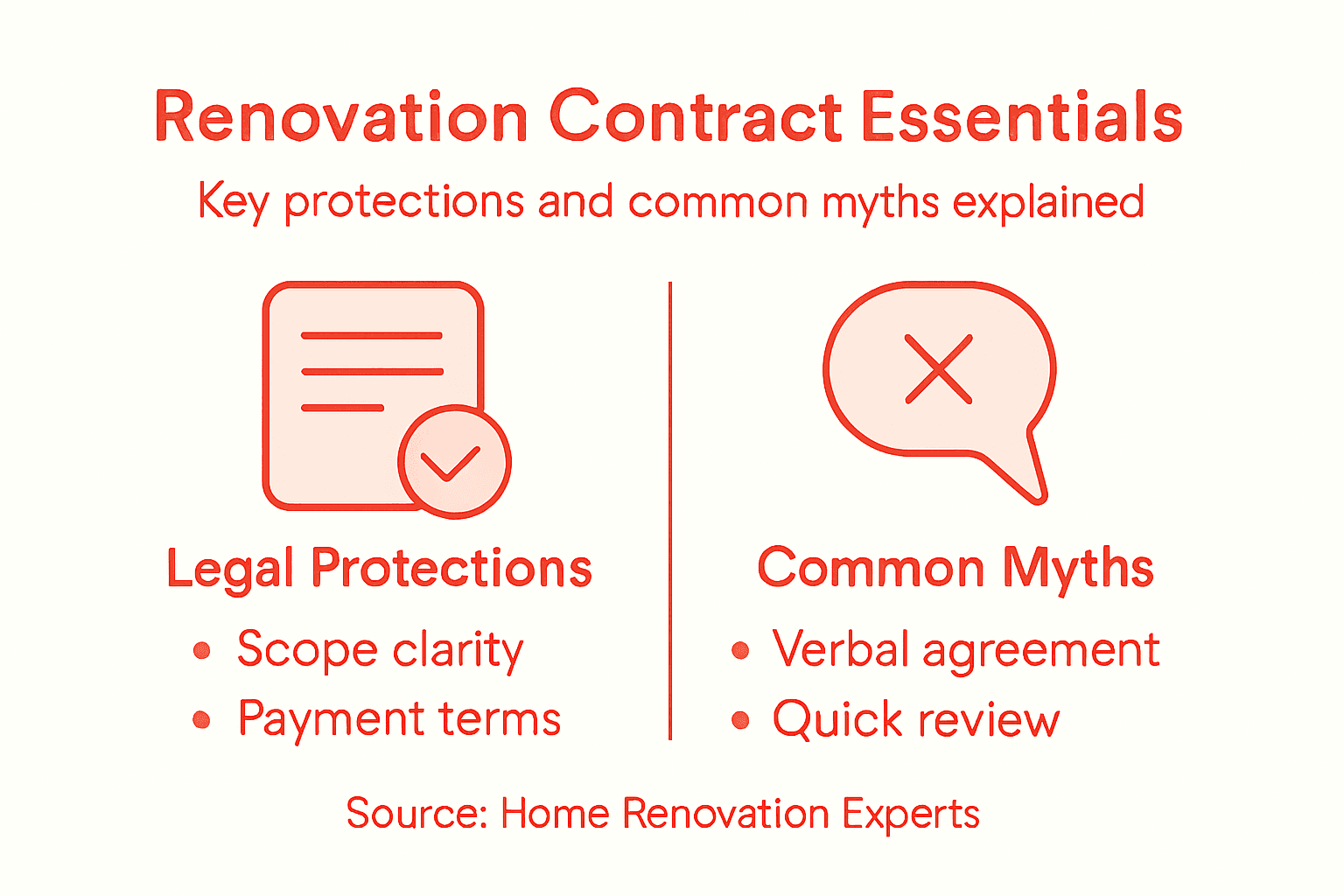
Professional contractors understand that comprehensive contracts protect both parties. They provide clear documentation of project expectations, potential change orders, payment schedules, and performance standards. Without a detailed contract, homeowners risk misunderstandings, unexpected costs, and potential legal complications.
Pro tip: Always request a detailed, written contract that includes specific project specifications, total cost breakdown, payment schedule, estimated timeline, and potential contingency plans.
Types of Renovation Contracts and Key Differences
Renovation contracts are not one-size-fits-all documents, but rather specialized agreements with distinct structures designed to address varying project complexities and risk management strategies. Construction contract classifications provide homeowners with multiple options to protect their investment and align project expectations with contractor responsibilities.
The primary types of renovation contracts include:
- Lump Sum Contracts: Fixed price agreements where the total project cost is predetermined
- Cost-Reimbursable Contracts: Payments based on actual expenses plus a predetermined fee
- Time and Materials Contracts: Compensation calculated by hourly rates and material costs
- Unit Price Contracts: Pricing determined by specific unit measurements of work completed
Lump Sum Contracts represent the most straightforward approach, where contractors quote a fixed total price for the entire project. These contracts transfer significant risk to contractors, incentivizing efficient work and precise cost management. Homeowners benefit from predictable budgeting and reduced financial uncertainty.

Cost-reimbursable contracts offer more flexibility, particularly for complex renovation projects with uncertain scopes. In these agreements, homeowners reimburse actual project expenses plus a predetermined contractor fee. This approach works best when project details are challenging to define precisely upfront.
Time and materials contracts provide maximum adaptability, with payments calculated based on actual labor hours and material expenses. These contracts are ideal for projects with evolving requirements or when initial project parameters remain unclear.
Selecting the appropriate contract type depends on project complexity, budget constraints, and desired risk allocation between homeowner and contractor.
Pro tip: Always carefully review contract terms, understand fee structures, and clarify potential additional costs before signing any renovation agreement.
Here’s a summary comparing the main renovation contract types and when each is best used:
| Contract Type | Best For | Homeowner Benefit | Key Contractor Risk |
|---|---|---|---|
| Lump Sum | Well-defined, simple projects | Predictable total costs | Cost overruns |
| Cost-Reimbursable | Complex, hard-to-define projects | Adaptable to changes | Uncertain final costs |
| Time and Materials | Projects with evolving requirements | Flexible scope adjustments | Limited pricing control |
| Unit Price | Repetitive, measurable work units | Transparent incremental cost | Misestimated quantities |
Essential Terms: Scope, Timeline, Payment, Changes
Renovation contracts are complex documents that require meticulous attention to critical terms ensuring both homeowner and contractor understand their responsibilities. Contract changes management represents a fundamental aspect of successful renovation agreements, protecting both parties’ interests through clear, comprehensive documentation.
The essential contract terms can be broken down into four key components:
- Project Scope: Detailed description of work to be performed
- Timeline: Specific start and completion dates
- Payment Schedule: Structured financial milestones
- Change Management: Formal procedures for project modifications
Project scope definition is the foundation of any renovation contract. This section must comprehensively outline every aspect of the planned work, including:
- Specific areas to be renovated
- Materials to be used
- Exact work specifications
- Quality standards expected
Timeline terms establish clear expectations for project duration. Interim valuations and payment mechanisms should align with specific project milestones, creating accountability and transparency throughout the renovation process.
Precise documentation prevents misunderstandings and protects both homeowner and contractor from potential disputes.
Payment schedules are critical for managing financial expectations. Most renovation contracts utilize milestone-based payments, where funds are released upon completion of specific project stages. This approach ensures consistent progress and provides financial protection for both parties.
Change management represents perhaps the most crucial contract term. Formal change order procedures must detail:
- Who can initiate project changes
- Required documentation for modifications
- Process for pricing and approving alterations
- Impact on project timeline and budget
Pro tip: Insist on a detailed change order process that requires written approval and specifies exact cost implications before any project modifications.
Legal Protections and Dispute Resolution Procedures
Renovation contracts are complex legal documents that require robust mechanisms to protect homeowners and contractors from potential conflicts. Alternative Dispute Resolution methods offer strategic approaches to managing disagreements before they escalate into costly legal battles.
The primary legal protections in renovation contracts typically include:
- Clear definition of each party’s responsibilities
- Specific performance standards
- Mechanisms for addressing contract breaches
- Comprehensive liability clauses
- Detailed dispute resolution procedures
Dispute Resolution Mechanisms provide structured approaches to resolving conflicts. These typically follow a hierarchical approach:
- Direct negotiation between parties
- Mediation with a neutral third-party facilitator
- Adjudication by industry experts
- Formal arbitration
- Litigation as a last resort
Dispute Boards offer proactive conflict management by providing ongoing oversight throughout the renovation project. These independent panels can quickly address potential issues before they become significant disputes, helping to maintain project momentum and preserve working relationships.
Effective dispute resolution clauses protect both parties’ interests and provide clear pathways for resolving conflicts.
Legal protections also encompass critical elements such as performance bonds, insurance requirements, and specific indemnification clauses. These mechanisms ensure financial security and risk mitigation for both homeowners and contractors during the renovation process.
Contractual provisions should explicitly outline the circumstances under which disputes can be initiated, the process for documenting and presenting grievances, and the specific standards for resolution. This transparency helps prevent misunderstandings and provides a clear roadmap for addressing potential conflicts.
Pro tip: Carefully review the dispute resolution section of your contract and ensure it includes multiple escalation steps before resorting to formal legal action.
Risks of Skipping Contract Review or Oversights
Skipping comprehensive contract review is a potentially catastrophic mistake that can expose homeowners to significant financial and legal risks. Overlooking critical contract details can lead to unexpected complications, costly disputes, and compromised project outcomes.
The primary risks associated with inadequate contract review include:
- Undefined project scope and expectations
- Unclear financial responsibilities
- Potential safety and structural hazards
- Lack of legal recourse in dispute situations
- Unexpected cost overruns
- Potential compliance violations
Structural safety oversights represent one of the most critical risks. Without a thorough contract review, homeowners might unknowingly:
- Miss critical design responsibility allocations
- Fail to establish clear quality standards
- Overlook essential safety requirements
- Create potential liability exposure
Comprehensive risk management strategies emphasize the importance of detailed contract analysis. Financial risks can be particularly devastating, with potential consequences including:
- Unexpected additional costs
- Project delays
- Incomplete or substandard work
- Legal expenses from potential disputes
Skipping contract review is like driving without insurance – a risk that can lead to catastrophic financial consequences.
Legal protections are fundamentally compromised when contract details remain unclear. Homeowners might inadvertently waive important rights or accept unreasonable terms by not carefully reviewing every section of the renovation contract.
Professional contractors understand that transparent, detailed contracts protect both parties. A comprehensive review ensures alignment of expectations, clear performance standards, and a mutual understanding of project parameters.
Pro tip: Consider hiring an independent legal professional specializing in construction contracts to review your renovation agreement before signing.
To help prioritize your contract review, here is a checklist of critical contract elements and their purpose:
| Contract Element | Why It Matters | Potential Issue If Missing |
|---|---|---|
| Project Scope | Sets clear renovation expectations | Confusion, extra costs |
| Timeline | Provides completion deadlines | Delays, missed move-in dates |
| Payment Schedule | Defines payment triggers | Disputes over progress |
| Change Management | Details change order procedures | Unapproved or costly modifications |
| Liability Clauses | Allocates risk and insurance | Unexpected legal and financial claims |
| Dispute Resolution | Specifies how conflicts are settled | Prolonged, expensive litigation |
Common Mistakes and How to Avoid Them
Renovation contracts are legal minefields where seemingly minor oversights can lead to significant financial and legal complications. Critical contract review mistakes can transform what should be a straightforward home improvement project into a nightmare of unexpected expenses and legal disputes.
The most common contract review mistakes homeowners typically make include:
- Failing to read the entire document
- Skipping the fine print
- Not understanding technical terminology
- Overlooking ambiguous language
- Neglecting to clarify payment schedules
- Ignoring dispute resolution clauses
Bid-related errors represent another critical area of potential mistakes. Construction contract pitfalls often emerge from misunderstandings about binding obligations and inadequate verification of contract terms.
Homeowners should pay special attention to:
- Verifying all party identities
- Confirming precise project scope
- Understanding payment milestone requirements
- Checking insurance and liability provisions
- Reviewing termination conditions
Small contract details can create massive financial risks if overlooked.
Technical contract language can be intentionally complex, designed to protect contractors’ interests. Professional review becomes crucial in deciphering nuanced clauses that might expose homeowners to unexpected financial or legal vulnerabilities.
Effective contract review requires a systematic approach. This means carefully examining every section, asking clarifying questions, and potentially seeking professional legal guidance to ensure complete understanding.
Pro tip: Request a line-by-line contract walkthrough with your contractor, documenting and clarifying any terms you do not fully understand.
Protect Your Renovation Investment with Expert Contract Guidance
Navigating renovation contracts can be overwhelming but understanding the essential terms like project scope, payment schedules, and change management is critical to safeguarding your investment. If you want to avoid unexpected costs, delays, or legal disputes, partnering with a trusted professional contractor is the key. At First Solution IL, we specialize in transparent home renovation projects where your goals and protections come first.

Ready to experience stress-free remodeling with clear contracts and skilled craftsmanship Visit our Home Renovation Archives – First Solution iL for inspiration and trusted expertise Our team is committed to detailed planning and open communication so your project runs smoothly from start to finish Take the first step today by contacting us through First Solution IL Scheduling a free consultation now means you can clarify contract terms before work begins and protect your investment every step of the way Also explore how our General Contractor Archives – First Solution iL keep projects aligned with your expectations and local regulations Don’t wait until problems arise Secure your renovation success right now
Frequently Asked Questions
What is a renovation contract?
A renovation contract is a legally binding document that outlines the specific terms, expectations, and obligations between a homeowner and contractor for a construction or remodeling project.
Why is it important to review renovation contracts thoroughly?
Reviewing renovation contracts thoroughly is crucial to protect your investment by ensuring clear understanding of project scope, payment schedules, timelines, and change management processes, which can prevent misunderstandings and costly disputes.
What are common risks of skipping a renovation contract review?
Skipping a renovation contract review can lead to undefined project scope, unclear financial responsibilities, potential safety hazards, and a lack of legal recourse in dispute situations, resulting in unexpected costs and complications.
What key terms should be included in a renovation contract?
Key terms that should be included in a renovation contract include project scope, timeline, payment schedule, change management procedures, liability clauses, and dispute resolution mechanisms.