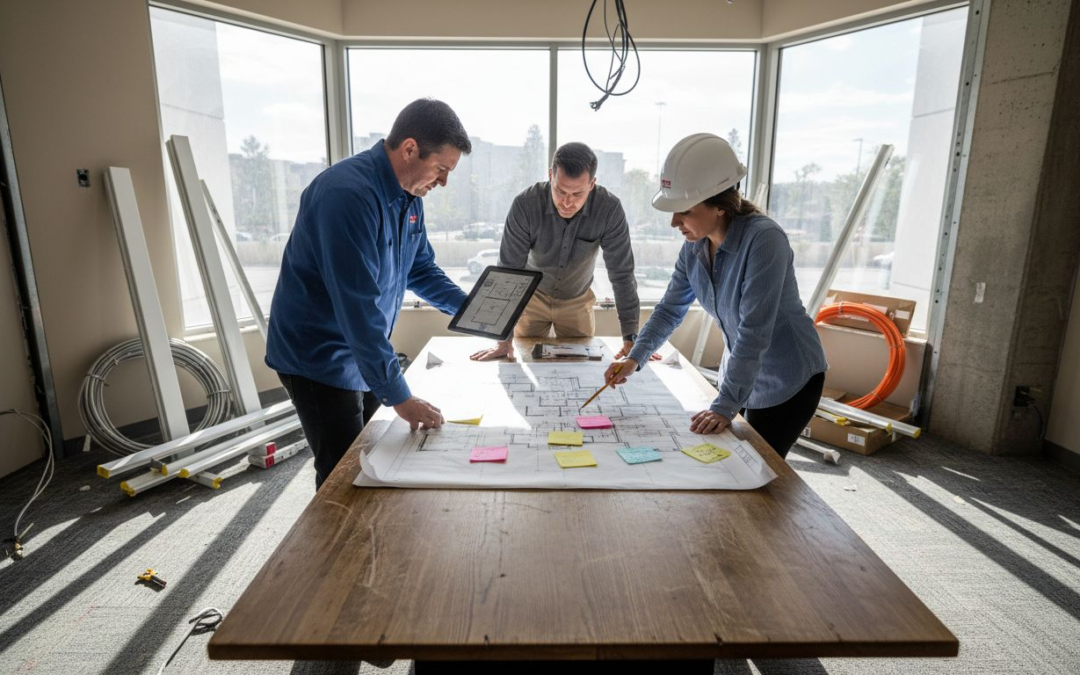
Every Illinois commercial property owner faces moments when unfamiliar renovation terms create more confusion than clarity. Renovation projects involve complex decisions, legal requirements, and interactions with professionals, making it vital to grasp precise terminology and project phases. This guide cuts through jargon, offering clear definitions of commercial renovation terms and practical insights that help owners make informed choices, manage budgets, and communicate confidently throughout every step of the remodel.
Table of Contents
- Defining Commercial Renovation Terms Clearly
- Key Renovation Types And Distinctions
- Roles And Responsibilities In Renovation Projects
- Critical Phases And Standard Terminology Explained
- Legal, Safety, And Financial Implications For Owners
Key Takeaways
| Point | Details |
|---|---|
| Understand Key Renovation Terms | Familiarity with terms like Adaptive Reuse and Tenant Improvement enhances communication and reduces misunderstandings. |
| Identify Renovation Types | Recognizing the distinctions between Minor, Moderate, Major, and Deep Renovations aids in budget and planning decisions. |
| Engage Key Stakeholders | Clear roles and responsibilities among stakeholders like the Property Owner and General Contractor ensure project efficiency and reduce conflicts. |
| Be Mindful of Legal and Financial Aspects | Awareness of permit requirements, insurance needs, and compliance standards is essential for successful project execution and risk mitigation. |
Defining Commercial Renovation Terms Clearly
Commercial renovation encompasses complex processes involving strategic improvements to existing business properties. Commercial real estate terminology helps property owners navigate these intricate projects with precision and clarity.
Understanding key renovation terms allows commercial property managers to communicate effectively with contractors, architects, and stakeholders. These essential definitions cover multiple aspects of the renovation process:
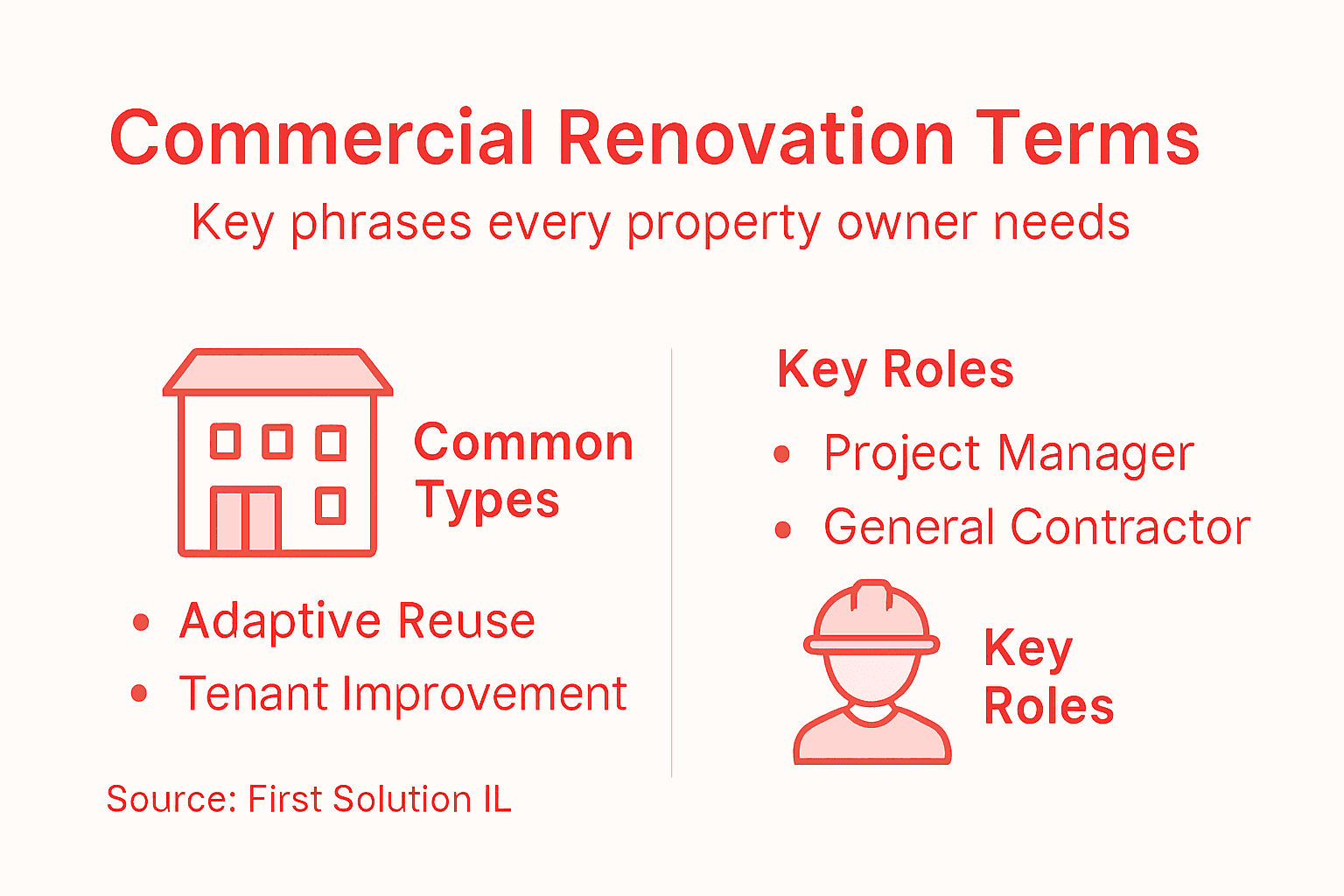
- Adaptive Reuse: Repurposing an existing building for a different function than its original design
- Building Envelope: The physical separator between interior and exterior environments
- Capital Improvement: Permanent structural modifications that enhance property value
- Core and Shell: The basic building structure before interior tenant improvements
- Tenant Improvement (TI): Customizations made to meet specific occupant requirements
Renovation projects require understanding nuanced definitions that impact budget, timeline, and execution. Renovation processes typically involve multiple interconnected phases, including design, demolition, construction, and project completion.
Commercial property owners must recognize that each renovation term carries significant legal and financial implications. Misunderstanding terminology can lead to costly miscommunications, project delays, and potential contractual disputes.
Pro tip: Always request written definitions of specialized terms directly from your renovation contractor to ensure complete mutual understanding.
Key Renovation Types and Distinctions
Commercial property owners must understand the nuanced landscape of renovation types to make informed decisions about their building improvements. Major renovation classifications provide critical insights into the scope, complexity, and potential transformational impact of different renovation approaches.
The primary renovation types can be distinguished by their depth, complexity, and intended outcomes:
- Minor Renovation: Cosmetic updates and surface-level improvements
- Moderate Renovation: Structural modifications with partial system upgrades
- Major Renovation: Comprehensive overhaul involving significant structural and functional changes
- Deep Renovation: Extensive upgrades targeting complete building performance transformation
Each renovation type carries distinct characteristics that impact project scope, budget, timeline, and potential return on investment. Minor renovations typically focus on aesthetic improvements and basic repairs, while deep renovations represent holistic transformations addressing fundamental building systems, energy efficiency, and technological integration.
Understanding these distinctions helps commercial property owners strategically plan their renovation investments. The choice between renovation types depends on factors such as building age, current condition, operational requirements, and long-term performance goals.
The table below summarizes how each renovation type influences budget, timeline, and building value:
| Renovation Type | Budget Impact | Timeline Impact | Value Enhancement |
|---|---|---|---|
| Minor Renovation | Low cost | Short duration | Marginal property boost |
| Moderate Renovation | Moderate expense | Mid-length | Noticeable improvement |
| Major Renovation | High investment | Extended period | Substantial value growth |
| Deep Renovation | Maximum outlay | Longest schedule | Transformative efficiency |
Pro tip: Consult with professional renovation experts to accurately assess which renovation type best matches your specific property needs and strategic objectives.
Roles and Responsibilities in Renovation Projects
Successful commercial renovation projects depend on clear understanding and coordination among multiple key stakeholders. Commercial real estate project participants each play a critical role in ensuring project success and smooth execution.
The primary stakeholders in a commercial renovation project include:
- Property Owner: Ultimate decision-maker and financial investor
- General Contractor: Project management and primary execution responsibility
- Architect: Design conceptualization and technical planning
- Project Manager: Oversees timeline, budget, and coordination
- Subcontractors: Specialized trade professionals performing specific tasks
- Building Inspector: Ensures compliance with local building codes
- Tenant Representative: Provides input on functional requirements
Each stakeholder brings unique expertise and responsibilities to the renovation process. The property owner establishes project goals and budget, while the general contractor translates these objectives into actionable implementation strategies. Architects develop comprehensive design plans that balance aesthetic, functional, and regulatory requirements.

Effective communication and clearly defined roles are essential for minimizing conflicts and ensuring project efficiency. Misalignment between stakeholders can lead to costly delays, budget overruns, and potential legal complications.
Use this table as a quick reference to understand each stakeholder’s crucial role in renovation projects:
| Stakeholder | Main Role | Key Decision Area |
|---|---|---|
| Property Owner | Approves plans and budget | Overall project direction |
| General Contractor | Manages construction execution | Implementation details |
| Architect | Designs building layout and systems | Functional aesthetics |
| Project Manager | Coordinates schedule and task oversight | Workflow management |
| Subcontractors | Completes specific trade work | Specialized tasks |
| Building Inspector | Ensures code compliance | Safety and regulation |
| Tenant Representative | Advocates for tenant needs | Occupant requirements |
Pro tip: Develop a detailed communication matrix outlining each stakeholder’s specific responsibilities, reporting structures, and decision-making protocols before initiating the renovation project.
Critical Phases and Standard Terminology Explained
Commercial renovation projects follow a structured progression with distinct phases that guide the transformation from initial concept to completed project. Renovation project lifecycle stages provide a comprehensive framework for understanding the complex process of commercial building improvements.
The standard renovation phases typically include:
- Project Initiation: Defining project scope, objectives, and initial budget
- Existing Condition Assessment: Detailed evaluation of current building status
- Conceptual Design: Preliminary architectural and engineering plans
- Detailed Design: Comprehensive technical drawings and specifications
- Permitting: Obtaining necessary regulatory approvals
- Construction: Physical implementation of renovation plans
- Quality Control: Ongoing monitoring and verification of work standards
- Project Closeout: Final inspections and project completion documentation
Building renovation strategies require meticulous planning and execution. Each phase involves specific terminology and technical considerations that commercial property owners must understand to effectively manage their renovation projects.
Successful navigation of these phases demands clear communication, precise documentation, and a comprehensive understanding of the interconnected steps involved in commercial building transformation.
Pro tip: Create a detailed project timeline that maps out each renovation phase, including contingency buffers for potential unexpected challenges or delays.
Legal, Safety, and Financial Implications for Owners
Commercial renovation projects involve complex legal and financial considerations that extend far beyond simple construction work. Commercial real estate legal frameworks provide critical guidance for navigating the intricate landscape of property improvements and risk management.
Key legal and financial considerations include:
- Permit Requirements: Mandatory documentation and municipal approvals
- Contractual Obligations: Detailed agreements defining scope, responsibilities, and liability
- Insurance Coverage: Comprehensive protection against potential project risks
- Tax Implications: Potential deductions and capital improvement classifications
- Compliance Standards: Safety and accessibility regulatory requirements
- Zoning Restrictions: Local government limitations on building modifications
Sustainability certification standards can significantly impact project financial planning, potentially offering tax incentives and long-term operational cost reductions. Property owners must carefully evaluate these opportunities alongside potential compliance investments.
Comprehensive risk management demands thorough due diligence, including detailed contract reviews, comprehensive insurance coverage, and proactive compliance monitoring. Understanding these multifaceted legal and financial dimensions is crucial for mitigating potential financial and regulatory challenges.
Pro tip: Consult with a specialized commercial real estate attorney and tax professional before initiating any major renovation project to fully understand potential legal and financial implications.
Navigate Commercial Renovations with Confidence and Expert Support
Understanding complex terms like tenant improvements, adaptive reuse, and capital improvements is vital for commercial property owners aiming to make informed renovation decisions. At First Solution IL, we recognize how confusing these industry terms can be and how important it is to have a trusted contractor who speaks your language and delivers precise results tailored to your needs. Whether you face challenges managing multiple stakeholders or want to ensure your renovation adds lasting value, our team provides clear guidance and expert craftsmanship throughout your project.
Experience remodeling excellence with our comprehensive services covering everything from interior renovations to structural upgrades. Visit our Home Renovation Archives – First Solution IL to explore how we turn visions into reality. Ready to take control of your commercial renovation journey with specialists who understand both terminology and practical execution?

Contact First Solution IL today at https://firstsolutionil.com to request a free consultation and get started with confidence. Discover how our proven experience and customer-focused approach remove renovation uncertainties so you can transform your property on time and budget. Don’t wait to make the smart move toward your building’s future value.
Frequently Asked Questions
What is adaptive reuse in commercial renovation?
Adaptive reuse refers to the process of repurposing an existing building for a different function than its original design, allowing for sustainable development and preservation of resources.
How do I differentiate between minor and major renovations?
Minor renovations focus on cosmetic updates and surface-level improvements, while major renovations involve comprehensive overhauls and significant structural changes that enhance the building’s functionality and value.
What roles do project managers and general contractors play in renovation projects?
The project manager oversees the overall timeline, budget, and task coordination, while the general contractor is responsible for managing the execution of the renovation and ensuring that the project is carried out according to the plans and specifications.
What are the key phases in a commercial renovation project?
The key phases typically include project initiation, existing condition assessment, conceptual and detailed design, permitting, construction, quality control, and project closeout.
Recommended
- 7 Essential Office Remodeling Tips for Property Managers
- 7 Essential Office Renovation Tips for Better Workspaces
- Blog – First Solution IL
- Exterior Remodeling Explained: Boosting Value And Appeal
- Why Renovate Commercial Property: Boost Value and Success – Astrotech Construction
- Commercial Construction Terminology: What Every Owner Needs – FloridaLicensedEngineers.com